• ABOUT

thinairfactoryblog

~ A topnotch WordPress.com site

thinairfactoryblog

Author Archives: Thin Air Factory

Living The Dream?! sustainable living & a Great British conversation just begging to be had.

19 Thursday Mar 2015

Posted by Thin Air Factory in Uncategorized

≈ Leave a comment

Tags

Austin Powers, Banter, brands, Castles, Cats Cradle, China Dream, Climate Change, Constituencies of Action, Consumerism, Dreams, Emerged Economies, faith, great British conversation, Identity, John Stuart Mill, JUCCCE, Lighter Living, love, M&S, Pay Day Loans, Peggy Liu, Pork Scracthings, Prosecco, Reimagining Prosperity, Smarter Living, Stenna Stairlifts, sustainable living, Transforming Desire, UK Dream

images

Funny how some phrases just fall in to your lap. Funny how some just stick. Living the Dream is just such a phrase – a gift horse that was staring me in the mouth.

In the space of two days I had the polarities of Great British aspiration and disappointment writ simple and large on my storytelling wall. Our Great British M&S-stylie Prosecco & Pistachio lifestyle and its poor PaydayLoan & Pork-scratching cousin came gift-wrapped in one exquisitely simple phrase.

In a West London brasserie bar sat a woman, fashionably turned out, the odd fancy shopping bag at her killer-heeled feet, a glass of bubbles in front of her, txting furiously on her i-phone 6. Her friend appeared suddenly, looking a little bedraggled, but on seeing her shiny friend she brightly chirped,’ living the dream babes…look at you…bubbles and everything…’

And within days of the upbeat version wafting in front of me, its poor cousin appeared in North London, just beyond N1. I see a bloke, obviously far from rolling in it: a bag of DIY stuff in one hand, one child in the buggy, the other mid tantrum, on the phone to his partner/girlfriend/wife/babymamma. She is patently giving him an earful. Cue a friend of his walking past on the other side of the street who shouts ‘ Oi Tommy..Living the Dream then mate!?’. The beer-battered sarcasm of this banter simply inspired a meek self-deprecating shrug in the bedraggled bloke on the mobile. True.

As a phrase Living the Dream does what every great tenet, mantra or philosophy of any authenticity and substance should do – it easily and effortlessly embraces every extremity, turbulence, nuance, depth and not so subtle shade of the thing it seeks to define or describe – in this case the quality of life the person is leading at that very moment the phrase is deployed.

It allows enormous complexity to sit just behind it, knowingly, without ever having to say it. The back-stories of these two people were plain to see without having to set them out.

This was the power of the phrase for me.

To be fair I had been searching for one to wrap up a very UK ‘dream of better’ for a while.

We had searched for a conversation starter around a more sustainable lifestyle – one that started in the real everyday world.

In 2013 we ran 4 pilot workshops in London for the UK Dream project to that end – to find a more populist, scalable conversation to inspire a more enduring model of prosperity: a thriving vibrant life open to all, underwritten with sustainable truths.

We needed a new narrative: a new lexicon of better for people to use in their everyday lives. The old narrative was simply not working. Sustainability people speaking to themselves: impenetrable, arcane, complex, off-putting.

For most people the end of the month comes before the end of the world. They are more concerned with making ends meet than with how they might meet their end in some post-apocalyptic climate-induced catastrophe. The old narratives, rooted as they are in the activist roots of environmentalism simply do not chime with your average Joe and Jane.

So we had a chasm to cross. We needed a simple and very UK-centric or British hook that allowed us to start with simple everyday human-sized truths – What keeps you up at night? What gets you out of bed in the morning? What does good look like from where you’re standing?

In a search for this new narrative, we had already applied the 7 stage Dream-In-A-Box methodology (well, three of them at least) to try and shape what better might look like and scaling the everyday conversation around it.

We got as diverse a group of individuals as possible into a room to play with, pull down, interrogate and explore the traits, dimensions, idioms and aspirations of a prosperous life underwritten by sustainable truths. And we did it by first banishing the language of the circular economy, up-cycling, collaborative consumption (a co-created art installation project by 17th Century British poets surely) stewardship, materiality, EP&L, Net Positive and every other phrase on the trending circuit.

The most interesting and charming conversations were sparked around the old arts of thrift – smart shrewd living skills. A form of street smarts for aspirational living. people who know know…

The idea of Lighter Living. Lightening the burden on oneself (bills, cost, beyond ones means) and on the world in which we endeavour to thrive offered an overarching narrative hook that felt aspirational; breezy; cool.

So UK Dream identified Smarter lighter living represented a good beginning – positive – something one feels before one thinks it.

But we still had the tricky D word. Left to its own devices, Dream is a very divisive word, regardless of how you underwrite it; especially in Britain. On the up side everyone likes a dreamy something – we are happy to have the dream job, the dream holiday. But these are specific uses of the word that define a clear and tangible set of benefits and experiences.

Use the D word on a more rarified cultural and nationalistic level and the long shadow of John Stuart Mill enters the room at the faintest whisper of the word.

Dreams. A tyranny of pasteurized living. The death of individuality. An opiate under whose suffocating crop invention withers and spirit is anaesthetised. Dreams: the heartland of the indolent and fearful. The sharp corners and friction of individuality are what keep us alive. Not buttered populist platitudes for us to get fat on.

For the UK audience, Dream just invites the cynic and the heckler to rip it up; test its edges, even when you try and put it in a box.

Hence my search for the phrase that delivered the idea of a dream of better as part of life in the here-and-now; as measured in clear and tangible terms – a phrase that could happily ladder up or down; for better or worse; good or bad; funny or sad.

Cue Living The Dream?!

As soon as we place the ‘Living the Dream?!’ question at the top of our conversational ladder everything shifts – and becomes more human.

It allows us to engage with really simple scenarios to begin with – what keeps you up at night? the ‘mares big and small of every day life – What gets you out of bed in the morning? the dreamy stuff that makes life worth living.

This simple two pillar approach can be used to inspire conversations around identity, fashion, lifestyle, living, food & drink, education, energy, finances, technology, travel & transport, leisure & entertainment, white goods, furniture – anything. Easy conversational doors into complex nuanced stories.

It also means that we can reframe conversations that interweave multiple dimensions (usually only looked at or explored as single threads) and explore them as we find them – as slightly more chaotic jumbled buckets of conversation.

For example:

Love & Shopping

The old intrinsic nature of love and how we demonstrated it – through nurture, provision, protection, empowerment, support and belonging – has been hijacked by brands trying to inveigle their way into a lead position on our purse. We are more likely to make an active demonstration of love through a commercial transaction than we are through a personal one. The extrinsic demonstrable nature of the neu-love we now practice is making us live beyond our means.

So we find ourselves living in a culture that celebrates Saturday shopping in Westfield as an act of bonding and love. Families share in the pursuit of living the dream; even if it just loading love on a credit card for later. Every demonstration of love seems to come with a bar code: DISCUSS.

Faith & Banter

Faith has become more than just the repose of religion – faith and leaps of it are required in every corner: humanists take the leap of faith in humanity and its ability to prevail. Philosophers cross the chasm of the ontological between universals and particulars. Artists relentlessly leap from humanities to science to metaphysics to the primal with an absolute faith in the eventual ascension of something sublime. Even in brittle science, in the absence of an M Theory waiting to be revealed, they undertake a leap of faith of their own every day between the two quantum truths without a bridge to join them.

But in the UK, if you get too serious, watch your language, lighten up and Get over yourself. This is the nation of ‘taking the piss’, heckling, ribbing and anarchic banter. How does something so serious play out in a culture where to be serious is to be dangerous. DISCUSS.

Castles & Cat’s Cradle

Every man is an island and every Englishman’s home is his castle. Well, ‘ish’. Given the level of Great British personal debt, mortgage rates, the ascendence of the pay day loans, just to keep the ‘castle’ from falling down, the old securities of a fixed and stable life are fast disappearing. And as the castle walls shrink or crumble, splendid isolation gives way to dynamic connection and collaboration. We are stitching ourselves back together again in myriad different ways, finding new ties that bind. If 2008 smashed the family china and pulled down the gazebo and the politicians are fracking society who’s got the UHU?

In the gaps and cracks they leave behind new opportunities and alliances form. Run down regions and communities are regenerated. people find new purpose. Can a new more enlighted aspiration for a more enduring life rise with the cultural phoenix? DISCUSS

Wellness in an highly emerged society.

In exploring the Living The Dream conversation, we also realised that culturally, socially and systemically, the UK is so emerged it’s submerged. Simple and very meaningful topics so easily and directly dealt with in other cultures are in ours hidden inside a complex and codified landscape. Triggering conversations around these topics is a minefield: an assault course of social gaffes, trip wires, trap doors, raspberries and silences. So achieving just the right lightness of touch and integrity is critical.

The conversation around wellness and wellbeing is just such a conversation. It is not in the direct line of conversational fire. We speak indirectly of these things, usually as part of a different conversational thread. We are more likely to fall upon the topic of well-being through jokes about Stenna stairlifts, incontinence pants, supersize mother in laws, smoking in bed and Austin Power’s teeth than we are directly with a straight face.

Wellness is a supermarket trend supported by chemist brands – it is NOT a stitched in part of the great british psyche just yet. But we are getting there in our own sweet time.

This is very different to the China Dream where its emerging economy status means that health & well-being are absolutely central to the idea of what better looks like. A conversation that begins and ends with the need for something drastic to happen around air, water, food integrity and diet and their role in building a more resilient and dynamic society.

All in all, Living The Dream?! (for now at least) creates a simple conversational foundation for a bigger conversation around what good looks like and how we might get there individually, communally and collectively. Apply simple rules of smarter, lighter living at the heart of it and perhaps we might move the dial from over indexing on what keeps us up at night and start peaking again on what gets us out of bed in the morning!

All we need now is the right partners to scale the right conversation and start asking the right questions of the right people.

So any platform or brand looking for a purpose in the UK – looking for a conversation to fuel, inspire, support and celebrate – come on down. We have the beginnings of something good.

FOOTNOTES

LivingTheDream is planning to undertake 10 workshops across the UK in 2015 – simply to start asking the right questions of the right people; of what better might look like for them – in their language, in their words and from where they are standing. The curated outcomes will then be shared with the constituencies of action – local communities, councils, faith leaders, collectives, interested parties, brands, institutions and organisations – to adopt, reflect and act upon to start making better a reality.

Living The Dream & the art of smarter, lighter living is an organically developing theme rooted in the original Dream in A Box UK Dream project workshops and part of a wider DreamInABox initiative which includes the founding China Dream movement run in China through NGO JUCCCE and spearheaded by the inimitable Peggy Liu; inspiration and co-founder of all things DiaB.

Restoration, Mighty Fear & the immutable power of Millennial Passion and Belief

05 Thursday Mar 2015

Posted by Thin Air Factory in Uncategorized

≈ 1 Comment

Tags

a new conversation, Back to the future, beauty industry, fear is an energy, Foot Long Suasage Rolls, Governance, HR Strategies, leadership, millennials, passion & belief, Punk, Resilience Strategies, Restoration, Social Purpose, Sustainability, Sustainability Diplomacy

Screen Shot 2015-03-05 at 10.58.40

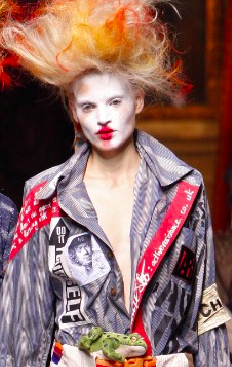
From the dressing up box of clashing social fabrics, a Queen arose: restorative, reckless, feckless and committed. The Restoration Queen.

Harsh. Brittle. And of Exceptional mettle; and a little crazy perhaps.

But that’s how to get on in this money-sucking carbon-wheeze of a 21st Century.

Too many bankers living in a coke and Purlina lunch schema; tucked up tight with the cross-dressing maid-interfering industrialists who say ‘what the hey, Ill be dead tomorrow…what if some kids drink piss from a rusty wheel rim and the forests collapse. I’m coining it, my kid’s at Harvard and I’m in the Cinquante Cinq’

But down the Production Catwalk of Life strode the Restoration Queen, no knickers and a pair of slab-soled Kickers to put the boot into every rhino skinned half-wit with a double-bubble scratch-card life with Ugly lurking under its soiled foil veneer.

And, wrapped in battling plaids, leaden white skin, and piercing black eyes thus spoke the Restoration Queen:

All the Shiny in the world shall be yours if you make it fairly and in good faith: but make someone else pay in misery and squalor for the colour of your money: and as Not God is my witness I will hunt you down and nail you up on a poster pasted to the honour of your disgrace.

If I find that for even the briefest second of your existence you can question the provenance of your good luck and in doing so find it tainted – dipped in the ink of someone’s diminishment, heartbreak, pain or misery – and in the second that immediately follows the first, do not immediately act to make amends in some way of other – you truly are the lowest in my domain and will suffer accordingly.

So, punchy? Perhaps. Threatening? Most certainly. And mediaeval? Without doubt. BUT effective none-the-less.

Polite entreats to corporate and government, to turn the nature of enterprise to better and kinder purpose, had made good dinner party conversation; the diplomacy of intellect deployed into rare and grand salons and boardrooms warmly welcomed. But you see everything was written in the courtly language of the Academic – and riddles rarely make for revolutions in anything.

Once the conversation had climbed out of the impenetrable linguistic forest of the bureaucrats, civil servants and systemic bourgeoisie; and ripped itself free of the suffocating social creepers of the over-educated, under-whelming middle classes, the language of Sovereigns and Serfs reigned supreme – and it is a surprisingly and disarmingly simple one – heart filled, base, emotional, primal and blunt.

There had been something fundamental missing in the more rarified and courtly conversations: something powerful enough to override the staggering self interest of the die hard industrialist and money monster – something that could present a healthy threat – a razor sharp blade waved at the fabric of their voracious acquisition.

What had been missing was Fear: Fear with a capital F. Fear of being hurt. Of being Humiliated. And diminished. Fear of LOSING!

And if there’s one thing that the Restoration Queen could inspire in the hearts and the underpants of the stolid grey captains of industry and finance – it was fear. because without her they were nothing.The Queen and the land were one. And without her the land would suffer. Poison her, act against her interests and their future would crumble into the sea never to be given a moments thought ever again.

From whence and where the Restoration Queen came is a matter of conjecture to some and legend to others. Her punked credential to rule in a land of shaped hedges, swinging Cul de sacs, subversion, elegance, eccentricity and foot-long sausage rolls was without question. But her conscience? Her fiery righteous conscience written across the world: where did that come from?

Some say from just an hour in a sweat shop outside Delhi – that the shock was too much for even her bullet-proof sensibilities – and that to scuttle from a palatial room to view a button pauper stitching Hope onto jackets put the first fissure in her armour of suburban everydayness – and sparked a more regal purpose in her heart.

Others say that it was that day at the Palace all that time ago, when the stick finally pricked the ardour of her anger at the inequality and destruction of it all.

So the Restoration Queen took stock and a deep breath; and she thought ‘time to knit a new fabric of life: one hitch and stitch at a time.’

There are alternatives, she thought, to the burning, drilling, cracking, fracking, and spilling that props our most industrious purpose.

Why is our ingenuity applied in such dark corners? Why do we abdicate all personal responsibility and accountability to new technology and innovation and the whimpering simpering ripostes of ‘I just didn’t realize – if only I had known’.

And so it was: slowly and surely at every turn and every opportunity: where she found distemper and malaise she cut it dead. In the presence of toxic arrogances cluttering tables and rooms, her acid dismissal followed. Intuitive, and ingenious improvements were made, some small and expensive; some grand and expansive.

Slowly but surely a new dawn arose, as the restorative nature of the Queen spread rapidly across the land. A fresh vibrant shout went up in think tank, factory, mill, studio, office and laboratory.

All Hail The Restoration Queen.

And restorative missives and mantras were pinned (kindly) to trees, walls and doors:

Goes around comes around, Mend and Make Do, Thrifty is Nifty and Waste Not Want Not; Look after the pennies…

Everything was to be restored  – not through the recreation of some over sentimentalised Narnia of what was, clambered into through a wardrobe of smoke-stinking camel hair coats and a barrage of idiot politics – but by tempering a sharp edged, keen and bright future forged out of the mettle of the past.

Back to the future was the way forwards – reaching back into old wisdoms and a sense of fair play. Reaching back to a time when decency wasn’t stunted and twisted by technology.

But this all seems so simple as to almost ignore how long – how terribly long – it took for the Restoration Queen to arise to her throne. Why?

Well, at first, they laughed. The ‘Mostly Men’ of Enterprise and Industry. And they laughed and laughed – at the mad harridan, the witch, the acid bitch, the righteous trollop. Laughed at her assertion that industry can be good: enterprise can be honorable: and business can thrive without extracting every shade and shred of Hope hosted inside every heart of every worker and every thread of natural capital the world has to offer.

Her ridiculous naïve protestations at the tenor of their destructive exclusive diseases raised howls of derision:

Anarchist – tree hugger – lofty lesbian – lefty dyke – punk slut – suburban nobody – clothes hag – freak.

Who are you to question the integrity of our enterprise, the substance of our trade and the provenance and integrity of our wealth creation?

Governance is reserved for those fit to govern, and agility is an over rated skill. Adaptive Governance my arse. We shape the world to ‘me’, not we to it.

And in the end?…Short time living long time dead, Love, so you can stick it. We’re off to the Guinea for a 100 Guinea’s worth of grub.

These ‘mostly men’ who everyday proved themselves to be mostly men (but not quite – perhaps therein lay the issue) would throw buns and scold and mock the Restoration Queen and her little theatre of ‘better’.

Ridicule and sneering was an everyday curtain call.

You can take your silly clothes and your gawky principles and awkward politics and stick them up your ignoble arse.

Everyday the mockery fell from the purses of the industrialists and the bankers. But the Restoration Queen was immutable and immoveable.

Until one day, amongst the hubbub and the screeching and the guffaws and coins spitefully chucked, a chair scrape was heard.

This was no ordinary scrape. This was the scrape of an antique chair crafted in Asian Oak, Teak & Walnut, hand finished in Windsor and reupholstered in St James. This was the scrape of a chair leg across a floor repeatedly oiled and waxed for hundreds of years to a sheen of patrician ‘just so’. This was a scrape of great import.

The dark, bright eyes of the Restoration Queen lifted from her Orb of Hope in the direction of the scrape.

There stood one industrialist: his heart in his hand. Courageously silent; and fiercely vertical in a room of horizontal disdain and louche legs crossed.

One solitary man in a shade of unsexual grey – a knight had arisen. The Restoration Queen had her first champion.

To honour this courageous chair scrape, the Restoration Queen matched with a scrape of her own, as she rose to her full fierce Celtic height – and stepped lightly off the podium and into the swarming mocking crowd.

Together they stood in the mote dusted, smoke filled half-light. The Restoration Queen and her First Knight.

The rising of a champion only served to provoke the laughter to continue louder and the mocking to increase;

BUT through the laughter a small whistle was to be heard. A wry whistle, through smiling pursed lips.

Who’d have thought it? The Restoration Queen has skinned her first Money Monster and revealed the human underneath – with a wish to create better together; not just more for his own.

But that first step to better seems so long ago now; and there is still much to change.

But lets hail the day that a real fear of retribution entered the halls of the mighty, that the possibility of their failure became real.

Praise the day the riddles ended, that language opened up its doors once more and the debate opened out to include everyone, and conversation flowered on every street corner and thoroughfare.

Let’s Hail The coming of The Restoration Queen.

NOTE: The Restoration Queen is the embodiment of the immutable thronging mass of Millennials and Post millennials rising up through the ranks – bringing with them their ‘naive’ assertions that it is incumbent on any business or enterprise to deliver rewards both financial and social, to mind their manufacturing and operational manners, take care of the people they both serve and who serve them, and to take a role in securing a more resilient human existence for us all. 

Top Tips for Carbon Dating & the life and times of a clean energy provider.

12 Monday Jan 2015

Posted by Thin Air Factory in Uncategorized

≈ Leave a comment

Tags

Caring about what people care about, Clean Renewables, Coal, Dating, Double dating, Ethical Business, First Dates, Flings, Flirting, Gas, GE, Identity, Integrity, Jeremy Clarkson, Life Long Friendships, Long Term relationships, Love Ins, Nostalgia, Oil, Old Mates, One Night Stands, Sentimentality, Small Businesses, Sustainable Brands '14, Ties that Bind, word of mouth

809d49227151ec8ed0716bc8dbfce646

The populist conversation around creating a clean energy love in seems to be going nowhere about as fast as Jeremy Clarkson in an oil-burning, coal-fired, gas-expanded super-car through a village of impoverished 3rd Worlders living on scorched earth!

So anyone out there in the world trying start a conversation with the unenlightened everyday someone around the idea of embracing clean renewable energy can be in for a cold start.

So which reframe might help us get people to more easily consider moving from a short term promiscuous ‘lowest price who cares?’ transactional relationship to a long term committed ‘that price I care’ value based relationship.

Reason? Glamour? EQ? IQ? Finding the hook can be tricky. So lets try looking at the problem through the everyday human condition – one that everyone can relate to.

The first time you meet a dyed in the wool cheap coal and oil energy user with a shiny new clean energy package you could say it is a little like a First Date.

So lets start there.

As with all dates, especially first ones, you need to be clear about your objective going in, as this defines the rules of engagement.

Do you just want a few dates? Or would you like a long term relationship with them?

If its a just a few dates, some passion and then goodbye; go in fast and furious. Thick skinned. Impervious. Immutable.

If it’s the long term relationship you want. That’s a different thing entirely.

That demands a more intuitive approach. Sensitivity. Respect.. Awareness.

So, when approaching a traditional coal, oil or gas burning energy consumer for the first time, here are a few tips and watch-outs to help shape a better first impression and relationship.

First Dates

1. Don’t assume that turning up bright eyed and bushy tailed with a shiny new something will get you straight to First Base.

Appearing with a clean renewable energy package will NOT immediately have them springing to click on the ‘change of provider’ PDF.

Putting aside old familiar and trusted things – however toxic they may be in reason – is not a given. Sentimentality and attachment are very strong emotions in the human condition.

2. Don’t assume that Reason aces everything.

Not everyone sees things reasonably: usually they will be quite the opposite – viewing life through a very human and subjective eye.

So Pointing out the deepest most destructive failings and flaws of their current energy choice may not only make them highly defensive of the choice they have made but also of themselves for making it.

Example: When you first meet a very old and good friend of your new crush, only to find that they’re truly awful: some recidivist throw back to a 1970s British sitcom with all the chauvinist, misogynist, racist paraphernalia that goes with it; you can do one of two things:

Either call out their dreadful-ness as loudly as possible, pointing out and highlighting every flaw, to then flounce off muttering phrases such as ‘How can you put up with that &*$%”

Or you can sit back, observe the relationship; assess it: for the depth of its feeling, and the integrity of its bond. This allows you to decide whether the presence of the friend is immutable and in turn a corollary to as yet unseen things to come in your crush; traits or behaviours that you have simply not registered through your lusty mists.

3. Be prepared for Double Daters.

Most people are unlikely to put all of their energy eggs in one clean renewable basket straight away. They will probably switch backwards and forwards or leave the big stuff as it is and just flirt with a clean and serene energy lifestyle to warm themselves up and test the edges of it. In that way the average Jane and Joe is not dissimilar to the average energy monolith. Just like GEs diversified energy portfolio – which unsurprisingly contains the smoky old faithfuls.

4. Get someone to put in a good word for you.

With most successful dates, the battle is one before it is fought. Someone ‘bigging you up’ prior the actual meeting can work wonders.It is also a way of utilising the grapevine that will be buzzing whether you like it or not. The odd whisper and aside and some furious txt-ing and calling will have already happened on the side between the two parties friends and acquaintances way before you get to the bar/restaurant/club/room.

Small businesses are always looking for smart wins in the efficiency and economies department. And they have a far closer eye on the way the business runs itself and makes money. Target the Owner Managers businesses, deliver for them and they’ll be singing your praises in the pub in a flash in very everyday and human sized terms.

So lets have a run at that and see if it enlightens the moment and sets us up for success or failure. And if that doesn’t work we’re just going to keep trying others. because we need to. So all ideas gratefully received.

Answers on a postcard.

NOTE This blog was inspired by a chat at Sustainable Brands London’14 with some super bright clean energy people around the topic of rewriting the narrative of the whole carbon issue – which to be frank currently reads like a Wet Wednesday, when it should come across like a Sunny Saturday.

signs, messengers, wonders & a collision of flocks and fists

05 Monday Jan 2015

Posted by Thin Air Factory in Uncategorized

≈ Leave a comment

Tags

art frieze, eating disorders, fun runs, Golden Compass, leisure activities, London Business School, London Zoo, Lycra Chafe, lyra belaqua, MAMILs, Obsessive Compulsive, patello-femoral pain, punctuation, Regents Park, Sociopathy, Spores, Trainer Rot, Voles

20150104_085513

Pedantry, punctiliousness, pomposity and particularity to name but a few of the leading P emotions and responses this crime against language inspires.

I spied it as I mooched around the periphery of Regents Park yesterday morning.

Lack of punctuation aside, its accidental pronouncement on the presence of runners in the park is its least dynamic feature. Anyone who has walked around Regents Park when any kind of collective Run is under way, either for Fun, a good cause or otherwise, knows all too well the tyranny that is a fist of runners (for that is my bludgeoning collective noun for them) heading in your direction.

It’s their park. Their path. Their arena. Their world. Their moment. And they’re seizing it MAN. And what the HELL are you doing? Huh? Mr beardy sloth-assed walking, looking thinking guy? NOTHING. That’s what!

The smug self-centredness of some of them and their sense of right of entitlement to the by-ways they tread is quite impressive if not a little delusional.

They are vaulted it would seem into divine superiority over all other bipeds, tripeds, quadrapeds (and mopeds for that matter) by the mere act of relentlessly throwing one foot in front of the other while sporting the kind of luminescent tops and inappropriate lycra also favoured by their close cousins, the far less sexually diverse MAMILs.

(Watching Flocks of these MAMILs circumnavigating the outer circle of the park tempted me to imagine for one delicious moment a cataclysmic collision of vitamin water bottles, hi tensile lycra, chrome, rubber, carbon frames, magnets, exploding trainers and performance insoles where fist meets flock. Efficiency and a dislike of waste and excessive logistical challenges also led me to further imagine that the mangled result of said collision could simply be shovelled a few hundred yards up the road and feature in the next Freeze Fair Sculpture garden – just a thought)

Anyway, to the sign in question, whose lack of punctuation (verging on an almost spiteful dereliction of syntactical duty) plunged me into all sorts of confusions.

The absence of punctuation actually raised (in tandem with my blood pressure) many questions (narrative, directional, nominative/ablative, relational, subjective, contextual, existential – you name it; the sign raised it).

This was effectively common criminal assault disguised as a leisure sports event sign.

My mind raced.

CAUTION RUNNERS

OK. Of course it could be a simple error. A slip of the punctuational tongue. Two full stops or periods absent without malice.

It should rightly read CAUTION. RUNNERS.

A clear sign to make me aware of the presence of Runners (plural) in the vicinity: but was that it? Or did it mean something more?

Did this sign demand that I caution runners? generally or specifically – and if so, against what or whom? Lycra Chafe? Trainer Rot? Falling branches? Designer dogs? Wind-borne Zoo animal Spores? London Business School alumni?

Or perhaps I was to caution them on the particular dangers of running itself? (long term joint impact & ligament problems – ‘patello-femoral pain’; lower back strain, compressed discs). And accidental health hazards & opportunities of punitive litigation – e.g. Collisions (with pedestrians, pets, park livestock, skateboarders and the aforementioned cyclists).

Or maybe I was to CAUTION RUNNERS on the need to be very very quiet given the arrival of a small pregnant female vole on the bank of the flooded ditch between the park and the zoo.

Or maybe I was to caution those guilty of knowingly or unknowingly disguising their eating disorder inside a seeming ‘passion for leisure activities.

Or perhaps the cautionary tale was around the subject of identity. Was one to caution said runners that being a runner was not all it was cracked up to be? Antisocial, smug, ultimately nihilistic: isolationist and self obsessed: potentially a sign of a deeper sociopathy, narcissism or compulsive disorder.

And then it struck me like a Gobblers Demon (probably while heavily under the influence of the dark magical realm of Lyra Belaqua):

CAUTION RUNNERS

Perhaps this was a brief window into the otherwise invisible systems of a mysterious breed of messenger – fleet of foot, immutable, unstoppable and relentless.

CAUTION RUNNERS – the mythical clandestine deliverers of cautionary missives, marks, data, intelligence, remarks and tales.

CAUTION RUNNERS We do not see them; but we know when they have visited upon us. (Think of those moments when we suddenly have a change of heart against some course of action or decision we have chosen or made. It is not our conscience or our fears talking. It is the cargo of the CAUTION RUNNERS lodged firmly in the back of our head.)

But then how do this mythical and other worldly sect of such daunting purpose remain unseen in the world? How come there is no proof of their existence bar one random accidentally placed sign?

They would be hard to miss. They will be patently odd. They will stick out like a sore, swollen and swaddled thumb. They will be incapable of normal socialisation. They would speak in riddles or some inexplicable language. Their human disguises would be clumsy. Their obsessive and compulsive nature would be difficult to disguise. They would be called upon to go out at all times of day and night. They would have developed strange codes of communication shrouded from the view of normal human beings. What earthly disguise could ever absorb so much?

This is a conundrum that I shall endeavour to solve. Throw a lens or filter across the seen world that will reveals them in all their splendour..

But until then, I’ll  continue to wander around the park, populated as it is by badly punctuated signs and a lot of awkward obsessed people in lycra and luminescent canvas talking in riddles to each other in the middle of a rainy Sunday, uncomfortable in their own…HEY…HANG on just one dang minute …HANG RIGHT BLOODY ON RIGHT THERE…

FOUND THEM!

verukas, prosperity & the detritus of parental love

02 Friday Jan 2015

Posted by Thin Air Factory in Uncategorized

≈ Leave a comment

Tags

adult tantrums, boarding schools, cheap money, China Dream, Consumerism, credit card debt, designer baby clothes, Dream In A Box, ethics, family holidays, hogwarts, love, millennials, moral compass, nurture, parental guidence, propserity, quality of life, the 2 week summer holiday, Transforming Desire

images

Who pandered to her every need?
Who turned her into such a brat?
Who are the culprits? Who did that?
The guilty ones now this is sad
Dear Old Mum and Loving Dad

Is the quality of contemporary parental love destined to go down the garbage chute quickly followed by the children it breeds?

Is the structure on which it is founded becoming increasingly fragile, facile and unsustainable?

Or will our children or grandchildren eventually just turn against us; crippled by their disappointments, and their inability to repeat or recreate the same or a greater quality of life for their own.

We already know that this is the first generation in recorded history that will be passing down a diminished quality of life to their children by our current measures of prosperity.

This question of whether parental love in its current form is unsustainable first raised itself whilst I was trying to assess and deconstruct the current model of prosperity we currently embrace and pursue.

(Let’s face it, for some the highway commercial robbery of Valentines Day, the poisonous barometer of the Tiffany box, Gypsy Weddings and the reoccurring arrival of Kim Kardashian’s latest ‘one and only love’ has firmly flushed the romantic model down the spiritual khazi already)

The exercise in deconstructing prosperity is a major part of a larger one I am undertaking as part of my ongoing involvement with the Dream In A Box initiative and its UK Dream iteration – which in particular terms seeks to Re-imagine the UK model of Prosperity through the transformation of what constitutes a desirous life.

On closer inspection (hardy surprising) it seems that a large part of what makes up our current model of prosperity lies in how we imagine, perceive, measure, pursue, and demonstrate ‘love’ and attachment: to friends, family, prospective partners, spouses and most pointedly our children.

There is no greater demonstration of loving provision and the profound contract of human care it seems than that hosted within the living bond between parents and their children.

But what was once only noted and measured in mostly invisible and passing terms – the degree to which we throw money at our children’s happiness – now seems to be worn like a badge of honour by everyone from the cord-breeched pseudo-toff urban preppy and the polo-shirt & chino mini-mes of the suburbs to the highly singular estate-inhabiting parent with a Burberry buggy.

The integrity of our attendance to our children’s needs and the strength of the love we hold for them now lies in the measure of its social visibility and worth.

We must be ‘seen’ to gladly or otherwise use every scrap of ‘cheap’ money we can get our hands on to further facilitate our children’s ability to hover above the ugly brutal truths of life.

Increasingly our ‘love’ seems to be wholly predicated on the scale of our investment: and not of the balanced, grounding, attentive, affectionate kind.

It would seem that it is wholly acceptable these days for a child to be intellectually stupefied, emotionally ignored, set aside and abandoned or passed over to some one or some thing – a digital device usually or perhaps a new pair of trainers – as long as the parent can be seen to have ‘invested’ at every turn.

From the designer baby clothes they learn to stand up in, to the grotesque and engorging hoards of seasonal gifts they now receive (from skip loads of Easter Chocolate to mountains of Christmas presents) and the increasing quantity of kit they now require to ensure they’re not seen as ‘going without’ – phones tablets game consoles to name a few – the scale of society’s expenditure on the presentation of the ‘loved child’ is staggering.

This is not reserved solely for the ‘kit’ we deck them out with. It seems to infect every corner of the family model for what constitutes a thriving life.

Another hellish tyranny of loving provision embedded in our current model of prosperity is the family holiday.

Even as I typed the words ‘family holiday’ I was suddenly washed in a sun drenched, lens flared, refracted moment of azure blue sky and crystal water splashes; stress free parents and laughing children perfectly framed against a distant white villa horizon speckled and coloured with the lobster clawed, 3 types of fish, pasta, pizza and west Indian slash Asian slash Mediterranean slash Tex Mex slash barbecue buffet.

The tyranny I refer to has nothing to do with the usual clichéd hooting and wailing you hear from many modern parents about the prospect of 2 weeks locked together in some slightly disappointing family resort.

(On that particular matter it will be music to the ears of every emotionally challenged and ‘highly individual’ parent to know that there are now two good reasons as to why that tyranny will quickly become a faint memory. Firstly we are seeing (so the people watchers tell us) that the 2 week block summer holiday meticulously planned and desperately undertaken is in its death throes in the more advanced mature economies. We are taking more and shorter and more impulsive holidays (with all that extra money we all have!!!) And secondly booking.com is chirpily telling any member of the aspirational mobile middle classes who wants to listen that never again will they have to booking arrive to find themselves trapped in some booking desperate, substandard hell-hole with a pool surrounded by drawn-on people and a dodgy booking breakfast buffet – as long as they book with booking dot com that is.)

Given the tsunami of availability and astonishing social pressure to just say yes to everything, it is no surprise that we’re running up a credit-card based personal debt mountain bearing a striking similarity to a Himalayan range built out of bullion and gemstones.

If a family doesn’t get to go on an all you can consume holiday plus a few weekends away and a second holiday thrown in, then they’re not cutting it. That a family with a annual family income of circa £30-40K quietly expects itself to demonstrate its loving provision through multiple holidays abroad is both financially unsustainable and morally questionable.

Education is another ugly social battleground on which ‘love of the child’ is undertaken with everything but balance. True this is a more particular and less universal truth – something usually set aside by the worthy as a First World problem.

It is of course driven by the clawing desperation of the upwardly aspirational middle-middle classes*, (the downwardly aspirational Toffs and upper-middles being otherwise healthily engaged in a swaggering mockney-gangsta walk through White City, Hoxton, Deptford, and the arse-end of Tooting).

These parents are not the first generation to have realised that the route to securing an improving prosperity for your child is a decent education.

The role of education (and skiing holidays for that matter) in social aggrandisement is not new. Parents with a particular predilection for elevating their own narrow lives on the back of the tiniest increment of superiority have been judging their dinner party neighbour by the scale of their educational investment for many decades. But they were (and still are) of a particular rare breed, reasonably cloaked and easily ignored.

What’s particular in the new trend is the frenzy with which the greater majority pursue this madness in the blinding glare of the social spotlight.

Over subscribed schools, post code hopping parents, dodgy intake policies and the see sawing fashion for Public versus independent versus Free versus State versus ‘who said Grammar? I didn’t say Grammar?!’ schools certainly has a lot to answer for.

But that’s still no excuse for the lack of human elegance, the vacuum of discretion, and the gaping hole that seems to have opened up in their ability to circumnavigate the sensitivities of others.

They take a bludgeoning approach to improving the child that is conspicuous by its conspicuity – gratuitous over expectation, intellectual bullying, litanies of after school clubs, multiple tutors, competitive schooling and the most insidious social engineering are all worn in public like a beacon.

Educational trends currently also raise some rather interesting existential questions – of the ‘life-imitating-art-imitating-life’ kind.

The recent Disney-fication of boarding school culture via one small wizard and a place called Hogwarts has had a large number of parents who can ill afford it sending their little darlings to prep and boarding schools ‘because the child demands it’. There’s only so long you can get away with stuffing the fees on a credit card until the house of plastic cards collapses. And love is rarely proven resilient by the relentless use of the word ‘yes’. But that is how society seems to be shaping the model of demonstrable love in a prosperous life. If the child demands it – the loving parent must give it: and blatantly.

For me these are reasonable examples of how warped I believe our sense of how we demonstrate love for the child has become, and evidence of a toxic model of prosperity.

If one takes these lite examples and generously sprinkles them with tons of over packaged brightly coloured and quickly discarded plastic, £400 bikes, theme parks, and mountains of cheap cotton basics with pointless groovy graphics, the landscape of parental love, certainly that currently exercised by the average emerged economy parent, is looking sparkly, cluttered and bleak, and ultimately unsustainable in so many ways.

Is this love of ours Tainted. Maybe. Is it Human. Very.

Is this progress? Perhaps. Or is this simply the gene pool opportunistically wrapping its progeny in as much as it can get its hands on before the moment passes. Most likely.

Regardless. Navigating the modern world and the byways of fruitful love, especially that which we feel and demonstrate for our children, was never going to be easy or simple.

But re-imagination of the model of prosperity we base our life, love and dreams on: one which holds greater store by that which cannot be bought might give us a few more compass points along the way.

It may well also help clear up some of the side issues: like the increasing population of staggeringly spoilt, increasingly sociopathic children… oh and that of personal bankruptcy of course, and a sparsely furnished dotage.

So, veruka cream anyone?

FOOTNOTES

*the middle middle classes are how I refer to a very active, vocal and seemingly forever squeezed section of the British population. They are, in class terms what Mickey Flannagan’s ‘out out‘ is to going out.

The Luxury of Conscience & how the end of the month comes before the end of the world

16 Tuesday Dec 2014

Posted by Thin Air Factory in Uncategorized

≈ Leave a comment

Tags

#squeegeemylife, Apprenticeships, Dream In A Box, everyday idioms and insights, Helter Skelter, John Stuart Mill, Kerring, LifestyleApp, Luxury of Conscience, M&S, Maslow, NGOs, Popper & Berlin, privilege, Re-imagining Prosperity, streetwise, UK Dream, Unilever

ivory_tower_defenders  There are two phrases that I use often:

The Luxury of Conscience.

The End of the Month comes before the End of the world.

They are my way of arriving at the same point: just from two wholly different ends of the social, strategic and storytelling spectrum.

The point I am usually making? That the narrative that will transform desire, reframe sustainability and re-imagine prosperity is potentially being shaped and moulded by the wrong people.

So what constitutes ‘wrong’ you might ask. And I would venture ‘those who might struggle to empathise with their audience – the 85%+ –  through a lack of real everyday insight and socio-cultural understanding into their lives, needs and desires: that of the ‘lived it been there’ kind.

The Luxury of Conscience is a phrase that I sometimes use when describing such a person – someone who has ability to sit back and engage in the bigger conversations around climate, environment and more sustainable lifestyles, their minds uncluttered by making ends meet, either spiritually or financially.

The ability to exercise and expend their energies and passions on designing a higher order human existence predicated on sustainability is indeed luxurious – proof that they exist in the upper tiers of Maslow’s Hierarchy.

They have the luxury of a ‘comfortable security’ – financial, educational, social and cultural – to see beyond the scrabble for immediate provision; for themselves and their families – of the tyranny of bills, eking out the money until the end of the month comes, trying to avoid the pay day loan light bulb in a head clouded by debt.

It is for this reason that those with the Luxury Of Conscience should never be the people who shape the final vernaculars and narrative for a populist movement towards a more sustainable life.

It is indeed a luxury to live in what seems (to the average bank worker or electrician at least) a rather pompous dislocated 6th Form debating society world, extrapolating concepts and frameworks of improved human existence more akin in discourse to the letters of Hitchens’ and the treatise of Popper and Stuart Mill than the average pub banter.

There needs to be a real understanding in there somewhere of the everyday insights, idioms, influences and irrationalities that really connect with everyday people. It is exactly these subtleties that might tip the balance on whether that new narrative flies or fails. And they seem to be desperately lacking here.

Much as the Old Etonian politician who kisses the cheek of the docker’s baby has absolutely no idea what living their life entails (and should therefore be barred from influencing or creating policy that affects their lives in any substantive way), so it goes for the CEOs, the NGOs and the Activist Academics who populate the world of Sustainability. They are amazing. But they are dislocated from the truths of people’s everyday lives to such extremity, that they should be dissuaded from taking to the soap-box or typing the manifesto on behalf of those people they have such little real understanding of.

The people living in the mode of making ends meet are those most likely to be buying products and maintaining lifestyles that offend every statute in the sustainability rule-book – and doing it at scale.

They rarely do this maliciously. The concept and detailed understanding of whether a 3-blade razor or food product threatens the ecosystem of the planet, a precious resource or a community is the furthest thing from their mind – and therefore not something they are wilfully disregarding.

Saying that, equally, they do react badly when someone steps up into their eye-line with a message that seems to expect everything of them with little immediate benefit.

Breaking the line of sight between them and the end of the month with a fairly long-termist do-less/reduce/recycle/reuse message does not go down well.

Many people – the majority bloc of the 85%+ who are currently disengaged in this conversation – are living in a bi-polar world: a world whose greater potential for immediate gratification is bluntly counterpointed by an equally great potential for immediate disappointment or failure.

And we have to respect this – and shape and present narratives and solutions that are meaningful and positive in light of the world they live in: that enlighten them and enable them to make a considered and fully informed decision for themselves and the lifestyle they the choose to adopt.

We must also remember that the idea of a diminished or diminishing lifestyle fundamentally goes against the evolutionary gene pool imperative of acquire, appropriate and accrue that most of us are compelled by. It is hard to dismiss and de-list that which you have yet to have the pleasure and experience of.

It is far less onerous task to flick off or set aside the tyranny of the gene pool imperative when you come from the elite tier – as someone that already enjoys the benefits of being at the top of the socio-cultural ladder of humanity.

Having been liberated from the striving and surviving mode, you are free to discard that which others are still struggling to acquire.

You are free to discard the clutter of beliefs, attitudes, behaviours and material things that you or those generations before you have spent so much time collecting and curating.

The populist agenda and narrative can never solely mapped by people in rare places and cocooned in a bubble of otherness, set apart from the everyday lives of everyday people. They might try and inspire it, prod it, provoke it or record it: most certainly provide the substantial sustainability truths that underwrite it – but the Great British Story Book of Enduring Human Prosperity is being written in the pub, not the library.

Laws of similarity are what work in our highly tribal stratified social world.

There are many anecdotal instances where people from marginalised and degraded tribes, cultures and communities rued and resented the day that (predominantly) white middle class liberals started having anything to do with any form of their social development or increasing well being – devoid as they are of any of the cultural background or deeper understandings of what makes these people who they are.

So one might ask the question: what in any god’s name are we thinking when we task a bunch of PHD+ super rational and highly intellectual predominantly upper middle class people to construct an emotional and compelling argument or story to inspire and convince the 85% + people out there from a C2DE background of anything: the Laws of Dissimilarity seem heavily at work here.

It is no surprise that the majority of NGO activists are seen by the average working class kid as a bunch of bleeding heart liberals without the faintest idea of what living and surviving in the real world actually might entail. Unfair? Possibly. But in the real material terms of security, environment and financial status; quite correct.

So I think we need to do a little bit of filing, framing and a whole lot of question asking – and they need to be the right questions of the right people.

To look at what the right kind of questions might mean we should perhaps look at the context and culture of the different tribes involved in this dash for the answer.

We already know that some 7-15% of people (depending on which and whose sliding scale of insight data we use) have adopted and embraced to a greater degree the idea of changing their lifestyle to some substantial degree to do their part for a more harmonious positive human existence. So focusing a new narrative on them would, to be fair, be a waste of our energy.

Them aside, the top percentiles fall in to 3 categories – there are the corporates and high net worth individuals and of course Brands

Corporates – we have all seen them; the enlightened ones – setting some form of agenda – especially those delivering the props of prosperity up into the god light of the all seeing consumer eye – the multinational FMCG, retail, Food & Beverage, tech and fashion brands. They are hamstrung to some degree by their investor relations but as Unilever has already proven, these relationship can be tested and reshaped – and their consumer perceptions changed – but they need the right narrative.

High net worth individuals – this group are either shaping mass consumption trends through shaping their own business (Kerring leaps to mind) or they are in a position to trade massive blocks of shares in such a way as to heavily influence the people running the companies on which their gaze might fall. They have a filter for seeking exceptional financial performance screwed into their psyche – but they can be the most vocal on the positive impact on Long term profitability and growth from more sustainable and inspired operations.

And we are clear about how the brands that stitch themselves into the fabric of people’s everyday lives can start to shade and shape what they do to deliver a more enduring aspiration without passing on the cost. M&S is exceptional in its ability to respect its place in the fabric of the great British way of life by repaying the society in which it thrives with a smarter lighter and kinder business offering stand out solutions without making the customer foot the bill for Plan A sensibilities in product premiums.

If we look at these super players in the luxury of conscience stratosphere – we can separate them out as demanding a particular shade of micro or ‘shadow’ narrative – linked to the whole yet very particularly tuned to the closed room conversations that fuel their world. The narrative and the ask for the top end is very specific.

If we separate them out (along with the 7-15% who are already playing nice) it enables us to get a clearer view of what I like to call the ‘End Of The Monthers’ – those whom engage their conscience on a strictly Planet Me basis – my family my tribe my community my world.

How do we bring ‘End of The Monthers’ onside?  They do not have the luxury of just turning everything in their life on its head. So how do we facilitate and enable them

Partially that should come in the form of some simple playful tools that help them  and partially in a mode of educating them in such a way as to add value to their lives.

The inspiration for one tool idea came from a UK Dream Workshop. It was a piece of language that came out of one of the workshops around the lighter brighter approach to cleaning up ones slightly dustier lifestyle and consumption habits.

Someone told the story of a Window Cleaner who explained that he had to give something away to get it all back – and to convert a street, he used to do one person’s windows randomly for free. The reason: because until you’ve had your eye’s opened to the before and after you can easily just not bother. So one bit of tasty squeegee work And they became his Word of Mouth campaign.

So we thought that perhaps to inspire a smarter lighter brighter life in a way that was helpful and easy, we could create an app or site experience where people could populate the info on things in their life – finance/insurance – food shopping – car purchase – travel etc, and then ask the site to ‘squeegee that’ – at which point the site would use an aggregated information programme to review the information put in and see whether by post code region profile etc the costs of their lifestyle could be reduced – and their consumption ‘cleaned up’. We could call it, prosaically, #Squeegeemylife.

And perhaps the next wave of apprenticeships that we develop in the UK should include internships at major brands and businesses for young people from underprivileged backgrounds – those without the Luxury of Conscience – expressly to allow them the luxury of learning the benefits of shaping and securing a lighter life: individually, communally, regionally and eventually nationally. And in such a way as to ensure that when they take their ‘stories’ back into the pub, they resonate and have meaning and integrity.

If we don’t engage the man and woman in the pub meaningfully and authentically we are wilfully passing over the clay for the new model of our more resilient and enduring prosperity to the likes of Mr Farage.

Blimey.


Complexity, simplicity & the craft of resilient brand story making

30 Sunday Nov 2014

Posted by Thin Air Factory in Uncategorized

≈ Leave a comment

Tags

Adaptive Governance, brand futures, Brand Identities, Brand people, brand Stories, Complexity, Corporate PR, Economies & Efficiencies, Identity, rare air, resilience, Rigour, Risk Mitigation, Shared Value, Simplicity, social brand, Story Ladders & Arcs, Substance, Sustainability, Ugly face of Beauty, Unilever

128313

The story goes that in a recent conversation with a large multinational client, yet again, at the mention of the S word, the brand people did everything from polite wincing to effectively spitting their coffee across the room.

Now to be fair, it was mentioned not in splendid isolation, elevated as some false god, the hero of the day, but in context to Shared Value and Social Brand, seen as a set of three pillars on which to build a more resilient, inclusive and adaptive Brand Story.

So, no Sustainable evangelism: just an eye to rigour and a wish to build something of substance; built to absorb whatever turbulence and volatility our fluid and accelerating world might throw at it without losing its shape.

Even though there is no intention to use the S word in the everyday brand world, we do have to use the S word in some rooms and in some circumstances – and hope that the brand people will not respond like someone just broke wind in the halls of the Brand Almighty.

Because, whether brand people like it (or understand it) or not, currently Sustainability is the corporate, operational and consulting nom de jour to describe a set of operational, systemic and social actions, processes and behaviours which deliver positive impacts, economies and efficiencies which in turn create enormous sources of value.

They construct the proofs of quality and responsibility that any self respecting brand story should leap to embrace.

It’s these very actions that will keep a brand still punting its wares long into the future.

They are what underwrite a brand’s ability to exist with integrity and confidence in a world of heavy and public scrutiny.

The scrutiny is not something to be ignored – the turbulence and volatility generated by the average angry consumer or activist is a sight to behold.

The problem for the average brand person still is the language that comes with these initiatives and actions.

For example, I don’t think the idea of creating a Sustainable Living Plan is going to have anyone in the pub punching the air, popping on some ‘lippy’, kicking up their heels and rushing into the street to evangelise to the kids at the bus stop drinking offer-price WKD.

Unliever have done extraordinary things to move the sustainability agenda forwards and the courage of the Exec and their leading light is both staggering and audacious.

But the Sustainability community is still speaking in tongues as far as most people’s grannie is concerned.

The complexity of detail and systemic language – what the engineers and scientists might call the language of sustainability truths – is not exactly the kind that makes for a breezy chat with a mate over some Big D nuts and a pint of lager top.

So a huge amount of every day people powered interpretation is needed. But it must be based upon the full picture, which means we have to dive into the choppy seas of complexity before we can possibly pop up the other side, gasping for breath sporting a stupendous thong of Simplicity ready for the brand beach.

Just setting Sustainability aside as ‘inappropriate’ or ‘irrelevant’ is at best lazy and at worst just cowardice.

When considering what makes a resilient brand story, we can’t honestly say that it’s ever acceptable to just shelve all of this stuff because we don’t like the way it speaks.

If we remove, ignore or ‘duck’ anything to do with S word, the danger is that we remove the need to account for its value at all in the architecture and truths of the brand story.

For my own part, I have stated very clearly that I never want to hear S language used in everyday parlance – especially that designed to try and convince any normal human being to embrace a more enduring lifestyle.

But it must be woven into the foundational layers of the story we tell them; or we’re just spoofing the conversation.

The Brand Story must capture the value the operational and systemic innovations and improvements the Sustainability initiatives create.

So were to start? At the bottom is as good a place as any.

Every story of any substance and meaning has a ladder of detail, information, meaning and context: actors and agents woven together with threads of insight and converging lines of circumstance, action, feeling and consequence.

The bottom rung creates the dense, immutable foundation of the story, the top rung its clearest and most uncluttered vantage point.

That most people tend to read from the vantage point of the top rung isn’t a reason to bin the rest of them though.

If you did, the ladder would weaken and eventually fall apart. It would also prove impossible to climb.

We’ve all read a story where we become aware at some point of the absence of some of the lower rungs – the character feels a little ‘thin’, some of the detail feels over stated or under represented: the story loses energy at some points: it is confused or its reasoning fails or falters, or simply that the narrative thread runs out of steam.

The Complexity invested in those bottom rungs is what allows the top rung to remain both so strong and so effortlessly simple.

We simply cannot get to the simple vantage point of the top rung without them.

Setting aside all the slightly uncomfortable detail and complexity of the sustainable world when considering writing our shiny brand story is simply foolish.

So my issue with the brand people (whom I understand entirely, as I am one myself) is not with their dislike of anything that cannot be said in a simple everyday language.

My concern is this: in their rush to remove any explicit trace of strategic and systemic Sustainability thinking & doing and its accompanying language from their narrative world, they inadvertently remove the need to account for any of it at all.

And that is bad.

Because in trying to shape a brand story, its truths, reasons to believe and its dynamic rhythm, everything must be considered. This is the juncture when the chinks in its armour, its weak points and its fragile links over time are exposed.

If you are supposedly building a resilient brand story that can account for them; that can reengineer the weak spots, inspire every stakeholder and innovate around the real differences, you need to uncover the ugly first.

A critical part of developing a more resilient brand story lies in rigorously interrogating the brand’s resilient nature – its systemic, cultural and social integrity, inclusiveness and adaptability.

Without this, simplicity is an illusion and potentially an expensive one.

While everything’s dandy in your brand world and there are no NGOs, competitors or horror of horrors, customer’s or consumers taking pot shots at you, you’re laughing.

Life is simple. Create great campaigns. Don’t sweat the ugly stuff. No ones interested.

Until they suddenly get interested.

Your supply chain messes up. A Labour Rights issue. Another dead orangutan. Your pre-packed beef meat lasagna turns out the be horse-shit.

Usually at this point, you call Corporate Affairs, drop off the file, and hope it’ll be OK in the end.

The one thing that the brand people seem not to have noticed is that they are in a rare position – and if they chose to plumb the complexity of all that ‘S’ stuff, they could create a far more resilient brand story and generate value for the business far far beyond the usual horizons of the CMO and Brand Director.

The gift: that they view the world through brand eyes and sensibilities. If they view the operational and systemic nature of the business through the same lens, they may well highlight a flaw in the model of the business that may not have occurred to anyone else – one that could cause expensive or irreparable damage to the brand.

There is an economic benefit to this: if you account for the sustainability truths and ambitions of the business that delivers the brand, you are far more likely to have spotted the trip wires.

Given that the reflex position currently seems to be “why would I invest brand budgets in making this stuff a priority when it isn’t for my consumer? – it is sometimes worth doing a quick sum for fun. Try assessing how much money a business or brand has invested in Corporate PR reactions hastily and expensively constructed to mitigate damage to reputation because they missed something that hindsight cruelly points to a quite glaringly obvious.

Two examples – Foxconn & Apple. Palm Oil & Dove.

If the architects of the both the Apple and the Dove brand stories had been compelled to include, scrutinize and account for every operational, systemic and social dimension of the brand, they would have realized that, in Apple’s case, Labour Abuses (however distant) don’t sit well on the consciences of the Millennials and Gen Xers you are inspiring to Go Create. Nothing dries up the creative juices faster than feeling that you are pouring them into a machine that sanctions labour tyrannies and tries to cover them up when they’re busted.

They would also have notices that The Real Beauty Campaign was carrying an ugly secret – that it takes a shed load of Palm oil to grease the wheels of the Ugly World of beauty. And that sadly all to often means depleting forests and dead orangutans. Nothing pretty about that. And if you’re spouting Real as your mantra, the first person to get real should really be you.

This is not to say that both companies haven’t made enormous amends and changed the operational world of sourcing both human labour and palm oil in the process.

The point is they could have saved themselves a lot of Corporate PR money if they had just lifted up a few inconvenient stones and rummaged under some complex bushes.

The Solution?

There are many solutions and methods to help and enable Brand People to shape a simple top rung brand story without simply shelving the detail.

In the process of developing an approach designed originally to simplify the complex world of the circular economy and used more recently on a project I am undertaking to socialize the Genome, I have created a simple laddering model.

The example shows how one can create a simple and everyday mantra to represent a deep and impenetrably complex topic – in this case the Circular Economy – in 4 simple steps from Complexity To Simplicity.

Screen Shot 2014-11-30 at 14.49.00

It demonstrates that, as you climb the ladder, the simple use of human insight and a more creative strategic approach to populist territories and topics enables you to shift from the complexity of the Circular Economy towards a more general embracing life style framing in 4 simple steps.

Complexity. Insight. Territory. Simplicity

There is no reason why a model designed to mine and shape simple yet inclusive story telling from even the most complex subjects such as Sustainability and Genomic Science should and could not be applied to the average brand out there.

As the average consumer’s ability to scratch the shiny brand surface and plumb the depths of what happens beneath it increases, along with their ability to act against or delist at the click of button or the swipe of a touchscreen, its worth more than light consideration.

Be sure that your brand story isn’t pretending to be something it isn’t.

Hell hath no fury like a consumer scorned.

Punks, Wonks & Breakout strategies for sustainability innovation.

21 Friday Nov 2014

Posted by Thin Air Factory in Uncategorized

≈ 1 Comment

Tags

A.I., Bowie, breakouts, couples counselling, Eno, innovation, Oblique Stratgies, Peter Schmidt, punks, purpose, society, strategy, Sustainability, sustainable brands, venus & mars, wonks

Screen Shot 2014-11-21 at 16.37.18

Innovation. We love it!

Especially in the trending world of sustainability.

And rightly so: the potential impact and influence of sustainability innovation in the shaping of a more positive human existence is immutable and immeasurable.

Innovation’s role in reinventing and reimagining the way the domestic, private and public sectors use, reuse and replenish the limited resources we have at our disposal is critical to our survival as a race.

So anything that inspires us to escalate our ability to innovate, whether that might be of the incremental, process or radical kind, deserves all the help it can get.

We cannot really afford for sustainability innovation to stall or fail – but it does so, all too often.

Failure is of course an occupational hazard in the innovation department: an almost welcome metric.

If you’re not failing you are most probably not trying hard enough to create meaningful breakthroughs in unchartered territory.

But often the reason for innovation faltering is not quite so grand. An all too human: stakeholder conflict; lack of communication or collaboration: or simply personal agendas and self interested gerrymandering.

So the question recently raised was this: how do we make Sustainability innovation more, well, sustainable?

One enormously powerful influence we identified at these axial moments are the behaviours and attitudes of the different actors and agents in the room.

The first step was to try and create a really simple framework and a lens through which to view those actors and agents: and in such a way as to be able to inspire and help them marshal the innovation through.

The people involved seemed to fall into two broad camps of behaviour and attitude.

It was this simple observation that formed the basis of a recent plenary and workshop on Sustainability Innovation that Thomas Kolster of Goodvertising and I hosted at Sustainable Brands in London

Entitled A Game of Two Halves; the plenary and workshop endeavoured to use the two attitudinal behavior types we observed to set up a simple playful framework in which we might help re-inspire and reenergize the process of sustainability innovation: most pointedly in regards to human behaviour and modes of thinking.

The inspiration for these two types and they game of two halves they ended up playing was drawn from anecdotal evidence, conversation and a little light stakeholder research.

The world of Sustainability seems to be populated by a kaleidoscopic constituency of vital minds

  • the green activist agitators, ice breakers & policy shakers of the likes of the Sierra Club and Greenpeace
  • the scientists, conservationists and behaviouralists from the myriad NGOs advising and supporting communities across the globe
  • the sustainability policy and regulatory advisors, architects and engineers who operate at the point where the private sector and the public sector collide
  • the particular and labyrinthine coder programmer and systems minds of IT and rock n roll tech geekdom
  • the lateral and populist storytellers and communications professionals who advise both corporates and government on sustainability communication strategies and campaigning
  • the HR professionals who are increasingly being placed at the heart of burgeoining Social programmes being designed to evolve from the inside out and the ground up of large corporates and public sector organisations
  • the corporate actors driving sustainability agendas to improve performance, mitigate risk, attract investent or embrace social responsibility.

Many of these actors and agents are rarely advocates of an over simplified Either/Or picture of the world, and most have traces of both polarities in them.

But it did seem that as things start to go wrong or seize up there is a human tendency to fall into one or other of the camps – and revert to the type closest to ones own nature.

2 halves

Thomas and I chose to identify and explore these Either/Or moments and the attitudes and behaviours that accompany them in a couple of ways

The first was that of Venus & Mars, with Thomas viewing the two types through the lens of couples counselling, viewing the barriers to innovative sustainability thinking and doing as requiring the navigational and brokering skills usually deployed by professionals trying to help Couples climb out of the morass of familiarity and astonishing contempt – someone adept and experienced at showing warring and stagnating couples how to embrace the best of each other.

With this in mind we asked people a simple question; what is the greatest barrier to sustainability innovation?

We collected some answers from the people in the room. We then asked them to define what they felt might be the best solution to those problems. We collected these.

We then had the pleasure of Sarah Greenway from B&Q who spoke eloquently and in heartfelt terms about some of her own challenges and feelings (un-surprisingly one of those people with both aspects ascendant in her).

And then we rolled in a rainbow grenade to see if we could unlock people’s minds further.

Taking the view that in fact as well as the innate issues of intimate self-realisation that Thomas had alluded were some more extant behavioural traits that we might explore and play with to help the innovation on its way.

And I chose to label those traits as Punk & Wonk – another simple playful way of creating a tension and point counter point framework in which to exercise the innovation process to create breakouts and breakthroughs in stagnating thinking.

Punk celebrates the liberation of explosive dynamism and chaotic fluidity: Wonk that of incremental revelation and structured illumination.

I believe that somewhere between their poles: between the anxiety-inducing anarchy of blowing stuff up and the pointillist particularity or relentless rigour lies a resilience strategy for those embarking on a process of sustainability innovation. A potential answer to sustaining Sustainability Innovation.

I used the genius of Bowie and Eno as an example of how even the most complementary and inventive minds need help – need to be compelled to take a different view to break through blocks and walls in their own and others heads.

Bowie, the master of relentless reinvention – the punk dude of many lives personas and faces – and Eno, the musical scientist, and king or algorithmic cadence utilized the inspiration of Oblique Strategies – a set of obtuse cards devised by Eno and Peter Schmidt – to break their own creative deadlocks in the studio.

I asked people to envisage that we might create our own set of Breakout Strategies for Sustainability Innovation in much the same way, using the dualities of either Venus & Mars or Punks & Wonks to aid that inspiration.

We then asked the participants in the room to take one of the solutions we had identified and one of the traits = preferably the one least like themselves – and see if the application of a Punk or a Wonk mindset had helped them see anything differently.

I will leave the rest to David Harding-Brown in his write up of the session – far more complete and objective as an observer than either Thomas or I would be.

What we have left is a charming and playful set of inspirations rooted both in punk and wonk perspectives and some hybrids to help people in the fire storm of sustainability innovation.

Everyone needs to break out of their hole and reignite the minds we need to re-inspire the innovation that just might stop us all going up in a plume of consumption smoke!

Discuss.

See the links below to the event from the SB site including david Harding-Brown’s piece

http://www.sustainablebrands.com/news_and_views/organizational_change/david_harding-brown/sb14london_innovating_sustainability_-_game

http://www.sustainablebrands.com/digital_learning/event_video/collaboration/innovating_sustainability_game_two_halves


Palls – Put your political pen away for one day – because every one was some mother’s son.

09 Sunday Nov 2014

Posted by Thin Air Factory in Uncategorized

≈ 1 Comment

Tags

death, final moments view from a new century, Forgotten soldier, Last Post, rememberance, Respect, Someone's Son, somme, the poppy, Trenches, WW1, ypres

article-2494023-194B10CF00000578-711_634x494

Dance laddie dance

In your machine gun trance

As your jigger body flits

Among wired gore and bits.

Scream laddie scream

In your steel ripped dream

As clamouring shells

Ring out Death’s bells

Turn laddie turn

As the phosphorous burns

‘gainst your young boy face

In this melting place

Stare laddie stare

Through the milk white glare

Of your unseeing eye

Turned dead to the sky

Tick laddie tock

Goes the beating clock

As your body bag drops

Spilling human slops

Shush laddie Shush

In the final push

Where beauty falls

As leaves through Palls

London. 2003

Tech, Social networks and & the rise of Inconvenient Desire

19 Sunday Oct 2014

Posted by Thin Air Factory in Uncategorized

≈ Leave a comment

Tags

21st Century Consumer, Adaptive Governance, Apple, Caring about what people care about, Communications, Consumer Activist, desire, ecosystems, Foxconn, Human Rights, Identity, Incandescent Identity, Institutional Investors, Labour Conflicts, NPS, reputation Studies, resilience, social networks, Supply Chains, technology, Value Chains

imgres

You’d be hard pushed to find a more powerful source of human incandescence than that of Desire.

Most humans once seized upon by a fierce Desire, (quenchable, drenchable or otherwise) would struggle to not glow like embers or light up like a Christmas Tree.

But equally, incandescence is a volatile and unstable thing in its base form. It is as likely to illuminate a life as it is to burn down a house, so must always be treated with the greatest caution and respect.

A powerful and singular Desire, initially so exquisitely turned out: seductive, rich, complex and compelling, can quickly lose its form, focus and potency, becoming fleeting, deceptive, destabilising, and in some ways almost manipulative – one moment all consuming, profound substantial and irresistible: a twisted echo or hollow memory the next, whispering in our ear.

It is one of the cruel polarities of life that Desire, especially when ignored, demeaned, spoiled or thwarted, can become a very destructive force –  one of the most turbulent, psyche-ripping, heart-trouncing, confidence-destroying, life-diminishing experiences in our human condition.

We do not take it well! And it makes us act in irrational, random and unexpected ways.

So Desire. Powerful, yes; BUT its got form. Tricky. Volatile. Fluid. Uncontrollable. Fragile.

A singular Desire is of course not the only model. Desire has many forms, natures and universes. Not all Desire is so singular, egocentric, unfettered and prone to flip-flopping and flailing all over the place, at the drop of a rather existential hat. Some Desires are quiet; considered; evolving over expansive periods of time and frames of context. Others are a dynamic shifting mass: loose ecosystems of smaller desires, likes, preferences, needs and wants; splintered, fractured, fractual. A brilliant constellation with fluid and adaptive qualities.

But for now let’s concentrate on one very particular nature of Desire and the context in which it exists: that of human consumption and the systems and organisations that meet its rapacious and accelerating demands.

Desire in its 20th Century Consumer form was well served by multiple businesses and the brands they created. Most importantly the Desire was one dimensional: of a linear and modal kind. A singular Desire, in the form of an unmet consumer demand for a particular product or service, was either revealed or identified through intuition, experience, market research or in the absence of anything else, confected out of thin air in a marketing consumer insight department and then seeded in the mind of the unsuspecting consumer.

Once identified, every atom of the business was put in service to meet the needs of that one Desire. The whole operational infrastructure and systemic nature and capability of the brand and business was set into motion to against it. The sentiment and sensibility of every other person in the chain other than that of the Consumer – the font of all revenue opportunity – was set aside, ignored, or suppressed; viewed as at best, secondary, or at worst, irrelevant.

The Desires (and disappointments) of any individual or group dwelling in the Supply Chain that provided the material, resource, operational systems and manufacturing tools were also secondary – and someone else’s problem.

The Value Chains that developed around the Supply Chain to extract clear measures of additional value in every link in the chain, were focused wholly on controlling and securing in absolute terms the direct cost of resources (human and material), the executive overhead, operational running costs, the logistics of distribution and the indirect fixed contracting of supplier partners, especially when operating across multiple sites and geographies across myriad countries and cultures.

The ability to secure the base cost of delivering increasing value in every link of the chain was the way by which a company both improved its productivity and profitability. And it did it by controlling everything. Even the desires and the voices of those that worked within it.

The insular unconnected and disparate nature of the old world was highly convenient for those who wished to quash any form of desire that might destabilise that link in the chain’s ability to deliver itself at a projected and secured cost amenable to the larger commercial target and deliverable margin.

The very fact that these various sites and sources of production were localised, isolated and unconnected to every other stakeholder in the chain by anything other than their place in that chain meant that the desires of the workforce and the local communities in which they lived could be considered incidental. They remained for the most part invisible, unheard and often unmet. It is fairly telling that the managerial department allocated solely to ensuring and upholding the wellbeing of people required to populate and sustain any Value Chain were identified as a Support Activity in Value Chain models.

But those Desires cannot be ignored anymore. In the 21st century, the consumer’s Desire is not the only one that must be respected, elevated and pored over.

Technology and the social networks have unchained the value chain, giving voice and a podium to every Desire of every person (or stakeholder if you prefer) along the chain, Supply, Value or Otherwise. And they cannot be simply ignored anymore.

Now, Desire has got a smart phone, 6 email accounts, a facebook page, a twitter, instagram and youtube account. And Desire is getting busy.

Desires, individual and collective, in every corner of the globe are now connected. They’ve got access. They’ve got volume. And they are using the social networks to act with fierce purpose against brands and businesses they feel demonstrate an arrogant lack of respect for the human rights and dignities of their customers, employees, suppliers or partners. Once fired up, these consumer activists will harry and pursue the perpetrators regardless of emollient PR releases and promises – as the likes of Apple and Foxconn found out in no uncertain terms. These massed, noisy and high profile actions are now proven to have a direct impact on the measures of integrity held in high esteem by brands and businesses – NPS, The Reputation Study – and more importantly by the investors who fund their ambitions.

So the volatility, flux and turbulence of kaleidoscopic Desire is now at work in the world along very link of the Chain. And they are testing the resilience of those chains, and buffeting the previously tightly controlled and secured value and margin each link in the chain delivers. Adaptive governance must now include the ability to absorb the turbulence these points of social flux and volatility present.

In this way, the 21st Century world of accessible, affordable tech and the social networks they fuel are giving rise to a new chain – the Desire Chain – a value chain populated by individuals with dreams, expectations and rights as important and potent and ultimately as capable of creating value and growth as the old singular desire of the Consumer in the 20th Century.

So here’s to brands embracing a new chain model – the Desire Chain – one that is made incandescent and more resilient by respecting and elevating the desires of every stakeholder in its chain, to mutual benefit and a more secure future for all.

Screen Shot 2014-10-18 at 22.25.15

The essay upon which this blog is based, ‘The Value Chained Unchained‘, explores the nature and impact of technology and the social networks on the old Value Chain models and sets out the need for a new model based upon ever-evolving highly adaptive points of Mutual Desire and Shared Resilience.

The Value Chain Unchained by J Borra is to be published by Shared Value Chain Consultancy as part of a compendium of essays on Sustainable Value Chains. Editor: Michael D’heur

www.sharedvaluechain.com

← Older posts
Newer posts →

Subscribe

  • Entries (RSS)
  • Comments (RSS)

Archives

  • April 2026
  • March 2026
  • November 2025
  • September 2024
  • June 2021
  • December 2020
  • August 2020
  • April 2020
  • March 2020
  • January 2020
  • October 2019
  • June 2019
  • April 2019
  • November 2018
  • August 2018
  • June 2018
  • February 2018
  • January 2018
  • December 2017
  • November 2017
  • August 2017
  • July 2017
  • June 2017
  • May 2017
  • March 2017
  • January 2017
  • December 2016
  • November 2016
  • October 2016
  • September 2016
  • August 2016
  • June 2016
  • May 2016
  • April 2016
  • March 2016
  • February 2016
  • December 2015
  • November 2015
  • October 2015
  • September 2015
  • August 2015
  • July 2015
  • June 2015
  • May 2015
  • April 2015
  • March 2015
  • January 2015
  • December 2014
  • November 2014
  • October 2014
  • September 2014
  • August 2014
  • June 2014
  • May 2014
  • April 2014
  • March 2014
  • February 2014
  • January 2014
  • December 2013
  • November 2013
  • October 2013

Categories

  • Uncategorized

Meta

  • Create account
  • Log in

Create a free website or blog at WordPress.com.

Privacy & Cookies: This site uses cookies. By continuing to use this website, you agree to their use.
To find out more, including how to control cookies, see here: Cookie Policy
  • Subscribe Subscribed
    • thinairfactoryblog
    • Join 28 other subscribers
    • Already have a WordPress.com account? Log in now.
    • thinairfactoryblog
    • Subscribe Subscribed
    • Sign up
    • Log in
    • Report this content
    • View site in Reader
    • Manage subscriptions
    • Collapse this bar
 

Loading Comments...