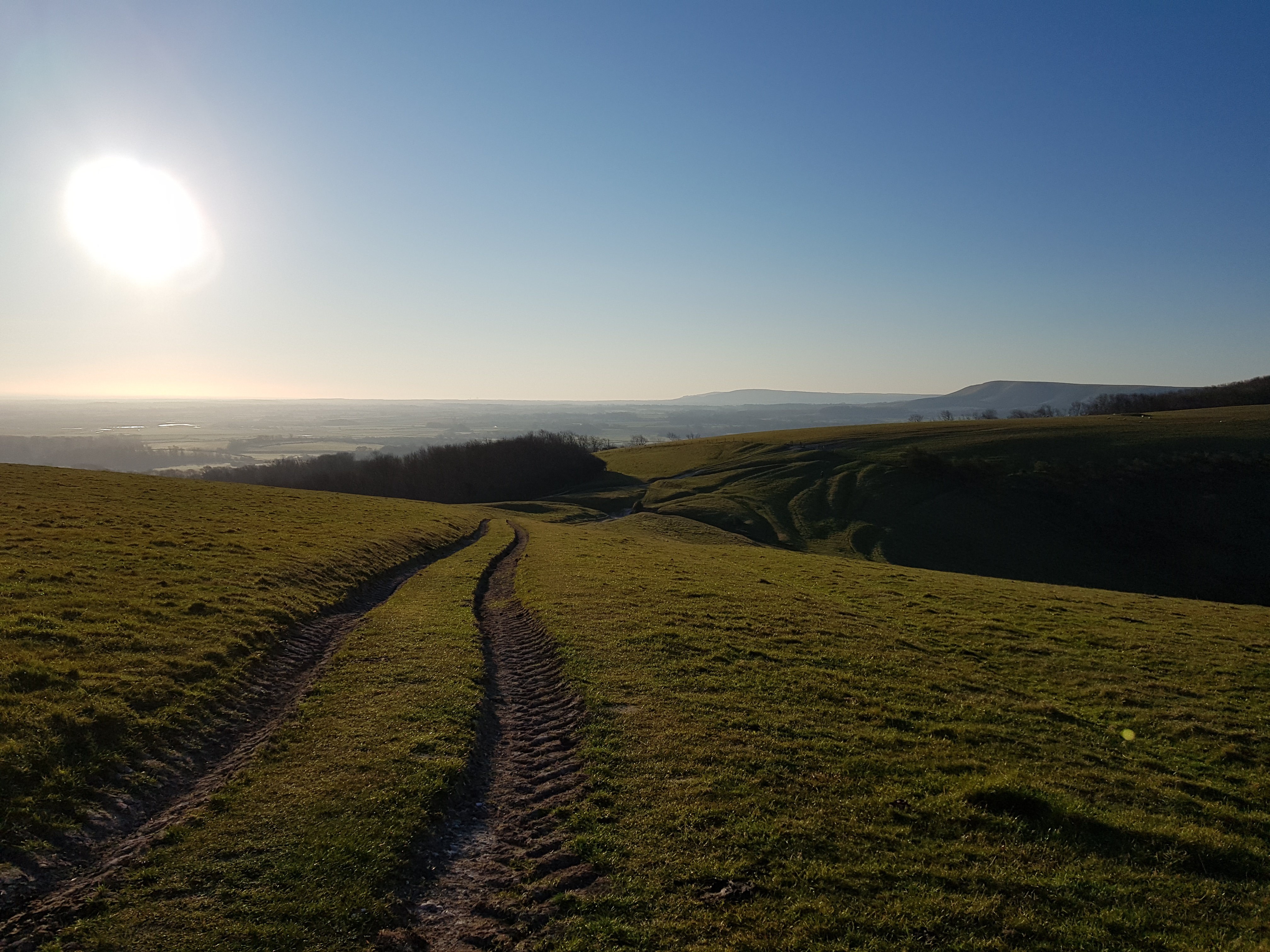
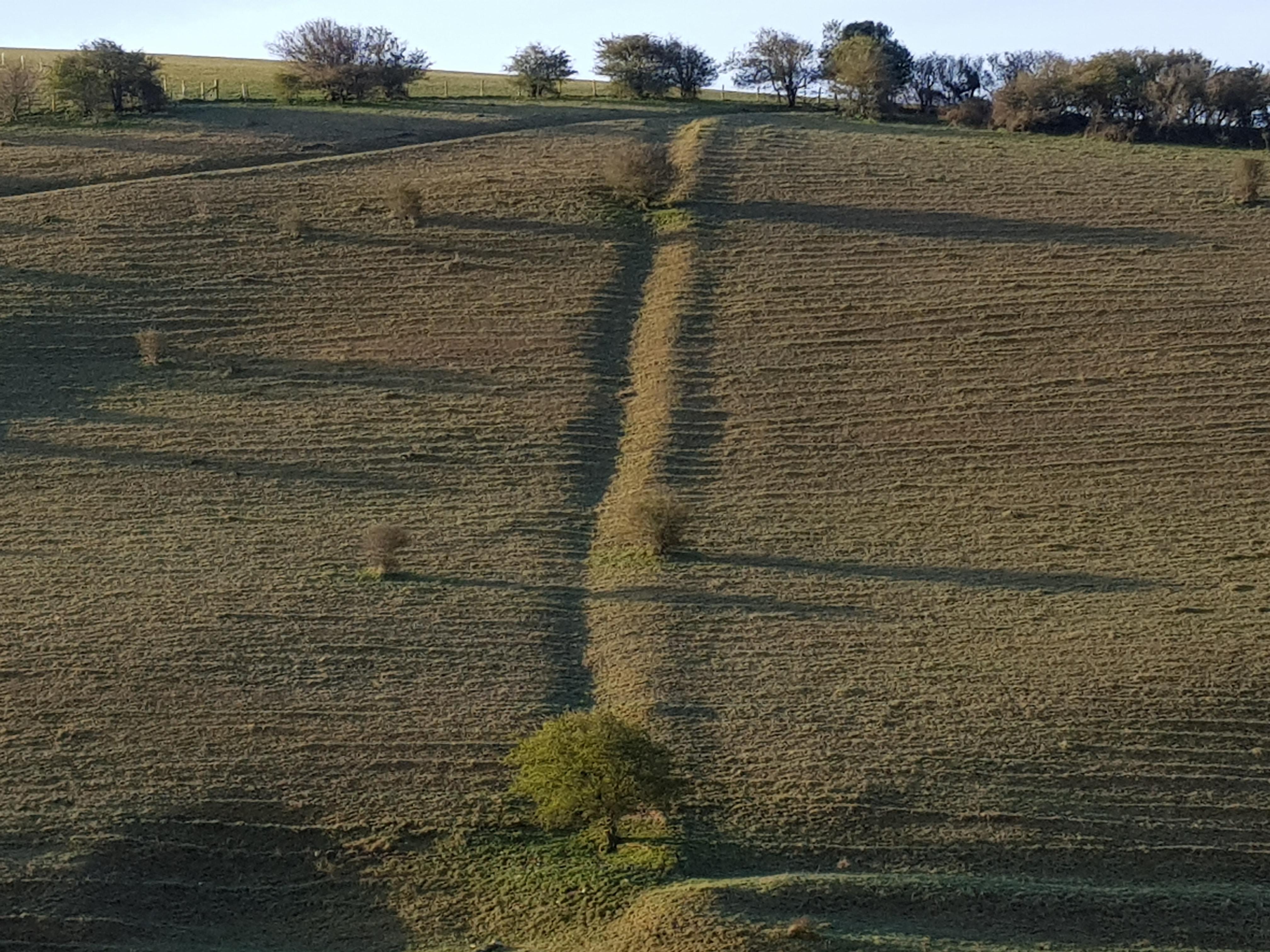
The Crossing.

Featured

Tags

, , , , , , , , , , , , , , , , , , , , , , , , , , ,

A point of crossing has seduced me. Slowly. Irrevocably. Immutably. Emphatically. No immediate and violent passion. It didn’t seize me. I wasn’t fired by it. No turbulent thoughts and painful feelings of loss suffered by its absence or my distance from it.

This point of transition, of crossing, didn’t press itself on me in a gaudy show of beauty, high-mindedness, primitive baseness or dramatic wonder – no, this transition allowed me to alight upon it. In my own time. In my own way. It waited for me.  No ta-da. No trumpets, no fanfare. No hashtag or meme flurry.

This was subtle. Nuanced. A sense of an elegant coercion within it. And I realise now that within that elegance lies the transcendent part of it – barely discernible, vaporous, ephemeral – but very much there.

This makes sense to me. I would venture that transitions are seldom sudden or violent things. Of course we can cite transitions of power – sudden brutal exchanges and bloody un-seatings – where a collective or individual change from one state into another, whether desired or not. The board room putsch; the post-pub brawl. There are many transitions where a violent suddenness is part of the fabric of the transition, an essential element or particularity if you will. But this was not one. 

The richness in my crossing revealed itself over time. Only after repeatedly traversing from one point in space to the other did the deeper, more spiritual sense of the crossing become apparent. 

Each time. Each traversal. Knitting the contextual fabric around it, securing it. A small fractal moment, repeated over and over. Knit one, pearl one. The repeated act becoming an integral part of the fabric of the experience, not just the act of moving towards and away from a particular point. 

As the emotional density and gravity of the point of transition increase with each undertaking, the act becomes an Act. The act of transitioning from one side to the other is rendered into an experience unto itself.

Where the Act of Crossing now stands, a simple set of actions stood. A set of actions with the sole purpose of traversing space in time towards a desired goal, objective, state or destination. In this instance, cold water swimming, the sea-bound kind, was the simple, practical thing I am repeatedly moving myself towards. 

There were clues I suppose, to the profundity beneath the function. Clues to the deeper transitional nature of this ostensibly practical routine. 

When I look back, the idea of my revelation is in itself unoriginal – merely the echo of someone else’s. But then I wonder if that matters; and I come to the conclusion, self interestedly that it doesn’t. Echoes and reverberations through time space and people are fundamental to how we have evolved as creatures. So balls to it. 

This transcendental tale began as I would contest all do, knee-deep in human banality.

In conversation with an old friend of mine, I was despairing a little. My infinite positivity and usually rather annoying glass-half-full-of-itself-ness was stuttering and stalling. The Pandemic had devastated my modus.  And utterly floored me.  

“That bad?”

“And how.  But it’s ok. You see, I walk. I walk religiously every morning. Well. I march to be fair. Marching. Yomping. Sturdy stomping. Up Down and down Down. Until the ferment in my head calms a little, and the noisiness of my mind decreases.” 

Which I did. From Lockdown’s beginning. When my need to commute up to London, sometimes 3-4 days a week, simply stopped. I walked fiercely; fervently, feverishly. Two hours. Sometimes three. On the Downs, lost in my thoughts. Sometimes with the wind against me, sometimes with the mist lying over the plain beneath, like the dragon’s breath of Arthurian legend. But always with nature’s dignity all about me, punctuated by Tick Warning signs, curious sheep and the odd passing hallo.

Yes, there was a sense of lifting, of elevation in these walks, climbing the scarped upsides of ‘pick a Down. any Down’. A sense of elevated connection. But even in the midst of all this beauty and nature’s wonder, there was something missing. The nature of Nature wasn’t quite immersive enough for me – at a base, primal level.

I needed something else. My soul was greedy for nature of a more dynamic, turbulent, flowing kind. Something in me seemed to reach back into the core of my creature self, stirring up an old and primary connection. 

I’d love to claim that, at this moment of revelation,  a higher lyrical sensibility consumed me; a poetic reverie from an ancient memory – but not so. [Though I would claim that the power of the cosmos resides in even the smallest and most banal of moments. In this case, old family photos.]

In the process of clearing out a cupboard I find an old shoe-box full of photos [yes, really: like a bad film script cliché]. Amongst the photos, there it is – a slightly yellowing photo of me, as a child, in a rather dainty tea-potting stance, in red swimmers, on the beach in Genova. 

The moment I see the photograph, I am catapulted backwards [or forwards, or sideways; whichever direction the space time continuum and human episodic memory sends us in]. I can hear the sound of the beach. Smell the warm air about me – and the tang of the sea only a few feet from me. The aromas of the beach restaurant at Capo Marina float past me. Sound becomes sharp, clear. I hear my uncle’s name rattle across the beach intercom:

Telefono. Cleo Paravagna. Telefono.

The sea sound accompanied by the noisy bustle of humanity at the water’s edge. The rattling sticks and handles of the table football players near the bar. The splashes in the small, circular salt-water swimming pool where I probably learned my first swimming strokes. Every memory, living and true, plays out under the watchful eye of the Hotel Villa Park’s pagoda’d roof. I see the formidable silhouettes of the big ships in the distance as they leave the port, passing beneath the sundial shadow of La Laterna, as my brother and I try to guess where in the world these exotic, hulking ships are bound. But above all else, the photograph reminds me of the sheer joy I always feel and have felt in the sea. 

Ever since I can remember, the act of rolling in the spume and briney embrace of her, bouncing through her waves, submerging into her ‘inky depths’ [I am one of Cousteau’s children], twisting and turning through her eddies and bobbing on her tides exhilarates me far beyond the physical.

Looking at the picture, it all seems so obvious. I realise what I need to do. To break the Lockdown blues.  I need water. I need to swim. At the deepest yearning middle of me. I want to swim. I need the cold-water clarity of St Cuthbert. I need sky and the sea beneath it to un-clutter my panicking mind. 

I need the sea to pour into the void left by the utter collapse of everything I understood to be my professional life and direction of travel.

When I announce my need, my friend gives me a deeply practical response. He tells me of a beach where he swims, to help him recuperate from a rather bad bike accident. He explains where the beach is and how long it takes to get there.  He describes the beach very simply. Wide. Deep. Crescented. Pebbled [or stony if you are feeling ‘flinty.’] But a short walk, some two minutes, from a small car park

He uses some words that give it a more emotional context. Unexpected. Calming. Regenerating. But only lightly and only in passing. There’s no lyrical reverie in him. No momentary loss for words. The emotional weight of the place doesn’t create a trough in our conversation.

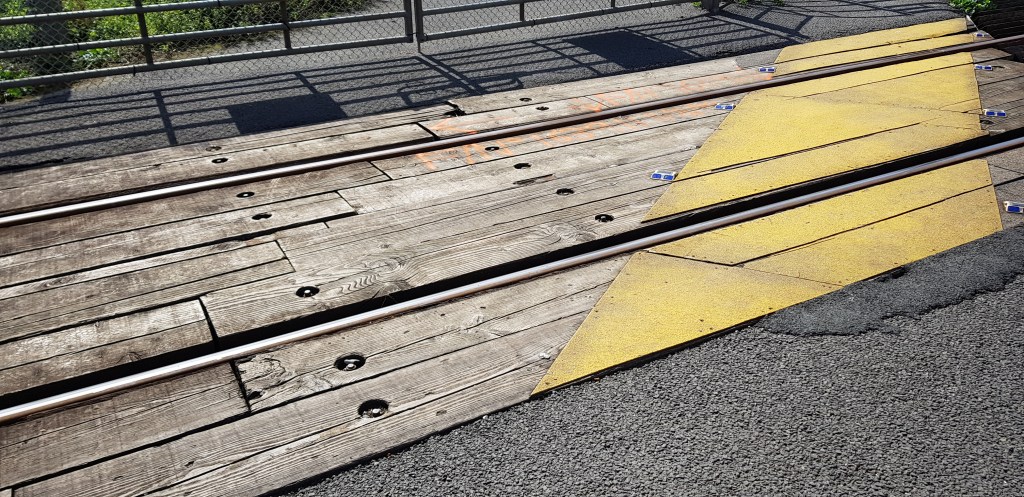
He describes the functional nature of how I get to said beach. Sat Nav. Parking, he suggests, is either to be had at the larger on-road car park. Or alternately, if I’m feeling forthright, pushy, or lazy, there is a smaller strip of parking on the left hand side up near the railway crossing. This is reached by driving up the aforementioned concrete access road lined with shrubs and bushes. 

“At the end of that concrete road” he says, “you’ll find the railway crossing. Cross over the railway tracks, Walk the path. Bob’s your uncle. The sea.

Crossing railway tracks! 

This news thrills me. I’ve always loved crossing railway racks, or tram tracks, or any kind of track. I love the sound car tyres make as they cross them, the deep-set drum flourish and squeaking rubber purchase as the air filled tubes strike the rails. [This is an ancient love in me, rustled up from years of driving across the Continent where rail crossings seemed so much more plentiful and open.]

This brief rhythmic communion with the deeply carved infrastructure of our world has always enamoured me for some reason – these great lengths of steel or iron set into the rock concrete, tarmac and earth of us. Travelling infinitely, into the distance, in either direction. 

Their weight excites me. And the opportunity cast into the form of them. In both directions something, everything lies – another story, another place – something other than where you are in the Now of your crossing. 

The rails’ connection to all those other intersections of humanity, of teeming lives and industry, past, present and future. The connection. The materials and humanity they carry along their lengths. As I contemplate this an insane picture rises up in my head, of places, lands and people tumbling through occasions and moments and happenings both within and beyond my immediate existence, all interwoven and stitched together with rails – rails everywhere, like some insane theme-park ride, all surging upwards like a dramatic curlicued and brilliantly-inked spread of pages in a pop-up book.  

In this crossing lies something else though. Beyond the rush of child like reverie. Something with edges. Something of the creeping crime. In the crossing lies the possibility of Transgression. There is something of the outlaw about being in close proximity to railway lines – and of walking the rails. Mischievous, pioneering – like the young boys in Stand by Me walking towards their destinies, great, small and indifferent. Walking across railway tracks smacks of the Outlier – the intrepid hobo-vagrant, the missionary or the errant child. They are also fringed with darker stuff. The edges of railways lines are lined with the human debris of us, cast both from and in front of the trains. The stories of the dead lie in the shadows at the edges of the railway tracks. There is the chiaroscuro of us in them.

None of this falls from my friend’s lips of course. In his mind, the crossing is a purely functional descriptor – part of the process of getting me from despair to elation. In that he is purposefully precise. Correct. Useful. 

In the first few days of my new swimming regime, I undertake the journey with the practical mindset of my friend’s instruction. I drive to the car park, either road side or the one closer still. I cross the railway lines. Gates clank behind me. I walk to the wide crescent pebbled beach – as a function of going cold-water swimming. 

To begin with there is nothing in any aspect, element or ingredient of the journey to and from the water that is anything other than functional.

The drive through the countryside. The expanse of sky, clouded, low, wistful or otherwise is there as a matter of fact. Even the swimming itself is a gym-deprived exercise regime cloaked in a communing with the sea. Nothing more.

Even when my pedestrian eye for beautiful light makes me pause and capture aspects of the walk through the flinted shadows and echoes of the Mill, viewed over the wildflower and gorsey borders, the penny has not yet dropped in any substantial way. Something whispers to me in the back of my mind but I am otherwise occupied.

The feeling of crossing, the act of transition, physically, materially, temporally, spiritually, comes through in small glints and sparks. Much as the sun scatters splinters of light off the surface of the grey-green sea, the revelations came to me randomly at first, and then, as time goes on and the rhythm of my crossing becomes more regular, so too do the revelations of crossing, of transition, become more regular, more fixed.  

The first realisation is through taste and smell. Unsurprisingly some might say. But there we are. I am a number of days into my regime. The morning journey to the water and the arrival at the beach  is increasingly visually rewarding. But the visual allure has not popped properly yet. I am in the water, slow rolling tide waves moving me in an exotic manner far beyond my own physical abilities or grace.

As I move the moment occurs.  It is the way the salt water feels and smells and tastes on me. As I tread water I am held in the glittering laser beam of morning sun streaming across the water towards me. The air shifts. Warms. The salty taste and smell of the sea water cracks into a memory. I am young. I sense the sea. The smell memory is overwhelming. Behind it comes a splinter of every warm-air, salt-water, sun-scratched memory – a rush. I feel my body change as an electric charge bolts through me momentarily. It is exhilarating. 

And it comes to me.

I feel like a Russian doll. The shells of previous increasingly younger, other mes lining the inside of the other all the way back to the first time I would have been dipped in the sea and anointed with her salty divinity. 

My recollections – of the nature of the sea, my immersion in it, and of the scattering of sun across it, its interplay between the clouds and sky above it, and the rocks and sand beneath are informed by something other than by the wells of sentimental data stored in various corners of my mind. 

I do not trust my own memory to have such depth and expanse. Even though many papers and articles and studies point to the incredible faculty of our episodic memory and what it is capable of retaining.

I am certain that my earliest technicolour memory of sea water, is largely informed by the kodachromatic photographs of my childhood – those snapshots of existence – which I have then subsequently codified into ‘memory.’ 

It must be photographs. Of me as a baby in my father’s arms as he stands at the edge of the beach, rolling sea water glinting beneath his feet and into the distance. Various tableaux interleaved with each other in various shoe boxes. Of the beach at Capo Marina. Various people, in their youth, bright floral 60s bikinis and swim suits, about me as a baby, as a child. And the sea always there, nearby. The glinting sea below at Portofino. The sandy Paraggii beach with the crescent road. Cornish waters with the grey stone hotel standing on the cliffs above them. The beach at Weston SuperMare with Renee, my brother’s and my long-time babysitter and sometime nanny. Every one of these images, singed and tinged with sensorial data and emotional memory, flood into the space in my head and heart triggered by the salt edges in my nose and my mouth, and across my skin. 

Finishing my swim, I feel quite electric. Time to return to ‘reality.’ I hear myself say. Hmmn. ‘Reality.’ This shift seems to be pervasive. From my physical and mental sense of it out into my phrasing. I am seeding the language I use about this place with otherness.  

I traverse the crossing. Gates clank. I return to my car. Something has shifted. Small tectonic plates within me and about me have moved, ever-so slightly. The sea and the beach have taken on a different role for me, suddenly stitched into my myth. A sense of otherness has developed for me here. The utilitarian nature of traversing the railway line has transformed into something richer, deeper.

The small concrete road up to the railway line. The railway line itself and the gates at the crossing either side of it. The borders of the derelict Mill strewn with thick gorse, hawthorn and blackthorn and wildflowers. This coming to the sea feels as if it has multiplied in depth by multiple lifetimes.

I feel the relativism of it, the connection of myself in relation to the now derelict and deserted mill buildings, and those that lived and died here. It feels overwhelming. And beautiful. 

These moments, experiences or happenings have now become regular, each quietly overwhelming or increasingly profound  in different ways. I realise that I can perch at the edge of the water here and, in turns, all time becomes Now. Salt on my skin, and the sea air in my nose. The horizon fizzes – starts to feel particular. The clouds become timeless; become the same clouds I have looked at since arriving in this world – rolling, turning, folding, dissipating, building, streaking, patterning themselves. One day – subtle shifting formica patterns. The next; a chevroned pattern shuttering above me as if a celestial tractor tyre has imprinted its tread across the sky.

All time is Now.
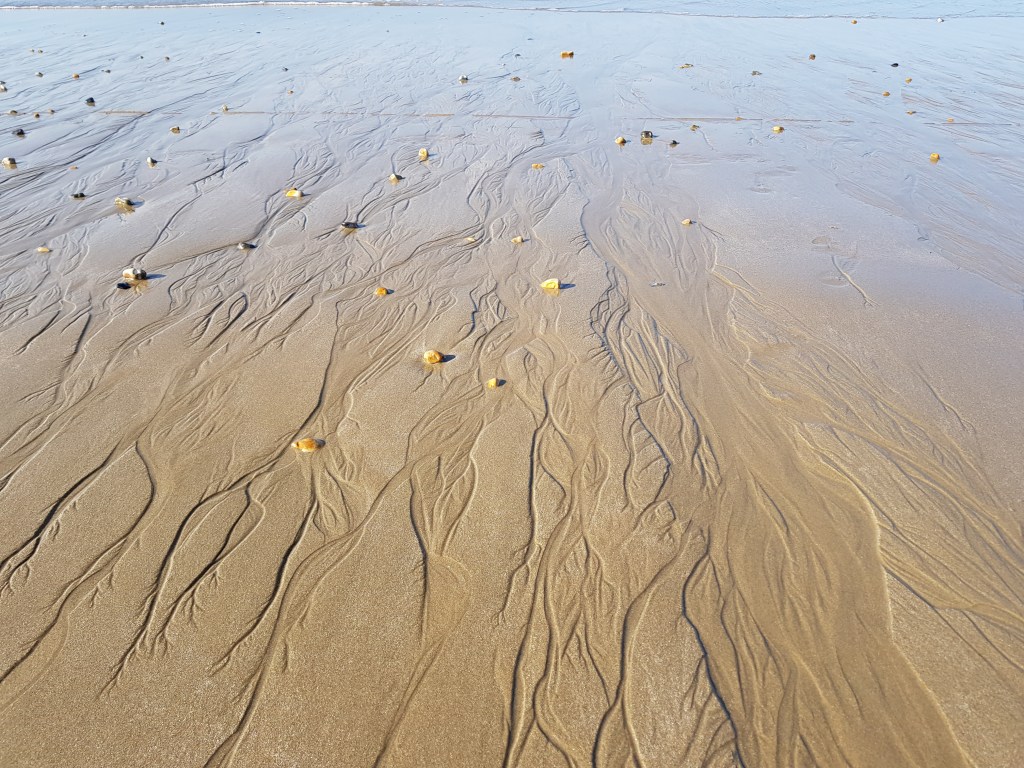
I turn my head slightly to the left and the soft wind blows over Thurlestone beach against my 13 year old face, as I watch the edge of the sea hit the sky, the voice of my mother calling me to lunch from across the paddock field behind me. I turn my head slightly to the right as the motor boat pulls the skier in the distance, and I am simultaneously on the prow of the boat post-ski in Ibiza, saltiness baking into me, and my tubes still filled brimming with the salt water my face smashed into when the cosmos, tiring of my showing off and conceit, decided to trip me in a defining act of enforced and inelegant humility .

The salt tang and breeze about me creates a constant re-cloaking in shards of my life and other deeper ones I cannot fathom. The churning water off at the mouth of the Hanalei river. The blistering light over Bantham beach. The Indian Ocean’s tealy iridescence after a storm. The frothing topped Tasmanian Sea on a spring evening. The salted sandiness of Paradise Cove and the municipal beach at Huntingdon. A freezing monkish baptism in the North Sea in a Northumbrian spring, playing out across an endless expanse of sand beneath the warm sun-struck sandstone of Bamburgh Castle on its promontory.

Every immersion in every corner of the staggering entity that is earth’s singular ocean has informed and shaped me someway somehow.

Not only am I child of Cousteau and his expeditionary wonders aboard the Calypso but also of Attenborough and his natural world and the blue expanses of it. And of the wonder of my beautifully tooled pop-up book, of Jules Verne’s 20,000 leagues Under The Sea, which I immersed myself in as a child. The film of the same name with the majestic James Mason as the wise, capricious and flawed Nemo. Moby Dick. Call me Ishmael. Again, translated into a formidable 1956 epic of the same name, its salted obsession and creature madness fuelled by Gregory Peck’s masterclass Ahab. A mind filled with the puppeteering wizardry of Troy Tempest, Marina and Stingray. Marine Boy with his oxy-gum and twanging psychedelic theme tune. The deep memory imprinting of the magnetic boouuuu boouuuuu boouuuuu of the sonar emanating from the ray-nosed submarine in Voyage To The Bottom of The Sea, the immutable Richard Baseheart’s stern, troubled expression reflected in the blue void of its deck viewing glass. The pop cultural plotting points of my sea-bound psyche pour in from all quarters.

A sense of the seas’ natural wonder and fantastical nature has been instilled in me from a very young age. But there are things of the sea that vibrate through me that reach far beyond the warm ebbing and flowing of Attenborough narratives, seminal sea books and the pop cultural referencing of my young TV life.

The sea runs through me, spiritually, physically, temporally and genetically. I have Genoese blood, which should be sea-faring enough for my purposes. But in doing research for a book a few years ago, I discovered the simple scientific truths that mark our connection to the seas. The similarity between the salt levels and ions in our cells and in our blood plasma and those in sea water are seen as evidence of our evolution from and connection to the oceans. Human fat density, make up and ratios are very similar to those of cretaceous mammals and a world away from our ape cousins. We also potentially share the necessary crypto-chromes for magneto reception and navigation, though it is felt that we civilised ours out of our everyday lives long ago.

I find these facts and theories astonishing yet unsurprising. They add colour and depth to a deepening sense of wonderment in every journey to and from the beach, 

But the taste smell and rub of the sea is just part of this. There are aspects of the beach and sea beyond the crossing that, for me at least, add to the transitional, the transformative and ultimately transcendent nature of it. 

The beach sits, in a somewhat surreal manner, between two very distinct and very British things. 

Looking from sea to land, to the left lies a small working port – where fishing boats and ferries crisis-cross out of the estuary and harbour mouth into La Manche. From the beach and in the shallows, before the sound of the water envelops you, it is possible to hear the wheezing, clanking industry of it all: the clattering release of anchor chains, ships horns, clattering endeavour, the scrap-yard claw wrenching and grinding clutches of metal wrecks and rubbish from one corner of the yard to the containers and crushers in the other. Humming cranes. Distant engines. At its edges, rows of housing braid the hills, off-set with anomalous ‘beachside’ apartment developments. A small drilling rig, out of commission, sits hunkered down on its legs, an old sea fort set into the cliffs above it. 

Looking to the right, just before the white cliffs climb up and into view, lies what can only be described as a most quintessential sea-side town. Part resort, part dormitory, with a mixture of architectural styles one only ever finds in British sea-side towns. This place feels both timeless and lost in it. Sea-side towns in this country have a remarkable melancholy about them. Even when bathed in sunshine and light, the memory of that melancholy, and the inevitability if its return pervade its being. Sea-side towns wear the tenure of sometimes brutal and unforgiving human existence where the land meets the sea. These towns and the settlements that lie beneath them are riddled with the fragile truths of human endeavour and the indifference of nature and her oceans to the passing of our time here.

To one side Brutal utility and to the other an elegant melancholy. And between the two sits the beach. The crescent pebbled beach. And while swimming something struck me. 

The beach sits like an unfinished piece of collage. To the left and right of it pictures and fabrics and textures have been applied, richly, clumsily, workman-like, with gentle artistry or brutal utility. All about it has been ‘coloured’ – with the sea beneath it and the sky above it. The derelict Mill and settlement behind it is defining – a solid something. Even the lighthouse has a charming simplicity – the kind of lighthouse a child would draw at the edge of their seaside picture.

But the beach itself? 

A magical oversight. Exquisitely unfinished.  As if the collage maker was suddenly called away, just for a moment, distracted. But the moment passed into months and years and then decades. And became a lifetime. Leaving the beach as a simple a fabric, a speckled flax of stones and rocks. The raw material of something. 

Perhaps it is the nature of the beach as a work-in-progress that invests the experience of transition – of crossing – towards it into something seemingly metaphysical – capable of weaving and stitching its own folklore and gentle piety while time suspends itself, hung either side of the beach in purposeful waiting.  Perhaps it is this otherness of the beach’s nature that gives a Narnia-like quality to the crossing. 

Otherness is a theme here. The land and sea scape fizzes with it. Each time you move through it, it is different yet the same. In a certain light at a certain time, derelict mill buildings in East Sussex suddenly resemble the derelict farm buildings at the edges of airport runways in the southern-most latin countries. Landing strips at the edges of cities, carved into the rural surround. Vestigial echoes of lives once hewn from a land now veneered with the petrol physics of aviation, global travel and the need for our metal birds to alight somewhere. The light, momentarily crisp and blued air can turn in an instant – and a warm African reddishness run through it and across the foliage and flint. Or, as the blue deepens above it, the whiff of a New Mexico morning alights upon it.
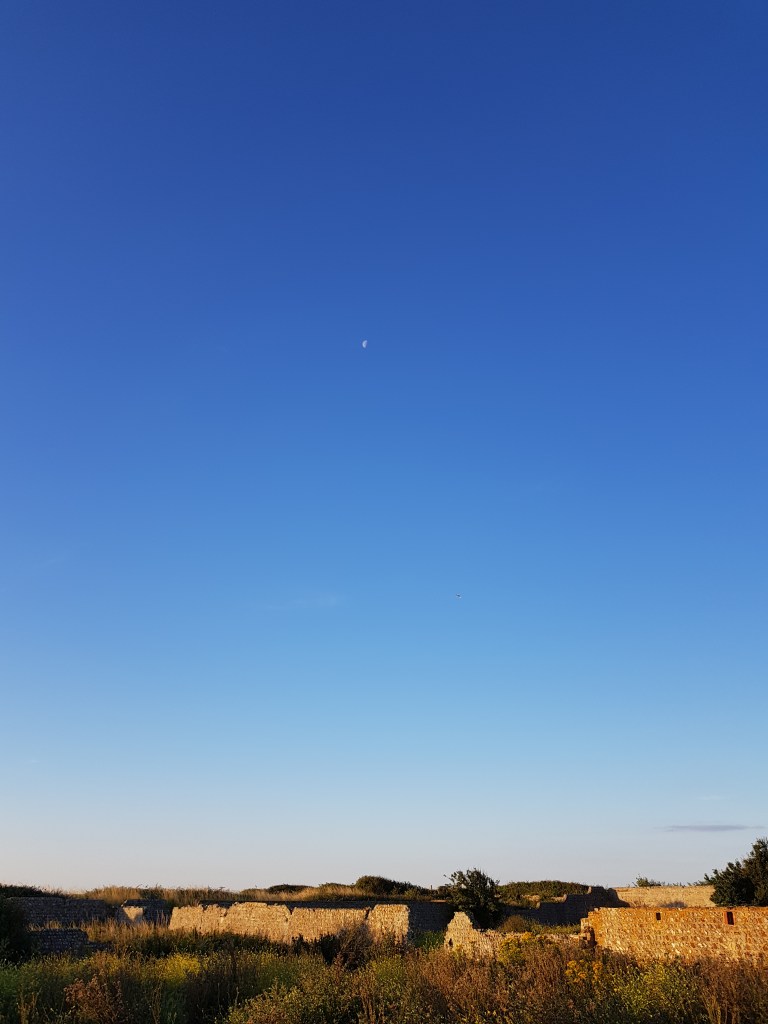
Otherness marks this place. Otherness makes a beach you reach across a railway crossing, slung between two very different types of seaside town, tucked along a B-road on the south-east coast of England an extra-ordinary place. 

Perhaps this is why it appeals so deeply to me. Because it plays to the sense of other in me. Something I’ve always felt. A sense of not quite belonging where I am, or to who I am or what I am.

Nothing dreadful. Quite the opposite. Something I’ve celebrated. Almost to the point of an arrogance. A quiet sense. Small. Momentary. Passing. infinitesimal sometimes. A twist in the lens of life. As if the picture is slightly skewed; askance, something different about it. The spectre of some hand at work. Perhaps that sense of not quite, of difference comes from within. A simple rather mundane irregularity in the fabric of me. Or perhaps it comes from growing up in a very provincial English village with a mother who is ‘foreign’ and a father who is ‘racy.‘  Perhaps it’s the reverberation of my parents dreadful schism, separation and deeply upsetting divorce, when the lives of all those about me seemed to simply roll on, secure in their banalities and routines, while mine seemed to inexorably stumble and crumble into some slip-shifting divided life, ferrying between two homes and selves. Perhaps this is from where my sense of sympathy and syncopation with spaces of transition comes. This relentless crossing between selves.

Perhaps that is what I do here. I use the crossing and the beach as a way of relentlessly reliving and, in doing so, reiterating my sense of other – recharging it, replenishing it, reinvigorating it. 

My morning swim is a way of communing with that otherness. My own and that of the merfolk that inhabit the beach most mornings. Each of us, either individually, paired or in clusters and bunches, each of us with life happening to us, for us or against us in some way or other, gather up on the beach, a mercurial event, under the infinite possibility of nature. It is a celebration of otherness, each marching to the beat of a highly individual drum, yet, we gather.

A lost tribe of Other. Finding itself on a beach, in East Sussex. 

But therein lies a different more expansive story, far greater than this small essay on the seductive qualities of a crossing near a beach.

Language, Loops & the disarming human truth of everything AI.

Tags

, , , ,

So, AI is the answer to everything. Great. Slightly over simplistic in my opinion, but then again, I don’t own a social platform, an e comm business, a sprawling call-centre overhead, or a global AI solutions leviathan.

I spend most of my time at the punter end of the conversation: wrestling with myself in a desperate search for ‘contact number, any contact number’ while trying to communicate with yet another incommunicable agentic brand or business.

It’s hard to fault them. They’re just doing what all the messianic AI apostles, prophets and investment houses are telling them to. The quietly catastrophic impact of Agentic AI on the more visceral side of customer experience is yet to fully surface – and the jury’s out on to what degree and to whom it will happen. But down at the punter end, when one applies the ‘Pub Rules’ model of research methodology, it is quite normal now for any person on any given day to bemoan their inability to ‘speak to a human’ – especially when there is a problem.

At this moment of mass migration by companies to everything AI, it’s worth reminding ourselves of the prescient words of one Daniel C Dennett. In his refutation of the slippery slope towards the singularity and a dystopian future of machines ruling humans, he makes a very simple and universal point.

It’s not that AI will take over. Its that we will cede responsibility to it before it is capable of doing what we think it can do

Well, there certainly is a lot of ceding going on at the moment – and a lot of ‘well, that’s not really living up to the hype’. The gold rush mentality of companies, brands, and businesses integrating AI into every corner and layer of their operation under the guise of improved customer experience is, in some instances breathtaking. But all too often these are really just ‘stealth’ cost-cutting dolled up in the dressing up box of better CX. And the rigour applied to ensuring that they do not ‘collapse’ the very thing they claim to do – improving customer experience – is often non-existent in this rush to ‘optimisation.’

So what to do?

Well, change the strategic framing model for one. The inhumanity inherent in many AI solutions is primarily driven by one tiny snippet of language that has become the norm in every AI transformation meeting. A piece of language that sets all AI and tech above the human – and subjugates them to a secondary or tertiary role in the whole shebang.

The Human in the loop.

This is the source code of AIs ghettoisation of humans – compelling them to be forever seen as operating under and within its gift. If we are to define a more optimistic, fair, and ethical model for the proliferation strategies of AI, I’d suggest that we need to create a counterpoint to this framing. One that compels every potential AI transformer to consider the human as primary.

My recommendation?

The Loop in the Human deployed as the leading tenet.

I pondered this as a theory. Then I chose to explore it more formally.

So below is a friendly little proprietary White Paper exploration [aided ironically by AI – in service to my ideas of course] on how that new and more balanced strategic model might play out.


The Thin Air Factory 2025: White Paper Case: The Dual Framing of Agentic AI Strategy

EXECUTIVE  SUMMARY

This white paper introduces a “Dual Framing Strategy” for Agentic AI, arguing that the prevalent “Human in the Loop” (HitL) approach is necessary but incomplete. HitL, an AI-centric viewpoint, focuses on automation, risk mitigation, and error handling, positioning humans reactively as validators or correctors.

The paper proposes “Loop in the Human” (LitH) as a human-centric strategic framing. LitH re-establishes AI’s philosophical driver as the augmentation and empowerment of human performance, making humans proactive co-creators and strategists.

A complete Agentic AI strategy combines both LitH and HitL. LitH defines success through proactive human-driven excellence and elevated human performance, while HitL defines safety through reactive AI-driven governance. This dual approach ensures that the pursuit of efficiency doesn’t diminish human capability and that oversight doesn’t hinder augmentation, leading to a balanced and effective Agentic AI implementation.


The Dual Framing of Agentic AI Strategy

This paper seeks to posit that current strategic framing of Agentic AI, dominated by ‘Human in the Loop’ (HitL), is a necessary but ultimately one-dimensional strategic posture. It reflects an AI-centric viewpoint that prioritizes automation, risk mitigation, and error handling—a critical but incomplete view of the human-AI partnership.

The white paper will argue for the introduction of the proprietary, human-centric term ‘Loop in the Human’ (LitH) as the primary strategic framing for all Agentic AI initiatives. LitH fundamentally re-establishes the philosophical driver of AI: the augmentation and empowerment of human performance.

Only when LitH and the complementary HitL are used in conjunction can an organization achieve a complete Agentic AI strategy that balances human-centric augmentation with AI-centric safety and control.


1. The Limitation of ‘Human in the Loop’ (HitL)

The existing strategic discourse is heavily weighted toward HitL, which primarily functions as a guardrail for autonomy.1 Academic and thought leadership publications consistently frame HitL around concepts like:

  • Risk Mitigation and Accountability: Embedding human judgment at key decision points to safeguard reliability and ethics, especially in high-stakes domains (OneReach, iMerit).2
  • Error Correction and Edge Case Handling: The AI agent escalates to a human when its confidence is low, the context is ambiguous, or a task is beyond its current capability (Medium, WorkOS).3
  • System Refinement: Using Reinforcement Learning from Human Feedback (RLHF) to align AI behavior with human values and goals (OneReach).4

This framing is indispensable for safe deployment, but it is architecturally and philosophically reactive. The human’s role is to intervene, correct, or approve—acting as the system’s fail-safe, censor, or validator.5 This emphasis on preventing failure misses the strategic opportunity of driving success.

The current HitL strategic framing, while essential for governance and risk management, fails to capture the proactive, creative, and augmenting potential of human-AI collaboration.


2. Introducing the Strategic Lens: ‘Loop in the Human’ (LitH)

‘Loop in the Human’ (LitH) proposes a paradigm shift from viewing the human as a failsafe to seeing them as the proactive, value-creating engine for the Agentic AI system.

LitH is a strategic framing defined by its Human-Centricity:

Focus Area‘Human in the Loop’ (HitL)‘Loop in the Human’ (LitH)
Philosophical GoalSafe Automation and Risk MitigationHuman Augmentation and Value Creation
Human RoleReactive: Validator, Censor, CorrectorProactive: Co-creator, Strategist, Commander
TriggerAI Failure/Low Confidence/High RiskHuman Intent/Strategic Insight/Creative Need
System OutputReliable, Safe, Aligned DecisionsElevated Human Capability, Novel Solutions

LitH is supported by principles from Human-Centered AI (HCAI) research and the concept of “Human-AI Teaming”:

  • Elevating Human Agency: Research in designing Agentic AI emphasizes that systems should be built to complement human expertise and elevate human agency, not supplant it (ResearchGate, UST).6 LitH captures this imperative by defining the human’s role as the system’s “Commander”—directing goals and providing the high-level intent that the agent then executes.
  • Proactive Collaboration: The concept of AI moving from a ‘tool’ to a ‘co-learner’ or ‘peer collaborator’ aligns with LitH (arXiv). LitH is the design mandate that ensures the human initiates a creative feedback loop, such as providing an unpredicted strategic correction or an ethical override based on non-quantifiable domain experience, thereby driving the agent to a better-than-automated outcome.
  • The Philosophical Driver: LitH re-establishes the service mandate of AI—that the agent’s purpose is to amplify the user’s performance and knowledge, rather than the user’s purpose being to train or validate the agent. This aligns with the Industry 5.0 shift towards human-centricity, adaptability, and ethical AI integration (Amity).

3. The Complete Strategy: Conjunction of LitH and HitL

The full strategic potential of Agentic AI is unlocked only when the two lenses—LitH and HitL—are combined into a Dual Framing Strategy.

Strategic AxisPurposeFraming Lens
Augmentation & ValueProactive Human-Driven ExcellenceLoop in the Human (LitH)
Governance & SafetyReactive AI-Driven SafetyHuman in the Loop (HitL)
  • LitH defines Success: The strategic objective is defined by the human’s elevated performance (e.g., faster innovation, better strategic decision-making, personalized outcomes). The agent is designed to proactively “loop in” the human for strategic direction, novel inputs, and creative collaboration.
  • HitL defines Safety: The governance objective is defined by preventing failure (e.g., mitigating bias, correcting hallucinations, avoiding non-compliance).7 The system is architected to reactively “loop in” the human at points of risk and uncertainty.8

By adopting this Dual Framing, organizations can explicitly decouple the AI’s operational strategy (governed by HitL) from the Human’s value strategy (driven by LitH), ensuring that the pursuit of efficiency does not erode human capability, and the need for oversight does not stifle augmentation.


Conclusion

The existing reliance on ‘Human in the Loop’ presents a strategic blind spot, framing Agentic AI primarily as an automation challenge to be governed. The introduction of ‘Loop in the Human’ offers the essential counterpoint: a human-centric mandate that frames Agentic AI as an augmentation and co-creation opportunity.

The case for the Dual Framing—LitH (Proactive Augmentation) and HitL (Reactive Governance)—is supported by the emerging consensus in academic and industry papers that effective Agentic AI requires systems that both elevate human agency and maintain clear accountability (Capgemini).


So, there we are. A provocation? Maybe. A model that can be immediately deployed? Most definitely. A small step towards rebalancing the madness of AIs the answer now what’s the question. Without question.

But its one primary role above all others: to help us avoid ceding responsibility for everything to AI with no meaningful interrogstion of how that serves the human first and foremost.

Every transformative technology, from language, glyps, writing, and printing onwards, has always had to take time to shake out its bugs and weather the abuses of those who use it to favour the few, not the many. But they got there. It takes time. Thats what we need to create if we are to off-set the worst applications of AI in our shared human existence – the time to interrogate its most meaningful application beyond cost saving and control. And we might start by using strategic tools to keep reminding ourselves whom AI is in service to.

Loop in the Human anyone?


Julian Borra is a creative writer, strategist and published author with a soft spot for culture, purpose, sustainability, tech, and Pub Rules.

AI, an Endangered Species & The Immortal Dinner

Tags

, , , , , , , , , , , ,

On the night of December 28th, in the year 1817, B. R. Haydon – by all accounts a rather eccentric British painter – gave a dinner party in his painting room in London. He invited, among others, three of the greatest writers of the age: the poets John Keats and William Wordsworth, and the essayist and wit Charles Lamb. Over the course of a long winter evening, they recited poetry, indulged in the high art of conversation, punctuated with antics both ridiculous and absurd. The evening was filled with such displays of brilliance and wit that Haydon’s party came to be known as The Immortal Dinner. 

In a podcast conversation recently with Maryrose Lyons from the Institute of AI Studies, I entered the conversation ostensibly as ‘an endangered species’ – the creative writer in an increasingly AI driven world. In a very pleasant and robust conversation with Maryrose, I ventured some of the ways in which writers can change their lens on AI, and understand more clearly how they can use it as a ‘buddy’ or tool. So with Haydon’s Immortal Dinner in mind, I thought I’d share where our conversation netted out .

Firstly, on that Endangered Species thing, if we listen to the AI doom-gong of some, my professional life is apparently all but over.

AI will not only eat mundane repetitive production line and back-office tasks by the gazillion – it will also consume the flowery likes of me along the way.

Why pay some ink slinger, or hack top-dollar to shape nuggets of written joy either large or small when an algorithm can do all the work at a fraction of the cost? Just think: all those by-lines, pop ups, adverts, blogs, essays, speeches, white papers – and that’s before we even get to the whole teeming slurry pit of marketing content that fills the platforms and networks on which we live – all done without one whining writer or transaction? Pretty compelling really – and it’s a fair cop. Our species are the shapers of the world we live in, so the adage of making beds and lying in them holds true enough. We are the architects of our futures, both good and bad – and sadly, more often than not, it tends to be the bad we focus on most.

The ‘bad’ are not always misguided or hysterical – some perceptions of AI  make an interesting point. In conversation with Laird Hamilton, legendary big wave surfer and water man, with whom I co-authored a book called Liferider, he touched on a theory of his that’s worth repeating. His theory is that ‘however good things are’, as a species, we always find a way to mess things up – and that AI is just the next phase in this series of species self -harming. It’s as if, having used our awesome protein computer brains to become the Alpha Predator on the planet, we suddenly realised that we’d created a flaw in the ‘order of things’. We realised that we needed to create a new Alpha Predator to maintain the ecosystem – as if we knew that, without a predator to test us, our evolution would stall in the face of our misuse of all that we’d created. So, we came up with a new predator to ‘thin the herd,’ keep us optimal and maintain the natural order of things. Take a bow, AI.

A powerful idea simply put and not that far fetched.

But.

There are three things that make me believe that, certainly for my shade of the species, extinction of purpose through AI is not a foregone conclusion. But we do need to accept that it will be very bumpy along the way – we live in the times we do.

As Ian McGilchrist pointed out in his book The Master & his Emissary, we are living in a Left Brain Tyranny now. Our seemingly unquenchable desire to use every technology we have, especially our new computational ones, to measure, manipulate and control everything from the universe to human behaviour to shopping basket suggestions is ascendent over the softer humanities and Right Brain creativity. In this world, every human action and task is a cost to be parsed, written down or extinguished in our fetish for ‘best maths homework ever’ – and a pat on the head of course, from whichever ‘teacher’ is marking our homework, whether they be shareholders, CFOs, Investors or simply the person in charge of calculating exco bonuses.

Creative Extinction Rebellion

So, what are these three things that make me think I can survive under, and indeed flourish in the face of this tyranny of AI?

What are the three things that make me believe that ‘creative doers’ like me can evolve and adapt within an AI world and, in real terms, use the ‘enemy’ to elevate and improve themselves, their value and their possibilities along the way? 

The first: The Company We Keep concerns the solitary nature of writing, creative exploration, and the absence of creative socialisation. The second, A Bigger Train-set, concerns the Application of one’s creative abilities and the art of evolution. The third, Fuelling the Fire, focuses on the need for AI to be relentlessly fuelled by new creative content and ideas to stay optimal and avoid its own form of endangerment.

So, here are my expanded thoughts on the survival of my breed:

1. The Company We Keep

Creative writers live in an isolated bubble, mostly. Yes, for a period of some 50 years, vast numbers of us of a less purist and more commercial bent sat side-by-side with our art directors and designer cousins in large agency organisations industrialising our crafts, and playing with and executing creative communications of every shade and hue for local and global ‘brands’, organisations or businesses.

Many did this from a rather privileged and well rewarded position. This bright, noisy creative machine exponentially grew under the watchful eye and once bulging bank accounts of advertising, PR, Marketing and Design agencies.

These creatives served the rise of ‘the consumer citizen’ and created a landscape hungry for more of their wares. But the computer age, the internet, mass digitisation, and flexible and remote working has returned many of them to their solitary desks, writing pads and keyboards.

For some creative writers this is bliss. The splendid isolation of it fitted with their ‘lone tortured artist in search of creative pearls’ narrative. But for many, the absence of the serendipitous creativity that existed in socialising their ideas amongst a group of like-minded people every day has narrowed their view’ of the world, their role in it, their craft, and ultimately, the ideas they generate. That’s not good.

At this juncture, many of those writers feel that AI represents just another nail in their creative coffin – the super accelerant of their demise.

But, for me, it offers the opportunity of not only expanding the creative company we keep and bringing the most diverse set of minds to bear on whatever we do, but also seeing our ideas through the eyes and pens of some of the greatest writers the world has ever known, forcing us to raise our bar again and again.

Which brings me to The Immortal Dinner part of the title. In the absence of a set of workmates and a big shared table, we can now use AI to create our own Immortal Dinner, all in the tap of a computer key.

A creative writer can take any creative phrase, description or idea, and feed it into even the most basic ChatGPT with a request to have the phrase rewritten in the words of the likes of Malcolm X, Margaret Atwood, The Bard, Graham Greene, Jumpa Lahiri – anyone that takes your fancy. Five or six goes at that and voila! You have created your own immortal dinner – where your shared idea has been reimagined through the eyes and words of another’s genius.  Cheeky? Maybe. Cheating? Not at all. 

As an example: to test the edges of a creative concept line I’d developed to explain genomic science in a more compelling, ‘feeling,’ and human way, I invited Jumpa Lahiri, Shabba Ranks, Margaret Atwood, The Bard, JP Donleavy, John Lennon, Iris Murdoch, Bill Bryson, and John Betjemen to my ‘Immortal Dinner.’

The outcome was swift and exhilarating. It opened out other avenues of language and phrasing, and creative thoughts around how different minds, communities, cultures, and eras might see the same thing. It was a dip into the eternal and universal.

Just for fun, I’m going to leave the responses anonymous – see if you can guess which one is which.

My Phrase:

The source code of our humanity.

ChatGPTs responses:

“The intricate design that governs our humanity, subtle yet profound in its influence.”

“The melody that writes our human story, the notes that make us who we are.”

“The quiet script that shapes our humanity, woven into the fabric of who we are.”

“The intricate manual that underpins our very existence, full of quirks and complexities that make us undeniably human.”

“The rhythm and root of our human core, the heartbeat that makes us true.”

“The raw, tangled code that makes us human, messy and marvellous all at once.”

“The blueprint that threads us together as human.”

“The essence that scripts our mortal soul.”

“The very script of our shared human heart.”

So, to summarise the ‘first thing’: For a writer, AI platforms, even the most basic ones, enable creative writers to effectively socialise, hone and explore their creative ideas amongst some very rare company. The machine mind doesn’t provide the answer – but it provides a sophisticated sounding board that enables the writer to ask better questions of themselves and their creativity. What’s not to like?

2. A bigger Train-set

So, to our second point, and AI’s potential to expand and evolve the application of a writer’s craft.

generative AI can help transport a creative writer’s ideas into new channels and skill sets they had otherwise never touched, explored or deemed to be in their ‘wheelhouse.’ This second point focuses  on how generative AI can build both commercial resilience and creative possibility at one and the same time.

For example: many commercial writers harbour fantasies of writing a novel or a movie script [though given that Hollywood is in melt down right now, this might be worth shelving for a while at least – Oh, and it’s all AI’s fault.]

Often, the lucky ones will take themselves back to college or, at the very least, embark on a writing course or two. BUT. Both of these options are expensive and time consuming – and if you’re struggling with bills, time poor, or have children or relatives to care for, the luxury of wafting off for a 7-day orgy of self-interested literary self-development, though a very attractive proposition, may well be beyond you. Fear not. ChatGPT to the rescue.

Basic generative Ai platforms can take a rough film treatment of yours [as long as it is well fleshed out, with clear scene structure and well-developed characters], and convert it into a very rough foundation form of Final Draft [a tyranny to those who know it] With one click, you can start to see how your idea falls on the page in script format. Again. It isn’t going to write The Ipcress File for you, or Slumdog Millionaire [unless you ask it to write your script in the style of those films]. The film idea has to be strong first and foremost – otherwise you’re just creating algorithmic ‘noise’

One simple way to test an idea that might be bobbling around in your head is to play with the core idea of it. For example: if your idea is basically Hamlet but played out on a Cruise Liner as a comedy, start by asking ChatGPT to rewrite Hamlet in the style of a sitcom by a TV comedy writer you revere: Armando Iannucci? Sharon Horgan? – take your pick. The result may be madness [but in a way, for Hamlet at least, that would be quite fitting]. This is a simple and quick way of testing an idea to see how much stretch and flex it has in it – and ultimately, whether you still feel excited and enthused enough to put in the leg work to bring it to fruition. The desire and perseverance required to realise an idea fully demands an absolute belief in what you’re trying to do – AI might help tip the balance.

In more particular terms, you can dive into very specific explorations that mix the immortal dinner idea with very particular disciplines to help you to develop voice and tone through comparison. There are a lot of genius screenwriters and their work out there to mine – William Goldman, Elaine May, Joel Cohen, Frances Marion and Tarantino to name but a few. They are masters of their craft and there’s a lot to learn from them. But there are also short cuts where you can test your mettle against them, courtesy of generative AI.

                  For example: a piece of dialogue from a piece of fiction I’m currently writing features a rather withered and cruel dying mother and her anxious and screwed-up grown-up daughter having a tiff:

“Oh, the whole ‘we named you after a car in a movie’ thing was just a little joke, darling – just for fun.”

“And 40 years of humiliation. Oh, how you must have laughed.”

“Oh, ‘Ren you are soooo dramatic.”

“She puts four ‘o’s in ‘soooo’ and I’m dramatic.”

“Oh, ‘Ren you are soooo funny. You sound just like that American comedian – jewish – Billy something or other.”

“Billy Crystal.”

‘That’s the one.”

Now, I’ve no intention of turning my two provincial English ladies into a pair of gnarly Cali-valley wash-ups perched in a hospice room in a run-down nursing home at the crap end of La Cienaga – but it is interesting to see how the dialogue translates when I put them through a Tarantino lens:

“Oh, c’mon, sweetheart. The whole ‘we named you after a car in a movie’ bit? Just a little gag. You know, for kicks.”

“Yeah, and 40 years of being the punchline. Bet that had you rolling, huh?”

“Damn, Ren, you gotta chill. You’re always soooo extra.”

“She drags out the ‘soooo’ like it’s a freaking opera, and I’m the one overreacting?”

“Ren, you’re a riot. Seriously. You could be that Jewish comedian… Billy, uh… you know the guy.”

“Billy Crystal.”

“That’s the one! Nailed it.”

Again, this is not about answers and the technology doing the work for you. Again, it is a tool by which you can ask better questions of yourself. The examples I’ve used are simplistic, but they are intended to demonstrate one simple point:

Forget what anyone else says about generative AI. Find out for yourself – take control of the technologies available to you and use your creativity to figure out first and foremost how to use them to your advantage. Screw with them, push them. Try to break them. Enjoy the irritatingly good and sometimes great responses they seem to pull out of thin air. Learn something. Surprise yourself. But most of all. Make it fun – and open your mind to everything and anything they have to offer. You’ll be surprised at the outcomes.

Which brings me to the third and last reason for my potentially non endangered species status.

3. Fuelling the Fire

For all the trumpeting of how the exponential improvements of generative AI are going to consume the old creative arts of writing, photography, design, fine arts and most conspicuously, film making, we seem to be missing one simple fact.

Generative AI is capable of doing what it does because of the well from which it draws its responses. It can scrape, curate, reorder, and reassemble all of civilisations current stored intelligence, knowledge, artifacts, systems of thinking and understanding to fit any question or challenge we set it [within reason]. While the well of its enlightenment is being filled with a relentless tsunami of human thought and creativity, it will continue to draw up some remarkable results. But that’s the point. To be the best it can be, the well cannot be allowed to stagnate.

If all human evolution of thought and culture were to stop tomorrow, left to its own devices, AI would eventually eat itself in series of ever-decreasing returns [after a few tries of course, at replicating the sheer individual gloriousness of our far superior protein computing.]  

It is therefore not in generative AIs interests that we hang up our creative spurs and accept obsolescence any time soon, whatever the bean-counters may say [though, given how short-term their view is, much like the industries exhausting the natural capital of the planet we exist on, they’d most probably think “screw it’, I’ll be gone by the time that happens”].

We are the fuel. Until the moment comes when AI can replicate the power of that ‘big old protein computer’ we call a brain, and do so a few billion times over, all at once [something that is still a very very long way off], we will always be the fuel of its best performance.

So, there we are – my three reasons for feeling mostly unendangered, excited, and in good company, thanks to generative AI.

Deluded? Perhaps.

But hopefully, if you’re of a creative bent, or are looking to optimise creative potential, these thoughts have chimed with you in some way, and you’re already planning an Immortal Dinner of your own sometime soon, just for the hell of it.

Snake Oil, Big Ideas & the enduring value of ‘failed’ Creative Ambition.

Tags

, , , , , , , , , , , , , , , , , , , , , , , , , , , ,

Read Time: 12 Minutes

Two things have prompted me to have a type:

Firstly the passing of Nick Kamen, 1980s cultural landmark, icon and star of BBHs remarkable Levi’s 501s campaign. My threadbare 501s were welded to me for YEARS, and life was GOOD in them, and not just because BBH told me it would be.

Secondly, a recent client’s abject abandonment of a great creative idea in favour of something more anodyne. This had led me to ponder a little on what makes a creative idea big – and, in turn, what it means for an ambitious creative idea to succeed, ether in whole or in part.

So, let’s start with the obvious. What is a ‘big’ creative idea when it’s at home?’

There was a time when that was an easy question to answer.

Big Creative ideas smacked a little of madness – an audacious ambition wrapped up in a slightly megalomaniacal belief in possibility, all stuffed through the multi-million dollar mincer of creative chutzpah and craft obsession. Big creative ideas took cojones to create, to buy and to run. They weren’t simply the outputs of a smart collaborative team. There was a legendary status ascribed to big creative ideas and their creators.

There was a time when big creative ideas were seemingly forged in the fires of myth, rendered in gold and then scattered like diamonds across the arid deserts of our ordinary everyday lives. A time when Ad men and Ad women wore Sex Panther, and had highly inappropriate impromptu TV production meetings in the hedge at the Hurlingham Club on a hot summer Awards night. A time when a long lunch could reach across three dawns. A time when you didn’t fuck with big creative ideas.  A time when creative hot shops were on fire even though some may have sounded somewhat like a collision between a Victorian legal firm and a minor sex offence.

Much was made of the slightly unsavoury emollient nature of the Persuaders inside the Hot Shops’ doors with their dark arts of Madison Avenue. But, for all that, the creative work the hot shops and better agencies generated was memorable, often exceptional. Their presence on poster sites, newspaper ads, television sets and cinema screens made the world a richer, funnier and more interesting place. Saying that, not everyone appreciated the new, slick, bold and confident nature of the creative industry. 

Just a bunch of slippery market stall wide boys selling fizzy drinks and jeans to poor unsuspecting idiots.

Perhaps, but if the aforementioned Levis 501s campaign and Tango are anything to go by, slide on McDuff.

Add to that the likes of Honda Cog, John West Salmon Fisherman, Carousel, Sony Balls, John Smiths, KFC FCK and the myriad other big creative ideas that leap to mind, and why wouldn’t you give the creative folks your cash in search of a big idea?

Was their fetishization of gongs and plaudits, gathered up every year in the discarded clothing of the TV Department, deeply narcissistic and unsavoury? Perhaps. 

Awarded work was the only trumpet to be blown. Over the glory years of D&AD pencils, Cannes Lions, Creative Circle awards and various others, the industry revelled in its ability to use ground-breaking creative work to make their clients’ brands famous and echo through culture.

Everything was seemingly perfect and exceptional and single-minded creativity was revered and defended.

The downside [if there was one] was the agency people’s tendency to turn up for meetings in a car worth as much as the marketing director’s house, accompanied by a rather over-engineered sense of their own fabulousness. 

‘We’re the best part of their dull day job. ’Coming to the agency is like an outing for them’.

Even when said marketing director realised that the Ad people’s magazine-lifestyle of smart restaurants, endless bubbles, Cannes trips and Tony Montana-sized heaps of cocagne was being paid for by them, still, the value of and reverence for great creative work was upheld. As with every other cod trope about putting up with the difficult genius, the world still allowed for the minds that might make something exceptional.

But as the world turned a new dawn of democratic creativity arose. Creativity was reframed. ‘Everyone is creative’ – and ‘great creative ideas come from anyone and anywhere.’

This new egalitarian creative dawn, fuelled by the post-it-note frenzy and white-board abandonment of tech fuelled innovation sprints and hacks, seemed to diminish the pure dream of the big creative idea. It visibly shrank in the room. Suddenly, real world-changing Creativity was super-processor shaped and lived in Silicon Valley. This creativity was not only shinier and sexier – it was worth a jaw-dropping amount more money for its priests and advocates. And the fractal screenage media world that came with it didn’t help matters. 

When you can shade every channel to the immediate audience and a brand must speak in segment tongues you are in effect viewing everything through a sieve.

Where once a single killer TV or Cinema spot could knock itself and its audience out of the park, said idea now needed to be capable of the creative equivalent of channel parkour – leaping from blog to vlog to App to platform to paid social to podcast to Youtube to PR event to TV. 

All too often, in this environment, the value of a big creative idea is quickly diminished – suffocated by too much channel complexity, over-bearing and ill-conceived metrics – leading to a slow though rather intelligent death by democratic contribution. Not always – but increasingly nonetheless. It takes nerves of steel and endless patience to keep it on the rails.

But is that such a bad thing you might ask? Doesn’t that just test the mettle of the idea even more – a sort of Iron Man endurance test for creative thinking? Good point.

There are also many who dismiss the search for the ‘big creative idea’ because they look back at the golden age of them and simply see self-interest and sophistry. What’s more the purpose of big creative ideas if there was one, is perceived as rooted in endless and infinite growth and gain.

‘Come to think of it’ they say, ‘Big creative ideas lacked real integrity because they were used to persuade people to buy shite they never needed while making them feel like enough was never enough’ 

OK – again, fair-dos. The gold mine of unfettered consumption, feckless social engineering and the waxy, bloated god of endless growth throned inside a Super-Size model of excessive corporate greed may well have underwritten the whole cult of big creative idea advertising BUT that don’t make them less valuable M’lud.

In that small slightly defensive truth lies the point.

There will always be a value in reaching for a big creative idea – even when some people are calling them anachronistic – others saying they’re not fit for purpose any more – and more still decrying their seeming indifference to robust data measurement and research.

Even when the budget has shrunk, and the joy has been suffocated in its sleep, the deadline looming and the client exercising their dick-ness or insecurity or both – don’t stop reaching for a big creative idea, because even if you don’t quite reach it or you do and they don’t run it, the sheer act of reaching for it will create a positive impact in the world. 

Now to be clear here, there is a very clear line that divides the messianic pursuits of creative ambition and the sociopathy of misguided creativity, inappropriately applied.

Seeing an opportunity for a Platinum Lion in a single social post hashtag for Leclerc supermarkets on Insta and burning the ferocious gem-like-flame of creativity in pursuit of it is simply madness. We are only talking here about situations where a big creative idea might be fit for purpose – where a client has said ‘We’re up against the big guns here. We’ve got to really stand out. Cut through. We need a big brand story, a brand idea that gets us noticed.

Having recently created an idea rthat delivered way beyond the particular client’s ambition – an idea that may well have set a new optic through which to view their world and their proposition – to watch if get fleeced out and side-lined through a mixture of bad timing, over thinking, cold feet and an overly-rushed need for a website led me to contemplating the idea of what it means for a big creative idea to ‘land’ and ultimately succeed or fail.

Does the fact that the bigger idea wasn’t taken up mean that it failed? 

Does it make the desire to keep on seeking a bigger creative idea or play-space a rather nihilistic exercise fuelled only by ego? 

What does it mean for creative ideas to succeed? 

Must they always do it in totality? 

How much tenure does a creative idea need to have to impact and shape something good both within and without a business or brand? 

Lots of questions then. Any answers? Dunno. But here’s a thought hidden inside an observation. 

What I did notice in the new stripped-back vanilla version of the client’s website was a phrase – one of the original phrases I’d written as part of the creative idea. Now, if that phrase goes forwards and upwards into their business and brand vernacular – and shades and shapes how they think of and apply their IP and proposition in the world over time – in turn reshaping and transforming their clients’ worlds’ to even a small degree – then all is not lost. 

Do the businesses and brands who have a tendency to not convert the big idea but flourish from the ideas that fall out of the process of chasing it realise what they are doing when they magpie creativity along the way? Usually. Especially if some nominal sums have been exchanged for the thinking. But in a world where they’ve been taught to honour the whole idea or nothing, not buying it allows them to not recognise the influence of the creative exercise on their thinking and doing.

The evidence of various pieces of creative shrapnel embedded in a clients’ thinking, echoes of the big ideas that have been blown-up along the way, are not that hard to find. Their role in influencing the client’s proposition and trajectory are, equally, often plain to see. 

To be clear, I’m not referring to that really crappy behaviour that we’ve all come across in our time – that of running a pitch and then ‘scraping’ the pitch works, taking what you like from across the work yet not recognising any of it. That’s just plain old opportunistic theft of others IP and creativity.

No, I’m talking about when ideas and thoughts and strategies shared along the way, openly and in good faith, to the point they become shared perspectives and therefore part of the commons – at which point they are adopted as part of the client’s new dawn with no real appreciation or recognition of where those ideas came from. 

My point?

These pieces of creative shrapnel embedded in a client’s thinking and doing are proof of the fact that it is never a waste of time to go for a bigger creative idea and ambition, even in the absence of gongs, fat cheques or even client appreciation. 

The unreasonable power of creativity needs to be unleashed in the world at every opportunity. 

Is this a desperate re-rationalisation of what it means for a creative idea to succeed, just to make me feel better – a last ditch effort to stop it feeling like an utter waste of time and energy? Perhaps. Quite possibly. But not necessarily.

Trump, Fake News, Gonzo Society & a series of Unfortunate Satirical Events.

Tags

, , , , , , , , , , , , , , , , , , , , , , , , , , , , , , , , , , , , , , , ,

AKA Trump, The Gonzo President.

An hour in the company of PJ O Rourke – iconoclast, much lauded author of the seminal Republican Party Reptile, contemporary of Hunter S Thomson, man of letters, polemicist, contrarian – and of course the near mythical voice of some legendary BA adverts that wrote themselves into our cultural mythology with that laconic opening statement: “You Brits!”

The Theme for the gathering – a TortoiseMedia-eye look at America Today in the space between Presidential conceding and inauguration. Rich pickings indeed.

What’s not to like.

PJ O Rourke is a hero, the meeting of which can be a precarious thing at the best of times, as James Harding, Tortoise co-founder and our host rightly pointed out. But we were in safe hands. Mr Harding’s effortless steerage allowed us to hang out in our PJs if you will, consuming PJs warm yet remorseless observations without said meeting popping the heroic balloon.

The hour was spent walking the tightrope between PJ’s ability to infuse Zoom with the smoky,  peaty warmth of an antique Chesterfield chair and the frothy opinion and polemic bubbling up in the chat stream at the expense of the departing POTUS . 

What does the lampooning and highly satirical Republican-ish writer PJ O Rourke think of The Yellow Hair?  [my imagined Lakota Sioux name for said POTUS].

A proponent of Gonzo Journalism, this was the man who famously wrote on “How to Drive Fast on Drugs While Getting Your Wing-Wang Squeezed and Not Spill Your Drink.” He also notably served as Editor-in-Chief of National Lampoon for many years with his imprint on many National Lampoon classics. His room for satirical manoeuvre was vast.  

And then it hit me – the fact that a master of Yan-kee satire and lampooning would be discussing a political culture of shifting-sand sensibilities underwritten by fatuous and sometimes almost wilfully funny untruths struck me as ironic at best, or at worse, a conflict of interest. 

This tension felt like it deserved a little more poking.  

To most people outside the U.S., and a rather large number inside, American Politics feels like it has been hijacked by the writers of National Lampoon and The Onion – with a smattering of H R Puff N Stuff and The King Of Kings screenplay bringing in the wings. At the heart of it all? Fake News – a master class in obfuscation. Everything is Fake, unless the Real President says otherwise, with @realDonaldTrump playing a pungent role in the Real Fake divide. Madonna or Maradonna? You decide.

Fake News – ridiculous flights of factual fictions, fantasies and potential conspiracies –  all liberally doused with the petrol of incensed ‘values-based’ hurt and ‘spiritual’ mortification. As the American master Mark Twain proclaimed:  ‘Why let the truth get in the way of a real story.’ Amen! Each new ‘real’ news story is  another tongue placed firmly in 330 Million or so American cheeks – and all the while POTUS gleefully flicking off the critical flies with pronouncements of ‘Fake News.’

Fake News feels so, well, American.  The right to shape any truth, fact, system, person, group, taste, belief, or data point in your own inimitable and highly subjective image feels more than just human. It feels like a goddam’ amendment in the constitution of all that is American.

Hunter S Thomson summed it up thus in his seminal Gonzo tome, Fear and Loathing in Las Vegas:

‘But what was the story?

Nobody had bothered to say.

So we would have to drum it up on our own.

Free enterprise. The American Dream.’

Damn right. The Right to live out a Truman-show life under God & Fake News feels pretty damn good. Throw in a Rifle and I’ll pay the damn sub RIGHT NOW – in dark web crypto-currency of course, so those long-haired, bean-shoot-smokin, pinko sons-of-bitches can’t trace me. Hell yeah. I’m a Boy and Proud of it. Get me?

When the fact that the greatest political satire is real life – when everything is Fake, up is down, black is white, left is right, sex isn’t gender, fixed is fluid, everything’s a meme and the question of ‘how did we get here?’ gets begged – my tuppence-worth of an observation is this.

In the old courtly world, high satire was exactly that: the rarified and vaunted art of the rapier strike – of barbed projectiles of intelligent drollery fired against the pustular buffooning of royals, aristocrats and their petite bourgeoisie henchmen, with a liberal dose of mockery reserved for the sprawling, brawling plebiscite. 

But in the New World – the land of opportunity –  where every man was equal under God [though not the women – and…uhm…oh, yes, those dark skinned folks and any Native Indians we haven’t killed or filed under D for Destitution – just saying] – everyone should be allowed to play. Why just let the nobs of Nob Hill have all of the fun. 

Cue the heady days of the 60s and 70s. American polemicists took the spirit of free speech and the people’s right to voice their disdains, loathings, suspicions and truths to a whole new level. In the social splintering of the politicised Beat Generation and with the late Sixties agitprop movements came a new wave of satirists and lampooners with a much more audacious and ambitious sense of their audience. Hell, if a washing powder can change the behaviours [and underwear colour] of millions of Americans through television – just think what we might achieve. 

Mid West college kids, East Coast ingenues and West Coast dilettantes, growing up on the mass-market all you-can-eat-buffet of the American Dream, got busy. And they got tooled up. They armed themselves with Satire. What’s more, they got populist. [For the people by the people. How could they not. The whole point of propaganda, whether to stop a war, a politician, or a bunch of racists, is to inflame a reaction in the hearts and minds of as many people as possible as often as possible for as long as possible. Ridicule became the power tool of their populist propaganda.. 

Serious political discourse and posturing was already in full flight across most US college campuses. Over arch and deeply myopic, radicalism, was the order of the day and it had ‘rules’ as Saul Alinsky so clearly set out. This modern radical agenda and its propagandas cut deeply into the fresh-faced self-serving idealism of the existing New World elites. But it would always be a throw-back from the old world that would cut deepest. And that throw back was Ridicule. 

Ridicule, an art practised slavishly and to a higher order in the Old World of the 17th and 18th Centuries was, once again, to threaten the power elites of the New World. The using of formal and informal fallacies and fakeries to undermine someone or their argument – to make a mockery of their position or beliefs and in that way disavow them of any credibility, credulity or integrity – was to have a U.S. make-over.

As a weapon, Ridcule, designed to wither and erode the very foundations upon which someone stood, was remorseless and relentless. Ridicule is engineered to destroy the essence of the thing it targets. Forensic. Calculated. Cruel. 

The new satirical U.S. version was simply the old Ridicule dressed up in a goofy Matt Monroe jumper.

In playground terms, National Lampoon magazine could be said to have ‘started it’. Originally the Harvard Lampoon, NL parodied, mocked and ridiculed everything and everyone. In that way it was VERY egalitarian.

In it we can find perhaps a ground zero – a crucible moment – in a Gonzo to Fake News trajectory theory.

True Facts, one of the magazine’s cornerstone pieces and in fact the only factual part of the whole rag, used such bizarre obtuse and ridiculous pieces of real news from around the world that reality, even when it was in evidence, was barely distinguishable from ridiculous madness and satirical surreality.

It is at this point that the connection between Gonzo Journalism and Fake News becomes clearer for me. In that moment, where reality and the ridiculous were purposefully blurred beyond comprehension, the possibility of a Gonzo society became an unsettling reality.

In that effect, I believe that for all the good they did, and for all the rotten edifices they collapsed, the arch lampooners and satirists have at least a little to answer for in regard to to the polluting and toxic nature of what we now call Fake News.

The multiplier in all of this? The steroid of mass media – the exponential reach and influence of Television and the Movies.

Hot on its heels of National Lampoon came the fire-starter of Saturday Night Live. From its inauguration in 1975, SNL packed and wrapped ridicule for mass American consumption. By the mid-to-late seventies it was a seed-bed of cultish satirical showmanship. 

Between National Lampoon, SNL and all the subsequent mischief makers they spawned [The Onion being a notable example], the intelligent populist, comedic contrarian and anarcho-satirist had the opportunity to fire their ire into millions of homes via both printed piece and the cathode ray. What’s not to like?  

The small flaw in the blessed trajectory?

If everything is ridiculous, then nothing is serious – and more importantly, nothing is sacrosanct. There are no safe places or secure vaults of immutable truths and irreversible facts. Relativistic trick-cycling allowed anyone to present even the most rigorously tested or peer reviewed truth or fact as open to disdainful disregard or suspicion. Nothing can be fixed. Everything is fluid. Everything suffers a Borderline Personality Disorder. 

In a culture still mostly raised on the biblical trope of Let him that is without sin cast the first stone, the idea that any flaw whatsoever disavows you of being able to stand in serious and sometimes punitive judgement of a belief, moral code or political position, satire is more than just an intellectual foil, it is an instrument of faith. When that happens, you’re effectively fucked.

Everything is flawed – ergo – it does not have the untainted status, permission or the credibility to ever take higher ground or present an unassailable position, framing fact or truth.  In that instance, everything is relative and nothing is what it seems, to the person or persons ‘seeming’ it at least. So any and every thing can be ridiculed, undermined and summarily dismissed with no right to reply. Sound familiar?

The satirist and the lampooners power to pull down edifices of bullshit, self interest, political filibustering, outright deception and lying changed the face of massed political debate and its accompanying sophistry, in some cases irrevocably, removing its cloak or invisibility and invincibility completely. 

More recently, Social Media has simply accelerated the whole kit and caboodle – leaving us with Radical Pamphleteering to the power of Moore’s Law.

People under the cosh of power elites have always seen potential witchery and devilry in those above and beyond them. Unknown darkness and debauch in the big houses and the strange ways of those who Have have always been with us. And elites have always attracted suspicion, with wild stories of their excesses and self interest [often true] used as propaganda to bring them down. Put that sensibility into the New World and the land of Salem Witch Trials and the Pilgrim suspicions of the excesses of Mammon and, well – light blue touch paper and stand well back.  Conspiracy theories have always existed. But as with any fact or ‘truth’ generally, pop a conspiracy theory into the super-fly, deep-fat-frier of investigative gonzo journalism to the power of social media and shazaam, Bob’s your slightly unnerving and sexually ambivalent Pizza Delivering Paeodophile Uncle of the Jewish Global Conspiracy variety. 

Suddenly, It feels like a very short walk 

from 

everything is underwritten

to 

everything is undermined

How does one sustain a shift of that scale and nature? 

Comedy of course. Great comedy. Crazy comedy. Off-beat comedy. Free-form rough-edged comedy shit. Funny shit. People love to laugh, especially at things that would otherwise make them cry – like the state of their wallet, their world or the nature and idiosyncrasies of the people tasked with running it – elected or otherwise.

Funny is what we do when all else fails. Humour is how we navigate the madness. Funny is sacrosanct; a human right. We don’t like people telling us what to laugh and not laugh at. If you need proof, look no further than the belief that the the inauguration of Donald J Trump was in part powered by people reacting against being told what not to laugh at. Don’t mess with funny. Even it if is offensive or potentially dangerous. 

‘Sy Benson’ discusses comedy and Coffee with ‘Benjy Stone’ [AKA Benjamin Steinberg].

As Sy Benson, head-writer on King Kaiser’s Comedy Cavalcade in the movie My Favourite Year proclaims when challenged to remove his ‘Boss Hijack’ sketch, a bitingly satirical yet potentially libellous piece on a Mobster thug:

“You never cut funny.”   

The relationship been truth, satire, journalism and dangerous living are ancient. Telling powerful people, or massed tribes and types of people exactly what you think of them and their shibboleths has been getting satirists into trouble since Aristophenes in Ancient Greece first thought to poke fun at both Socrates and the Athenian Court System. The golden age of Satire was no different – Moliere, Voltaire and Boileau-Desperaux in France and Swift, Pope, Dryden and Hogarth in the U.K. walked a perilous line with the potential for censure, prison and death threats as the reward for their caustic, parodical exclamations.

This whiff of danger has lurked in the wings of Gonzo since its inception. The counter culture and its harrying of state instruments and bodies in the era of the Pentagon Papers, Nixon and Watergate bought investigative journalists, cultural commentators and bold satirists closer to the flame again. To be seen to be distributing a truth that did not align with the ‘confected’ truth of the governing elites was a very dangerous pastime. 

Furthermore, it wasn’t always political truths that were being smashed or subverted. This was also the era of brutal self enquiry, identity myth busting and raw revelation – where people mined the underlying flows, fractures and flaws of the human psyche through explorations that sought to break down multiple doors of perception in search of some greater cosmic truth via LSD. A search for absolute truths in whichever shape they came could be cause for concern

Again Thomson, this time in a Rolling Stone Article in 1973 states:

“Absolute truth is a rare and dangerous commodity in the context of professional journalism.” 

If you set out to design, engineer and seed a social movement custom-built to suffocate serious debate and enquiry, undermine universal ethical and moral constructs, and effectively neuter any intellectually-rigorous and profound discourse or enquiry, you couldn’t do better than Gonzo Journalism and National Lampoon’s anything. A stroke of genius. In these two pillars the foundations of a Gonzo Society are born.

To that point, one could posit that Gonzo culture and Gonzo Society both deserve and create Gonzo Politicians. 

Followed to its logical end, one could say that Donald J Trump was the only choice in 2016.

Trump is the ultimate Gonzo Politician. The perfect POTUS to sit in power at the heart of a nation of states suckled on gonzo lampooning and relentless irreverence. In 2016 Hilary was the epitome of a satirical target. Rooted and raised in the self serving circles of political power elites and Washington well-doers, Hilary was never going to have an easy race against Trump in a predominantly Gonzo Society. Gonzo was the pixie dust in Trump’s armoury, the accelerator of his ambition. The 2016 election was far more a realisation of gonzo politics than an assertion of real inalienable political will. 

Is P.J partially responsible for the political mood in 2016? Kinda but not really. No more than for any election since 1969. Should Hunter S Thomson take a bow? Again, it’s a No.

But their legacy does certainly taint the world we now live in, for both good and bad.

If showbiz rules and we’re all Gonzo now, Trump Rules – or at least did for 4 years longer than most of us would have liked. But, careful what you wish for. And perhaps more importantly careful what you laugh it. Because someone might take you seriously.

Inspired by the very real events and conversations [recorded] in an An Evening with PJ O Rourke hosted by Tortoise Media. The topic? America Today.

Human Sorrow, Environmental Joy & the Wisdoms of Danny The Dealer.

Tags

, , , , , , , , , , , , , , , , , , , , , , , , , , , , , , ,

MV5BYWFhZDRlMzQtY2Q3Ni00MDQyLWE5ZGYtZmUxNWEwOTVlMjk1L2ltYWdlL2ltYWdlXkEyXkFqcGdeQXVyNTgwNTk5MDU@._V1_.jpg

Bear with me as I just want to set out the slightly odd logic that got me to here.

While walking along the banks of the Ouse towards Hamsey, mist rising off the sky soaked water, a chattering Magpie swooped and settled on the dewy path in front of me.

Good morning Mr Magpie: 

how are Mrs Magpie 

and all of the other little magpies?

Thats what I should have said at least, if I were a man truly stitched into the natural fabric of Albion’s rolling, rural majesty and the echoes of our medieval ritual and lore. But it was in fact the Magpie theme tune from the 1970s children’s show, with accompanying electric moonage graphic intro that came to me first, through a rose-tinted mist of Angel Delight, It’s a Knockout, Berni Inns [the Tudor Tavern in St Alban’s to be precise], ABBA, and Susan Shanks.

This was closely followed by an passing echo of Radiohead’s:

Good Morning Mr Magpie,

How are we today

Now you’ve stolen all the magic 

And took my memory

At which point I settled back into the familiar One for Sorrow, Two for Joy, Three for a Girl and four for a Boy refrain. And it was the word Sorrow that finally popped to the top of the pile in my head. 

As I walked I remembered a passage in Stephen Pinker’s book, Enlightenment Now which alluded to Sorrow and something about pandemics.

For those who might not know him, Stephen Pinker is a Scientist first and foremost, the Johnstone Family Professor of Psychology at Harvard, and an Elected Member of the Academy of Sciences. He is also an advocate of Eco-modernism or what some call Eco Pragmatism, and actively refutes any attempts to create a morality play around issues concerning the environment and climate change. He dismisses the positioning of these arguments as being those of Good vs Evil and rightly questions all of the incumbent fanatacisms that come with that framing from either side. To some Green Revolutionaries and Climate extremists this places him firmly in the opposition. 

Why had this Sorrow Pandemic thought demanded revisiting? Because recently in the pursuit of seeking out and discussing positive outcomes from our current crises, I’ve been reminded that some, especially those at the bleeding edges of the Environmentalist establishment [and yes, you are as much of the established order now as those you damn], see the crisis unfolding around the world as licence to make unrestrained and slightly gleeful statements and exaltations about the impacts of COVID 19.

There is no doubt that this cloud does contains a multitude of silvery positives. That there is barely a plane in the sky, no travel to speak of, a collapse in oil demand, a shrinking if not collapse of unfettered consumption, the return of certain ecosystems to their purer nature [the canals of Venice’s return to beauty is a much trumpeted benefit of the collapse of its tourism trade], and a general re-engaging with nature in all of its glory are indeed to be somewhat thankful for. But they come at a price.

There is also a sense from some that COVID will act as a great leveller, and that, just perhaps, this crises may lead to a shrinking of inequality in the world; a rebalancing in favour of smaller living and needs and a greater balance between humanity and the natural world. 

The upsides are plain to see. But where my issue lies is that these upsides often seem to be dislocated from the downside price we will have to pay for them – and what’s more, unfettered from whom will pay that price eventually. It is that dislocation that concerns me. And it is the glee present in some of the exhalations that pricked me; the whiff of a misanthropic, Thanos-shaped righteous mania that is in need of checking, in my humble opinion at least.

The piece I remembered was in fact to be found in his chapter on Inequality, and if you’ll bear with me I’ve reproduced it below in its entirety:

‘The historian Walter Schneidel identifies “Four horsemen of Levelling”; mass-mobilisation warfare, transformative revolution, state collapse, and lethal pandemics. In addition to obliterating wealth [and, in the communist revolutions, the people who owned it], the four horseman reduce inequality by killing large numbers of workers, driving up the wages of those who survive. Scheidel concludes, “All of us who prize greater economic equality would do well to remember that with the rarest of exceptions it was only ever bought forth in sorrow*. Be careful what you wish for. ‘

Source: Stephen Pinker, Enlightenment Now, Penguin Random House

*my emphases

There it was – careful what you wish for. In reading this I had mentally added to Sheidel’s prize of greater economic equality those of greater environmental well-being; an equality of possibility for all regardless of gender, colour, creed or background; a reduction in industrial carbon emissions; greater respect and care for the creatures we share the planet with; a return to less nihilist consumer tendencies; and a general rebalancing of humanity and planet.

All of these are eminently desirable, but must exist within a universal order under natural laws, and therefore there are losers and losses to be accounted for with these gains. Positive and negative externalities. We must be cognisant of that.

And this is where I come to my point [at last]. 

I have a simple request to those whom might quietly caw and reel and dance as the old order burns about them – the price for your glee is being carried by human beings who do not necessarily deserve your dance at their despair.

To punk and pimp Yeats:

But I being poor have only my sorrow:

I have spread my sorrow under your feet;

Tread softly because you tread on my sorrow.

Before you say or do anything in celebration of the upsides, just be conscious that there is a bill: the loss of hundreds of thousands of lives; the deaths of precious loved ones, the loss of millions of jobs and the supplementary well-being and progress they bring to individuals, communities and economies – and a severe loss of momentum on the social and technological progress that might just accelerate humanity out of the poverty that fuels so much of what’s wrong on the planet.

In his chapter on The Environment, Pinker quotes Indira Ghandi; ‘Poverty is the greatest polluter.’

If we only look to the negative environmental impact that historic and more recent scale industrialisation brings and discard the fact that the advances inherent in these epochs have in turn raised millions out of poverty, of course we will see a doomsday scenario. 

Pinker’s book reminded me that for all the degradation and diminishments the industrial revolution and subsequent technological advances have bought [and he does not shy away from pointing to the dreadful scale of them, and equally the role of tyrannies of both the extreme left and the extreme right in escalating them], he reminds us that once the leverage of progress has lifted millions out of poverty and away from scratching a daily subsistence, they are able to raise their eyes and minds to higher-order issues and challenges that might face us not just as individuals but as a collective.

In the act of liberating millions from poverty, enlightenment stops being the exclusive preserve of a small cabal of highly-educated and righteous minds exercising the luxury of their conscience above everyone else. Enlightenment becomes democratised across millions, eventually billions, of people – and through that enlightenment comes the responsibility it brings.

The rise out of poverty allows any society to educate and enlighten those liberated millions to the positive and negative impacts of our existence, both on each other, the environment and on the planet as a whole – and it elevates and accelerates that society’s ability and capacity for making and acting upon smarter choices. There has to be some good in that.

And in regards to a point I made earlier, whether Pinker is the opposition or not, here’s a thought in regards to how we might nurture greater consideration and consciousness of others in the machine of all of this. 

Break out of your echo-chamber. Every now and then. Move away from those that celebrate the same beliefs and value systems as you and consume the same feedback loops of ‘suitable’ or relevant data that you consume. Read texts that make you feel uncomfortable; texts that hold the opposite of your belief system; texts that present research findings, insights and correlations that contradict those you usually rely on to support your beliefs – seek out the peta-flip-side to the peta-flop of big data points your echo-chamber usually feeds on.

Big Data and the feedback loops of insight and ‘truth’ it brings are the drug of Now. But this presents us with somewhat of a dichotomy. What makes one ‘truth’ right and the other wrong? Who decides?

What we trust and why is a shaded and complex thing, as Withnail’s provider of Phenodihydrochloride benzelex, Danny the Dealer points out:

Marwood: Give me a Valium, I’m getting the FEAR!

Danny: [very calmly] You have done something to your brain. You have made it high. If I lay 10 mils of diazepam on you, it will do something else to your brain. You will make it low. 

Why trust one drug and not the other? That’s politics, innit?

Why trust one ‘drug’ and not the other? Though the data point itself may be scientifically or statistically immutable and solid, it does not stop the purveyor, distributor and propagator of that data point ‘framing’ it for their own benefit and in such a way as to suit their immediate need. So for balance, and in search of illuminated self-enquiry, it pays us to see and contemplate on all sides. In doing that we might achieve a slightly more universal, humane and less partisan perspective.

You might of course align yourself with Saul D. Alinsky’s Rule for Radicals of polarity and extremity as the only way to drive transformative change. You may choose to remove any of the naturally occurring grey and revert to a black and white absolutism underwritten by the fifth rule of Ridicule and think ‘Fuck your Trumpist orange-man point of view’, in which case, enjoy your radical bully-hole. 

You might be so delighted at the evidences of nature’s ascendency that everything else can go whistle.  That’s also fine. Unlike millions of people who still live under the shadows of poverty, tyranny, ignorance and degradation, you live in a society that treasures and upholds free speech and the application of free will. So you’re free to utilise your educated, enlightened mind to think and say what you like.

And if, given all of that, you quietly and simply don’t care; and see the doomsday scenario of natural reordering and devastation required to deliver your aims as worth cheering for in the face of others sorrow, then crack on.

All I would ask is this – that you and your opposites, those who trumpet and celebrate free-market dynamics and profit while dismissing the destruction and degradation they bring on humanity, our communities and our environment as a fair price for the gain, do us all a favour:

Get a room, and leave the rest of us to try and make the best of this.   

Up-Close & Silent. Firing up intimacy in a Zooming world.

Tags

, , , , , , , , , , , , ,

Screenshot 2020-04-23 at 17.35.32.png

This is a really simple, and hopefully, rewarding and meaningful exercise we can all do.

The only barrier to participating will be your broadband connection.

If it is dodgy and you already spend indeterminate amounts of time waiting for the frozen rictus grimace of the person you’re zooming or hanging-out with to unfreeze, what I am about to impart as an exercise in intimacy will be lost on you. Though you may want to try filling the down-time by capturing screen-shots of the best ‘frozen faces’ and creating a ‘rogues gallery’ to while away the moments.

But, if your broadband is bulging with bandwidth, we’ll crack on.

Now, hands up who’s spending a ridiculous amount of time on Zoom meetings or call meetings or meeting meetings of any kind? Thought so.

It seems that though we are winding into our newly virtually-streamlined dance of life and work reasonably well, some of us are finding it hard to shake the need to be busy being busy.

Working from home seems to be an exercise in existential professional angst.

“Should I have a Google meeting Calendar?”

“Should I just ‘be around, dial in whenever’ or more formal and less available?”

“What is ‘too many meetings” in a COVID 19 world?”

“ How do I project value to my employer while ‘not in the room’?”

We also then have the aesthetics and logistics of the Lockdown Screen-Age. There’s been lots of adjusting, and light moving, all to sort the Zoom friendly ‘best angle.’ We know full well that people are surrepticiously viewing our Now – the life of us visible around the edges of our in-screen head when we meet. Slightly to the left? To the right? Painting or book shelves in shot? But which books? Which artists? What do they say about me? Back to the wall, or space behind me? Comedy zoom-bombing by family members [or pets]? Or door cemented shut with barbed wire?

Questions questions questions.

The one outcome or effect? 

Zoom & FaceTime saturation. And a staggering disappearance of natural intimacy.

Once upon a time when it wasn’t used for everything FaceTime was fun and quite personal. Not any more!! You are as likely to have your line manager, CEO, business partner or the accounts department on FaceTime as you are your 12 year old and the family dog.

And it’s also getting a little ‘performance’ out there.

We are trained almost chimp-like to ‘lean in’ [the crap silicon valley speak for being half-interested] when the camera is on. And we seem to be suffering from accelerating excitability, so desperately in need are we of a new face/conversation/topic/theme/human to point ourselves at.

So we tend to perform a little more – and in turn perhaps be a little less genuine?

So how do we rediscover intimacy not only in the absence of hugs and physical proximity – the rub of life – but also in the accelerating tsunami of zoom screens and facetime?

And here is my thought – and, as I say, it’s really simple.

Select someone you love – family, friend, child, grandparent, anyone – and the best channel on which to connect with them – hangouts, face time or zoom.

Then do the following:

  • Agree in advance that you will only be on the ‘call’ for 5 minutes max – no more
  • Agree that after the first minute, you will both stop talking. 
  • Agree that you will just look at each other directly; no wriggling or evasion
  • Agree that you will do that for as long as possible.

And see how you do.

This is about a simple shift in behaviour with big impact. And putting the staggering intimacy of silence and direct gaze to work.

And it’s tough. You may only get 10 seconds in – or, perhaps, like a lot of other things recently, you may surprise yourself and last longer. 

But don’t underestimate it. To engage, fully, in silence – to truly look at the person, and not demand noise, action, words or response; that is ‘powerful shit, man’ as Cheech may well have said to Chong at some point in the late 60s early 70s.

To look at the person directly, and just be comfortable with that and the deafening silence of it can be remarkable and so intensely intimate you’ll be amazed. Or terrified.

Someone mentioned that they’d be lucky to get through 2O seconds without either breaking wind, slurping tea, cackling randomly or bursting into tears.

Well, all of those sound great to me. But perhaps all at once might be a challenge. 

Give it a go and then at least you’ve tried and there’s another thing to cross off the Things To Do In A Lockdown list.

Bon Chance

Soul Telly, Snacks & Reasons to be Cheerful.

Tags

, , , , , , , , , , , , , , , , , , , , , , , , , , , , , , , , , , ,

Screenshot 2020-04-11 at 10.51.29.png

Love Gogglebox. Every fidgeting, gasping, shrieking, bantering, bolshy, camp, caustic, crass, deep, playful minute of it.

Gogglebox is soul telly.

There is no better reminder in these C times of why things will be alright. Gogglebox reminds us that the genius of every British sitcom from Fawlty Towers and Sorry to Plebs, Shameless and the IT crowd is rooted in the fact that basically they’re us, but with a director and a cameraman attached. But there’s more to soul telly than meets the eye. And its just one beautiful piece of the puzzle

In the words of the master Blockhead, Ian Dury, that timeless funk-punk Chaucer, Gogglebox brings Reasons to be Cheerful, 1, 2. 3.

So let’s pick through those Reasons. Starting with the biggie. No. 1. Gogglebox is Soul telly. And I really need to be clear about what I mean when I say Soul Telly so we don’t get muddled up. For me there are many kinds of telly so I break them into four buckets just for my tiny brain to order them better.

First there’s Brilliant telly. Now Brilliant Telly is the Oh my God have you seen…? format of telly that people refer to as having ‘water cooler’ cache [though I prefer to call them Kettle Conversations as we’re keeping this British!]. Brilliant telly is the likes of: Blue Planet, Peaky Blinders, Killing Eve, The Nest. Brilliant telly goes off like a rocket and lights up culture and conversation.

Then there’s Reassurance telly. We all know this one. It’s the t.v. solution to ‘now THAT was a shite day. Is it wine o’clock yet? Right answer. Yes.’ Once the liquid and the nibbles are sorted [more of the later], next step, reassuring telly. The increased likelihood of Reassurance telly viewing can be mapped in direct relation to the degree to which you’ve had a shite day, are knackered, and simply can’t be arsed to start a new box set, navigate Catch Up or start a movie. At the intersection of all of those variables a moment occurs. ‘Modern Family? Love it. I’m well in the mood for that. Pass the Chipsticks and that full-fat hummus, right now.’   Reassurance telly is telly that is an old friend. You know each other and you are happy in each other’s company and it requires little effort on either part. And the biggest upside? You know you’ll have a good time and you shall go to sleep quietly happy.

Then there’s Nostalgia telly. V. different to Reassurance telly. Nostalgia telly does a very particular job. It is the televisual equivalent of sticking your thumb in your mouth and having a good old suck. Nostalgia telly is when you purposefully call up something that is as much a part of socio-cultural memory and history as it is of your own personal intimate memories. For me that can be anything from The Sweeney [the original] and Thunderbirds [the original] to Dr Who [the third one]. Granted some telly does a weird slip-shift thing between Brilliant and Nostalgia – Life on Mars and Ashes to Ashes are a perfect example of this. But don’t be fooled. These anomalies are Brilliant first and foremost. Nostalgia tends to announce its presence – like the screen format giving away the fact that it was built for the old television format. Porridge. Fawlty Towers and BlackAdder fulfil these things nicely.

And finally there’s Soul telly. And this is a transcendent level. Soul telly seems to be able to reach something that, to punk an old beer advert, other telly cannot reach. And Gogglebox is one of those for me. It is not just something I look forwards to; or something I love to watch with my family; or something that just makes me feel better.  It fundamentally restores my faith in a very British humanity. This is not solely reserved for reality formats. The Detectorists, a masterclass in gentle, wry, rolling storytelling  is one of the most sublime pieces of soul telly I have ever seen.

NOTE I have not included the slightly difficult 5th child. Shite Telly,  as I didn’t want either to pretend I give a shit or to intellectualise what is effectively shite by its very nature. And to be fair it demands a whole journey into the underworld of its own.

So, Reasons to be Cheerful – part 1.

Soul Telly.

Now Reasons to be Cheerful parts 2 and 3 exist, in my world at least, directly in relation to part 1. This may be currently due to the lockdown and the country calling on us to park our arse on a sofa and crack on. But to be truthful, it’s not that much of a change for me. 

When I’m not wandering around the Downs in my over-tuned trainers pretending I’m Wordsworth, or perched at my lap top typing stuff like this, or undertaking any of the various other task-based living that makes up my day, I can be found parked in a blue, poplin armchair in front of my television. [I can’t bring myself to call it a smart screen TV as it isn’t – it’s my mother’s old telly which I’ve never upgraded.]

Sometimes I am doing this with my children. And sometimes alone. But for the purposes of this piece I’ll stick with the version that includes nearest and dearest. When we do, as has already been pointed out, there is always some form of snack close to hand . 

Which neatly brings me to Reasons to be Cheerful – part 2. 

Snacks.

Yup. Snacks – or nibbles. Some form of savoury snack is always welcome – piles o’ toast. Crisps, chips n dips. [Naked Tyrells for me]. Or sweet stuff. Maltesers, M&Ms or some such chocolate. Chocolate Fingers. Whatever. [Be warned, it’s a bit of a push dragging 85% Patagonian cocoa chocolate with organic caramel splinters into this environment – a little like trying to watch Corrie with Donatella Versace but – everyone to their own.]

Screenshot 2020-04-11 at 11.07.12.png

Make no mistake, snacks are REALLY important to the Reasons to be Cheerful. They are not discretionary. They are a pivotal part of the whole shebang. But, again, I cannot be generalist here. In this instance, for me, snacks require a nature of self-containment if not portability. Snacks need to come in a packet, bag, sachet, wrapper or box. Cakes should be of the already individually-portioned, or of the complete-format variety – for example; chocolate cake rolls or eclairs. Though I LOVE Marmite toast, marmite toast is a step or two beyond ‘snacks’. It is for want of a better word – un-contained. Toast? Fine. But Marmite Toast. It requires toasting – and the buttering – and then spreading.

It is no surprise that every one of the gorgeous, funny and highly individual families and units on Gogglebox always have some form of snack on the go, from expansive picnic-like extravagances, red wine and chocolate, to cup-a-soup, glazed eclairs, and spray cream. They play a profound role in the dynamics and integration of the people in the room. A catalyst to lean in.

One question that does arise in my mind though is why Dave, one of the Malone family’s dogs, doesn’t eat the piles of snacks and treats on the table? Plastic props? Discuss.

Screenshot 2020-04-11 at 11.06.06.png

Which also brings us to Reason to be Cheerful – part 3.

Company.

There is something simple and human about the intimacy and proximity of the people in Gogglebox and the company they keep [even when they are not always human]. And once we’ve got beyond the slightly self-conscious construct or conceit of us watching them watching telly – a simple truth reveals itself to me every time. 

We’re going to be alright. If this is a half decent mirror of British society, give or take a little tweaking around the edges, we will be fine.

I am uncertain as to the degree to which they programme tries to ensure that it is being ‘UK SAMPLE’ representative but there seems to be a reasonably decent balance between types and natures and backgrounds in the Gogglebox regulars with little preference shown to any one unit. 

And as if we needed proof of the great leveller of it all, Celebrity Gogglebox simply proves that however extraordinary the things people do, they are still ordinary people. Whatever makes and bakes their fame, they are still broadly the same: same quirks; same glitches; same beliefs; same values; same need for simple acts of togetherness and belonging.

I am reassured by the fact that if I were to put a camera on myself I am no different. When I sit and watch The Detectorists while stuffing Tyrell’s Naked crisps in my face, nibbling a Malteser, or scoffing hummus with carrot batons [I just HAD to use that word], I am them. And they are me.

I am no different to any of them really. And the reason that makes me cheerful is this:

Before the big C popped up, we have been living arse-deep in divisive shite. If it wasn’t the strange and quite unpleasant hectoring and bullying of BREXIT, the utterly slippery nature of how all sides presented themselves at any given time, and the civil war of LEAVE and REMAIN, it was the hysteria of identity politics, with seemingly intelligent people sucked into messy, unravelling justifications for carving society into finer and finer pieces in some insane slice and dice race to the bottom of the self-assertion barrel. And however good the cause that one or other crowd or tribe might ignite, the nasty social smack-down bullshit of the echo chamber prevailed, and it got uglier and uglier and noisier and noisier. Cheerless, Soul-less. Charmless. Over protesting. Needy. Crooked. Divisive.

In Gogglebox. I see a celebration of shades of same. Not difference. And I think right now, out there, the majority of people are proving everyday in so many ways that shades of same are a beautiful thing. Something we’ll all stand up for and fight to protect. And it is not isolationist to look to our own first before we look to others across the world. We must secure the integrity of our society first and foremost. We’re no good to anyone elsewhere if we don’t. 

And if Soul Telly, Snacks and Company underwrite that sterling effort… I’m in.

Vestigial Tales, Trainers & other Natural Wonders.

Tags

, , , , , , , , , , , , , , , , , , , , , , , , , , , , , , , ,

20200405_072941.jpg

     The sponging of dense grass and moss muffles up through each footstep. Each earthly percussion creates a physical feedback loop that drives the next step and the next. There is something of the mechanical meditation in this walk. Each step reaches further than just the simple exchange of calorific energy through muscle and sinew for propulsion. Each footfall connects me with the deeper history of the chalk and flint ground beneath my feet. My pace is steady. [My speed hovers somewhere around the 7 in gym treadmill terms.]

That I connect to this ancient soil through the soles of my very urban white, red and green Suacony Jazz 91 trainers doesn’t quite fit the idyllic bill. But in their defence, they have carried me through hundreds of hours of walking around this Downland over the last 3 or so years. So they have earned their place, however incongruous they might seem amidst the herds of professional walking boots and shoes we pass.

20180211_153623.jpg     


The wind-blown tree sits on the prow of the hill. The tree is my first marker. Beyond the tree, decompression and a quieting of the mind awaits.

As I pick up my pace, I imagine each heel-crump and sole-scuff echoing down through the Cretaceous layers beneath me. The chalk here is a vestigial blanket beneath the patchwork quilt of the East Sussex Downs – a residue of microscopic plankton skeletons from the bed of the shallow sea that once covered this area. As I veer left towards the tree I see the roof-tops of Cliffe High Street and the scimitar curve of the tidal River Ouse behind and below me as it exits Lewes. I also sense the Culfail Tunnel that cuts beneath me behind the chalk cliff-face that rises up over the south-easterly point of Lewes.

20200405_081308.jpg

The walk takes me up and into the Southerham Farm Reserve, just south-east of Lewes. The grassland here has developed into the close-cropped downland pasture through over a 1000 years of grazing. South Downs sheep speckle the hillsides, bobbing like fluffy white and grey corks on the waves of chalk and flint hills rolling back towards the sea some five miles off to the south of me. The Reserve footpath scarps up a green incline to my left punctuated with sheep and meat-herd cattle. In front of me to the right and below where I am standing is a curved hollow that wends around to the right and down into a dip through which a farm track runs – a natural amphitheatre with topographic welts running along its steep sides – the long grassed-over furrows of some older crop raising. 

20200407_072619.jpg

Vestigial echoes are a theme up here. Another quirk of my Saucony Jazz trainers is that the left one wheezes slightly each time my heel hits the ground. [Well, more of a  squelchy-sigh than a wheeze.] The right remains inscrutably silent. I speculate that this lop-sided sound effect might be due to the fact that I carry more weight on my left foot. A physical echo perhaps, of an L1/L2 prolapse disc that demonstrated itself [sciatica] in my right leg and foot. The echo here resides in the heel of my left trainer as evidence of my ‘carrying’ it still, [my leg that is, not the trainer] some 18 years after the fact.

Beyond the wizened tree, the ground raises upwards in a gentle slope and then steepens. The meat-cattle are closer now, bunched in this narrower spit that runs around the top edge of the amphitheatre to my right. As I move to the prow where a stile opens onto the next leg of the walk, the wind blows up a little. I am suddenly aware that there is not one obstacle between me and Eastbourne to the immediate east and Beachy Head and the Birling Gap to the south-east of me.

Sound overwhelms me here, the wind buffeting my ears. Until this point the walk has been wrapped in the birdsong of skylarks hovering and flitting 20-30 yards above my head. The warbling sing-song of them wafting over the downs just above ground level is particular to this landscape.

The purity of their song marks a clear phase in the walk. Earlier on, as I climb the tarmac hill from Cliffe High Street up past the golf course to reach the downland, the birdsong is an exquisite collision of sparrows, starlings and blue tits, tinged with the corvid caws of crow, magpie mutter, wood pigeon coos, and the wood chatter of a distant woodpecker.

This blanket of birdsong is soulful evidence of a universal grammar at work in the natural world. Current research shows increasing evidence of the links between birdsong and the universal grammar evident within it and the syntactical rhythms of creature speech. It would come as no surprise to me that humans have mined and mimicked bird song to elevate and sophisticate the basic range of primate vocal communication. Chimpanzees may well write Shakespeare given a typewriter and long enough. But it takes birds to elevate the human language to a sonnet or an aria.

Once past the golf course and out on to the downland, everything falls away.  I am left with only the skylark song all about me. It is punctuated every now and then by soaring seagull calls high above me and the distinctive cocking of the male pheasant below me, scuttling along the fringes of the low copse woods. Ive decided that, at their harshest, pheasant calls sound like a hybrid between a crow caw and a fan-belt slipping.

As I look up into the blue, scanning to find the various protagonists of said songs, something reveals itself to me. Before the lock down came, even up in this beautiful and reasonably unspoilt part of the world, there would still be a steady, low level of noise pollution coming both up from the traffic rush of the A27, and down from the planes heading for Gatwick Airport.

20200405_072152.jpg

Now. Just blue. And silence. As testament to the emptiness of the sky bar the birds nature put in it, I spy just one high distant vapour trail. This blue canopy is usually criss-crossed with the vapour scratches of windswept and interesting air travel. No now at least.

The lockdown has given those of us lucky enough to live at the fringes of nature an opportunity to reconnect with her beyond a simple Sunday walk. The silences left by the absence of air and road travel amplify and elevate the natural orchestra of the wild. Greater tracts of time and a far deeper need to reflect and interrogate some of the turbulence and anxiety the COVID 19 pandemic has bought compels us to spend longer out in nature than we might otherwise do. Thats not a bad thing. And it is a living privilege that I am deeply grateful for.

As I loop my way up and across the downland, Mount Caeburn sits to my left-hand side at the highest point, with Lewes to its north and the silvery Ouse snaking beneath its gaze southwards to Newhaven and the sea. This hunched, moated echo of an iron-age hill fort is from a time where defence against the dangers that might lurk all around the settlement, against what might harry and kill the occupants, was the key to survival. It was a defended place everyone could withdraw to and take refuge in. It strikes me that every home in the UK right now is less a castle and more a Mount Caebourn.

20200407_071518.jpg

The sun is up properly now and the mists are starting to lift off the alluvial plain below and to the south. The striding dark sigh of me falls away to my right across the grazing field.

It makes me think.

The shadow that falls from me is not the stretching shadow of an evening sun whose lengthening signals the coming darkness of a long night. This is a morning walk. On this day, for the moment at least, much like our impacts on the environment, my shadow will only shorten as the sun rises and the day fills to blooming.  And with the coming of the mid-day sun that shadow will briefly disappear. To nothing. The long shadow of my presence on the downland will have passed into memory, for a short while at least.

It would be rather nice if our impacts on the only planet we have did much the same.

20200405_073429.jpg


HEAVY BRAKING. A cautionary tale for our times.

Tags

, , , , , , , , , , , , , , , , , , , , ,

Screenshot 2020-03-29 at 21.19.58.png

Mike did not see Sir David Attenborough until the moment he stepped in front of Mike’s speeding Lexus Hybrid NX 300h.

Thankfully Mike did what every right-minded father-of-two raised on endless episodes of Life on Earth would do when a force of nature steps in front of your vehicle.

He braked; heavily.

Truthfully Sir David was never in danger. A combination of a fierce primal instinct to preserve Sir David’s life and the superior braking system of Mike’s new hybrid Lexus SUV meant that Sir David was successfully avoided. Mike was highly attuned to forces of nature. He recycled – and drove a hybrid, albeit a self-consciously ‘desirable’ one.

No, It was the occupants of Mike’s car who experienced the full weight of this event. In so many different ways.

The first fact we must absorb is that Mike is speeding. No surprise there. It’s not that Mike is irresponsible. He is a very cautious man in many ways. But. The smarter the technology life gives us, the simpler and more effortless our ability to accelerate to fibre-light speed, and the more cocooned we are made to feel as we do it, the more oblivious we are. And ultimately, the faster we go. It’s a human thing. It’s what we do.

Now to Mike’s driving. Is he fully attentive to the road? Kind of. Truth be told, he is perhaps a little preoccupied with how things are going right now. Mike is a reasonably senior director in a small local firm. And BREXIT has been a little bumpy – but things are sort of OK. They’d only had to lay off Sharshi, but frankly that was more to do with her being a gob-on-a-stick as well as being highly inappropriate with the logistics manager over company email than it had to do with any financial pressures bought on by ‘BREXIT. But Mike cannot shake this creeping feeling that failure is lurking around every corner at the moment.

The other occupants in Mike’s speeding Lexus NX 300h with superior braking are: Tilly, Mike’s partner. Tilly is an exceptionally rigorous and controlled laboratory director at the local University. And part time keep-fit instructor.  Though right now, data sets and crunches are the furthest thing from her mind. She looks blankly at the txt. thread she should never have answered talking back to her now in highly physical terms. Words like sucking and pumping shouldn’t be in her message threads, especially when accompanied by a picture like that. Jesus! Her laboratory was potentially losing funding – cheers BREXIT – so everything is a little crazy.

Next is Kiera [yes, really. Blame the film Love Actually.] Kiera. 15 years old. Up to her ears in GCSE study modules, performance anxiety and Spotify playlists [her most recent being MentalSplinter – music to die for.] At this very moment life is a mixture of ear-bleeding headphone-induced oblivion, fierce self scrutiny, a particularly tricky spot on her hairline and a pubic pimple that was frankly freaking her out. Fuck growing up if this is what it had to offer.

And then there is Rachel. The ‘clever’ one. Rachel is 13 and better read than Mike currently. Two more text books and she will over-take her mother. She is startlingly astute, with a vocabulary and syntactical sensitivity that could fell Stephen Fry. BUT. For all of Rachel’s blistering astuteness, learned appreciations and curious ability to breakdance, she cannot fathom what to do with the complete B in year 8 making her life an utter hell on SnapChat. Speccy virgin. Shoot yourself. Skiddy Knickers. Nightmare. And no idea how to stop it. Yes. I know… I shouldn’t even be on Snap Chat but COME ON people. Anyway, right this minute, the sun’s streaming across her and ABBA are on her playlist. LOVE Mamma Mia!

And now to that series of events:

Well, heavy braking creates a rather remarkable succession of immutable truths – unstoppable occurrences that one always hopes will end well. So with an optimistic note, let’s unpack them a little more. 

The minute Mike hits the brakes two things happen. And they happen in hyper-slow motion.

Firstly everyone in the car is dragged [sometimes screaming] at hyper-speed from whatever thought, moment, reverie, dream, fantasy, space or private perceived hell hole they’re in into the Now. Boom. And what a Now it is.

As the driver’s reflex dictates, Mike puts his left arm across Tilly’s chest to potentially stop her over-accelerating towards the dashboard and, hopefully, the airbag – and in doing so comes far closer to her breasts than he has been for quite some time.  

At the exact moment Mike stamps on the brakes, Tilly’s txt concerns become utterly irrelevant as a mixture of gravitational pull and sheer momentum pitch her towards the dashboard in a rather twisted and uncomfortably movement caused by her badly positioned seat-belt [Tilly always slightly wriggles the seat belt down and across her so it doesn’t cut into her gunmetal silk blouse.] The raised airbag logo on the dash board is something she has no wish to become more closely acquainted with but equally appreciates that she may well end up emblazoned on her forehead. What’s more it will be reversed in much the same way that AMBULANCE is written to be legible in the rear view mirror. Nonetheless forwards she goes. And she is uncertain as to what is less welcome, the word airbag tattooed on her forehead, or Mike’s hand hovering in intimate proximity to her breasts.

Rachel’s master plan of destroying Yr 8 B in a firestorm of BRILLIANT Snap Chat ripostes simply leaps from her mind as she starts a low-rider body slide towards the back of her mother’s seat. The combination of highly-synthetic patterned jeggings and the leather-creamed sheen of the open-stitched leather seats quickens her already pacy trajectory as the lower seatbelt-strap ratchets up over her hips as its diagonal strap hovercrafts upwards over her wrinkled chin towards her pert nose. The phone that’s in her hand is now just another item in the vehicle heading forwards at a greater velocity than the vehicle in which it is currently travelling. Mamma Mia, here I go again…my my… how can I resist it. For Rachel resistance is futile as forwards she goes in super slo-mo, her wide eyes furiously snapping a million single images in quick succession to turn into some survival slide show for  a later date.

Kiera’s mind’s eye has dumped the multiple threads of general teenage angst, confusion over two-timing Archie, the pubic pimple debacle and exam horror to concentrate solely on her trajectory towards the back of her father’s driving seat and the small plasma screen currently showing High School Musical 3 with the sound off. In this moment Kiera is focused on the general dynamics of her motion towards an irritatingly perfect Troy Bolton as her seat-belt steps into the role of Sharpay, holding her back from an accelerated rendezvous with Troy’s plasma-screen lips. This series of unfortunate events is accompanied by the 4th random play track on her Mental Splinters playlists. As it turns out, Stormzy’s Heavy is the Head is the perfect anthem, given that her heavy head separates from her headphones like Usain Bolt on a very good day.

The second thing that happens in times of heavy braking is an exercise in relativity. When seen from the outside world through which it moves, the car slows rapidly, but when viewed from the inside we see that the the occupants inside the slowing vehicle experience the polar opposite physical phenomenon as they accelerate through the cars space, embarking on a whole new journey through space and time. And not only the occupants, but every other thing in the car that is not of the car.

As the Lexus screeches to a halt things fall open, fall apart, tip over, reveal themselves. Objects roll out from under seats and from behind head and arm rests and door side pockets – things once considered lost, or misplaced, or nicked by one’s siblings: Those special Lego characters thought pilfered. A small corner of an ancient blueberry muffin, a load of CDs [wot they] that simply got transferred from the old car to the new one and got dumped in the boot. Three random and now chalky Maltesers. A pen. Old car park tickets. Carb Killa wrappers. A branded gym water-bottle A scrunched and discarded note, written by a teenage admirer. A copy of a ‘no idea, never been there’ restaurant payment receipt for a meal for two. And a Final Reminder letter that proved to upsetting to open. 

Once these are seen, they re-enter the lives of the car and the occupants, evidence of other times and moments until recently lost to them.

In a time of heavy braking, as the speed of life both reverses and accelerates, the unseen become seen. Things reveal themselves to Mike, Tilly, Kiera and Rachel – material things, physical things, emotional things, spiritual things – things that they might otherwise miss, ignore, over-look or feel able to hide in the usual speed of life.

And in the midst of this moment, their minds will demonstrate exactly how quickly we adapt – how we create expanses of inner space in what we thought was a mind full up with life’s really important stuff – an expanse of inner space that gives us the room to take up new threads, scrutinise events, record information, and expand to accommodate all of those tasks and complex conundrums and puzzles to solve in the next few nano seconds.

In a moment of extreme reflex survival, our hearts and minds demonstrate how resilient they truly are – how fast they can operate, how much they can absorb, how much thinking they can do, how much consideration they can muster and how many decisions and commitments they can make in the lifetime of infinitesimal moments that occur in times off heavy braking. And in that moment we are re-stitched into the fabric of each other’s lives in the most profound way.

All of this seems clear enough.

The big question is this – when the period of heavy braking is over – once the agile, highly engineered and resourceful Lexus NX 300h comes to a stop [beautifully of course, as the hi spec ABS and sports suspension has fulfilled its role] – once everyone is checked and found to be OK, other than the odd scuff, chaff and wrench – what will Mike, Tilly, Keira and Rachel have learned? About themselves and those in the car with them? What life lessons and outtakes can they pop in the back of their memory for later?

Will the shared moment of dramatic suspension – the memory of their collective journey through space and time, hurtling through the inner space of Lexus engineering towards the unknown [the cosmic unknown that is – there is very little unknown about a windscreen, air bag or dashboard], the intimate proximity of it, their shared expulsions of breath, their primal exclamations, all mixing in some primal soupy in-car atmosphere of survival – will those things positively imprint on Mike, Tilly, Keira and Rachel? 

Will the experience make them see how some things are barely worth the anguish or the upset – and how sometimes our vanities and inflated expectations of ourselves and what life serves us are just that and with the gift of a clarifying experience to guide us, should be set aside and good things embraced.

Who knows? But you can only hope. 

In these times of heavy braking, take the time of slo-mo living that it presents to look to those closest to you, open your eyes to them – freeze frame these moments. And try and catalogue the gifts this time gives us. Starting with the realisation that the previous speed of life was bullshit really. And all that shiny ‘look at me’ momentum was simply that, the veneer of our vanity. Take the time to think What If… what if we managed to capture even the smallest of the gains from this time of heavy braking – insights, realisations, commitments, behaviours, resolutions, even the smallest of transformations in ourselves, our families, our communities and our societies. That would be good. That would be something.  

Author’s Note: I apologies if the use of Sir David Attenborough as the human embodiment of Nature’s volatility. Sir David is Nature to millions of people – so I popped him in there. Though he may not like being used to represent COVID 19 – and some might even question the ‘natural’ nature of the virus given humanity’s ability to turn it into a blight.