• ABOUT

thinairfactoryblog

~ A topnotch WordPress.com site

thinairfactoryblog

Author Archives: Thin Air Factory

Of Knowing, UnKnowing & the creative pillars of polarity. AKA Creativity Pt. 2

09 Sunday Feb 2014

Posted by Thin Air Factory in Uncategorized

≈ Leave a comment

Tags

Art History, Bi-polarity, Commercial Creatvity, Communications Industry, Creativity, Creativity in Science, Democratisation Of Creativity, Destructive Natures, Diogenes, Ego & Id, Grayson Perry, Insanity & Genius, Knowing, Mindfulness, Paradigm Shifts, Stephen Hawking, technology

Image

Funny thing. Creation. Everyone’s at it.

(The ‘hey! lets do something creative!’ version that is; as opposed to the Birth and Big Beard Versus Big Bang kind.)

It’s all the rage: like cocaine, Taylor Swift, snapchat and uprisings.

And taking some of the creative people I’ve come across in my own ‘creative’ career as an example, rage seems the most apposite of words for this tempestuous trend.

The creative endeavor as a civilized form of howling at multiple moons is all so ‘Now’, and a lot more populist and less ‘rare’ than it once was.

The infinite collision of technology, accessibility, social collectives, the relentless inspirations of the internet and the democratization of creating offered by the endless tools and networks populating our digital lives is shifting the social paradigm of creativity.

In many ways this is a wonderful thing: but it makes the ‘purist’ creative creature out there very nervous.

For the pure creative; someone who has probably invested an enormous amount of time and energy in developing their otherness this new ‘thin’ democratized creativity is a hellish confection.

To someone who has invested their whole being to all that zigging while others zagged, the ritual disemboweling of the inner Id: all those hours crawling through the primordial intellectual soup of abstraction and expression, little known philosophers, off beat gothic novels, performance art, turbulent emotional algorithms and the most impenetrable art shows, not to mention all that self harming, disorder development, and the habit of watching certain films just because they make other more ‘normal’ people nervous: imagine what horror at the idea of ‘’er next doors being craytive‘ too.

‘It’s just not right‘ they howl moonways: ‘it lacks, well, it lacks commitment’. Being ‘different’ – being of a creative persuasion is to be frank, exhausting, very particular and shouldn’t be for everyone. The democratization of creation: the auguring of an age of everyday creativity is sending shock waves through the existential halls of the mighty.

But don’t panic! If you are in the purist club, there’s always the madness and utter self destruction to fall back on.

The newly democratized creative people out there can get as fancy as they like with their 3D printing Maker movement sculptural maquettes; and their evolving algorithm art music BUT can they take an overdose?

Exactly.

For all of these new sweeping gestures towards ‘social creation’ the old model of what constitutes the white hot crucible of true creativity is still there: the final filter: and one studiously applied by those still inhabiting the rare academies of the creative mind and spirit.

You’ve always got the get out of jail card of being or becoming (certifiably if required) nuts – troubled with a capital T and an accompanying life-threatening addiction of some form or other.

‘Real’ creativity is conflicted.

‘Real’ creativity and the people who hawk it should exist in some hellish b-polar vortex, stumbling through quantum surges of creative doing wrapped in creative being.

‘Real’ creative types must be to a lesser or greater degree consumed by their art or creative nature, usually to some destructive degree.

Twas always thus.

It has indeed always been quite the fashion for the ‘Real’ creative person to be seen to enjoy an innate disposition for ‘explosive’ expression. This is romantic and poetic phrasing for what you or I might call losing it: getting shouty and throwing shit around.

Allowing their ‘passionate’ nature to overwhelm them and most everyone else within 5 emotional yards of them has always been quite vogue for the ‘tortured artist’ (though anyone who has read the conceptual treatise of any Art Installation works recently might say that it is the observer who is in fact being tortured, not the artist.)

Raging is and always has been quite the rage.

This rage it seems has two broad brush strokes.

Sometimes the rage is internal, turned inwards on the person; consuming themselves, their mind fracturing and splintering quietly in a room.

And at other times the rage is of that of the smashing, brutalizing murderous kind. One quick leaf through the stories of Caravaggio and Shakespeare’s contemporaries will find that the quick-tempered madness of the creator is at its sharpest in the act of destroyer – of lives, of chattles, of dreams, of stability, of innocence.

Even in the secondary (or some would say basement) of the creative world – the communications industry – this polarity, once celebrated, and now mostly disappeared, is still visible every now and then, stalking the corridors of the creative floor.

Sometimes the rage is a quiet cold cruel internal force compelling the sociopathic intellectual knife twister to ever-greater heights of creative depth; and much of the product, though very funny or terribly clever, can often seem to be utterly lacking in joy, even with 26 million youtube hits.

Other times, the rage takes the shape of a shambling, fog horn, noisy trousers, whoops where’s that wrap?-chat-chatty, self-conscious-shoe-wearing creative peacock (2 syllables – stress on the second syllable) crashing into their creativity like, well, like an overjoyed drunk into a shut door in Soho House. A krispy kreme variety box of joy with toffee sauce.

This bi-polar view of creativity seems further ratified even with the smallest rummage around on http://www.creativegeniuslunatictypes.com/madness/.

In the rarer and purer atmospheres, regardless of whether the form of creativity is being applied in the sciences, music, mathematics, literature & poetry, drama, engineering, product design or architecture, the polarities at work become even more marked, though only amongst a precious few. 

Most of us pretenders scuff about somewhere in the space between these manic-depressive book-ends, floundering around for some premature pop of immortality played out for a very-mortal few days or weeks on a page or a screen – a pantone book of middlin’ shades of creative variation.

(Given 3D printing’s new role in illuminating the creative txt of our invention, the great news is that we can actually render these bookends in pure alabaster; one a polished relief depicting Andy Kaufmann and Steven Wright in a Same Sex Marriage; and the other played out in a bass relief of John Belushi and Jeff Koons Buddy-Jumping from a burning pink plane)

Though highly one-dimensional, as a first-meeting finger in the air Type A Type B approach to identifying creativity in the world, these bookends do a fair job.

Though flippantly rendered, these two types do point towards something of a deeper less facile creative truth.

Take it as a given: this law of polarity is at work in all realms of creative endeavor, their two schools, distinctive and immutable opposites in most every way, still finding time to integrate, interrelate and conflate, sometimes in the same theme, often in the same person.  

These pillars of polarity represent the two furthest points of the inventive lateral compass, the divine hyper-tensile high-wire of creativity, strung tight and humming between them.

Standing atop these two pillars are two quite opposite schools of thought, nature and effect.

One is founded on the Scholarly pursuit of Knowing – a relentless curious incremental acquisitive reductive sparse sharpening intellectual inquisition in an ever-reducing space, theme or manner. A spirit level approach to creativity for a Jekyll-like persona.

The other collapses backwards into the Scholarly pursuit of UnKnowing – of breakage and unlearning, fracture, disruption, chaos, danger, bestial, unruly, anarchic – the smashed train-set approach to creativity far more suited to a Hyde-like approach to life.

Yes, there are myriad confections scattered between the two but, much in the same way as with the The Hunting Debate and the discussion of Benefits Cheats, we rarely hear the dulcet tones of those in the middle, trapped as they are between the deafening silence, atomic nature and cold eye of the Jekylls and the clanging-gong parachute silk pants and rocky horror debauch of the Hydes.

On the Knowing campus we find the likes of Andy Kaufmann, Gallileo, Ferran Adria, Robert Fripp, Seneca, Philip Seymour Hoffman and Steven Hawking.

The Knowing are clearly defined in the world, set apart, celebrating their otherness through a celebration of the reductive forensic interrogation, construction and engineering of every piece of what it is they are in the process of creating.  Their closed and in some ways highly scientific rational approach to the irrationality of creativity creates the dynamic tension in what they do.

The downside of the Knowing trajectory was beautifully bought to life in the first of the artist potter Grayson Perry’s Reith Lectures – in which he reads out the conceptual treatise from some art work. An over complex, over blown piece of cod-intellectual arcana; like a dysfunctional Rubik’s cube of pompous phrases that could never align to anything resembling human meaning, whichever way you might try and spin them. A corrupted bastard child of the Knowing school.

On the UnKnowing Campus we have John Belushi, Caravaggio, John Nash, Oliver Reed, Diogenes, Byron, Iggy Pop, and Kurt Cobain

The UnKnowing’s ability to traverse the fractured, chaotic randomness of creative disorder, embrace the madness of invention and all that comes with it is an anathema to the average person. The UnKnowing’s capacity for clutching to the edges of life, merrily pumping the visceral, wheezing soul of the moment and of their own mortality is simply staggering. They also demonstrate an appetite for seeking redemption through destruction. In this paradox lies the dynamic tension of their tempestuous nature.

The vertiginous nose-bleed nature of their creative leaping and scrabbling up the stepping stones of madness in search of the creative ‘it’ is reminiscent of the snow leopard character, Tai Lung, in King Fu Panda.

In the scene where he escapes from the Chor-Gom prison, he does so by springing and scrambling up falling rocks, using them as descending elevators to rise back up out of the abyss: against all the laws of nature, his upward trajectory enabled by their downward one, the opposite of all that should be. That is the against-nature nature of the UnKnowing. 

But often the most transcendent moment comes when we experience someone who makes the journey or transition from Knowing to UnKnowing or vice versa. Or when someone relentlessly and seamlessly shifts from one to the other.

At its simple journey level, Picasso is a good example of the shift from Knowing to UnKnowing. His skills as an accomplished artist in the traditional mold: his sense of scale and context, his draughts-manship, his painterly skills, brushwork, colourist’s eye and capture of the subject were exceptional. So when he chose to smash the vase of his traditional expertise, reassembling the fragments of what was in a new and abstracted disruptive way, he made the journey from Knowing to UnKnowing.

But in their extremes, especially that of the transcendent form, lies the greatest turbulence and far greater likelihood of a dark mortality.

So to be creative or not to be creative and in which sphere is not really the question. But whether we choose to be of the Knowing or the UnKnowing variety.

Perhaps, if you are creative yourself or know or work with creative people, the question that we should ask is this: am I, or they the Knowing or The UnKnowing kind: or the transcendent other?

Lets start there.

(And perhaps we should also spare a kind thought for those who find themselves imprisoned by these pillars, their only escape coming when the whole edifice collapses upon them.)


Creativity, Troubled Spirits & The Art of the Commercial Creative Tantrum

04 Tuesday Feb 2014

Posted by Thin Air Factory in Uncategorized

≈ Leave a comment

Tags

Advertising, Cannes Lions, Commercial Artists, Communications, Creative Excellence, Creativity, Mad Men, Seymour Hoffman

Image Part 1 (of 3)

Creativity. What a cursed word this is. Its stain and shadow seems to riddle anyone truly touched by it with a silent screaming see-saw yaw of insecurity and brilliance so profound it staggers them to a deathly stop, sooner or later.

And when I say truly touched by creativity, I am talking not of the noisy swaggerdaccio of  commercial creatives who you’ll find buzzing around the ad agency, digital content and brand consultancy hives of most major and supposedly civilised cities.

That kind, my kind, are simply echoes, re-percussions in its truest sense of the dark, glittering, brilliant bangs and crashes of those truly blessed and cursed with creativity.

When I speak of creativity I speak of those people who carry their creativity deeply within themselves, not worn as a badge of entry to the latest and so, so self consciously flagged eatery as metered out on any latest given social network living or virtual.

Perhaps it was the news that Seymour Hoffman was found with the needle sticking out of his arm still, dead of an overdose that enraged me enough to wish to write this piece.

Seymour Hoffman to me was simply a reason to think that there was a god.

An actor whom I found to be so audacious in his characterisations, so breathtaking in his personification of characters whom, until he lit a torch inside them, lay across the page, inert and inhuman. His rendering of legendary and well-documented Characters like Truman Capote, surely an impossible task, simply allowed Seymour Hoffman the opportunity to be more Capote than the man himself. He has utterly delivered on the concept of a performer and performances that transcend every possible preexisting point of reference or comparison.

And for that I feel he deserves a prize as great as any our druid forebears could give to any man or woman who could encapsulate the human condition under the gaze of he gods in such a way as to enable every observer to learn something profound, however small and in such a way as to improve their own.

His bravery in putting out there what he felt to be the prima version of what was expected of him reaches so far beyond the cowardice of the average commercial creative it is hard to even begin to measure the distance between them

The renaissance nature of him – his ability to reach into corners – his breadth depth and well of influence was simply staggering.

The depth of his creativity – of observation, on human nature, the tics and flinches of human behavior, its emotional eddies and whip-pools, its penchant for small tragedies played out in the inane and banal – and the wealth of invention required to conjure all of that into a moment under the cruel and unforgiving gaze of the camera. That is what I call creativity. It is naked and raw, and spiritually incapable of being repaid.

But perhaps in the cruelty of the lens lay a black truth. Maybe that was the masochist at work in him. Throwing himself relentlessly at the feet of an unforgiving master – one whom he knew would ultimately never let him go.

It is when I look at creativity at work in people like him that I wonder at what seems to pass so often otherwise as creativity.

I am bored with the wannabees and the almosts. There are times when the crippling truth of the real deal should make us draw breath and admit for perhaps even the most fleeting second that the pure genius of those that truly have it make those of us who simply exist in their slipstream, small and recondite in nature.

And then I view creativity through the eyes of the scientists, the poets, the architects and the mathematicians and then look through the rear view mirror at the communications jonnies and wonder where their arrogance came from.

No Cloths of Heaven. No Suspension bridge. No Higgs Bosen. No Rubik. No 3D printers.

What in god’s name have the commercial creatives given us that illuminates our life in such exceptional and poetic manner that they deserve one passing second of attention beyond some Cannes obsessed self gratifying accolade?

That we, the Ad kids think that creativity demands eating the last 10 D&AD annuals and spewing forensic facts about who won what for typography or platinum content really matters: that both being difficult and using the comedic sums of money that we’re paid to buy some more toys to throw out of our pram.

Like we really do exist in some rarified existence with the answer to anything bar selling 100 more txts and minutes packages and 2 million more 7 blade razors with pointless emollient strips.

Have we ever considered the beauty and commitment that it requires to deliver a Caravaggio into the world? That we might consider for even a moment what the exceptional requires of us beggars belief.

That I have seen the most average of creative thinkers claim some primary space in the world based upon the mediocrity of what spews from them troubles me to my core.

Their only reason for existence is that they feed the creatively inert business ambitions of the corporate gristle that pays their bills. That it should succor their self-belief is a weak and ultimately nihilistic pursuit and an exercise in self obsessions.

The creative people that I value in my life are indeed the butcher the baker the candlestick maker. The real creators in this world we live in.

And I add to them the performance artists that make me stop, heart racing, befuddled and illuminated by their capture of the human condition.

I also add those that disassemble the scientific condition of our existence. Creating new intellects and formulae for understanding.

And I feel it is time to call it on the idiots and the fakes. Lets hear it for the true creators and let the rest go to overpaid hell.

If you ever walk into a room with a budget in your pocket for creativity and purchase some distant echo of what purports to be it, please call it as so.

How many more times do we need to sit in a room and listen to a commercial creative play a youtube clip, show an artists work, stream a song, or catwalk the work of a designer far, far greater than they and be told ‘it’ll be something like that’ and asked to pay top dollar for it?

I say go to the source and buy it pure.

If you need this fix to drive your business or your ambition forwards, die on the needle of purity or stop pretending.

And if you are some Byron obsessed creative with your self-destructive, insecure (but strangely enough never ultimately critical) tooting and gacking crutch, or your strategic side kick who believes that you have a god given right to be heard in your creative mewling, be true and be real and die on the commercial sword of what you suggest.

Never expect someone to expend hundreds of thousands of pounds on something you barely believe in yourself beyond what It might bring to your own personal glory.

If glory and recognition is what you seek there are a myriad collection of garrets and studios in lost forsaken places populated by people earning nothing fighting for their art.

If that is what you seek stand up and next to them and take what comes.

But if you are the person who endeavours to commercialise the creative process, remember, just prior to your next tantrum, that in greater footsteps than yours you travel, be respectful, and endeavour to be as close to the pure genius of them as your pay check allows.

Remember greater creative spirits than you die with a needle in their arm. God help them and god thank them for the price they pay for what you imitate in a room somewhere and for which you will never ultimately pay the price.

If this makes me a Wyndham Lewis, damning my own ‘creative’ class, I’m OK with that. Why? Because they’re fine. They are Ok in their tower, never really having as their only option a mine shaft, a production manufacturing line that steals their life, a trawler boat that goads their nerve and heart, or the banality and drudge of Till 3 on the check out at 4pm on a wet wednesday. 

The Needle and The Damage Is Done. 


Resilient Storytelling© & the pursuit of a smarter more secure communications train-set

03 Monday Feb 2014

Posted by Thin Air Factory in Uncategorized

≈ Leave a comment

Tags

Adaptive Governance, Advocacy, Communications, HR, leadership, Mutual Desire, resilience, Social Dynamics, storytelling, Value Chain Modelling & management

cuffs_and_kevlar_note_book-r71d212403d5f4799b390661f225ad269_ambg4_8byvr_324
Having recently been on the receiving end of the questions – “what exactly do you believe?” and ‘what do you do all day?” I thought that I should set out my Thin Air Factory stall a little more clearly.
A Storyteller’s Manifesto
AKA what I get to do and love to do when someone asks:
I believe that one of the greatest factors in securing the exceptional resilience of a company lies in identifying and creating the most resilient nature and model of its storytelling.
I call this Resilient Storytelling©
Resilient Storytelling© is storytelling that can inspire every stakeholder to more resilient actions that are beneficial to the nature and performance of the company without danger of that storytelling being set aside, dismissed as an excuse for inaction or evasion or seen as excluding: storytelling that cannot be called ‘thin’, inappropriate, inauthentic, irrelevant; dismissed as gloss or icing, or simply seen as faddy, fluffy, short-term and short-sighted.
By its very nature Resilient Storytelling© must:
  • be resilient in itself – able to take the knocks, whether they come from an investigative or riled NGO on the one hand or a disgruntled consumer activist agitating in the social networks on the other.
  • inspire greater resilience in others: every audience being moving by even the slightest degree towards greater advocacy and engagement with every telling 
To do that it must be fit for purpose, forged from a whole picture of the company – not just its individual functions and layers.  To create storytelling that can absorb the turbulence and flux of the ever-changing, ever-evolving world a company seeks to thrive in, that storytelling must embrace the 4 corners of the company; from the top of its brand to the bottom of its business supply chain, and from one end of its value chain and stakeholder group to the other.
Resilient Storytelling© creates a clear sense of unified purpose beyond profit, a clear central tenet of adaptive governance to shape, manage and distribute the mutual endeavour that purpose demands, and the shared benefits it offers: it engenders greater and more cogent social collectivism and engagement across every stakeholder group.
Resilient Storytelling© is inclusive, inspiring and as adaptive as the company. It frames the integrity of every relationship the company generates and engages in, and shapes every piece of communication the company produces in undertaking and maintaining those relationships. Resilient Storytelling is storytelling that can relentlessly inspire and drive advocacy in every stakeholder.
Resilient Storytelling© is one that reconciles and reframes the most compelling, differentiated and most valuable points of systemic, operational and material resilience (the sustainability and CSR aspects and traits in the company) to the greatest number of shareholders with meaning and effect – allowing these truths of shared resilience to be drawn up into the storytelling in a way that is accessible to all (not just the brilliant scientists, engineers and strategists who define, design and deploy the drivers of those sustainability truths).
Resilient Storytelling© must be founded on exploring, understanding and respecting the relationship between the different shades of desire enshrined in every stakeholder across its Value Chain, including which points of resilience are most compelling and authentic to every one of them.
(There is little point focusing on points of resilience, and then storytelling around them in isolation – they are and must be seen as just one evidential part of a wider and more coherent value system at work and have been reconciled inside it.)
Resilient Storytelling© is both the VOICE of MUTUAL DESIRE in the company: and the reflection of the strongest and most compelling points of SHARED RESILIENCE, and a primary source of increasing resilience in itself.
A slightly weird diagram to prove a point:
Image

Most storytelling operates in very distinct vertical or horizontal blocks – for example, broadcast and bought media delivering desire generating materials with little reference to points of systemic material or social resilience of the company – a bit too much y and not enough x.

Equally, most resilience-focused storytelling focuses too much on its detail and integrity with little sense of how that might fit into the desire model of the audience it’s aimed at or resonate across the broader stakeholder group. A lot of x but y bother?

To truly engineer Top Of The Brand to Bottom of the Supply Chain storytelling that resonates across the whole Value Chain stakeholder group, you need to have generated the most mutual desire around the most compelling points of shared resilience across the greatest percentage of your communications touch-points. (Get to the top right corner and you will feel the love!)

To do this, Resilient Storytelling© must not only be completely representative and respectful of every dimension of the company but also be authenticated by being true to the everyday language and vernaculars of the everyday people who drive the company, its partners and suppliers. Too much Consultant and Business School speak becomes impenetrable and impossible for everyday people to act upon; too much slang and brand puffery lacks the substance to sustain engagement or fend off every detractor that might turn up.
The simplest and most human storytelling is what will take the smartest, most enduring and most innovative ideas from thinking to doing.
The human nature and openness of the storytelling is in itself a large part of what creates a state of shared resilience. The focus, scale and application of actions a Value Chain needs to both embrace and inspire to maintain its integrity and endure demands storytelling that can communicate the financial, commercial, operational and social benefits of doing so to best effect.
A resistor to Resilience?
Clients at the moment are enjoying the queue of agencies, consultants and advisors clamouring at their door. Myriad thinking and IP is being poured in one side and zero hours and zero waste relationships pouring out the other. It is simply not in any one agency or consultant’s interests, business model (or skills & capabilities to be fair) to create a singular and cohesive narrative that truly delivers Resilient Storytelling©. Their differentiated interests usually direct a client towards the most lucrative end point and outcome which they can reasonably protect.
Clients in their rush to seem smart, shrewd and masters of integrated thinking court these clashing and conflicting agendas to best results for themselves. This is only partly to be true to their own commercial needs and ambitions and the budgetary and structural limitations that come with them.
There is also a top note of presenting oneself as ‘nobody’s fool’ – especially when every other C Suite heavy hitter sees the (quote unquote Cost Plus Cowboy) Marcomms ‘professionals’ as worthy of a strategy of ‘Approach With Extreme Caution’. The legendary mickey-taking profiteering Ad Agencies of old, the overblown promises and myopia of the Marketing Emperor’s New Clothes – from Sales Promotion, to Direct Marketing and now the new nirvana of Digital – and their accompanying (and often spurious) fees and mark ups has left a very bad taste in mouths old and new.
So my plea is this – view Resilient Storytelling© not as a Communications Upgrade but as an Act of Adaptive Governance.
Its value stretches far beyond the remit of Sales & Marketing. It is as likely to optimise more enduring HR strategies and more focused innovation and R&D funnels as it is to create greater social advocacy across the stakeholder group, engage peripheral partners and suppliers and generate the ground work for qualitative growth.
But there needs to be an owner: and perhaps Brand should or could be that Stakeholder.
WHY? because it will undoubtedly take collaboration between agencies, consultants and advisors to deliver this kind of Storytelling. Only the Brand owner can enable this – only you can set the terms of Play Nice.
If you do, your advisors and touchstones will then see the commercial benefit of not rug pulling, dissing and discarding each other or treading on each other’s commercial toes and perhaps seek a better model of engagement and collaboration to a more efficient and economical effect. And please don’t say that the likes of the existing Loop Meeting models are an example of this in practice.They are fundamentally an exercise in leadership and agenda grab taking up torturous hours of politicking and pre prepping and post controlling.
Create and compel a truly collaborative, holistic and complimentary structure that uses opposing dynamics and forces to their best effect and you have the beginnings of a value centre in the company: one of greater use across the C Suite need set – and not just a continuation of a cost centre.
But that means that Brand needs to be fit for purpose: with an innate understanding of the previously impenetrable concepts of supply chain and value chain modelling and management, CSR strategies and impacts, R&D dynamics and the complexities of decent HR frameworks, communities, behaviours and rewards. To upgrade these traits and reflexes in the Brand function of a company is to make the first move towards a more resilient company and set the stage for a more inclusive innately collaborative and open leadership model. Then the landscape becomes rich with possibility.
Imagine if you put Resilient Storytelling© at the centre of your stakeholder constellations informed by every function and then mapped every communications touchpoint against it, with a weather eye on managing the overlap and the duplication: that would be exhilarating.
As Jack Nicholson’s Joker quips as he enters the art museum “Gentlemen!..let’s broaden our minds”
Resilient Storytelling©ThinAirFactoryLtd2014

Zoos, MAMILs & The Art of Going around in expensively dressed circles

31 Friday Jan 2014

Posted by Thin Air Factory in Uncategorized

≈ Leave a comment

Tags

Exec Ed, London Zoo. Self Assertion Courses, louboutins, MAMILs, Rapha, Regents Park, road cycling, Sherlock Holmes, velodrome

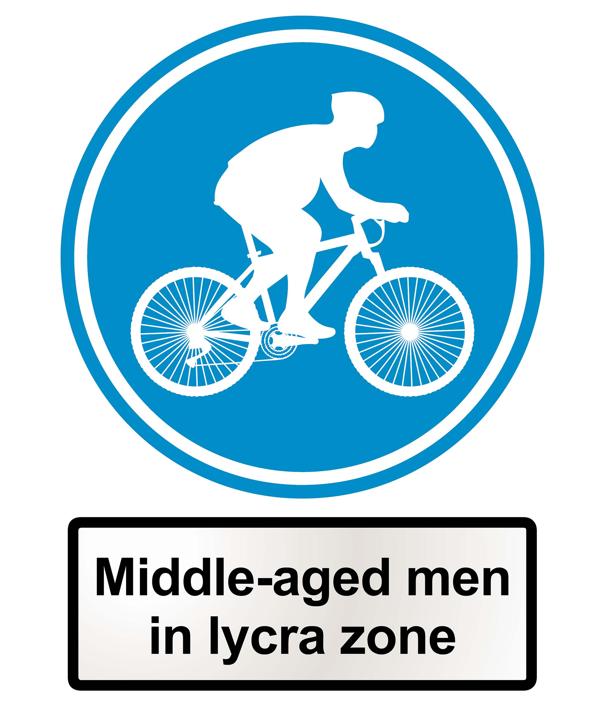
ImageIn trying to cross the outer circle of Regents Park to go and do my slightly shabby walk/run around its perimeter (a first world life structure challenge certainly), the most dangerous occurrence to present itself at 6.30am is not that of early doors muggers, the confusion of hybrid arctic meets monsoon weather or even a distinct lack of appropriate clothing; but a cluster of MAMILs moving at high speed.

(I am uncertain of what the collective noun might be for a group of densely-packed middle aged men in black and fluorescent lycra on bikes – a ‘weave’ perhaps? Or a ‘knob’?).

Much like our captive creature cousins at the Zoo across the park, these middle aged men disported in their tightly brightly tailored costumes (there’s theatre in every fibre of them) seem trapped in some perimeter prowl, hawking and screeching, unable or incapable of breaking free of the infinite circular trajectory they have locked themselves into – for an hour or so at least.

Now given the circular nature of their journey, there is little to concentrate on other than the ‘track’ curvature, rendering itself relentlessly to the left (they have projected the spirit of the Olympic velodrome onto the roads of Camden), the choreography of their individual pieces of kit and their own performance pay grades.

But I can tell you this: they do like a chat.

I sense this is both part of the bonhomie of a shared passion and a way of humanizing what might as with all obsessions be a cause often fought alone.

There seem to be two shades to their conversations that I hear wafting across the park when it is empty enough of people and other noise to allow their conversations to carry, whipping past ones ears as they hurtle through their next pain thresh-hold. And both of these are played out against a very particular audio backdrop.

So I’d like to just take a slightly closer look at:

1. Kit & Attack  2. Shop talk  3. Sound design

1.KIT & ATTACK

KIT – Discussing the detail (and believe you me the devil is indeed in the detail) of this exceptional pastime is the foundation stone of the evolutionary laws of the MAMIL. And though one might find the creation of a cycling babel fish highly desirable to navigate the conversation that would belie the integrity of their attentions.

The conversational skip jump through the delicious details of custom-moulded high-modulus carbon frame, pro-level transmission, Schwalbe Ultremo ZX, tyres and wheelsets, Titanium rotor and shift bolts, carbon Shimano and Campagnolo brakes (or should I say derailleurs) and the concepts of vertical compliance and decreased road buzz – simply demonstrates that this is cyclng at the top of its game.

I am told that the sheer exhilaration fused with exceptional attention to detail and a geek like obsession with kit and detail creates an experience that speaks for itself: which is a good job; because from some of the commentary I came across it might be better that no one else is allowed to. For example:

“Formula R1 with 203 rotor, these pads have the grip to endo at 30mph with no fade! Lets be fair from a single pot that’s seriously impressive. By no means is this compromised on pad life, Uberbike no what Business is all about, make a decent product and let the product do the talking. Theses pads were fitted along with some standard rears, despite all the pain the front brake has gone through the rears are shot and the front only half worn!! Speaks for its self. ”.

Attack – the manner in which they attack the task of circling the park demands fine shadings of performance between steadily increasing pace riding, sprints, and practicing the invisible baton change strategies of team position shifting across the pack line.

The circular whole comes into perfect balance when the excellence and performance metrics and shadings of the ride itself fuse with the cod motivational woops and c’mON!s and let’s push it PEOPLE! cries that fire out of the middle of the pack every now and then. But more of that in 3.

2. SHOP TALK 

The Day At The Office chat attacks are a little more difficult to bear. These are the equivalent of discussing staplers and A4 photocopier paper on the tour de france warm up stage. The nature of conversation is wholly at odds with the Rapha wrapped primaloft-insulated insects buzzing around the Regents Park velodrome

The most shocking aspect of some of the conversation is the ‘Office’– like banality of the content. It delivers all of the bleak ennui yet with neither the knowing nor the wit. It did cross my mind that perhaps this particular group that I encounter are a highly advanced cycling syndicate of data management programme software designers and logistics analysts with a distinct digital chip on their very slim shoulders, and far from representative.

But in retrospect I am certain they are in fact top of their game execs who drive their entrepreneurial and corporate businesses as hard as the super light weight framed pedal machines they sit atop: and I am probably just jealous of their camaraderie, observed from my lonely and slightly scruffy vantage point.

3. Sound Design

Sound Design seems quite an important part of the MAMIL cycling experience. The most emphatic aspect of this comes from the resonant motivational ‘call signs’ of the group carrying across the empty spaces or warping across your path as they pass. Most of the time these are indistinct, an aural fabric which they weave as they encircle the park.  But these ‘caws’ ‘barks’ and screeches’ do become recognisable if one gets on the right side of them. When they become clear enough to be heard you realise that there is a healthy (or unhealthy some might say) use of highly Americanised Whoops, Yeahs! C,mons, DO IT people, Push ITs!!! and various other inspirational inducements to better shouted aloud (or should I say ejaculated, given our proximity to 221B Baker Street and the oral outbursts of Holmes & Watson).

This may be to do with the style of institution or the cultural provenance of the corporations they work for. Or they may just have attended too many motivational Leadership and Performance Excellence seminars at a Golf Club Manor House Hotel just outside Guildford. Bonding over the shared air of a whiteboard conference ‘suite’ exec team session, high burn team building exercises, comedy evening drinking, a full cooked breakfast buffet with compulsory hangover bravado and finally zip wiring through a wall of flaming underpants to the deafening roars of ‘Lets win this thing’ leaves its mark on a person. Perhaps the mark is so deep it simply compels the MAMILs to exclaim motivational speaker speak at deafening volume in some fit of Exec Ed tourettes.

But the most particular, unique semiotic ‘sound’ resonates only at the point at which this streamlined gathering finally pulls to a rare stop; usually at the far corner of the park closest to Gt Portland Street. And that sound is the clatter of magnetic shoes released from the pedals to touch tarmac. The clack of a mag ball cycling shoe puts down a marker of the highest order.

The catwalk cacophony of the magnetic cycle shoe, the Louboutin of the cycling world, is powered by more than just a functional and material truth. It is a signature of seriousness, a statement of intent. CLACK I mean it CLACK Look at my thighs CLACK I burn commitment like coal CLACK protein super hero drink CLACK eat my TITANIUM.

Only committed people clack happily around in the non-cycling universe, the intermittent percussive nature of their movement proof that they are not bluffing.

To be fair this group are it seems exceptionally fit and have little in common with the MAMIL of legend – the Family Guy sporting the equivalent of Elvis’s Hunk Of Burning Love Suit rendered in under sized spandex, webbing and lycra. The ones I see are a rarer creature.

But it is for that reason that  I would flag a cautionary note.

I would suggest that perhaps, given their proximity to the zoo, their ‘matey’ calls, bright plumage and tendency to flocking, they might choose to be a little more discrete and less visible, less their rare species starts attracting the wrong kind of attention.

It would not surprise me to find, on my next visit to the Zoo with my children, a ‘weave’ of MAMILs circling a much smaller and far more contained enclosure; delighting the onlookers with their caws, calls and clack footed dance.

Old heads, Young Hearts & The Foot soldiers of resilient humanity.

25 Saturday Jan 2014

Posted by Thin Air Factory in Uncategorized

≈ 1 Comment

Tags

anaglypta, bi-generational living, broadband providers, collectivism, enduring aspirations, innovation, millennials, old people's homes, resilience, resilient societies and communities, skype wisdom, telecoms, Wisdom Of Age, within our means, youth

Screen Shot 2014-01-25 at 17.32.23

If we had to choose two lead stakeholders in building a more resilient society, my money’s on the under 20s and the over 60s: and here’s for why.

Allow yourself the luxury of the observer for a short while at least and there’s one thing you may notice: teenagers and oldies are very, very similar in many ways – especially when they are grumpy. They re in fact made for each other.

Both sleep at weird times of the day. Both are prone to radical mood swings. Both err on the side of the heavily medicated (prescription or non prescription). Both sport injuries and conditions as a form of life signature: some inflicted by challenging the nature of their own mortality and existence (the irresponsibility of youth): others purely by having existed for so long (the immutability of age). Both enjoy wheeled modes of transport other than cars. Both tend to suffer either a crisis of or a surfeit of identity.

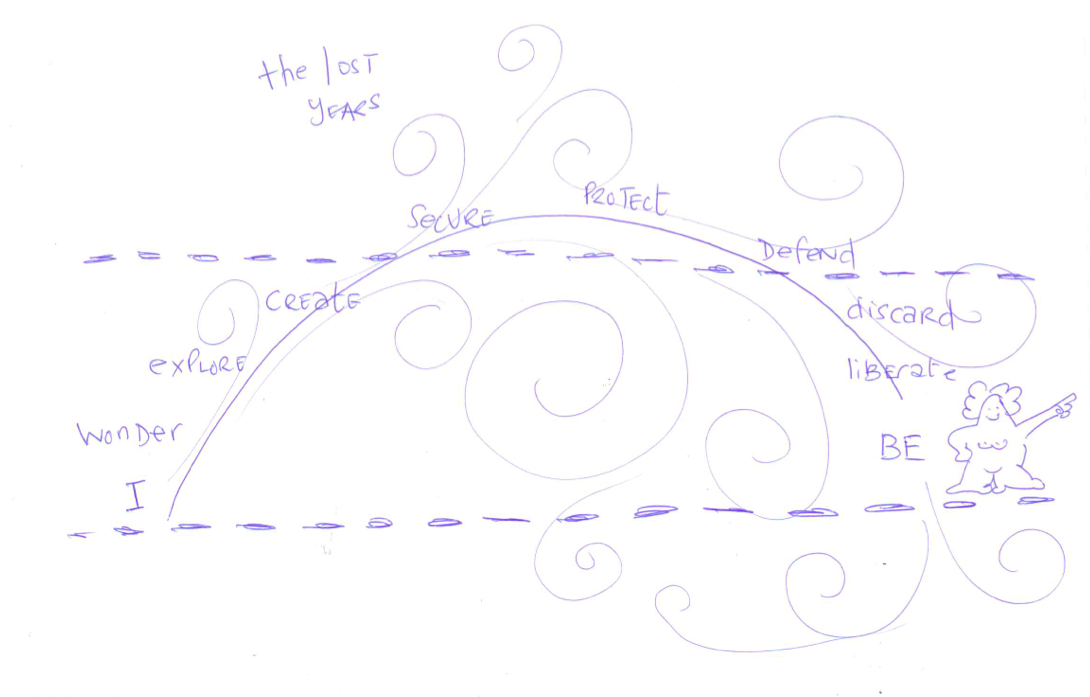
Both view the wheezing middle (those of us between 20 and 60) as an uptight, over wound self obsessed lost tribe. We are trapped in the lost years, having left the age of wonder, explore and create behind, we are trapped in the secure protect and defend stage – fiercely ring fencing the things we have accrued and are accruing – and as yet far short of the time when we are finally confident and secure enough in ourselves that we can begin to discard and disassemble stuff and liberate our crippling concepts of a thriving life and just be.

Unlike the Lost Middle, they have ‘nothing to lose’ in spiritual or material terms. At one end the young, prior to being owned or owning, are still free to explore possibilities randomly, inspiring themselves and each other as they flow. They are at the least compromised stage of their lives. No strings have been attached: no mortgage overlord; no food and energy bills to speak of (even if they have got as far as renting); no fixed pathway measured in decades from which they cannot deviate; and little in the way of allegiance to the sensitivities of others, speaking out loudly and relentlessly at those things they find unfair, irresponsible or destructive. They both have a penchant for saying inappropriate things in public.

Equally, many of the elderly are also in the position of liberty and regeneration, being reasonably capitalised without the stricture of a working day or people to answer to. Both also enjoy a strong sense of community that seems bleakly lacking in the striving grinding scratching generations that separate them (unless of course you think the togetherness of mutual Lexii ownership or collective apple upgrades represent communities of any real worth.)

It is these similarities in nature and self that lead me to believe that they are the two primary stakeholders in building a more resilient model of humanity and the architects of a more enduring aspirational life.

And I believe wholeheartedly that it will take both of them. There is too much pressure being put on the shoulders of the excited young to use their seamlessly connected collectivism to compel companies to act more responsibly, to shape a kinder less tyrannical form of consumption, and ultimately to be more capable of finding meaning within their own means. They simply lack one thing: the kind of resilience and adaptability that is only ever learnt through multiple sustained and not always pleasant experiences being endured over time; and a clear sense of the inevitability of consequence come what may.

Young people need the easy, reflex and second nature wisdoms of thrift and financial integrity of the older generations. They need mentors to help them build a more integrated, inclusive and supportive society; the benefit of which they will come to reap eventually.

Oldies need to be brought in from the cold for a number of reasons not only just to supplement and compliment the young in the shaping of a more enduring model aspiration. Their return to a central role in society would be a salve to the fractured communities and families we increasingly exist within, with parents and grandparents increasingly isolated as younger families move further afield.

There is a dreadful lack of economy, efficiency and foresight in the speed with which we dispense those slightly worn generations into some inert anaglypta hell with a name drawn from the lexicon of calming rolling rural pastures or idyllic flora & fauna. (Even the best of God’s waiting rooms still suffer a dreadful absence of young people in their halls as reminders of the living.)

Thankfully, the brittle brutal truths of austerity, the death of cheap money and the comedy of house prices are making people reconsider bi and tri generational living again. Not to say that will be rose scented from the off.  It will reignite some of the old issues of proximity certainly amongst generations with radically different perceptions of what is good right and fair.

Part of the original dislocation was due to the fact that the oldies of yore remained quite attached to some of their more suspect beliefs even as the world turned. Their casually voiced views and derogatory referencing to foreigners broadly and specifically people of a different ethnicity marked out by colour and homosexuality to name the two biggies didn’t roll too well with the newly liberal uber-youth. This only served to exacerbate the social and familial ruptures.

The unacceptable nature of these traits rightly needed rebalancing but it became a reasonable much cited excuse for us to condone abandonment and simply eject them from the framework of what constituted a decent functioning liberal society.

In doing so we threw the wrinkly baby out with the bathwater. Because with them went all of the old wisdoms of making ends meet, make do and mend, waste not want not, the economies of leftovers, smart buying and existing and still finding meaning within ones means. And it is the nature of those wisdoms that will secure young people’s futures.

For all of the old jokes – Quick, Get teenagers to run the world while they still know it all – the immutable emphatic heart, energy and passion of youth is fragile. They need the irrepressible mettle of oldies and the life wisdoms that come with them. The combination would be amazing.

Brands, especially ones that have been around a while, could find amazing ways to harness this power duo – starting from the inside out and the ground up. Formally connecting the young graduates, interns and apprentices with the retirees and wise owls would recalibrate how a company develops its service propositions and extant purpose in a far more holistic manner.

Telecoms and Broadband providers with an interest in building cohesive societies could fill the gaps that tech progress leaves behind. They could allow fractured or distant families to utilise skype culture to reconnect old and young as part of a Family Broadband Offering.

Educational groups could help children on the verge of dropping out of school by giving them access to the perspectives of a generation of old people who can speak from a lifetime of knowing about the decisions we all make in haste – some with regret some with joy – but all without the hectoring proximity and intensity of a parent made fractious and intransigent because they are both scratching out the bills as well as steering their brood.

But where it really gets exciting is through the introduction of the question ‘Why?’ When we sit around and hack new technologies, create new products, most looking a pale shade of difference to the ones we’ve already got. To raise the question Why? Why spend the money on a tiny upgrade? Why make a 5 bladed version of a 4 bladed razor? Why triple pack food you’ll waste some or all of? Why burn money you don’t have? Why?

The energy and passion of youth with the calm caution and questioning nature of age would create the killer innovations department in most any business.

So here’s to the hard-core stakeholders and architects of better, the oldies and the youngies: old wisdoms and young hearts reshaping a more measured and enduring future.

Swapsies, sharesies, half eaten Apples & the joy of the digital yard sale.

23 Thursday Jan 2014

Posted by Thin Air Factory in Uncategorized

≈ Leave a comment

Tags

1970s, Adam Werbach, Apple, Collaborative Consumption, Consumer Insight, Consumption Behaviours, Cradle to Cradle, Great American Songbook, Hoagy Carmichael, i-phones, i-tunes, Life Cycle design, Shared Economy, Swapsies & Sharesies, Trends, Vinyl LP Sleeve Notes, Waste Not Want Not, Yerdle

images

To be fair the first time I ever heard the phrases Collaborative Consumption and Shared Economy used to explain the new consumption trends of collective barter and re-use I was no more enlightened.

One painted the picture of a co-operative of tubercular poets and the other sounded like a euphemism for a low effort-short-duration-hi reward act of coitus.

Not that I don’t find the concepts they represent amazing and inspiring.

I am in awe of the platforms that are conflating the social culture of sharing and swapping stuff for free, great distribution and logistics providers, a higher purpose of light touch collective action and the target of substantially reducing the purchase of consumer durables by doing so.

The likes of Adam Werbach and the people at yerdle are blazing it.

The whole social marketplace of give and get for free reminds me of the sheer excitement and pleasure of swapsies and sharesies, with everything from player cards to lego pieces to Action Man accessories furiously exchanged  – the smart thrift of a great trade and the thrill of an unexpected treasure.

I just wish more brands figured out how to build this kind of community-making, life-affirming idea seamlessly into their systemic selves.

I am especially irritated with the brands who know full well that a whole load of their junk is in someone else’s trunk (and I don’t mean that as a euphemism)

I have already mentioned in a previous blog the fractual tech landfill of the Man Drawer. Drawers filled to brimming old tech kit, some barely used. The orphanage of every tech fling we’ve ever had.

The other junked up trunk in my life is sitting on my lap top right here and somewhere in the ether out there.

i-tunes. Or should I say specifically the deselected i-tunes in my library.

Now I love Hoagy Carmichael. A honky-tonk swoony blues songwriting band leading pianist of the finest order. His Hong Kong Shuffle, Riverboat Blues, Georgia On My Mind and Old Buttermilk Sky are basically liquid golden pools of genius soaking through the pages of the Great American Popular Songbook.

You cannot fail to love a man who when asked to describe his own voice referred to it as sounding “the way a shaggy dog looked”.

And there is nothing one dimensional about Hoagy. Hoagy is not easily set aside. Hoagy is loaded. With him comes the daisy chain memories of that period in the early seventies where everyone from fashion designers, to musicians, artists and filmmakers just couldn’t resist the cultural signatures of the Great American Era from the 1890s to the 1930s – especially the speakeasy chops of the old joanna.

Enshrined in Films such as Butch Cassidy & The Sundance Kind, Bonnie & Clyde, The Great Gatsby, The Sting and The Man With The Golden Gun, the jaunty jazz keys chimed through everything. Even popular music stole a march from the zeitgeist with Bowie drawing in the haunting chops of the good old days into his anthemic tracks Time and Aladdin Sane (accompanied by jazz pianist Mike Garson) and in the fashion of his Man Who Stole The World Zoot Suit come Speakeasy look.

So Hoagy, Genius. But the purchase decision on my part was badly planned. I wanted a download with the 9 or 10 tracks I really liked. What I got was a download of forensic depth and scope. The download included interviews, 7 separate recordings of Riverboat Shuffle alone, and much more.

In the absence of a retro vinyl moment of in-depth sleeve note reading accompanied by the sharp petro-tang of print varnish and PVC this download is old school in its detail. An enthusiast would adore it.

But it’s wasted on me. Which brings me back to the point with our grandparents words ringing in our ears:  Waste Not Want Not

So to that end, Apple, if you’re listening, all I want is a button on my i-tune genius panel marked Yard Sale. And all I want that button to do is allow me to select all the deselected tracks in my library and put them into a special open market.  Where I can either swap and share them for others, or sell them at tuppeny prices and donate the cash to the cause of my choice.

BOOM happiness – and all in the spirit of Yerdle et al.

I am sure that there are many ways of passing around music whose stealth tactics and moves teeter on being a martial art. But I am taking the simpleton tack here. And I am pointing to a Brand’s responsiblity for cleaning up their own back yard, laying waste to waste and leading by example

I want a massive brand like Apple to do it for me – in fact, especially a brand like Apple, with all of its ‘we’re a Purpose Driven Business’ Love Me Love My 4th Upgrade i-phone schtick’.

Workout the IP issues with the artists and publishers – I am certain that the idea of sharing deselected, de-listened and de-loved tracks in some second-hand music platform form of barter is not so satanic an idea or impossible a task.

The criteria that the user only sells the quantity that you have (no multiple sales of individual tracks) and that once sold it’s gone forever seems wholly reasonable.

Now, if there ALREADY IS is a device/trigger/button/easter egg somewhere on my machine or in the software that does allow me to do this, PLEASE SHOW ME WHERE IT IS, along with the other half billion users on the i-tunes system.

Counting down to the one billionth download is all well and good BUT I would be a lot more excited if i-tunes started counting up to celebrating a billion deselected tunes shared and a petaflop of cash raised.

The guys at Yerdle are aiming for a 25% reduction in consumer durables purchases.

My challenge to Apple is to commit to reducing the number of dormant tunes sitting in libraries by the same percentage – by introducing a swopsies and sharesies meets yard sale mechanism into i-tunes.

(That would of course require them to be arsed to do it in the first place. And not just um and ahh their way out of it by distracting themselves and us by counting up to their billionth pointless upgrade I-phone sold.)

I want the spiritual zeitgeist to be carried at scale and across oceans by someone of Apple’s reach and influence. Its a role model thing.

Speaking of zeitgeists, one of the most powerful things about the Yerdle kind lies ironically (given how NOW it is) in the shape of things to come.

As platforms like Yerdle develop, they will become an increasingly valuable partner for any one in the consumer durables markets because they will have first hand insight and data regarding the post purchase behaviour and utility of those consumer products – far richer than any service programme report. The broadened view of the landscape of use would give real meaning to Consumption Insight as it would reach far far beyond the increasingly one dimensional framing of consumption and what it means to consume a product or service over time.

They would have an independent viewpoint of which products leave the home (or favour) as quickly as they enter it, lose their cache, or simply fall redundant. They would know which items travel where, where the sharesie hotspots are and when swopsie communities are most active. They will know what types of profile user gravitate to which type of ‘thing’ – data to cross refer against the company eye view of their segmentation and dynamic customer behaviour.

That kind of knowledge could reshape the nature of the consumer companies’ distribution partnerships and networks as well as their models of Customer Relationship and Service Management.

What’s more it could start to change the shape of Cradle-To-Cradle design in a number of sectors – even to the point where consumer durable manufacturers start to build the share swap barter life stage in the cradle to cradle life cycle design and planning.

Not that any of that helps me – or Hoagy, who is currently sitting mostly deselected and dejected in my library.

So here’s to Swopsies and Sharesies, digital yard sales and Hoagy Rides Again

DELETE A short film idea about mobile living, the death of memory & why we keep what we keep.

19 Sunday Jan 2014

Posted by Thin Air Factory in Uncategorized

≈ Leave a comment

Tags

A Mobile Life, avatars, emotional fracturing, Gamification, Identity, lifestyle, mobile consumption, multiple identities, psychology, search for self, technology, technology landfills, The Death of Memory, virtual living

Image

NOTE: STORY/FILM IDEA ORIGINALLY CREATED AS A PIECE OF STORYTELLING DROPPING OUT FROM THE TOPIC OF DISCARDED TECHNOLOGY – By Julian Borra©2012 

ELEVATOR PITCH – In a sentence: Memento on Mobiles – How machines murdered memory & identity. 

DELETE

WE OPEN ON A BLOKE, AN EVERYDAY BLOKE. HE’S IN A BED BUT HE’S DRESSED. HIS CLOTHES ARE A MESS. HE LOOKS LIKE HE SLEPT IN A SKIP AND HERE HE IS, IN AN EXQUISITE LOFT APARTMENT SOMEWHERE. EGYPTIAN LINEN. DUSTBIN SCENT.

He’s foggy, wooly. Unsure and half awake. 

He starts to quietly wail. He looks suddenly wide-awake and terrified. He makes the physical shape of a small creature trapped in a corner of life.

He is wild eyed. Something is wrong something is terribly terrible wrong. He looks around desperately.

There are picture frames. Many picture frames – in all the unusual and haphazard random shapes and styles you get in a home – but every one is empty.

His hands run around his half standing body – a wallet in his back pocket reveals nothing – it is worn – lived in but empty of everything and anything.

He looks down. His bare feet are crusted and smeared with old blood.

He stumbles towards what he believes is a bathroom adjoining the room. He frantically opens all the cupboards. Nothing. No medication, no shampoo, no bin with old cotton buds and tissues – nothing to make this place – human.

He stops. He looks at himself in the mirror. His eyes search his face. He moves his have draws his hand over his chin, scruffs his hair, tears at his face. We start to realise that he has absolutely no idea who he is – who the fuck IS HE?

He opens and closes the mirror cupboard – his face appearing and disappearing – as if trying to jolt his mind into remembering who he is.

We see his feet as he paces across the floor. As he walks he touches furniture; trying to connect – nothing. He walks down some open plan stairs.

He looks in draws – filled with the bric-a-brac of living but nothing – not one thing held a sense… …of someone… …anyone… …any… … identity

The windows reveal nothing. He could be in a truck by a river next to park in a market town underground – anywhere.

His eyes alight on a half open door. He senses more than sees a large space beyond it. He walks towards and then after a beat through the doors. He is in a large loft apartment styled space. The space is empty. Except for one thing. A piece of furniture? He moves towards it. At the far end: a large chest of drawers

He walks towards it as if drawn towards it – by something. No voodoo. Just something

He slows as he reaches it.

Something in it makes him feel apprehensive.

He touches the wrought metal handles. He runs his fingers across the surface. The wood, walnut perhaps, inlaid with mother of pearl. He fingers the handle and then curls his fingers slowly under it, just the tips. He pulls. The drawer slides elegantly out – this is a very, very expensive item.

He looks in. His gaze is met by what seem like dozens of bits of tech. They are mobiles – mobiles of every style and hue and age. There are mobiles in cases and with trinkets, old palms, crackberries, i-phones, motorolas, nokias HTC’s …Jesus.

He picks up one of the more recent models – couple of years old – he flips it. It’s charged. But phones lose charge? Why’s a two-year-old phone charged? He flicks through it.

No signal – no call logs – no message logs – gallery! – gallery?

There’s some files in the gallery. Pictures, random pictures of places; they mean nothing to him…and a woman…he stares. Nothing.

Up here? Down there? Nothing he feels nothing when he looks at her – she is mad and distracted – in the next, she’s reading in a café.

There’s a film file. He hits play. He can see the woman playfully avoiding the film maker. It’s not in this place. It’s a hotel place – somewhere cool and foreign. A hand comes in from the film maker gesticulating to her. She gives the camera the finger. The disembodied hand gestures. She disappears and the film follows her. As we turn the corner she is right in front of us – creepy – staring. She’s not laughing anymore: she smashes her fist at the lens and the film cuts.

A small fizzing feeling slides across his sternum, up his neck and glides across the right side of is face. A small tremor: was it actually a twitch, fires in his left eye.

The random hand in the film wore a large and quite avant-garde ring on the thumb of the right hand.

The hand he is holding the mobile with. His finger traces a faint shallow but very present impression on his thumb, the inner ridge of skin slightly rougher, coarser  – the worn edge of where a ring might once have rubbed and rolled and sat.

Suddenly he frenetically scrabbles through the drawer looking for anything, something to explain who the FUCK HE IS….

He picks up phone after phone: every one. Fully charged. WTF! Now. Where is he NOW.

He grabs what he thinks is the most recent model. He pops the button. Glow, sound signature, mix up. Interface. Gallery. Shit interface. Where’s the gallery. No gallery. Messages? Messages. Picture messages. He scrolls through it. There are hundreds of them. ALl kinds of crap. Girl. A girl. No. He looks closer. Its her. The woman. But she’s younger. So much younger.

He scrolls further. An older couple. Her parents? His parents?

A very sharp pain traverses his skull as a thought crosses his mind. Synchronicity.

He checks the model. He checks the previous model. He knows models. 

The model the old her is on: thats weird. Its older than the model the young her is on.

His face fizzes and buzzes again, louder this time.

Stupid tune. Stupid tune. In his head. Not in his head? Wheres the stupid tune? Tune’s in the drawer. The drawer is ringing.

He starts to tear at the mass of mobiles. Which one’s ringing?

Two stupid tunes? No three. Three tunes.

He steps back. The whole drawer vibrates now.

Every phone starts to ring. Too many stupid tunes.

And one voice.


Trunks, Junk, Science & bees that go BOOM in da room

16 Thursday Jan 2014

Posted by Thin Air Factory in Uncategorized

≈ Leave a comment

Tags

Beyonce. bees, Biodiversity, Cross The Chasm, Lighter Language, macro photography, Playful Science, Polarity of Impact, Pollen, storytelling, Sustainability Storytelling

Image OK. As my preferred space in the world is that of using language and creative storytelling to make very complex or otherwise arcane subjects fun approachable and palatable.

And as I celebrate anyone who has the ability to lighten up to make a serious point, I am currently enamoured with the work of Sam Droege and his team at USGS Bee Inventory and Monitoring lab.

Their bee portraits, featured in the Observer’s Tech monthly article last week, were truly awe inspiring.

But the biggie for me was the lightness of touch involved in how Sam summarised the amazing diarising and macro photography of these beautiful creatures.

“We do select out the supermodel bees”. “We wash them in soapy water and then we blow dry the to make them look good”.

Now, using drop dead photography to make smaller insects, especially those holding the key to keeping the biodiversity tree flourishing and fecund, might be a well trodden path. But the lightness of touch did not end there.

It only got better with the revelation that a bootylicious bee had been named after Beyonce Knowles

It seems that Bryan Lessard, a researcher at Australia’s Commonwealth Scientific and Industrial Research Organization, on finding a newly discovered horsefly in Australia with a golden-haired behind, named it Scaptia Beyonceae. That’s Beyonce to you and I. The reasoning is simple enough.

A stroke of Genus genius if you ask me.

That the given name might bring a titan of bio-diversity into the interest framework of an urban 12 year old girl is exactly what every scientist should wish for. The delight of generating Inappropriate degrees of opposite impact; in such a way as to open up the amazing topic of insects to a teenager has to be good.

In the Huffington Post piece Lessard went on to point out “It’s extremely important to name all the un-described species so we can measure our human impact on the environment and hopefully protect it for future generations to enjoy.”

Now if we could get more sustainability practitioners, boffins and innovators to apply the same tack, we might perhaps start with a better communications brief for the brand or communications whizz bangs to start with.

So I’m saying yes to bootylicious bees and the joy-filled triviality of word play and pop culture.

This is the kind of thing that reaches across chasms.

Joy.

PS Is it me or does Anthrophora Bomboides look a little like Orville The Duck, given a little green fur tinting?

On Human Bondage, Sexism & the corporate art of owning people

15 Wednesday Jan 2014

Posted by Thin Air Factory in Uncategorized

≈ Leave a comment

Tags

Blokes, Corporate Mediocrity, Corporate Politics, Faustian Pacts, Feminist issues, Girl Power, Glass Ceiling, Gristle, Human Resources, Inequality, Investment Banks, Labour Rights, Ladettes, Owned, Sexism

urlSince you stopped going to the pub after work all the time, working all hours and making a herculean effort to be in the thick of it at the company away-day, have you noticed a cooling in your professional prospects?

If so you may be on the slippery slope to being corporately disowned

There is one shade of casual modern enslavement that seems to always sneak under the radar. That of the corporate cultural variety and the manner in which it captivates and ultimately ‘owns’ people through subtle or overt forms of structural and social entrapment and the illusion of sanctuary.

The average corporation still manages to successfully achieve the rather jaunty conjuring trick of increasing levels of ownership of people while decreasing levels of commitment to them, using ever-more restrictive mechanisms, covenants and contexts to bind their workers personally, financially, socially and professionally to the wheel.

With the death of professional ‘tenure’, jobs for life and the culture of company ‘lifers’; and with the increasing instability or absence of pension security, you’d think that the old social cache of being with a company “Man And Boy” would seem not only outdated. It would look like a fools choice. But still they sign up in their tens and hundreds of thousands.

To be fair, the desire to create stability for oneself and those one loves in an increasingly unstable world compels many to seek the chimera of job security. The social contract written by many corporations only seems to take advantage of that primary and aching human truth – and the social contract between ‘owner’ and ‘owned’  have remained mostly unchallenged until only recently.

The heady confection of deceptively stable pillars of recognition, incremental reward and stability, wrapped as they are in faint praise and quarterly critical assessments and riddled with the insidious spirits of ‘try harder’, stay competitive and the threat of social or tribal alienation for those cast out from its culture are evidence of a rather impressive dark art at work.

Traditionally, the confection, when properly set and applied, fuels a slippery culture of forced bonhomie, social adhesion, complicity, politicking and institutional bullying – a culture by which corporations, even those of the enlightened variety, herd the worker bees to best performance and output for least investment and inconvenience.

The even more surprising thing is that the primary benefits of professional development in a secure job – getting better at what you do, working with inspiring people and enjoying the security of the journey  – are NOT necessarily a natural outcome from Owned cultures.

Quite the opposite in fact, as proven by the number of corporates struggling with employee satisfaction, and the need to go to open-source and collaborative co-create models to ensure that they offset their knowledge gaps and the pockets of intellectual and systemic inertia that their ‘lean’, narrow skill bandwidths and heavily siloed infrastructures and governance seem to nurture.

Corporates, especially multinational ones, function on rules of uniformity and similarity. This often leads ‘outsiders’ to question the nature and quantity of mediocrity that hides within many corporate structures. But in pointing to their ability to ‘hide’ inside the structure misses one vital point.

They aren’t hiding.

Most switched on corporate career tourists are all too aware that mediocrity is a fundamental requirement of the beast. Mediocrity is the gristle, fat and cartilage of the ‘corpus’. The business cannot function and the corpus cannot retain its structural integrity without them.

What we see in our post-modern post-industrial light Manufacturing and Knowledge economies is a shift from the Muscle that moved the machines of manufacture to the Gristle that binds the body corporate.

Critical to the integrity and survival of the corporate structure these gristly, sinewy, fatty actors have to be secured; made immovable and inviolable – inextricably linked to the structure. Owned by it.

The condition of being either Owned or Un-owned by your job, the social and personal impacts of which you choose and ultimately the discrimination you suffer if you choose the un-owned path, have until recently mostly been explored from a female viewpoint – through the filter of sexism, the glass ceiling and equal rights in the work place.

This is hardly surprising. Women rightly pointed out that there could be a far better way of doing things inside large companies and corporate organisations – and in such a way as to make far more of their skills and capabilities.

They made the even greater mistake of mentioning that “while we’re at it, would you mind paying me the same as that bloke, as we do the same job and, errrm… yup, I’d like the same opportunities too. Oh, and in regards to pregnancy I’d like to neither be discriminated against just because it ‘might’ happen or be penalized for actually becoming so”

Now that’s just not playing the ownership game.

The primary creator card is never going to go down well with the ‘owners’:  A noisy display of an substantial, vital and deeply rewarding alternative life choice to the job in question would have set off every alarm bell they have.

Top all of that off with a one very irritating request and a paradigm shift in leadership and the ‘pro-ownership lobby probably went incendiary.

The request? To not only remain un-owned but also to be paid as much as those who are. The paradigm Shift in leadership? The rise of the Female Competitive Advantage as the more future-fit leadership model for success.

(Of course exceptions like the investment banks just step over the ugly social tripwire inherent in this conundrum by facing it up: “Yup! We want to own you. You bet. Screw Un-owned. What’s more, your reward will be commensurate to how long we get to own your soul for. If you want un-owned go line up at the welfare office.“)

With the weakening and the collapse of the traditional workers unions  and collectives (the last spoilers of ‘owned’), the next last biggest problem facing the ‘Owners’ was the threat of half of the working population becoming protected and secured. The last thing they needed was an increasing rump of un-ownable workers shifting the balance of power. They needed an answer. But they needed to be smart. And they found the answer: a short term one at least.

Blokes.

The simple reason being this: For millennia men as a gender tribe have allowed themselves to be bullied, poked, teased, coerced and convinced by their Betters, Biggers, Strongers & Richers into a blinkered one dimensional application of all they had to any given task in hand – without distraction and with absolute commitment.

20th Century Corporates (like their ruling predecessors in the royal courts, the military and the clergy) demanded men’s attention be uncluttered by any form of sentimentality and home making – and certainly untouched by even the slightest desire for any alternative life choice other than the one said bloke was committed to.

The corporate ‘owner’ does not need the inconvenience of anything making their wholly owned workers think for even a second that there might be any benefit in comparing and weighing up different life choices let alone pursuing one. The last thing they need is the inconvenience of workers ‘feeling’ – they need blind obedience.

Ownership demands complete sublimation of the self to that which owns you, unwavering and unquestioning. To be owned is to become a non-self in fact. Also it seems that Ownership does not operate at a fundamental level on either gender or ethnicity, other that is than to seek to control or mitigate any traits or attitudes in those genders, tribes, or ethnicities that might otherwise loosen the  powerful grip of owned.

It seems to me that regardless of what sex you might be, to present a life choice or set of life priorities that do not put the job at the very top and centre of everything is to stop being owned, heart and soul, by the job you are in.

Perhaps the inequality we see regarding women in the workplace specifically is not wholly a sexist or feminist issue – founded upon women being women per se.

Perhaps it is founded on the fact that the ‘owners’ simply see women as more or most likely to be compelled by natural forces or desires to pursue an alternative to the sole bondage of career and just working till you drop – regardless of whether they exercise that right for a short period or indefinitely. In turn this allows the owners to infer that their lifetime value is immediately able to be diminished, bartered, sliced and diced – and they can be held as ‘lesser’ than their unquestioning, bowing, obedient and vaguely terrified workmates.

That women have the ability to fall pregnant makes them by their very nature ‘un-ownable’. Perhaps to the corporations that is their crime.

Reasons to be cheerful:

a)  That more and better educated women are pouring into better positions in corporations while still embracing and celebrating their ‘un-ownable’ selves (bar the odd female CEO kills flexitime glitch)

b)  That the millennial working generation will drive a new and more liberated modus of belonging into corporate life as it seems that neither millennial guys nor girls have any intention of being ‘owned’ by anything other than their own purpose

c) That more blokes are citing an interest in de-shackling in favour of softer purposes and priorities like spending more time with their kids.

I think perhaps it is time to consider that in real terms, job, career or corporate success is not necessarily predicated on a Breasts/No Breasts basis. Perhaps it has quite a lot to do with whether one is prepared be ‘Owned or Not Owned’.

Perhaps if we looked at the inequalities and sought solutions to them through a filter of Owned & Un-owned – in a way that removed the gender or even the ethnicity issue it might simplify and focus the process and expedite progress.

An Owned versus Un-Owned framework of interrogation might also enable us look at other symptoms of the modern professional malaise, like the escalation of anti-social behaviours in young working women – especially those in more pressurized workplaces – not as some trite male wannabee ladette trend  – one of women having to ape men and their destructive behaviours to get on and succeed.

We might venture that they are in fact simply adopting the more nihilistic social coping mechanisms of the ‘owned’ human being – the career slave and the working drone suffocating inside their own ambitions, realizing the gap between living the dream and grinding out the reality and ultimately seeking the illusion of escape from the Faustian pact they have signed through 15 Bacardi Breezers or 3 bottles of a rather cheeky sauvignon.

DISCUSS

Dodgy Dumplings, Celebrity Mystery Shopper & a new food culture revolution.

09 Thursday Jan 2014

Posted by Thin Air Factory in Uncategorized

≈ Leave a comment

Tags

Behaviour Change, China, China Dream, Cultural Revolution, Dumplings, F&B Supply Chain Management, Food Hygiene, Food provenance, H7N9 bird flu virus, JUCCCE, Mystery Shopper, New Ways To Eat, Peggy Liu, Pigs In The Horse Meat, Risk Mitigation, Smarter Lighter Living, Xi Jingping

Image

Having listened on many occasions to Peggy Liu (my partner in all things Dream In A Box and the powerhouse behind The China Dream) speak on the worrying nature of diet and the often questionable quality and provenance of food sold in some Chinese eateries, a small article in The Economist* last week made my heart give a little (non-ischaemic) jump.

Not only did the article report on the feel-good factor of a people-powered ‘first’: that of the president of the People’s Republic turning up unannounced in a local Beijing eatery. it may also potentially provide a playful answer to the huge challenges around regulating for better food and restaurant hygiene in China.

And that answer is? The Mystery Shopper. The one time secret-police of the Sales Promotion industry and their FMCG clients in the late ‘70s and ‘80s could just hold the key – especially if that Mystery Shopper is none other than Xi Jingping

That is an opportunity for a celebrity endorsement you wouldn’t want to screw up. A gift horse one would wish to neither look in the mouth nor find in one’s noodle soup.

The chance that you might still be peddling some old bits of shoe in batter just at the moment the esteemed leader enters your establishment would leave you with more than just Foo Yung egg slice on your face and a few apologies to make.

it would leave purveyors of such culinary delights as slow roasted ‘plucked floating from river’ foul in much the same circumstance as they found the bird in question; quite dead in the water – commercially, legally and personally. The loss of face that would accompany such an unmasking would be immeasurable in a culture that holds honour in such great esteem.

Whether the possibility of it would be enough to dissuade the many sellers of the likes of steamed dumplings stuffed with (used) newspaper soaked in a rather tasty rice vinegar; and pork buns filled with abstract species of every kind other than the porcine variety is uncertain.

But I imagine they would do more than think twice about serving up these mutant delicacies if they feared that Mr Xi might turn up in their lunch time queue unannounced any time soon.

Equally, the reverse impacts along their (loosely phrased) ‘supply chains’ would be of benefit to everyone in terms of eating experiences, food hygiene and a more regulated and heavily scrutinised food industry and culture generally.

To instil a blanket terror in every dodgy dumpling merchant would in fairness require little of the leader. He only need turn up once or twice in the four corners of the Republic: and ensure that the media cover following each appearance was massive.  After that he could simply hire 20 or so unnamed Look-a-likes who could pop up randomly in distant eateries while Xingping remained safely tucked away doing slightly more important things like running China.

There is also something quite apropos about a method once reserved for checking up on whether CTN owners, grocers and Wholesalers had put up snack and soft drink sales promotional literature potentially revolutionising food culture at a mass scale in such a high-profile culture.

That mystery Shopper could from such low beginnings rise to the challenge of solving one of the greatest food crimes ever knowingly undertaken by so few against so many, would indeed constitute a sublime example of conceptual social mobility in a culture once renowned for championing the rise of great leaders from humble beginnings.

So, here’s to the inception of Chinese Celebrity Mystery Shopper and a food revolution.

JUCCCE China Dream FOOTNOTE:

  • CLEAN & SERENE – To activate safe food, JUCCCE is working with Ecolab, a company that works in restaurant hygiene and clean water supply, and a local design firm called Impact Group to publish and distribute a guide for “Top 10 tips for Safe and Healthy Restaurants”.
  • YOU ARE WHAT YOU EAT – created a New Way to Eat program – melds new nutritional guidelines with low impact foods – convening senior global coalition of nutritionalists and sustainable agricultural experts to develop new guidelines – create school curriculum in YK Pao and YCIS schools, and tasty, sustainable and nutritious school meals with Eurest.
  • JUCCE are developing a NWTE programme with WEFer David Agus (author of “End of Illness”) that is “Good for you, Good for the planet”.

* Original Economist Article – A New Flavour. Xi Jingping gets down with the people.

← Older posts
Newer posts →

Subscribe

  • Entries (RSS)
  • Comments (RSS)

Archives

  • April 2026
  • March 2026
  • November 2025
  • September 2024
  • June 2021
  • December 2020
  • August 2020
  • April 2020
  • March 2020
  • January 2020
  • October 2019
  • June 2019
  • April 2019
  • November 2018
  • August 2018
  • June 2018
  • February 2018
  • January 2018
  • December 2017
  • November 2017
  • August 2017
  • July 2017
  • June 2017
  • May 2017
  • March 2017
  • January 2017
  • December 2016
  • November 2016
  • October 2016
  • September 2016
  • August 2016
  • June 2016
  • May 2016
  • April 2016
  • March 2016
  • February 2016
  • December 2015
  • November 2015
  • October 2015
  • September 2015
  • August 2015
  • July 2015
  • June 2015
  • May 2015
  • April 2015
  • March 2015
  • January 2015
  • December 2014
  • November 2014
  • October 2014
  • September 2014
  • August 2014
  • June 2014
  • May 2014
  • April 2014
  • March 2014
  • February 2014
  • January 2014
  • December 2013
  • November 2013
  • October 2013

Categories

  • Uncategorized

Meta

  • Create account
  • Log in

Create a free website or blog at WordPress.com.

Privacy & Cookies: This site uses cookies. By continuing to use this website, you agree to their use.
To find out more, including how to control cookies, see here: Cookie Policy
  • Subscribe Subscribed
    • thinairfactoryblog
    • Join 28 other subscribers
    • Already have a WordPress.com account? Log in now.
    • thinairfactoryblog
    • Subscribe Subscribed
    • Sign up
    • Log in
    • Report this content
    • View site in Reader
    • Manage subscriptions
    • Collapse this bar
 

Loading Comments...