• ABOUT

thinairfactoryblog

~ A topnotch WordPress.com site

thinairfactoryblog

Tag Archives: Social Memory

Living memory, resilience & the art of not forgetting

02 Monday May 2016

Posted by Thin Air Factory in Uncategorized

≈ Leave a comment

Tags

Alzheimer's, ard drives, Arts, company culture, data points, degenerative disease, desire, drama, Elegy, Evolution, Gladiator, Identity, Language, literature, Living memory, Maximus, Nock Payne, resilience, self expression, smart phones, Social Memory, technologies, telecomms, The Book Of Life, Virgin Accelerator

Screen Shot 2016-05-02 at 12.03.31.png

Funny thing memory

We tend to pay little attention to it; until it starts to fail us.

Sometimes its reason for failing us is a conspiracy of genes + environment – creating a disposition to Alzheimer’s and other forms of degenerative disease – the desperate creeping extinction of everything that made us one the whole beautiful living breathing loving human being we are.

At other times it’s disappearance is to do with the impact of new technologies. Recent technologies tempt us to dispense with our need to ‘remember’. Or they diffuse or diminish our natural ability to remember those things most important and valuable to us. In his book the shallows, Nicholas Carr points to how excessive immersion in the internet and the digital world disturbs our ability to transfer and store working memory into our deeper long term memory, reshaping our neural pathways.

Unlike language, art or drama – older human technologies designed to mine, explore, capture, elevate and replay memory and the experience and impact of living – our most recent technologies sometimes seem to seek to simply mathematically atomise our lives and the memory of them until human feeling is viewed as nothing more than a data point – something to be measured calibrated and engineered.

The idea that consciousness, identity and the precious value of memory is a form or condition of existence that can simply be dissected, measured, data pointed, and reengineered by science is a theme explored in Nick Payne’s play Elegy. A woman raddled by a degenerative disease that will eventually kill her is told her condition can be halted by ‘life saving’ surgery – the miracle of science – but only at the cost of catastrophic loss of memory. At which point one has to ask: ‘What life are you saving if not the recollected one; the one filled with precious riches and experiences?’

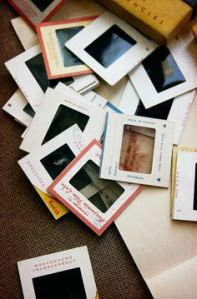
In some ways the diaspora of memories and recollections once housed in picture frames diaries sketchbooks letters and albums into the lost vaults of smart phone devices and hard drives is robbing us of tangible tactile living memory. This functional un-remembering allow us to abdicate the responsibility for maintaining those experiences, memories or recollections and synthesizing them.  The machine nature of calling up data is very different to the human nature of recollecting memory – the former is perfect, linear, modal and cached, the second, imperfect, linear, messy and overlapping, every journey into it opening up the possibilities of new revelation – as opposed to the same data cache relentlessly replayed like the locked loop in a stored file.

One of the most powerful drivers of our progress and evolution and of our astonishing resilience as a species is personal and shared recollection. Perhaps memory is a just a simple evolutionary trait mythologised – of collected wisdoms and experiences of fear pain survival and joy, regurgitated in fire side stories, tales, mementoes, symbols artefacts and dramas.

But to connect memory or remembering to some higher order of existence – to have created the thread between what is, what has been and what will be via the technology of memory is some proof of our ability to transcend the claw and scratch of base existence.

That the memory of us and what we do may well be a vanity particular to our species – a desperate need for our life to be more than some nihilistic little blip on a cosmic scale.

Nonetheless, our need to try and reach beyond the brackets of birth and death and seize immortality; whether it be through our beliefs, by our actions, the legacies we leave, the children we bear or the blunt tool of extending our physical and conscious existence, is a defining trait in us.

Gladiator’s Maximus demonstrates our need to be remembered as an inspiration of improvement and achievement when he states: “What we do in life echoes in eternity”

To be forgotten is a terrible thing. Immortality, until some scientific trickster or data consciousness A.I. guru makes it otherwise , is mostly an exercise in seeding a process of relentless remembering.

We have a number of simple systems already in place, some rooted in thousands of years of repeated doing and some rooted in immoveable belief systems, and some developed through more recent technologies.

Some forms or remembering have until recently been seen as the sign of mental distress or illness. Take Nostalgia. Sneaking off for a quick youtube binge of TV theme tunes from childhood or rummaging through pictures of old Y Front adverts (love Retronaut!!) and a desperate yearning to watch the infamous Ziggy Stardust Top of the Pops is usually seen by the up-tight ‘its all abut the Now man’ zealots as some mawkish sentimentality BUT recent developments in psychoanalysis have shown that nostalgia is a powerful human tool – and can actually strengthen our sense of self and centre our identity, enabling us to weather greater shifts, turbulence and transition.

Look Back In Joy, a recent Guardian article looking at the power of Nostalgia, focuses on an Greek Born American academic, Constantine Sedikides, who had left the University of North Carolina to become Professor of Social & Personality Psychology at the University of Southampton. He realised that he was using nostalgia to manage the turbulence and dislocation of changing continents. This led him to exploring in far more robust academic terms the role and facility that nostalgia provides us with. His findings are liberating. Sedikides talks of nostalgia as the “perfect internal politician, connecting the past with the present, pointing optimistically to the future” and a mental state “absolutely central to human experience”.

For me this quick blog journey through the Art of Remembering was bough on by a recent collision of banal choices, a profound realisation and professional curiosity.

First up.

The banal. Sky movie choice time with my children. “What about The Book of Life?” – a simple, beautiful whimsical story with a simple point by the master Guillermo Del Toro. Yes, its about greatness. Yes, its about the illusion of courage. Yes, its about true love. yes, its about belonging – but really, it id a film about not forgetting. Relentlessly Remembering is about Not Forgetting. Memory and the act of remembering are the most powerful tools that we have at our disposal. We are all kept alive in the hearts and minds eyes and memories of those who love us and have lived out some part of their lives in around and about us.

Second up.

The profound. In a simple exchange between my brother and I, we reminded ourselves that the effects of my beautiful but now dead mother will eventually need to be shared out between my he and I – the next step in the atomisation of her living memory into our lives and eventually the lives of my children and so on. Each effect vibrates with associated memory – sodden with the context which arrives like a steam train every time they are recalled into being – expressions, sounds, smells, feelings, times and experiences. The atomic truth that an atom never dies – and that the world vibrates with the atomic echoes of every one who has ever lived needs to include the more ephemeral but still equally powerful atomic nature of the vibrations of memory that run through the effects of those we have loved. Their atomic nature is indirectly imbued by their having been part of a life. They are rendered ‘animate’ by those vibrations. This belief in this form of conscious osmosis doesn’t stop at the effects and belongings of those who have passed out of sight. We also apply it to sites and buildings – from Stone Henge and battle fields to the blue plaques on buildings. We make pilgrimages to the hallowed halls of here and there, wishing for the conscious greatness and wellhead of wisdom and learning steeped in their walls to pour out into us.

Third up.

The professional. This curiosity arose while exploring the purpose of one of the Virgin Accelerator businesses I have had the pleasure of working with. In a world of zero hours and the death of the social contract between large corporations and their employees, their idea of a platform that links previous, present and future employees creates a simple and compelling way for rebuilding a powerful and precious social memory into a company.

Social or Living Memory in a corporation or business is increasingly left to chance and the random foray into face-book pages, LinkedIn and the odd Instagram surge. Fully connecting with a company’s Now – amongst its employees, the communities it touches, its customers, its partners and suppliers – is only part of true socialisation

Socialising a company requires more than just acting in the Now. But few companies actively connect their past with their present and even fewer attach it to their future. The anti-socialising of a company – the active dislocation and rupture the social threads that run through it – the ties that bind it from its past to its future – are not just an oversight on the part of the social strategy or HR.

It is not just economic pressures or the trend for zero hours that destroy the social contract and living memory of a business. Many ambitious and venal execs actively dispense with the ‘dead wood’ and not always for the right reasons. This forest fire approach is often simply a way of removing those with a greater living memory of the business than the ‘new’ order now prevailing and controlling it .

Agreed, often the human nature of getting stuck in our ways: fixing things: securing them and subsequently seeing all change to them as alien or dangerous can kill a business; sucking the light and life out of it. But the baby & bathwater approach to removing people who’ve been around too long can rob corporations of a vital cornerstone of their resilience. When done wilfully this kind of action should be seen as an aggression against the business and in turn the shareholder – because it is purposefully eviscerating a source of memory and knowledge that though in its linear and previous form may be obsolete, could be re-tasked and transformed into a new and more powerful resource to greater long term value.

All of these impacts, however great or small, can create a form of Corporate Alzheimer’s – the degeneration of the social memory of the company, and with it the very thing that made the company burn so brilliantly for so long.

In a conversation with a large American telecomm business about how they might help High School kids resist dropping out, I was surprised to find that they struggled to see the value in connecting their ex employees – a truly universal and multitudinous cohort of living memory and life experience – with the young high school crowd via a weekly skype roulette. The idea was simple – for a massive telecoms and connectivity provider to create a showcase of meaningful connections by using social platforms to randomly connect high school kids and oldies to share moments of life and experience to mutual benefit. I realised that to grasp the value of this and institute this type of initiative requires an innate understanding of the power and value of being remembered for ex employees and of memory to those just staring on their journey.

Regardless of what a company gets wrong, and many get much wrong in regards to how they treat their employees over time – the truth is those companies still invest an enormous amount of time and money into training up and expanding the capabilities of their workforce (self interestedly granted but in that mutual self interest lies the truth of the social contract between an employee and an employer).Why let it all walk out the door when the employee leaves?  Because sometimes their tenure was bumpy or you didn’t act in the best manner towards them?

At the close of the Theory of Everything , when Steven and his ex wife Jane watch their children playing in the garden, their exchange summarises the value and potency of connected imperfections perfectly.

“Look what we made”.

For all the mistakes. For all the disappointments. For all the pain. Would you have it any other way? Memory can hurt. But is can also heal. Forgetting is a cop out.

Some people and the companies they run would be all the better for taking this view – and in doing so commit to rebuild their ability to relentlessly remember – drawing a long line from their past to their future. Social or Living memory is not only one of the most powerful human facilities. It could also be the cornerstone of a companies greatest resilience in our accelerating atomizing world.

Purpose, the north star of any company, is one of its tools for Relentless Remembering  – and it becomes meaningless if it is only socialised in the Now.

A purpose must be part of a continuum that reaches from the beginning of a company to its end. And to do that it must exist inside a structure that values and facilitates everyone’s ability to relentlessly remember and be improved and enlightened by that remembering.


Chocolate Instagram, digital consumption & the sweetening of social memory.

07 Monday Sep 2015

Posted by Thin Air Factory in Uncategorized

≈ Leave a comment

Tags

A.I., Apps, Brain Scans, Confectionary, Consiousness, Digital Consumption, Digital Obesity, Educational Psychologists, Fat Sugar Compounds, HUman Existence, Instagram, John Sweller, Justin Kent, Kodachrome, Long Term Memory, Maltesers, Mondelez, NeuroScience, Neurotransmitters, Nicholas Carr, Social Memory, social networks, Social Technologies, Swiss Chocolate, tenderness, Walter J Ong, Wonka Bars, Working Memory

a808cba992a3a2f4f25634f6de7e3475

Could chocolate provide a simple low cost off set strategy to the impact of repeated use of technology, devices and the internet both on our individual long term and our collective social memory?

Could an old school tablet of a particular chocolate offset the dulling of our deeper human conscious software bought on by hi tech devices and surfing the net?

Nicholas Carr’s The Shallows pointed to the neurological impacts of constant and intense internet usage on us – with evidence that suggests that how our brain works – the way we think and in deeper terms how we retain and internalise our experiences both immediate, short and long term – is directly affected by how we experience life through the lens of our digital age.

We use technology to accelerate and expand both the speed, reach and the expanse of our lives.

But we rarely stop to consider the impact of using technologies to do so. Any negative consequence of doing so would simply ‘get in the way’ of the immediate gratification and the life enhancing abilities of fully submerging ourselves in a stream of tech derived stimuli.

Its just cool kit right? That helps us be our fabulous expansive selves.

But as we are coming to realise, technology and all it brings has far deeper resonance on our humanity. It always has, regardless of type, culture, epoch and era. Let us not forget that, at one point, alphabets and writing were an exterior technology. But their impact on how we retain, process and express our most profound human selves has been immeasurable.

Carr cites Walter J Ong in that “Technologies are not mere exterior aids but also interior transformations of consciousness”.

Modern digital and social technologies, in rewiring how we think, are changing our capacity for retention of information – especially the kind that feeds our deeper long-term memory – in ways that may seriously affect how we remember – both individually and collectively.

Contrary to the previously held belief that “it played little part in complex cognitive processes such as thinking and problem solving”, long-term memory is more than just a warehouse for ‘stuff’, according to Australian educational psychologist, John Sweller – “long term memory is actually the seat of understanding. It stores not just facts but complex concepts or “schemas”. These schemas are the very things which give depth and richness to our thinking.

So how our working memory – the short term immediate variety – works and its ability to transfer information to our long term memory has a massive impact on and is central and fundamental to the ‘health and dynamism’ of consciousness.

So where does the Chocolate Instagram connection come into this?

Last year I had the pleasure of being party to a number of research groups across France, Germany and Russia run by the inestimable Justin Kent.

The research in question focused on deciphering the true ‘emotional’ heart and hook of an iconic Swiss chocolate brand. The theory was that the chocolate seemed to be rooted in a deeper sense of emotional well being and connectivity of a particularly tender variety. (I know, go with me on this one: its surprising what a group of supposedly sane adults can come up with in a room when they’re exercising their intellect and protecting their school fee paying salary and smart holidays.)

That the taste and experience of the chocolate might build an instant bridge between the Now and the deeper long term individual and collective social memory bank was to be fair not that ridiculous an assertion.

In two of the countries researched, millions of people had grown up with the chocolate, so its role in golden-fringed and highly personal memories of childhood and of naive simpler times was to be expected

But interestingly the research also revealed that this was a reoccurring theme across both the countries where the people had grown up with it and in those where it was a new arrival (albeit using very small highly qualitative samples – and with only one ‘new’ country in the mix).

Something in the chocolate’s sweet emollient nature – its texture and melting properties – and the way it made you play with the square of chocolate in your mouth (a quite childlike think to do)seemed to create a brief momentary sense of wellbeing that seemed to be rooted in taking people to a naïve and simpler place in their head, regardless of whether they had ‘grown up with it’ or not.

To be clear this was not a retro, nostalgia moment that lifted them up and out of the moment into a reverie removed from the here and now. It seemed to bridge the space between their ‘Now’ – their working memory – and their ‘Then’ – their long term memory.

Much like the Kodachromatic filter on Instagram that immediately makes any picture just taken look like a memory; plucked from some old family photo album (for those of you who can remember them), the chocolate was making instant snapshots in the family album of the Now, saturating and staining the living moment in a deeper simpler kodachromatic emotional mood.

This inspired me to badge this momentary product effect as Chocolate Instagram.

But in linking something as simple and old school as chocolate to something as advanced and rooted in the burgeoning digital age as a social app, a thought popped into my head.

That Chocolate releases chemicals like anandamide and theobromine to stimulate neurotransmitters that affect our mood and effect how we think is a well proven ‘given’. It has a singularly positive effect on our disposition (unless you are on 3 bars a day and diabetic of course). Could the positive act of consuming chocolate off-set the potentially stunting, shallowing effect of our consumption of relentless digital stimuli on the well being of our brain and ultimately our consciousness?

Chocolate is certainly one of those rare compound experiences that seem to elicit both highly individual and deeply set emotional responses while also triggering immediate and ‘shared’ moments of equal emotional vivacity between people who have otherwise no connection to each other: much the same as the social apps and networks we fill our lives with.

If chocoholics are to be believed it certainly fulfils Ong’s task of being a technology that transforms interior consciousness.

Therefore it was interesting to me to ponder the possibility that the simple act of eating a piece of chocolate might be opening a synaptic connection between wells of feeling (sentimental data) in our deeper consciousness (our long term and social memory banks) and the immediate working memory of the Now, measured in seconds and moments.

Beyond the pleasurable feeling in the moment of playing a sweet melty square of chocolate around in your mouth, could chocolate create a parallel yet opposite effect? Heightening the receptors that shape how we consume the moment and subsequently how we process it? Perhaps we could build a complementary ‘conscious cloud’ computing system for our emotions predicated solely on the eating of chocolate?

That the low-fi technology of chocolate might have a similar yet potentially opposite effect on our conscious existence to the one provided by an super hi-end App used in the recording of that existence felt intriguing and in some ways complete – circular.

It certainly felt worthy of further exploration: especially by a chocolate business looking to off-set its avaricious peddling of more of its fat sugar compound pleasure with a higher purpose of sorts.

Even the simplest test might be revealing. What if we were to wire the brains of two sets or samples of people – and then have both sets undertake social networking and web surfing in isolation – the only difference being that one set undertook these tasks with the supplement of chocolate and the others without.

We could test them ‘in play‘ – eating as they undertook the tasks. We could also perform a secondary and tertiary set of tests – with consumption of chocolate happening prior to undertaking the tasks and finally one where the chocolate was consumed after the fact.

What would the brain scans reveal I wonder? No effect? Some effect? Would the activity be complimentary, conflicted; or would one either elevate or negate the other?

Who knows: but it would be fun to find out.

In the meantime, I suggest we break out the Whole Nut: oh, and a bag of Maltesers please. (And a Wonka Triple Chocolate Whipple) and consume heartily. And then perhaps tweet the empty wrapper picture to an waiting audience!

You know you want to.

Everything is connected & a brief journey through two kings, blue eyes, 1970s posters and Alice Cooper

15 Wednesday Jul 2015

Posted by Thin Air Factory in Uncategorized

≈ Leave a comment

Tags

1970s Posters, Blondie, Crystal Gale, Elizabeth Taylor, Elrond, Everything Is Connected, Gandalf, Gimley, Gladiator, Hamlet, Legolas, Living In The Now, lord of the Rings, Lothlorien, Manhatten Transfer, Mick Ronson, Mirkwood, Mustique, Nostalgia, Peter O Toole, Portofino, Richard Burton, Sartoria, Shakespeare, Sir Ian McKellen, Sir John Gielgud, Social Memory, St Tropez, Strider, The Cramps, The Medusa Touch, The Senses, The Shire, Theodren, Viggo Mortgensen, Who's Afraid Of Virginia Woolf

Screen Shot 2015-07-15 at 11.26.07  BurtonL1402_468x624imgres-1$_12imgres

TWO KINGS

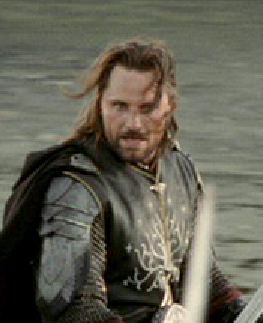
let’s start our journey of connection at the film Lord Of The Rings: The Return of the King – and lets take ourselves to the final reckoning at the Black Gate – and Aragorn’s rousing speech in the final battle scene.

It teeters on battle speech perfect. And that’s amongst some stiff opposition:
Spear shall be shaken, shield be splintered,
A sword-day, a red day, ere the sun rises!

Theoden’s rousing speech is about as good as they get (leaving aside every transcendent quote from Gladiator you care to mention.)

But Aragorn’s speech goes to a different level. And it is due to something beyond mere content. Something rings (sorry) more deeply here: something is different: his voice: the gruffness of before – the hoarse whisper of Strider, the ranger’s voice, has taken on a more measured passion – a more kingly tenor.

Suddenly there is a new stature present: that of a King in waiting. It seems as if Aragorn in his speech finally rises through his oratory to the challenge set by Elrond: to “Put aside the Ranger. Become who you were born to be.”

But this kingly voice sounds faintly familiar. Whose voice echoes down through the celluloid corridors to sound out through the lips of Viggo Mortgensen?

And then it struck me.

Richard Burton: Hamlet. 1964. Produced and directed for the stage and screen by the immutable Sir John Gielgud.

And What a piece of work is a man…

Glorious.

Viggo’s voice, whether by prescription or accident sounds out the spirit of Burton’s Hamlet through the mouth of a different King.

Strangely, another more abstracted, wholly subjective and subtle connection exists for me – through Gandalf or should I say Sir Ian McKellen: whom has always reminded me of Gielgud.

GOING FOR A BURTON

On the matter of Richard Burton, when asked recently whom I thought, beyond Bond et al,was the yet to be discovered Look in gentlemen’s sartoria – for me, it is Richard Burton.

Apart from the fact that, he already achieves 11 out of 10 on a blokey rating just for marrying one of if not the most beautiful women of the age (shallow is the new deep), Burton also found himself a famous sporter of fashion signature pieces like the toweling polo shirt – three button, splayed collar, sun burnt colours – which he sported in American Bars from Portofino to St Tropez to Mustique.

But look further and his look expands into multiple sartorial shards from the broken glass of 50’s 60’s and 70’s fashion. The ‘almost Elvis’ suit and collar combos off set by slicked back hair and powder-white sideburns firing across rippled sun drenched skin. The smokey southern deconstructed suits of a very twisted George in Who’s Afraid of Virginia Woolf. To the beat generation black of Hamlet and the stripped back Medusa Touch.

So Burton is The Man for me when it comes to the next British Look.

BROWN EYES BLUE

It’s amazing how a still from a movie can invoke a memory that rockets you back to a moment in time with such a breathtaking ferocity and such clarity.

While looking at stills of Richard Burton in the film The Medusa Touch, I was reminded of the depth and what I can only refer to a the particular ‘blue’-ness of his eyes – not bright crystal like O’Toole’s – more a deep mined blue with graphite shades and green eddies.

Regardless, the song that rushed to the back of my mind while looking at the stills was Crystal Gale’s Don’t it make your Brown Eyes blue. Now disregarding the fact that I had a massive crush on her for a while (though nothing will EVER outshine the tenure of my teenage crush on Debbie Harry – currently still burning brightly), and playful word recognition and threads aside (Blue Eyes – Brown Eyes) it was the ‘time’ that played up into my head – that moment of being in the world through which that song floated. The clothes I wore. The music I loved. The posters on my cork tiled patch of wall. All those discomforts of self: the intensity of passions and uncertainties. The smell of cut grass on school playing fields. The face of a girl that I liked but couldn’t even fathom how to look at let alone try and speak to. Dislocated parents. Dislocated body (nothing my body did bore any relation to what went on in my head – it was a law unto itself). A time made as viscerally present as it is past. All through a song and a film still.

1970s POSTERS

Speaking of posters from the 1970s – one of the posters that hung for years on my wall was a Lord Of The Rings poster Illustrated by J Caulty.

The poster’s central characters are, I believe, Gandalf and Frodo Baggins. Around its periphery we see Aragorn, Gimley, Legolas and Gollum amongst others, interlaced with twisting pathways, and realms like the distant Lothlorien, and the Shire – all topped with a curling embellishment on which hung a golden crown.

Around the poster ran a border embellished with men, elves, dwarves, riders and assorted others. But dead centre at the bottom of this border lay the magic: a small iris that looked into a mysterious land: as if we are peering out from the dark innards of the great Mirkwood to the lush lands beyond.

And I remember looking deeply, almost trance like into this aperture and wondering what world existed beyond there. (Preferably one more seductive than the one in which my highly conflicted teenage self lived currently.)

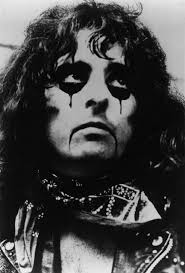
And I remember thinking that the character I thought to be Aragorn (but it is actually probably a darker character from the stories) midway up the right hand side of the poster looks like a mash up of Alice Cooper, Mick Ronson, Manhatten Transfer and a Cramps flyer – which just about summed up my musical confusion through the mid to late 70s – a troubled collision of heavy rock & pomp metal, disco, punk, greaser rock and psychobilly.

Confused perhaps. But Lord Of The Rings nonetheless.

Which brings me back to the return of the king: a virtuous circle of being.

So heres to a goes around comes around world where everything is connected – past present and future through sight smell taste touch and sound wound into a cat’s cradle string that we merely reform and reshape depending on the memory doorways we enter through, and to whichever passing thought kicks the embers from the back of our mind into sparks at the front.

Subscribe

  • Entries (RSS)
  • Comments (RSS)

Archives

  • November 2025
  • September 2024
  • June 2021
  • December 2020
  • August 2020
  • April 2020
  • March 2020
  • January 2020
  • October 2019
  • June 2019
  • April 2019
  • November 2018
  • August 2018
  • June 2018
  • February 2018
  • January 2018
  • December 2017
  • November 2017
  • August 2017
  • July 2017
  • June 2017
  • May 2017
  • March 2017
  • January 2017
  • December 2016
  • November 2016
  • October 2016
  • September 2016
  • August 2016
  • June 2016
  • May 2016
  • April 2016
  • March 2016
  • February 2016
  • December 2015
  • November 2015
  • October 2015
  • September 2015
  • August 2015
  • July 2015
  • June 2015
  • May 2015
  • April 2015
  • March 2015
  • January 2015
  • December 2014
  • November 2014
  • October 2014
  • September 2014
  • August 2014
  • June 2014
  • May 2014
  • April 2014
  • March 2014
  • February 2014
  • January 2014
  • December 2013
  • November 2013
  • October 2013

Categories

  • Uncategorized

Meta

  • Create account
  • Log in

Blog at WordPress.com.

Privacy & Cookies: This site uses cookies. By continuing to use this website, you agree to their use.
To find out more, including how to control cookies, see here: Cookie Policy
  • Subscribe Subscribed
    • thinairfactoryblog
    • Join 28 other subscribers
    • Already have a WordPress.com account? Log in now.
    • thinairfactoryblog
    • Subscribe Subscribed
    • Sign up
    • Log in
    • Report this content
    • View site in Reader
    • Manage subscriptions
    • Collapse this bar
 

Loading Comments...