• ABOUT

thinairfactoryblog

~ A topnotch WordPress.com site

thinairfactoryblog

Tag Archives: Back to the future

Accelerating History, Universal Rules & Tappist Conundrum

20 Monday Jun 2016

Posted by Thin Air Factory in Uncategorized

≈ Leave a comment

Tags

Back to the future, Bowie, Castro, Cold War, Conspiracy Theories, David St Hubbins, Dia De Los Muertos, facebook, Frank Cannon, GOOGLE, Guy Fawkes, History, Interior Design, JFK, Kevlar, Kruschev, Low, Marilyn Monroe, May Flies, Moore's Law, Mrk IV Continental, Rum Bean Stew, Simon Schama, Spinal Tap, Street Food, Will-i-am

Screen Shot 2016-06-20 at 11.38.20.png

The future is Now – or just a hop, swipe and a quark in front of the moment we’re in – apparently – and every leap forwards we experience just another masterful identification of yet another inflection in technology – another opportunity or possibility seized by one silicon valley giant or another (and at which they ferociously throw themselves like a clown-masked bank robber sprawled across the bonnet of Frank Cannon’s Mark IV Continental, money spilling from his pockets like confetti, killer app strapped to his oversized gloved hand, joker grimace mouth frothing with messianic fervour).

And as each Now is seized, another rush of them pop up in its wake. Not one. Many. Nows are like May Flies, their single short life, their moment in the sun though brief and bright, is followed by not one but many more, their job of expanding their universe efficiently and economically done. And like May Flies, those Nows and the wave of possibility and opportunity that accompany them are coming thicker and faster than ever as technology and the Moore’s Law slingshot applies.

But there’s the question (if you can be arsed to ask it).

These Nows, and the infinite relentless possibility that comes with them are coming thicker and faster BUT are they rushing towards us, and if so what’s pushing them? Or are we rushing towards them – and if so, what’s propelling us?

Are we in a delicious Pull relationship with that point somewhere between the far side of the Now and the leading edge of tomorrow? Is the mesmeric possibility and galloping expectation of ‘what might be’ seducing us to rush at ever greater speeds into that space, self-propelling ourselves on the accelerating nature of tech capability?

Or are we being pushed? – bullied and bumped by the expanding exploding mosh of what has momentarily just been…by history, its knee relentlessly in the small of our back: its open palms flat battering against our shoulder blades – oooffff – sharp shoves with vertebrae clicks as the metronome of our progress?

And if it is the latter, when did quaint, doleful, dusty history get so pushy?

Though providing a huge potential for sounding a little like David St Hubbins from Spinal Tap (how could we forget his musings on Infinity – “if the universe is indeed infinite, then how – what does that mean? How far is all the way, and then if it stops, what’s stopping it, and what’s behind what’s stopping it? So, what’s the end, you know, is my question to you.”), the question of whether we are being pushed towards the future (and if so by what) or whether the future is rushing towards us is a rather fun thing to ponder,

My interest lies in the two camps that seem to vie for attention in this Tappist space. On the one hand the Historians have always felt very strongly that the answer to every human question yet to be asked has already been answered somewhere in history so they would say that history reaches forward into the Now and the Near Future continuously, shaping, poking, and priming them as it goes, and, ultimately isn’t everything rather circular anyway in our Goes Around Comes Around world?

And on the other, the futurists have a tendency to simply view history as the collective debris strewn behind our relentless pursuit of that great big beautiful rush  of ‘Now’s – the past simply the rusting wreck of all that furious Doing and Being – the landfill of quadrillions of previous ‘what is’ and ‘what could be’s – and a fistful of ‘maybe’s’ – now old; spent; finished; past; dead.

It would be fair to say that in our tech-fuelled accelerating world one might be forgiven for believing that the Futurists are ahead

Bar the odd Simon Schama moment and the old farts watching Time Team re runs – and a small deep fetish for period dramas – it’s all i Robot, Future Shock, cyborg, Artificial Intelligence, the upcoming sensory smack addiction of VR, multiple Wireds by Will i am, and the ‘prism-meets-kaleidoscope-meets-mirage’ of social network identity.

But for my tuppence worth, I believe we are not being drawn towards the relentlessly multiplying possibilities of an accelerating life powered by accelerating tech.

We are being pushed towards them.

Life is not accelerating – history is. It is also expanding and deepening as it does so. Technology is not accelerating future opportunity; it is amplifying, multiplying expanding and accelerating the Past at an exponential rate, which in turn pushes the future. (I can hear the sound of a split hair readying itself for further splicing!)

The Past is throwing more and more data, options choices, threads and wormholes over our shoulder into the path ahead.

The old, odd, sloth-like and highly personal model of living history – a straggly tendril poking us along our merry way, or popping up for some reason every now and then – has transformed into a high, broad and deep wave of such staggering proportion that the sheer critical mass of it relentlessly rising up behind us presses us forward at ever greater speeds.

History has stopped being the inert supplicant to the edgy today and ever more glamorous tomorrow. History is no longer dusting off books and only getting noticed when the 120 pound muscled-up Now feels like kicking sand in its face.

History is now the big kid on the block. History has changed its diet. History is bulking up, doing free weights, and running faster and further than ever before. History’s arms are more ripped and wider than ever. History’s shoulders have expanded, laying on more muscle and width. History has binned the old singular enormo-head of massed experience, chronology and intelligence and now rears up like a hydra, multiple heads sparking, spitting and snapping in every direction at once.

History is so NOW. Alive. Vibrant. Ripped. (Ooohhh.)

And this History is no meathead. This History has taken up Humanities. Broadening its mind at the speed of light fibre. This history ‘listens’. And it learns.

The old, mean, sharp dry propagandas of the old History – mean, brittle, myopic, self interested, closed, elitist – have been supplanted with a broad minded, expansive all seeing History, fired by myriad reference points and concurrent history threads on any given subject – all of which can be viewed ‘in flow’, hyper linked to each other in a cats cradle of information, opinion, feeling, insight, record, and data. History is not only alive. Its groovy: switched on. Tuned in.

For example, lets take an era of historic record – The Cold War. In our new hyper connected world, at the touch of a screen I can explore the Cold War not only from the vantage point of general historic record; the standard expository account as set out in a geo political or military text book but also through ‘pulling up’ what’s out there (About 65, 100,000 results in 0,62 seconds according to GOOGLE) delivering everything from random Wikis to blogs to current affairs programmes and texts from the time, government papers subsequently released by interested 3rd parties (web platforms & activists): treatise on How and why – profiles on whom – the JFK lens? – the Khruschev lens? – the Castro Lens?  – suddenly Ive got Marilyn Monroe conspiracy films with my Bay Of Pigs and a recipe for Cuban Rum Bean Stew in front of me. There are personal biographical and autobiographical accounts of living memory (both politicians militarists, civic officers and everyday people) to swim in.

I can have a shufti at the confrontation through the 1st and 3rd person filmic, musical and artistic reminiscences of people who ‘lived it’. I can virtually experience Cold War happenings, using Google Street View to walk the streets and dark corners of the Eastern Block to bring a narrative reminiscence to life. I can listen to recordings, interviews; watch reams of old newsreel. I can even consider it through the lens of how the art direction of movies focused on the period have inspired new wave designers in a kind of New Wave Cold War Hot Looks Chic – with a range of soft furnishings furniture and wall papers that celebrate concrete block builds papered with the rural mirage of big florals rendered in a palette that cold best be described as ‘Bowie Low’ Orange

This sea of multi dimensional multi perspective references is universal.

Technology allows me to drown myself in my own historic tsunami on any given subject.

Now this new, expanding, deepening, towering hydra tsunami of history can be broadly separated into two forms.

Near History & Far History

Far History has nothing to do with timelines or chronology – Far History is the kind of history which is only occasionally drawn into our everyday consciousness – the type of history that is farthest away from our Now.

Far History is only drawn up for or by a particular reason. For example, I watch the film Book Of Life with my children; they ask me about The Day Of The Dead. I follow up with a little light research on Dia De Los Muertos and suddenly I can drown myself in an avalanche of semiotic, cultural, religious, geographic, artistic, musical rendition and reminiscence. And the odd street food recipe.

To put it another way, Far History is everything beyond the peripheral vision of a facebook timeline and a linked-in profile update.

Near History is the one to watch. Near History is the pushy one here. Near History is the type of history that is expanding to the greatest degree. Near History is the staggering funnel of information, data, reference, touch point, perspective that rushes outwards across multiple channels and platforms from any one moment, action, experience or occurrence to deliver social, cultural, economic and environmental context of staggering breadth, impact and effect.

Think of it in personal terms for a moment. Your ‘history’ was once something gentler, broadly of two parts – the highly personal – ‘Close to you’ version. Spoken memories. Photo albums. Diaries. Familial reminiscence. Shared experiences between neighbour and local. With a  nice and highly engineered ‘Part Of This’ national identity draped over the top for when bigger stuff came along – football, war, European Union, holidays, collective cultural rituals (Guy Fawkes Day).

But it was slow, intertwined, indistinct. Ambling.

Now every moment explodes with Near History – the old personal intimate ‘close to me ‘ stuff amplified to staggering proportion by the connections pictures films shares links likes revelations news sources contextual materials.

Near History doesn’t pop up eventually, a little way down the track. It goes off like a grenade – rising up and billowing around us so quickly that we are living in it – the Near History is now a part of the Now.

It is this expansive explosive Near History rising up behind every moment we live that is pushing us forwards.

Near History is not in service to Moore’s Law. It is what fuels Moore’s Law. The exponential multiplication of capability, capacity and functionality is forced forwards by the Near History of every innovating, applicable and expanding moment in technology that has just been in service to every expanding moment we’ve just lived and the legions of multiplying Nows lining up just in front of it.

I think.

Anyway, if you’re facing the future, throw away the rear view mirror, strap yourself in, pop on some flash goggles and turn that Kevlar round to face the back. And let History, especially the Near kind fire you forwards.


Brands, old-school Diplomacy & the New Humanities

26 Thursday Mar 2015

Posted by Thin Air Factory in Uncategorized

≈ Leave a comment

Tags

7 Revolutions, Adaptive Governance, Al-Indirsi, Back to the future, Brand Diplomats, brand futures, brand Influence, Business Schools, Castlereagh, Consumerism, corporate leadership, Cosmography, CSIS, DAVOS, Diplomacy, ecosystems, geopolitical leadership, Human resilience, Humanities, Napoleon, resilience, WEF

Screen Shot 2015-03-26 at 14.06.29

We’re up to our ‘proverbials’ in Brand Advocates, Influencers & Champions. The social shock troops have to no little degree saved a lot of the big consumer multinationals from themselves. They have proved themselves both central in driving relevance and a vastly improved and far more respectful model of customer service. They are to that end critical in securing the survival of relevance in many multinational brands who until quite recently had acted with old school impunity and arrogance when called to account.

But the blunt grass roots tool for creating better is just one of two required to secure an improved human existence in the face of our stratospheric levels of consumption and the brands who feed it.

The other (just as important as its grass roots cousin in shaping what better looks like) is though of a more nuanced and rarified nature. It is subtler, sharper; multi-faceted, fluid; intricate.

To build the more resilient and adaptive form of governance and influence that multinational businesses are increasingly going to require will take more than just a an MBA upgrade on the usual business school thinking and doing.

It will demand a new creature.

“The effective leader will jettison vertical integration information hoarding and dogma in favour of optimization, recalibration and negotiation.” (CSIS 7 Revolutions).

To navigate the ever-greater complexity and turbulence of our accelerating world, Leadership must be augmented by a new kind of executive corps.

The cats-cradle of interdependencies, interrelatedness and infra-connectedness of global business and the ascension of global brand potency in regards to global acts of responsibility demands more than a just ‘a faster executive horse’.

“A well-run business that applies its vast resources expertise and management talent to problems that it understands and in which it has a stake can have a greater impact on social good than any other institution or philanthropic organization” (CSIS 7 Revolutions).

Execs are increasingly finding themselves participants in and the conveners of dynamic and diverse conventions of actors and agents within the sphere of their commercial and social interests.

This new and more fluid model of engagement in the scale challenges that face both their businesses operationally and systemically and the communities in which they seek to thrive will become the norm.

Strategic coalitions consisting of governments, corporations, NGOs, and academic institutions will be necessary in mounting effective responses and capitalizing on important opportunities (CSIS 7 Revolutions).

The brutal truth is that they will be ill-prepared and increasingly incapable of managing and orientating these groups to any great degree.

This is because they simply do not have the skills and the training to do so.

To be brutally frank, the Davos & Done school of global stewardship needs a hearty and well placed kick up the arse.

Watching the currently fitful and flawed nature of a new world brand conversation should be all the proof we desire.

Current 21st Century Brand dynamics demand that Brand Leaders be capable of meaningfully engaging in a conversation that often spans a staggering breadth and depth of subject matter:

  • operational and systemic excellence, innovation and advancement
  • geopolitical sources of volatility and influence
  • the impact of global and local financial governance & volatility
  • the evolving nature and mandate of labour rights & the social contract
  • enlightened and reasonable understanding of adaptive governance models
  • the impact of technology both systemically and socially on global Value Chains
  • clarity and influence on relevant local, national and transnational regulation
  • a clear understanding of the value of enlightened sustainability practice and value
  • resilient growth modelling that embraces both quantitative short term and qualitative long term objectives

Add to these the escalating nature of responsibility and the multinational businesses ability (and more importantly its obligation) to focus all of its skills on improving both its own systemic nature and ecosystems as well as that of the societies, cultures and environment in which they are rooted and the need for a master-class in Brand Diplomacy quickly becomes critical to the successful evolution of our human existence.

The new leader and those that advise them will not only require an audacious breadth and depth of understanding but also, even more importantly, the artistry to navigate the nuances, multiple agendas and cultures of the multiple actors and agents operating within their realm.

This is what leads me to believe that this is the dawning of what I like to call The Age of Global Brand Diplomacy – and the rise of The Brand Diplomat.

Real diplomacy is a rare gift of the few that exists usually only by accident, quirk or happenstance. It requires a very particular education: a highly diverse immersive and passionate pursuit of breadth over fashion, depth over trend. It demands a real investment of purpose and person – a commitment of measurable integrity.

Given the scale and importance of the challenges they will be faced with and in which they will need to have a profound impact, the new breed of leader will at best be schooled in both the arts and discipline of geopolitics, anthropology, civilisation & culture, the Arts, the history of diplomacy and the intuitive Social Sciences.

So the question for me is not whether a Business School of global merit and stature should do this; but which School? Which business school is going to rise to this challenge and embrace the task of shaping this new creature more formally?

Which school can credibly host the Master-class in Brand Diplomacy?

It requires access to and the benefit of an environment that enjoys an effortless multi-cultural aspect. It requires exceptional immersion in a dynamic accelerating ‘living’ throng, not splendid isolation. It requires an audacious fabric of skills and disciplines to be stitched together into one compelling proposition.

But mostly of all it requires people steeped both in the commercial marketed and applied world and that of the NGO the government think-tank and the venerable institution.

It will also I sense require a new trajectory and term of influence and engagement: a longer and greater arc of nurture and devwlopment coupled and a more interdependent quality of rolling assessment and dispositional measurement from a far earlier point in the shaping of a mind.

It will also demand a clarity of purpose sparked and elevated at an early age – in much the same way that the British Public Schools of old shaped the disposition and the ascent to position of boys from their prep school years – through the study of War Craft, the Classics – a living, breathing understanding of how one fits into and then, if in your interest, how one starts to run and lead a ‘mini me’ hierarchical society; through the use and leverage of various tools at ons disposal – the pride and allegiance of the House system, Corps duty, prefecture and eventually the position of Head of School.

The only difference now is that having stepped through that system – the rest was quite straight forwards – based upon an assumption of position underwritten by an impenetrable right of entitlement.

The modern world has different demands. The fierce competitive nature of it cannot be dissuaded simply by an accent and a tie anymore. Quite the opposite. The brutally mercantile nature of it allows no easy options of rides. resilience and adaptability are critical in the survival of the Brand Diplomat.

In shaping the curriculum of the new Brand Diplomacy we also have the benefit of hindsight and the sensibility of foresight

We have the advantage of knowing that setting foot in the real world beyond the hypothesis and the theory is what ultimately shapes an exceptional leader so we are already one step head of the old model; the raw talent pouring into the world is more connected, engaged, Worldly and far more rounded. We also have the welcome addition of living in a time of the female competitive advantage is in its ascent (something the British Public Schools could have done well to embrace a lot earlier than they did).

The Business School that chose to accept the challenge of Brand Diplomacy would need to very clearly set their sights on those at a school age with the potential to fulfill their potential in this rare space where global politics, commerce, finance and cultural anthropology collide.

I believe that a course in Brand Diplomacy would need to be designed to be the culmination of a journey to enlightenment. And enlightenment is the word here.

No posturing blue-tooth slide show talker will be able to busk or bluff this. We already see in the sustainability and social purpose ‘game’ the limitations of the stage walker: too many rooms: too may panels: too little progress: their ceiling all too apparent to everyone but themselves.

This will demand true leadership skills from enlightened and measured minds.

A meaningful course in Brand Diplomacy should plumb not only the usual texts and case studies to hand but also look beyond the 20th Century scholars and Students of Diplomacy to the Birth of it in the Italian City States of the Quattro Cento and amongst the Bourbon Courts of the Southern Mediterranean. It should look to the life work of the likes of Castlereagh (the subject of Henry Kissinger’s thesis I believe), the much maligned but now redeemed British Foreign Minister from the era of the Napoleonic Wars: a master statesman who shaped much of the best of the interrelated and more stable nature of European politics – but only by virtue of combining foresight and the subtlest of diplomatic arts to everyone from Tsar Alexander and his own Regent to the masterful Austrian, Prince Metternich et al.

To shape the a more resilient future the business world needs to look past the lazy interrogation of the same old business school tenets and brand pillar thinking to the expansive landscapes of the Humanities and the depths of Geopolitics – to look beyond the One Size Fits All model and embrace the diversity of an Renaissance perspective.

idrisi2

Brand maps and models should begin to resemble more the cosmographic maps of the middle ages and the early powers – where character, tribe, geo-centrism, chronology and purpose exist on one plane seen as a whole.

This would be respectful of the new broader more complex and dynamic world that superbrands exist in and in which they have enormous influence on.

And to be frank, I sense it would be a damn fun course to attend.

So my original question stands: which business school?

Restoration, Mighty Fear & the immutable power of Millennial Passion and Belief

05 Thursday Mar 2015

Posted by Thin Air Factory in Uncategorized

≈ Leave a comment

Tags

a new conversation, Back to the future, beauty industry, fear is an energy, Foot Long Suasage Rolls, Governance, HR Strategies, leadership, millennials, passion & belief, Punk, Resilience Strategies, Restoration, Social Purpose, Sustainability, Sustainability Diplomacy

Screen Shot 2015-03-05 at 10.58.40

From the dressing up box of clashing social fabrics, a Queen arose: restorative, reckless, feckless and committed. The Restoration Queen.

Harsh. Brittle. And of Exceptional mettle; and a little crazy perhaps.

But that’s how to get on in this money-sucking carbon-wheeze of a 21st Century.

Too many bankers living in a coke and Purlina lunch schema; tucked up tight with the cross-dressing maid-interfering industrialists who say ‘what the hey, Ill be dead tomorrow…what if some kids drink piss from a rusty wheel rim and the forests collapse. I’m coining it, my kid’s at Harvard and I’m in the Cinquante Cinq’

But down the Production Catwalk of Life strode the Restoration Queen, no knickers and a pair of slab-soled Kickers to put the boot into every rhino skinned half-wit with a double-bubble scratch-card life with Ugly lurking under its soiled foil veneer.

And, wrapped in battling plaids, leaden white skin, and piercing black eyes thus spoke the Restoration Queen:

All the Shiny in the world shall be yours if you make it fairly and in good faith: but make someone else pay in misery and squalor for the colour of your money: and as Not God is my witness I will hunt you down and nail you up on a poster pasted to the honour of your disgrace.

If I find that for even the briefest second of your existence you can question the provenance of your good luck and in doing so find it tainted – dipped in the ink of someone’s diminishment, heartbreak, pain or misery – and in the second that immediately follows the first, do not immediately act to make amends in some way of other – you truly are the lowest in my domain and will suffer accordingly.

So, punchy? Perhaps. Threatening? Most certainly. And mediaeval? Without doubt. BUT effective none-the-less.

Polite entreats to corporate and government, to turn the nature of enterprise to better and kinder purpose, had made good dinner party conversation; the diplomacy of intellect deployed into rare and grand salons and boardrooms warmly welcomed. But you see everything was written in the courtly language of the Academic – and riddles rarely make for revolutions in anything.

Once the conversation had climbed out of the impenetrable linguistic forest of the bureaucrats, civil servants and systemic bourgeoisie; and ripped itself free of the suffocating social creepers of the over-educated, under-whelming middle classes, the language of Sovereigns and Serfs reigned supreme – and it is a surprisingly and disarmingly simple one – heart filled, base, emotional, primal and blunt.

There had been something fundamental missing in the more rarified and courtly conversations: something powerful enough to override the staggering self interest of the die hard industrialist and money monster – something that could present a healthy threat – a razor sharp blade waved at the fabric of their voracious acquisition.

What had been missing was Fear: Fear with a capital F. Fear of being hurt. Of being Humiliated. And diminished. Fear of LOSING!

And if there’s one thing that the Restoration Queen could inspire in the hearts and the underpants of the stolid grey captains of industry and finance – it was fear. because without her they were nothing.The Queen and the land were one. And without her the land would suffer. Poison her, act against her interests and their future would crumble into the sea never to be given a moments thought ever again.

From whence and where the Restoration Queen came is a matter of conjecture to some and legend to others. Her punked credential to rule in a land of shaped hedges, swinging Cul de sacs, subversion, elegance, eccentricity and foot-long sausage rolls was without question. But her conscience? Her fiery righteous conscience written across the world: where did that come from?

Some say from just an hour in a sweat shop outside Delhi – that the shock was too much for even her bullet-proof sensibilities – and that to scuttle from a palatial room to view a button pauper stitching Hope onto jackets put the first fissure in her armour of suburban everydayness – and sparked a more regal purpose in her heart.

Others say that it was that day at the Palace all that time ago, when the stick finally pricked the ardour of her anger at the inequality and destruction of it all.

So the Restoration Queen took stock and a deep breath; and she thought ‘time to knit a new fabric of life: one hitch and stitch at a time.’

There are alternatives, she thought, to the burning, drilling, cracking, fracking, and spilling that props our most industrious purpose.

Why is our ingenuity applied in such dark corners? Why do we abdicate all personal responsibility and accountability to new technology and innovation and the whimpering simpering ripostes of ‘I just didn’t realize – if only I had known’.

And so it was: slowly and surely at every turn and every opportunity: where she found distemper and malaise she cut it dead. In the presence of toxic arrogances cluttering tables and rooms, her acid dismissal followed. Intuitive, and ingenious improvements were made, some small and expensive; some grand and expansive.

Slowly but surely a new dawn arose, as the restorative nature of the Queen spread rapidly across the land. A fresh vibrant shout went up in think tank, factory, mill, studio, office and laboratory.

All Hail The Restoration Queen.

And restorative missives and mantras were pinned (kindly) to trees, walls and doors:

Goes around comes around, Mend and Make Do, Thrifty is Nifty and Waste Not Want Not; Look after the pennies…

Everything was to be restored  – not through the recreation of some over sentimentalised Narnia of what was, clambered into through a wardrobe of smoke-stinking camel hair coats and a barrage of idiot politics – but by tempering a sharp edged, keen and bright future forged out of the mettle of the past.

Back to the future was the way forwards – reaching back into old wisdoms and a sense of fair play. Reaching back to a time when decency wasn’t stunted and twisted by technology.

But this all seems so simple as to almost ignore how long – how terribly long – it took for the Restoration Queen to arise to her throne. Why?

Well, at first, they laughed. The ‘Mostly Men’ of Enterprise and Industry. And they laughed and laughed – at the mad harridan, the witch, the acid bitch, the righteous trollop. Laughed at her assertion that industry can be good: enterprise can be honorable: and business can thrive without extracting every shade and shred of Hope hosted inside every heart of every worker and every thread of natural capital the world has to offer.

Her ridiculous naïve protestations at the tenor of their destructive exclusive diseases raised howls of derision:

Anarchist – tree hugger – lofty lesbian – lefty dyke – punk slut – suburban nobody – clothes hag – freak.

Who are you to question the integrity of our enterprise, the substance of our trade and the provenance and integrity of our wealth creation?

Governance is reserved for those fit to govern, and agility is an over rated skill. Adaptive Governance my arse. We shape the world to ‘me’, not we to it.

And in the end?…Short time living long time dead, Love, so you can stick it. We’re off to the Guinea for a 100 Guinea’s worth of grub.

These ‘mostly men’ who everyday proved themselves to be mostly men (but not quite – perhaps therein lay the issue) would throw buns and scold and mock the Restoration Queen and her little theatre of ‘better’.

Ridicule and sneering was an everyday curtain call.

You can take your silly clothes and your gawky principles and awkward politics and stick them up your ignoble arse.

Everyday the mockery fell from the purses of the industrialists and the bankers. But the Restoration Queen was immutable and immoveable.

Until one day, amongst the hubbub and the screeching and the guffaws and coins spitefully chucked, a chair scrape was heard.

This was no ordinary scrape. This was the scrape of an antique chair crafted in Asian Oak, Teak & Walnut, hand finished in Windsor and reupholstered in St James. This was the scrape of a chair leg across a floor repeatedly oiled and waxed for hundreds of years to a sheen of patrician ‘just so’. This was a scrape of great import.

The dark, bright eyes of the Restoration Queen lifted from her Orb of Hope in the direction of the scrape.

There stood one industrialist: his heart in his hand. Courageously silent; and fiercely vertical in a room of horizontal disdain and louche legs crossed.

One solitary man in a shade of unsexual grey – a knight had arisen. The Restoration Queen had her first champion.

To honour this courageous chair scrape, the Restoration Queen matched with a scrape of her own, as she rose to her full fierce Celtic height – and stepped lightly off the podium and into the swarming mocking crowd.

Together they stood in the mote dusted, smoke filled half-light. The Restoration Queen and her First Knight.

The rising of a champion only served to provoke the laughter to continue louder and the mocking to increase;

BUT through the laughter a small whistle was to be heard. A wry whistle, through smiling pursed lips.

Who’d have thought it? The Restoration Queen has skinned her first Money Monster and revealed the human underneath – with a wish to create better together; not just more for his own.

But that first step to better seems so long ago now; and there is still much to change.

But lets hail the day that a real fear of retribution entered the halls of the mighty, that the possibility of their failure became real.

Praise the day the riddles ended, that language opened up its doors once more and the debate opened out to include everyone, and conversation flowered on every street corner and thoroughfare.

Let’s Hail The coming of The Restoration Queen.

NOTE: The Restoration Queen is the embodiment of the immutable thronging mass of Millennials and Post millennials rising up through the ranks – bringing with them their ‘naive’ assertions that it is incumbent on any business or enterprise to deliver rewards both financial and social, to mind their manufacturing and operational manners, take care of the people they both serve and who serve them, and to take a role in securing a more resilient human existence for us all. 

China, you-sized cities & the joy of cutting a different path

09 Monday Jun 2014

Posted by Thin Air Factory in Uncategorized

≈ Leave a comment

Tags

Back to the future, China Dream, China's Emerging Middle Class, Confucian, Culture & Style, Fossil Fuels, Harmony, Human-sized cities, Living, Mega-city, People's Republic, Qi, Respect, retail innovation, Social Fabric, Tan De Bing, The Rural Diaspora, tri-generational living, Urban Carbon Emissions, Urban Flow, well-being

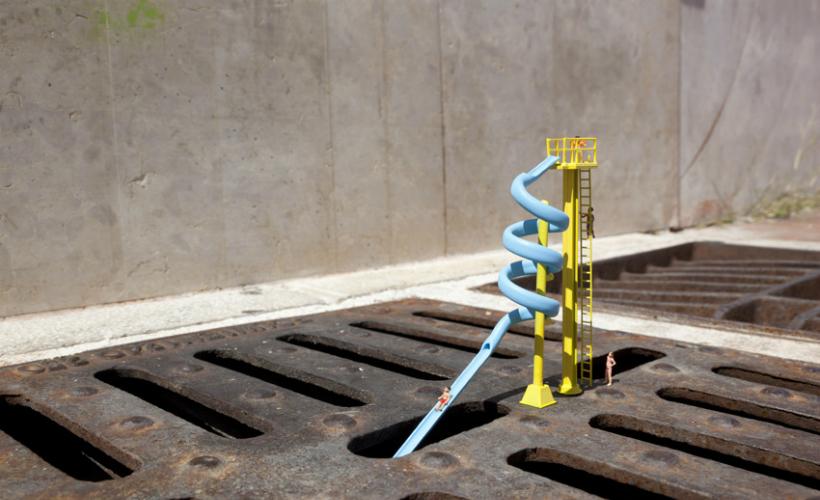
Image

NOTE This piece was written in May 2012 as part of an exploration on what might constitute the China Dream on a mega-city scale

Its a nice thought – that just by divine chance, Wang Shu, Tim Burton, The Candy Brothers and the People’s Republic all just happened to bump into each other in a coffee shop, got to talking about mega cities and started to think “what if?

It would be perfect: Wang Shu for balance and exceptional sustainable living design: Tim Burton for sheer Magic, Joy and Wonder: The Candy Brothers for monumental ambition and chutzpah: and the People’s Republic because beyond Social Harmony, in the end the mega city concept is still about people: the best of people and their infinite well being, for generation after generation: not just in the now.

In 21st Taoist terms, people and their energy are the ebb and flow of urban dynamic living – the Qi of the mega-city.

Which means the mega-city in its infinite wisdom must be designed and conceptualized around human-sized principles as well as eco and sustainable ones, constructed in such a way as to knit back together the strands of the fabric of society to create more than simple cohesion and structural support. To atomise and empty the rural constituencies requires making quite deep ruptures and rips in the cultural psyche. These need to be either healed or resealed depending on whether you see this as an emotional or rational task first and foremost 

This is about Tan de Bing versus Harmony, Balance & Respect.

With 1 Billion Chinese people expected in urban mega-cities by 2025, how one maintains Harmony Balance & Respect in a way that is both enjoyable and sustainable will become increasingly critical to the national and global well being.

Fossil fuel consumption increasing by 3-6 Billion life years per year with a ten-fold increase in solid waste this becomes a matter of human logistics on an extraordinary scale.

But perhaps just starting by thinking of what it means to be human in a mega-city is a good place to start.

Scale is something that seems to be driven by the most interested party and developers tend to favour scale of ambition over scale of inhabitant too often – particularly demonstrated in the burgeoning mega-cities of the Middle Eastern Sovereign States.

Human Scale

So let’s start perhaps from the small wonder of a human being – and those inextricably linked to that human being, family, friends, community, and those that serve them both professionally and domestically, and the services that surround them, the environments they exist within, and how everything from educational philosophy and medical wellbeing to civic planning needs to be calibrated in the daily flow of urban infrastructure. Obvious yes, but especially critical given the broader societal cultural, industrial and commercial shifts and undercurrents rippling through the nation and how it is perceived both internally and externally.

There are cities where a human scale still survives and becomes the defining aspect of those cities, whether by simple history and divine chronology – the existence of smaller more human-sized historic building scattered amongst the high rises.
The City Of London for example, like many European cities enjoy this aspect of modern urban living.

In a recent New Yorker piece by Evan Osnos, Li Huang the guide showing a group of mainland Chinese travellers ‘Europe’ pointed out the ‘open-ness of the city’ to them while standing on the banks of the Seine. “In Shanghai unless you’re standing right next to the Huangpu River you can’t get any sense of the river because there are too many tall buildings” adding that Europeans “preserve anything old and valuable.”

Even in the US the streets of some US cities like San Francisco and Boston old tradition and historic residences, churches, parks, thoroughfares and in Boston’s case the very halls of the Founding Fathers continue to set human dimensions on the aspirations of the high rise living that surround them.

Also, cities like London have seen the rise in the social and cultural importance of what were the old villages that once circled it. Highgate & Hampstead, Notting Hill & Kensington, Clapham, Dulwich, Blackheath are islands of human-sized buildings, spaces and thoroughfares critical in maintaining the balance between a city’s architecturally progressive and its inexorably human self especially given that they are now fixed firmly inside the UK city’s own version of Tan De Bing – its urban into suburban sprawl.

One could argue that mandating that 30 percent of buildings in any given area of a new mega-city can be no taller than three stories and have as much open space around them as they take up in square meterage would be a good start. Or that perhaps they should be planned with some human sized historic or non commercial building (whether it be a single barn, a temple or a whole village) at its centre, kept as a living spiritual compass for the rest of the city.

Continuing in the 21st Century Confucian theme perhaps a pond-ripple concept might also help keep things human.
If there were a central building: small, low rise (tasked with an active social role beyond being just thematic or symbolic – a community centre and well being clinic perhaps) with open space around it and the development of housing and retail spaces rippling away from its centre, only climbing to the higher and larger scales of buildng at the outer edges, until they overlap other ripples of development.

TRANSPARENCY

The ability to see through things: spaces, areas and buildings to what is beyond is to my mind critical in the health of a city.
Not everything must be wide open but enough to make openness and transparency a signature of better living.

Removing civic opacity to me must be both physical as well as spiritual and political.

The Cities of the future could place this very important ‘Balance’ characteristic at its conceptual core – as a form of ‘letting go’ – of removing the visual and physical barriers that are historically used to close and control communities, spaces, people, lives processes and systems.

Protection in regards to the state institutions has shifted from the more intimate communal protective vigilance of long ago to the more paternal protectionist big brother model – perhaps the mega-cities of the future can start with the one small step on the greater journey to rebalancing this trend.

LUNGS & ARTERIES

Enabling people to feel masters of the environment through scale is one aspect of a healthier urban environment.
The other is open and communal spaces in general, though I would stress a preference for planning that weaves green organic and flourishing habitat into the fabric of the infrastructure planning and not just as spaces set aside for leisure time enjoyment; for example as ways of humanizing commuter routes.

This is more than just a lung concept – these would be truly arterial in that they are oxygenating the traveller along otherwise urban landscapes. As opposed to arterial being a plain descriptor of the role, quality and flow of the traffic in motion along them.
To ‘line’ every road, rail and bike route with flourishing flora of ay sort – to turn them into a landscaped or farmed artery would make for ‘breathing spaces’ in otherwise quite congested high stress channels of flow through the city.
These arteries can also provide areas for the human hand to be seen at work. The still hands of the old might be usefully engaged in planting these arteries, creating shifts and washes of different colours and textures, small strips of pride – the tools and seedlings provided by a hands off civic centre.
If one were to create a grid one could assign the East West facing strips as allotments and urban farm strips, the organic and intimately tended criss-crossing the urban metropolitan landscape. One could even for example create a simple trading relationship between the owners/leases of these and small retail grocery interests around the city to develop a 1 Mile Produce Promise for the people buying the produce.

One Person One Life

The ‘one human’ concept – of people being the same person inside work as they are outside instead of having to become schizophrenic – is helped enormously when you ‘open cast’ their working community alongside the everyday domestic and public flow of life.

Physically knitting the fabrics of the business/commercial retail, domestic elderly and young communities of one city together like this is critical to health and communal well- being.
A true constituency of extant human beings sharing space and fuelling hope and small wonders on an everyday basis.

(NOTE: there is also an inbuilt innovation trigger in this style of interwoven and proximal living as it has a far greater likelihood of driving direct and indirect general idea sharing and creative collisions, making it far more likely for like and eclectic minded individuals t find each other).

This openly interconnected physical formula of: flow x people x experience x action ÷ space drives heightened degrees of mutual respect; of the others right to existence and enjoyment and equally, might also substantially reduce isolation of particular groups which ascendant modernizing societies have a tendency to leave behind in their whirlwind of achievement and pursuit of even greater individual success, e.g. the elderly and young mothers.
Creating working spaces where people travel along or up and down through domestic, retail or public spaces from office to office or from one corner of a business floor to another creates a far healthier attitude and less ‘ shutting away of the worker bees’ – a system proven to ultimately fail by creating social and communal division and isolation with net negative impacts on mental health and potential alcoholism and other domestic issues demonstrated inside people’s lives away from the public eye.

There are also financial possibilities to be considered here in regards to investors in development of these cities: I use the particular example of the Pension Fund standing at ¥1.9Trillion with a track record of low yield investments, lack of transparency in regards to management, low or empty regional pension pots and little impetus to change.

If we were to stitch the elderly back into the infrastructure of the mega-cities, not just by building more residential care homes but by investing their pensions in the very infrastructure of the cities that serve them, this may point to a more accountable and directly applicable financial deployment model of the pension funds that currently enjoy some arcane management at best.
If we were able to combine the financial interests and burdens of the polar ends of society by stitching them into the structure and flow of these new eco mega-cities perhaps it also reapplies a 21st Century version of Confucian harmony.

This is not just some retrograde cod philosophical posturing: a sop to the old wisdoms. We know for a fact from some of the most mature Liberal Democratic Capitalist countries that no good comes of isolating your elderly into the margins.
The soft wisdoms and life learning that comes with them equally disappears with them. The disappearance of these balancing perspectives and small wisdoms break down family cohesion, dumbing down the Emotional Intellect of the family and communities they exist within in by removing the direct effect of their life skills and experience: a removal of balance from the natural social order of things.

Deploying the power of old people back into society as some form of spiritual triage would also remove the tendency for young people to increasingly spend too much time reinventing the wheel in regards to life skills – taking time to discover some life experience that they might have otherwise picked up through sheer social osmosis ultimately takes the young person’s mind away from greater and newer discoveries perhaps.

And finally, old people sitting and watching the world go by being placed in close proximity to the crèches of their grandchildren not only brings the pleasure of young people to bear around them by reinstates the communities kind eyes and watchful carer class

Stitching Well-Being Into Everyday

City living isolates most people ‘away from’ the kinds of small incidental processes of health and well-being that would otherwise do them and their productivity enormous good.
‘Small and often’ in regards to visiting and exploring best-health and well-being practice ultimately pays the individual and the society they live in great dividends – they feel secure and supported, part of a substantial social contract of care, and equally in turn feel less distracted by abstract concerns and better focused on the matters in hand – extant beings working and being in a productive thriving life and society.

So, as an extension of the One Life One Person strategy it would make sense to begin building medical and well-being galleries populated by ‘walk in clinics into this open-cast approach to living working leisure spaces – equally it promotes and builds into the every day psyche a convenience strategy of well-being – critical in a city where people become isolated in their workday from the smallest medical or well being services or considerations.

The Devil’s in the Retail detail.

That every new eco mega city will have a burgeoning and vibrant retail economy goes without saying. It will be a cornerstone of the ebb and flow of life, existence and people’s broad concept of their prosperity.
The fact and detail of how the retail experience: and the brands and the businesses that design and deliver them stitch themselves into the urban society both physically and spiritually will be where the innovation and the harmonious concept development should come.

Most of the traditional retailers and manufacturers are constructed for an American style of manufacture, distribution, format and consumption. In the modern China this model has become simply untenable.
Not only are the American models require a staggering use of fossil, material and human resource to maintain themselves, they are also based upon on a Sub-urban mart and mall model that will not necessarily fit the design sensibility and spatial economy of the new mega cities – they also create cluster and volume formats in which the consumer is guided through a vast arena of offers and multiple purchase deals suited more to the vast double fridge households of the Midwest than the spiritually and physically ergonomic concept of Chinese living.

How retailers adapt to what the Chinese model of consumption will become, as opposed to just pointing at the version of it that currently exists – a cod-American gated villa ranch and lodge style of living that still holds up the SUV double fridge ‘I am therefore I consume’ model as a demonstration of personal meaning – this will be the defining factor in which brands and businesses win.

How the scale retail players deconstruct themselves into these mega-cities – delivering surprise and a more human sized and manageable set of offerings – offers an interesting challenge. Can they still create aircraft hangar sized triple floor temples to their wares and life style signature? Or will they need to sub divide their offerings into boutiques of need, day part and purchase scale scattered throughout the urban landscape? Or will they need to deploy a little of both?

Potentially, bringing in some of these retail and manufacturer partner players at a planning stage while they are still subservient to the greater good, and tasked with stitching themselves sustainably into the future habitat as opposed to helicoptering in and simply ‘planting monoliths to their brand dream where they fancy may be the smartest beginning to that journey

Back to The Future

There has been much talk of a return to the cultural roots of the Chinese – a return to the culture and environment that have shaped this phenomenal culture over the millennia. In returning to this space, and in reconnecting with their roots, there is in essence a trigger for the 21st Century ascendency of new Confucian or Taoist ideals at work across and throughout society.

Pure urbanity is imbalanced in its perspectives and its energies. It must have the organic rural expanse of ‘Other’ to be truly balanced and powerful.

Though some might see this as a cynical cultural play to make every one more personally responsible for their lives and to take them away from the state-orchestrated feel good dependency of old, there is a lot to be said for how we might build this into the vision of the new Chinese eco-mega-city.

If one applies the filter of ‘Perceptions of Prosperity’ over the question of how we reconcile cultural tourism and the rise of the eco megacity, we should simply look at how the most mature western liberal democracies view ‘having it all’.
It would reveal that one of the final steps to the peak of prosperous living and being is the one that takes you into ‘a rural retreat’ – having a place in the country – a cottage, house, farm or barn.
It is seen as the ultimate pressure valve for the modern sophisticated urban player – an escape to something purer and simpler; connected back to the land and the hands that formed it.
For many it is vicarious – many do not actually engage in the ‘hands-on crafts and tending of their property and the land that surrounds it’ even though it has been proven that undertaking these pursuits leads to a greater sense of fulfillment and superior mental health. They’re simply buying ‘the idea’ of it.
But to actually rebuild the bridge back to the rural culture of China could be of enormous social value in regards to a rediscovered and sustained sense of self – though some large negative perceptions and behaviours might need to be accounted for and changed first of all.

To some experts this idea of a return to ‘doing things with one’s hands ‘ – artisan and manual labour; craft works and hobbying’ sits at the peak of the Struggling, Surviving, Thriving, Being pyramid – as a supreme demonstration of ‘Being’, as opposed to near the bottom just above ‘Surviving’.

Given the recent emergent journey up and away from poorer rural roots of many of the new emerging Chinese middle classes, this would probably seem nonsensical or counter-intuitive – just going backwards.
But as has been born out in the western liberal democracies with quite sophisticated social models and concepts of prosperity and success, if one replaces the material striving and existence framework with one predicated on a ‘pursuit of sustainable well- being, balance and harmony’, a new world is revealed. It becomes part of the rupture repair strategy.

In many mature societies, especially those that have moved the furthest away from their original rural agricultural roots post the industrial revolution, it has been proven that hobbies, jobs and professions where ones manual actions are directly linked to having an effect in the physical world – an structural creation or improvement, a communal good, the creation of or maintenance of a personal chattel or machine, an improvement to the immediate landscape or environment – offer exceptional health giving properties and are a source of improved mental well-being and ultimately have a positive effect on people’s perceived sense of personal happiness.

In fact even in the more structured undertaking of civic politics and citizenship, the ability to act on something, directly attributing cause and effect to the person undertaking the action has been proven as a direct producer of ‘happiness’ – as born out in the Swiss cantons that rated highest in one of the global Happiness surveys – their ‘happiness’ rating seemingly attributed to each civic individual’s ability to vote in such a way as to have direct and tangible effect on the quality and progress of their own life and that of the community around them.

So, though I am NOT suggesting that every one need return to their roots and start taking up pot turning and weaving, I do feel that building a supporting environment or infrastructure into the city plan that allows people to ‘reconnect’ with the primal humanities contained in this ‘belonging’ in nature and environment is a good thing – and to that end a halo of eco lodges around as city as an inextricable part of the enjoyment of that city would make supreme sense.

If this outlying landscape was populated by eco-lodges that created an urban escape – one of many different shades – developed as an integral part of a sustainable more balanced living strategy – an inextricable aspect of the urban ebb and flow, maintained by the city as a part of the infrastructure, that would truly be cohesive planning at work. To create a ring fence of rural Eco lodges that any and every inhabitant of those cities could go and use, to escape and reconnect with the old rural cultures just for even a short while would be an amazing embrace of what we know know to be a silent truth about pursuit of happiness – and it would be far closer to the burgeoning 21sts Century Confucian ideal of Social harmony that the central party espouses.

One could also build into the city infrastructure a collection of what could best be referred to as ‘Barn Raisings’ (as a reference to the scene in the movie ‘Witness’ where the Amish community are shown ‘coming together’ to build a barn for a farmer as an exercise of community, brotherhood and social benevolence) – opportunities for communities to come together to put together, arrange, enjoy, expand, build or create something of direct value and enjoyment or utility to them – they could be used as social cohesion projects – one in every neighbourhood – large, communal ways of introducing and stitching together people who may have been drawn together from distant and disparate places

Big Ideas & Small Wonders

One particular thing that we have witnessed as a fall out from the recessions that have struck the western democracies recently is the transient and fluid nature of commercial real estate on the high street as well as in industrial areas.
I focus on the high streets though as they have the most social and communal traction and impact on the broader sense of well-being and as to whether a community is thriving or not.

Many high streets now have many shops that have been without a fixed proprietor for some years – the shops changing hands or being passed on either as a matter of short lettings or as what have become know here as pop up shops.
Over the last 6-8 years these have gone from being very vogue and ‘fashionable’ – a bit edgy and anarchic – to being quite regular spaces of energy and fresh drama on otherwise quite stagnant high streets.

So what if we chose to fix these dynamic moving feasts of retail joy into the new infrastructure of the new eco megacity?
What if we set aside a street of small shops and spaces, ready to trade, with fluid transactional soft and hardware built into each that each resident trader can be registered to use for the period of time that they are there.

What is we created a space populated by a wondrous fluid shifting sand of different small scale boutique cottage industries – of designers, tradespeople, artisans, local hobbyists, in fact anyone with a small volume of materials or products or wares that they wish to exhibit and sell. All you would have to do is register and take your slot. The simple fundamental idea of creating small islands and markets of maker crafts culture and innovations scattered through out the city that are open to any citizen who wishes to try their arm at being entrepreneurial would be a wonderful human sized way of breaking the homogenized tendencies of large urban living centres and creating a new quiet revolution in innovative thinking – but in such a way that it is the civic society that is enabling its own to act upon their skills talents and whims in a way that is productive and positive for everyone from the neighbourhood to the city as a whole.

Digital Glue

The life-changing role of social networks and digital enablement in humanizing cities of an ever-grander scale is critical and absolute. Every eco mega-city must be enabled for people to connect immediately and anywhere. This lies beyond putting up cafes and hot spots and creating the odd social network movement.

This is about the degree to which people can live out their digital lives enabled by the metropolis in which they live – as opposed to relying on the brands and businesses that populate that city to do it for them.

It is also to do with creating the platforms on which they can have their say and act directly on municipal and civic issues, questions and challenges that affect their daily lives.
Social Networks that create, stimulate and elevate a ‘listening’ and ‘acting upon’ culture are critical to engaged and communal environments flourishing and becoming self- sustaining.

That there should be an Open Innovation platform for every city yet to be planned and constructed; an open innovation platform focused on attracting, engaging innovative minds with potential solutions on everything from hi and clean tech and industrial innovation both radical and incremental to social programmes, care initiatives, and community ventures is critical given the scale and the different need states that need to be designed for.

The Open Innovation platform would be not only to harvest the best of local and national thinking and doing but also to create a high profile platform upon which to invite and build relationships with the private sector, where they might tender and where tranches of action and responsibility for the investment and involvement of the private sector in the infrastructure of the new city are presented in an open and transparent manner.

The possibilities that digital sharing living thinking and doing might bring to every aspect of a megacity’s potential both social and structural are only just beginning to be explored and embraced. Watch this space.

Take A Different Path. & Look Up

One last thought in this top note is about things I have noticed over many years, while spending a lot of time in various cities.
One of the ways in which to create social cohesion and engagement is to compel people to perhaps step out of the rigid conformity of their routine – how they journey through the city in which they live and work.

People fix themselves into commutes that are particular and for the most part forensic demonstrations of getting from A to B.
Most urban inhabitants have developed a hypersensitive modus that they apply to every journey..

This tends to lead eventually to a heads-down approach to city living much in the vein of the old New Yorker adage of Look Down Keep Moving.
Although this extreme developed from the time where the streets of New York were a lot less friendly than their post zero-tolerance selves and avoiding people’s gaze just in case was always a good thing, there is a universal truth in that people existing under the auspices of urban pressure cooker living do tend eventually to just put their heads down and get on.

But this creates a downward spiritual pressure on the individual – as they move into ever greater and more reductive processes and spaces of being and action. It creates an urban claustrophobia that is hard to shake and ultimately joyless.

I would contend that one of the greatest challenges to the social health of any eco megacity will be the city’s ability to mitigate or almost eradicate this urban trait – by using their rare opportunity to create as many ways as possible to stop it developing in the first place.

One suggestion if that we develop a travel and transport infrastructure that allows people to ‘take a different path’ to the same destination – getting some different perspectives and taking in different surroundings on the way.
Developing an arterial system that combines pedestrian, bus, tram, monorail, cycle, scooter and car ways in such a way as to allow commuters even at their most time critical to take a different route would create breathing space in the urban ebb and flow – a far greater sense of balance and an opening out of personal perspectives.

I also believe that in creating the opportunity to gently raise people or enabling people to raise themselves out of a sometimes crushing routine helps them to connect and engage with people they might not otherwise have meet or with experiences they might not otherwise ever enjoy – and that is about the earlier point of making transparency and openness an integral ‘living’ part of the city.

If one wants to see this demonstrated first hand get street level in a city where the normal infrastructure of travel is ruptured, stunted, closed, redirected or unsettled by either weather, a national or local event or industrial action.
Initially it is just a city full of exasperated individuals everywhere – anxiety and annoyance are rife. This is simply the immediate emotional reaction to enforced change, the frustration of having no choice in the matter of having to change your routine.

But once the rupture has set in, after a few days, the choice issue dissipates, and you start to see an underlying ‘lift’ in people, small moments or camaraderie, and people beginning to enjoy different aspects and attributes of a city they otherwise would never see.

Imagine if we could build that choice – and the citizens ability to do that – into the everyday travel infrastructure of a city – the ability to ‘take a different path’ and ‘look up’. That would be truly amazing.

Deep Breath

And perhaps in all of these things we could see an eco megacity built upon ore than exceptional carbon modeling, energy use, waste management, sustainable building materials, utility lifecycle planning and infrastructure efficiencies.

We would have a very singular and particular one built to house the new vision of Chinese prosperity – inclusive, interwoven, built around an exceptional ebb and flow of human energy, new dreams built upon old wisdoms, upon urban and rural integration, generations reconnected for everything China is yet to be and yet to do. 

NOTE: China Dream is an initiative designed to reshape a more enduring and resilient concept of prosperity. Developed by Peggy Liu founder of JUCCCE, an NGO, the China Dream is committed to changing the path of Chinese consumption and living for good. 

Photo: Little People Project by Slinkachu


Subscribe

  • Entries (RSS)
  • Comments (RSS)

Archives

  • November 2025
  • September 2024
  • June 2021
  • December 2020
  • August 2020
  • April 2020
  • March 2020
  • January 2020
  • October 2019
  • June 2019
  • April 2019
  • November 2018
  • August 2018
  • June 2018
  • February 2018
  • January 2018
  • December 2017
  • November 2017
  • August 2017
  • July 2017
  • June 2017
  • May 2017
  • March 2017
  • January 2017
  • December 2016
  • November 2016
  • October 2016
  • September 2016
  • August 2016
  • June 2016
  • May 2016
  • April 2016
  • March 2016
  • February 2016
  • December 2015
  • November 2015
  • October 2015
  • September 2015
  • August 2015
  • July 2015
  • June 2015
  • May 2015
  • April 2015
  • March 2015
  • January 2015
  • December 2014
  • November 2014
  • October 2014
  • September 2014
  • August 2014
  • June 2014
  • May 2014
  • April 2014
  • March 2014
  • February 2014
  • January 2014
  • December 2013
  • November 2013
  • October 2013

Categories

  • Uncategorized

Meta

  • Create account
  • Log in

Create a free website or blog at WordPress.com.

Privacy & Cookies: This site uses cookies. By continuing to use this website, you agree to their use.
To find out more, including how to control cookies, see here: Cookie Policy
  • Subscribe Subscribed
    • thinairfactoryblog
    • Join 28 other subscribers
    • Already have a WordPress.com account? Log in now.
    • thinairfactoryblog
    • Subscribe Subscribed
    • Sign up
    • Log in
    • Report this content
    • View site in Reader
    • Manage subscriptions
    • Collapse this bar
 

Loading Comments...