
Tags
bio-fabrication, Communications, Language, ordinary-people-extraordinary-science, Science, Sustainability
Bio-fabricating materials for consumer goods is the ‘thing’ amongst super-smart early adopters – but will ordinary people ‘buy’ it?
In a recent Future Laboratory report on Bio Fabricated Futures, focused on bio-fabrication and its potential to rewrite the sustainability story, I was unsurprised to read that, though staggering progress has been made on the science, still far more must be done regarding communicating the genius of these new processes and, more importantly, the desirability of them to ordinary people:
Conservation and environmental organisations’ efforts to rebrand nature drive experiences to engage the next generation have also gained traction, but there is still a way to go with consumer products.
The report tells us that this points to a consumer contradiction – where the greatest proponents and advocates of a more sustainable future, Gen Z, are equally if not more so addicted to fast fashion, and celebrity levels of consumption. [Temu’s ‘shop like a billionaire’ positioning is a clue] This suggests that they live far beyond both their means and their values. They’re not alone.
We seem to struggle with the conundrum of ‘talking’ certain values in terms of sustainability without ‘walking’ them. The mass consumer being averse to purchasing innovative, more sustainable or zero impact alternatives is not new. Neither is the potential cause IMHO: that of the language used and the story being told.
All I have to say is ‘fish skin.’
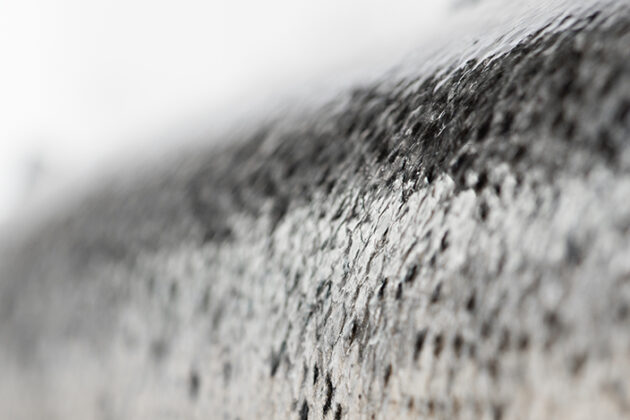
The report tells us that:
Many early and accessible sustainable material explorations, such as Nike’s Air Hobbits, Osmose’s rustic leather and Boas Kristjánsson’s fish skin collection, were characterised by organic,`raw and occasionally even grotesque aesthetics that signalled a close affinity with nature. While these were positive and potentially viable steps forward, they may have unintentionally made sustainability seem less appealing. This created a landscape where sustainability had to work harder than ever to attract consumers.
Now I don’t know about you but, if someone was to drop ‘fish skin,’ or the phrase ‘characterised by organic, raw and occasionally even grotesque aesthetics that signalled a close affinity with nature’ into a conversation with me at a Friday night barbecue, at best I might be curious, but I wouldn’t be sprinting off to purchase some – and I’m interested in this stuff. If we’re speaking to the ascendent consumer generation focused on looking good, social chops and belonging, fish skin is not where I’d start.
There seems to be an intellectual blind spot when it comes to talking to ordinary people about extraordinary things – and an assumption that by simply setting out the wonder of its science and ingenuity, ordinary people will be awe-struck and compelled to buy into them.
I’ve spent years sitting in the space where extraordinary scientific ideas and ordinary people collide. I’ve spent countless hours toiling away at how to make deeply engineered scientific constructs convert into a compelling and aspirational conversation with an ordinary person. Cue the ‘can I explain this to a 6-year-old or my nan?‘ challenge.
If I’m brutally honest, we still find ourselves between an intellectual rock and a popular hard place. We have not crossed the ‘chasm’ between the early adopter and the early majority.
Ordinary people still find that most innovators and experts speak in ‘riddles’ when it comes to all things scientific – in Bio-fabrication’s case, Sustainability, genetic science, engineering and Nature. What’s more, the die-hard devotees of these sciences seem to struggle with what they see as intransigence or a wilfully ignorant dismissal of their brilliant cause by ordinary folks. The devotees also seem to miss the fact that in many of these conversations, there’s a logic gap for most ordinary people. This gap is inextricably linked to the vast difference in the context in which. the science was developed, and the context in which those people live and where their horizons are set – which is mostly on getting to the end of each month. It’s bumpy out there.
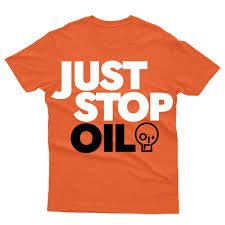
With climate science for example, many ordinary people know that circa 80% of the world’s energy is derived from fossil fuels – so punchy mantras like ‘just Stop Oil’ in support of the environment and the championing of clean energy technologies seems not only ill informed to them, but also either delusional or slightly suicidal in regards to the energy the world uses right now. The mantra screams ‘switch it off’ – and the following question is ‘…and replace it with what?’
Everyone loves a punchy slogan, and ‘let’s smash a robust energy transition strategy‘ isn’t quite as catchy or edgy. Thie issue is that this kind of extreme messaging simply pushes the two camps further apart. Three words deployed with the best of intentions have wreaked havoc with any potential consensus. It simply exacerbates the division, not heals it.

So what does all of this mean for Bio-Fabrication?
Bio-fabrication is an extraordinary leap forwards rooted in bleeding edge science. The report tells us that ‘It is created by using biological processes, often involving living organisms or their components like cells, proteins or DNA. Biofabrication techniques can range from fermentation of micro-organisms to grow materials that replicate leather or silk to genetic engineering to produce novel materials with specific properties. Not only are they a scientific breakthrough with massive social and cultural impact, but also as the report tells us, capable of offering ‘businesses a pathway to sustainable growth, particularly in a landscape contemplating concepts like de-growth and post-growth.’ Mind blowing frankly.
Bio-fabrication is a remarkable thing; but it is complex. And no one in Tik Tok world is buying complex. So I wonder how we might reorganise the chips on the table to make it more appealing without losing its integrity.

My first staging post in this process might be the Hotness Test. Given that bio-fabricated materials are to be used in what are effectively fashion, lifestyle and ‘identity’ products; those bastions of what’s hot and what’s not, it seems a reasonable first step.
The Hotness Test came to the fore for me while sitting on a call with some sustainability folks in San Francisco discussing Levi’s zero-water denim offering [well, 96% less water used in production, so VERY close]. The Levi’s people were slightly crest fallen when we pointed out to them that looking hot was more of a priority for what a teenager wanted out of their jeans than the save water story. It was a great second story but no. No. 1 – look hot and No. 2 – ‘look ma, no water!’ But waterless as first base? Nope. You only get to eco-hotness via hotness. Hotness first. Eco second. Double bubble. Frustrating I’m sure if you’ve innovated in every direction to make the product so low impact as to be almost environmentally invisible. But none the less: that’s reality.
So speaking to Fashion Forever as the mantra for the most sustainable new processes and materials might start us in the right place. Who wouldn’t embrace hot new items that come free of the creeping guilt of environmental impact.
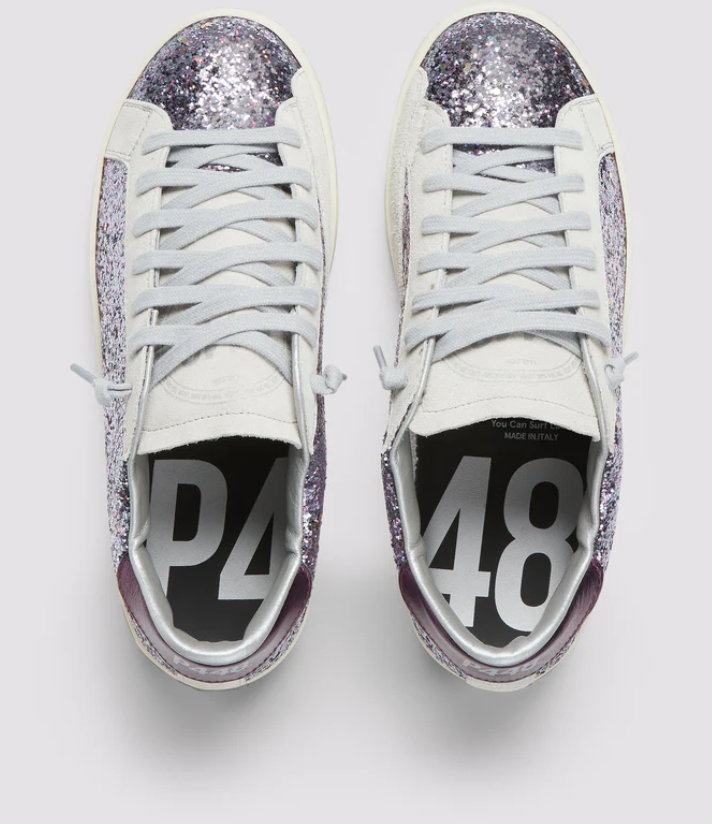
Another example here is Pleather, or plastic leather-look fabric. Now when we look at pleather up through the engineering, it’s a marvel of sustainability and utility. But seen through the eyes of a Gen Z devotee for whom looking rizz, the whole meal and ate iseverything, choosing between a complex, slightly self-righteous sustainable shoes story and a pair of silver glitter P488s worn by Gigi Hadid popping on TikTok somewhere near you sometime soon, I think the answer seems obvious. If the latter ‘story’ is a more appealing route to you, you’ve accepted that ‘hotness’ and aspirational things beats the underlying science hands down. This is not to dismiss the science, just to help it ‘know its place’ in the story.
Manufacturers making Bio-Fabrication ‘second nature’ to how they do business and make products – as a central foundational tenet of their production – is half the battle. But I sense we’ll struggle to peddle it to the Temu-adjacent majority if we start from science and benefits. But, find a new framing for it focused on aspiration and ‘hotness,’ and you might create a rather compelling pincer movement. People might actually buy what the manufacturers are selling
Positioning, framing and language will be key for Bio Fabrication – and it won’t be the language of science and benefits that wins the day.
This is not only a reoccurring theme in the world of sustainability, climate, and all things eco. It is the same for all extraordinary advances in science.
For over a decade I’ve worked at finding new conversational doors between the extraordinary science of genomics and ordinary people. The only simple rule is start where people are, not where you want to take them. Find the connections and the bridges between your extraordinary something and their everyday needs and desires.
In that way it is possible to take sometimes highly engineered and arcane sustainability innovations and make them more palatable to ordinary people whose minds are on just about anything other than extraordinary science.
Bon chance Bio-fabrication. May the force be with you.
Foot Note:
Sustainability Stories: an exercise in Aspirational Language and Framing
One particular project required me to explore how to take the idea of ‘Sustainable Living Plans,’ a brilliant piece of sustainable social engineering championed by Paul Polman at Unilever. But in wasn’t really chiming with the consumer – and its brilliance was being lost in translation. So a challenge was set to see if we could convert what underwrote it into an everyday conversation. So through a series of workshops we explored ways to reinterpret the sustainability truths that underpinned Sustainable Living Plans and reframe them in an aspirational conversation more likely to gain traction in a pub in Macclesfield on a wet Wednesday night in a bad week.
Smarter Lighter Living was where we netted out.
Having a chat about all things ‘smarter lighter living’ in a pub on a wet Wednesday night just felt a lot more interesting and exciting. It smacked of hacks and nous, and ‘being in the know.’ What’s not to like?
Who doesn’t want to make smarter choices? Who doesn’t want to ‘lighten the load’, starting with their wallet? That you’d be reducing the weight of your impact on ecosystems and planet makes for a wonderful back story. But again, it is Part 2 in the conversation. Smarter Lighter Living makes the individual, their family and their life the priority. Self interested perhaps. But as I say. Stop trying to ‘convert’ people with rationality. Meet people where they are. Invite them to the party. Create some FOMO.
Practically speaking, by reframing exactly the same sustainability truths in a more aspirational phrase we found a better and more positive conversation – one that looked like it might make people shift their behaviours. In that way it was still anchored to the sustainability truths: of planetary limits, full lifecycle responsibility, social interdependence, and purpose-driven growth, but viewed through the lens of the desires and values of an ordinary person in their everyday life. No silver bullet, but it was a start.
Did it irritate the highly intelligent architects of the original. I am uncertain. But experience has shown me that highly brilliant people have a klaxon warning when it comes to what they see as the ‘dumbing down’ of highly engineered or scientific ideas. They worry that integrity and rigour are lost. Our intention was not to lose the rigour that underpinned the idea. We simply elevated the the role of human desire and our wish to ‘thrive,’ make smarter decisions, and alleviate the weight [emotional, financial, social, environmental] in an increasingly squeezed accelerating life.
More soon.

