• ABOUT

thinairfactoryblog

~ A topnotch WordPress.com site

thinairfactoryblog

Tag Archives: innovation

A New Deal on Data.

20 Wednesday Jun 2018

Posted by Thin Air Factory in Uncategorized

≈ Leave a comment

Tags

Anna Middleton, big data, Collaboration, Consultation, Culture, DNA, GDPR, Genetics, Genomics, Genomics England, Health, Healthcare, Humanity, innovation, Julian Borra, lifestyle, people powered, Precious Data, Science, society, technology, The General Public, Vivienne Parry, Wellcome Sanger Institute

shutterstock_589327709.jpg

Articulating the contract between science and people

By Anna Middleton1, Vivienne Parry2, Julian Borra3

ARE YOU WITH US?

For most of us it is hard to unpick the various declarations, assurances and guarantees made regarding the sanctity of our data. Even the General Data Protection Regulation still feels quite far removed from the everyday lives of ordinary people and is seemingly absent of any consultation with them. People need to both see and hear proof that they’ve been listened to. And they will act against anyone who seems to wilfully dismiss or disregard them – with every right to do so. With Facebook recently under the spotlight, there is tangible alarm about the use of our personal information by others. A breach of confidence or inappropriate access to data becomes really sensitive when we consider our most precious and personal information. In a health sense, what is more personal than our DNA? It’s what makes us ‘us’.

We broadly know that scientists, clinicians and academic institutions collect, store, research and share DNA and medical information as part of the global endeavours to understand human health and treat human suffering. As part of this endeavour DNA information bounces around the Internet on an unbelievably massive scale, in ways unknown to the person who donated the data.

We probably expect ‘science’ is gathering, storing, analysing and sharing our data with respect, transparency and integrity. Whilst we hope that there is choice in this and we hope that we have actively consented, have we ever really discussed this as a collective society? Is this even possible?

Is it widely known that particularly for genetic research it is only possible to interpret what a glitch in DNA means if there are hundreds of thousands of DNA glitches from other people to compare it to. So, Big Data and DNA go hand in hand and are necessary for genomic medicine to deliver on its promises.

But, if science is truly going to serve humankind in the best way possible we need to be clear on the terms of the interaction and transaction with people, on their terms. And to do that we need a simple and clear conversation; to be certain that we can fulfil their demands or at least understand their desires and concerns.

The need for a PEOPLE POWERED conversation

THE WHY?

A. The world of data is leaky.

B. Society’ hasn’t yet been part of a clear conversation.

When thinking about A. we have to be honest. Nothing is perfect. No data is 100% secure. No system is flawless. No regulation is absolute. No cache of information is 100% bullet proof – and if anyone promises that, they’re over promising.

This is a given that we have got to accept.

The type of data we are talking about here is the purest most precious kind, fundamental to our identity and existence. DNA and linked medical data – the foundational stuff that makes us who we are. Whilst our data might be ‘de-identified’, i.e. our name and address has been uncoupled from it, ‘anonymity’ cannot be absolutely guaranteed, because health information can always be linked to other personal information that is also on the web, and in our increasingly data-connected world, it is entirely feasible that we could, in theory, be identified from our DNA alone.

Which brings us to the B.

There are a lot of companies and regulatory bodies that broadcast commitments and assurances about data use. But as there has been no collective societal ‘sign up’ – so the pronouncements and commitments could be seen as one-sided. Aside from (relatively small scale) targeted engagement initiatives, there hasn’t yet been a global two-way conversation. No complete consultation. No reciprocity. No serious voice given to the most important people and the principal recipients of the good works undertaken with their data.

This is especially problematic when it comes to trying to get more people to share their precious DNA – their genome – to advance medical research and progress healthcare. Which is why the scientists need to ‘go first’ with starting this conversation.

THE CRUNCH

To move forwards we need:

  • the medical, clinical and academic institutions and the policy makers to clearly articulate the assumptions behind ‘people’s best interests’ and make this available for debate.
  • society to accept the tiny risk inherent in sharing their data with individuals, organisations.

We need the people on both sides to be in this together – mutually accepting and supporting the power of precious data sharing to make life better.

GOING FORWARDS

Drawing up the New Deal

Simplicity is key. Two clear parties. Two clear beneficiaries. And equally mutual rewards.

Consultation

This is a reciprocal people-powered deal that brings both sides together for better. And the people’s voice must be consulted, heard and written into it.

This will require a comprehensive consultation process involving ordinary people from all walks of society.

This should involve Qualitative and Quantitative explorations and interrogations of the topic and the terms of the deal. It should involve experts in large-scale, population engagement techniques.

How do we start the conversation?

We need a starting point for that conversation – an ‘in’; and starting with the genome isn’t it. We know from our own research that the vast majority of the broader public have not yet encountered the term. However, more than 90% of the public are online and feeding their data into the grid. Thus ‘data’ is the conversation starter that can take us to DNA.

The binary algorithms that once sat invisibly inside tech tools that serve humanity –- have now become visible – data has become a ‘thing’. Something we can point at, hold up, scrutinise and hold accountable. Data and its big brother, Big Data, are now discussed, interrogated and judged everywhere from the Senate Commission to Mumsnet.

So, Data; our relationship with it; and with those who harvest, explore and administer it ‘on our behalf’ gives us a rich area from which to begin.

The conversation needs to focus on how science and humanity collaborate and win, together.

Communication

Language and Tone are everything. Pub and school gate rules apply (i.e. it can be discussed anywhere and everyone can participate). This is a People Powered Deal. Not a Protocol.This is a simple deal that respects and honours every human’s right to control their own data destiny. And confidently go into an agreement where they believe that the terms will be upheld to the best of everyone’s ability. Which means it must be couched in clear simple terms.

Distribution

We need the New Deal to be visible to all at every level. This will require a robust channel strategy – so we would also need to test best channels for spreading the word. And answer some pretty simple questions: Is it an event based news worthy event? Is it a web based platform for commitment with visible partners? Is it a socially driven call for better – a clarion call where we give the New Deal to the people and get them to use it as a lever to agitate for better – a movement.


We feel it is time for science and policy to scrutinise their direction of travel – with less rhetoric about the benefits of research and delivery of science (i.e. going in one direction from them to us) and more about serving humankind, recognising that we are all in this together. We, collectively are a partnership and we need the people of society to feel they sit with the scientists so that the journey into human discovery is one made together.


1Head of Society and Ethics Research, Wellcome Genome Campus, Cambridge

2Head of Engagement, Genomics England, London

3Citizen, Founder of Thin Air Factory, London


Punks, Wonks & Breakout strategies for sustainability innovation.

21 Friday Nov 2014

Posted by Thin Air Factory in Uncategorized

≈ Leave a comment

Tags

A.I., Bowie, breakouts, couples counselling, Eno, innovation, Oblique Stratgies, Peter Schmidt, punks, purpose, society, strategy, Sustainability, sustainable brands, venus & mars, wonks

Screen Shot 2014-11-21 at 16.37.18

Innovation. We love it!

Especially in the trending world of sustainability.

And rightly so: the potential impact and influence of sustainability innovation in the shaping of a more positive human existence is immutable and immeasurable.

Innovation’s role in reinventing and reimagining the way the domestic, private and public sectors use, reuse and replenish the limited resources we have at our disposal is critical to our survival as a race.

So anything that inspires us to escalate our ability to innovate, whether that might be of the incremental, process or radical kind, deserves all the help it can get.

We cannot really afford for sustainability innovation to stall or fail – but it does so, all too often.

Failure is of course an occupational hazard in the innovation department: an almost welcome metric.

If you’re not failing you are most probably not trying hard enough to create meaningful breakthroughs in unchartered territory.

But often the reason for innovation faltering is not quite so grand. An all too human: stakeholder conflict; lack of communication or collaboration: or simply personal agendas and self interested gerrymandering.

So the question recently raised was this: how do we make Sustainability innovation more, well, sustainable?

One enormously powerful influence we identified at these axial moments are the behaviours and attitudes of the different actors and agents in the room.

The first step was to try and create a really simple framework and a lens through which to view those actors and agents: and in such a way as to be able to inspire and help them marshal the innovation through.

The people involved seemed to fall into two broad camps of behaviour and attitude.

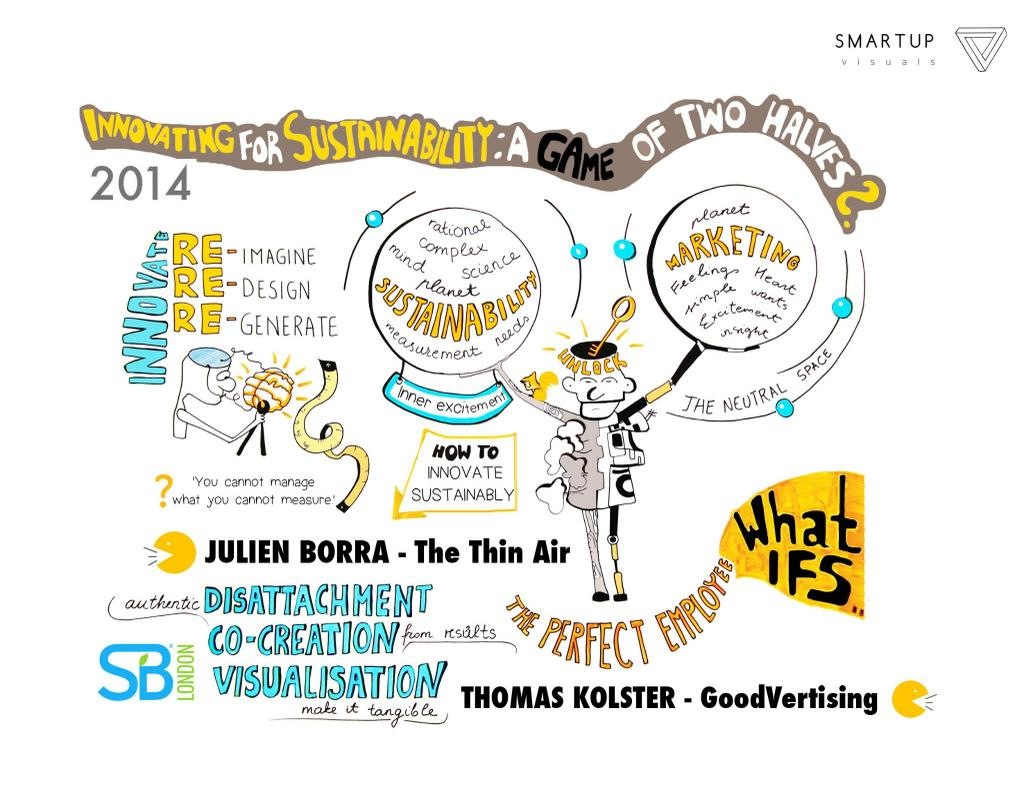
It was this simple observation that formed the basis of a recent plenary and workshop on Sustainability Innovation that Thomas Kolster of Goodvertising and I hosted at Sustainable Brands in London

Entitled A Game of Two Halves; the plenary and workshop endeavoured to use the two attitudinal behavior types we observed to set up a simple playful framework in which we might help re-inspire and reenergize the process of sustainability innovation: most pointedly in regards to human behaviour and modes of thinking.

The inspiration for these two types and they game of two halves they ended up playing was drawn from anecdotal evidence, conversation and a little light stakeholder research.

The world of Sustainability seems to be populated by a kaleidoscopic constituency of vital minds

  • the green activist agitators, ice breakers & policy shakers of the likes of the Sierra Club and Greenpeace
  • the scientists, conservationists and behaviouralists from the myriad NGOs advising and supporting communities across the globe
  • the sustainability policy and regulatory advisors, architects and engineers who operate at the point where the private sector and the public sector collide
  • the particular and labyrinthine coder programmer and systems minds of IT and rock n roll tech geekdom
  • the lateral and populist storytellers and communications professionals who advise both corporates and government on sustainability communication strategies and campaigning
  • the HR professionals who are increasingly being placed at the heart of burgeoining Social programmes being designed to evolve from the inside out and the ground up of large corporates and public sector organisations
  • the corporate actors driving sustainability agendas to improve performance, mitigate risk, attract investent or embrace social responsibility.

Many of these actors and agents are rarely advocates of an over simplified Either/Or picture of the world, and most have traces of both polarities in them.

But it did seem that as things start to go wrong or seize up there is a human tendency to fall into one or other of the camps – and revert to the type closest to ones own nature.

2 halves

Thomas and I chose to identify and explore these Either/Or moments and the attitudes and behaviours that accompany them in a couple of ways

The first was that of Venus & Mars, with Thomas viewing the two types through the lens of couples counselling, viewing the barriers to innovative sustainability thinking and doing as requiring the navigational and brokering skills usually deployed by professionals trying to help Couples climb out of the morass of familiarity and astonishing contempt – someone adept and experienced at showing warring and stagnating couples how to embrace the best of each other.

With this in mind we asked people a simple question; what is the greatest barrier to sustainability innovation?

We collected some answers from the people in the room. We then asked them to define what they felt might be the best solution to those problems. We collected these.

We then had the pleasure of Sarah Greenway from B&Q who spoke eloquently and in heartfelt terms about some of her own challenges and feelings (un-surprisingly one of those people with both aspects ascendant in her).

And then we rolled in a rainbow grenade to see if we could unlock people’s minds further.

Taking the view that in fact as well as the innate issues of intimate self-realisation that Thomas had alluded were some more extant behavioural traits that we might explore and play with to help the innovation on its way.

And I chose to label those traits as Punk & Wonk – another simple playful way of creating a tension and point counter point framework in which to exercise the innovation process to create breakouts and breakthroughs in stagnating thinking.

Punk celebrates the liberation of explosive dynamism and chaotic fluidity: Wonk that of incremental revelation and structured illumination.

I believe that somewhere between their poles: between the anxiety-inducing anarchy of blowing stuff up and the pointillist particularity or relentless rigour lies a resilience strategy for those embarking on a process of sustainability innovation. A potential answer to sustaining Sustainability Innovation.

I used the genius of Bowie and Eno as an example of how even the most complementary and inventive minds need help – need to be compelled to take a different view to break through blocks and walls in their own and others heads.

Bowie, the master of relentless reinvention – the punk dude of many lives personas and faces – and Eno, the musical scientist, and king or algorithmic cadence utilized the inspiration of Oblique Strategies – a set of obtuse cards devised by Eno and Peter Schmidt – to break their own creative deadlocks in the studio.

I asked people to envisage that we might create our own set of Breakout Strategies for Sustainability Innovation in much the same way, using the dualities of either Venus & Mars or Punks & Wonks to aid that inspiration.

We then asked the participants in the room to take one of the solutions we had identified and one of the traits = preferably the one least like themselves – and see if the application of a Punk or a Wonk mindset had helped them see anything differently.

I will leave the rest to David Harding-Brown in his write up of the session – far more complete and objective as an observer than either Thomas or I would be.

What we have left is a charming and playful set of inspirations rooted both in punk and wonk perspectives and some hybrids to help people in the fire storm of sustainability innovation.

Everyone needs to break out of their hole and reignite the minds we need to re-inspire the innovation that just might stop us all going up in a plume of consumption smoke!

Discuss.

See the links below to the event from the SB site including david Harding-Brown’s piece

http://www.sustainablebrands.com/news_and_views/organizational_change/david_harding-brown/sb14london_innovating_sustainability_-_game

http://www.sustainablebrands.com/digital_learning/event_video/collaboration/innovating_sustainability_game_two_halves


Old heads, Young Hearts & The Foot soldiers of resilient humanity.

25 Saturday Jan 2014

Posted by Thin Air Factory in Uncategorized

≈ 1 Comment

Tags

anaglypta, bi-generational living, broadband providers, collectivism, enduring aspirations, innovation, millennials, old people's homes, resilience, resilient societies and communities, skype wisdom, telecoms, Wisdom Of Age, within our means, youth

Screen Shot 2014-01-25 at 17.32.23

If we had to choose two lead stakeholders in building a more resilient society, my money’s on the under 20s and the over 60s: and here’s for why.

Allow yourself the luxury of the observer for a short while at least and there’s one thing you may notice: teenagers and oldies are very, very similar in many ways – especially when they are grumpy. They re in fact made for each other.

Both sleep at weird times of the day. Both are prone to radical mood swings. Both err on the side of the heavily medicated (prescription or non prescription). Both sport injuries and conditions as a form of life signature: some inflicted by challenging the nature of their own mortality and existence (the irresponsibility of youth): others purely by having existed for so long (the immutability of age). Both enjoy wheeled modes of transport other than cars. Both tend to suffer either a crisis of or a surfeit of identity.

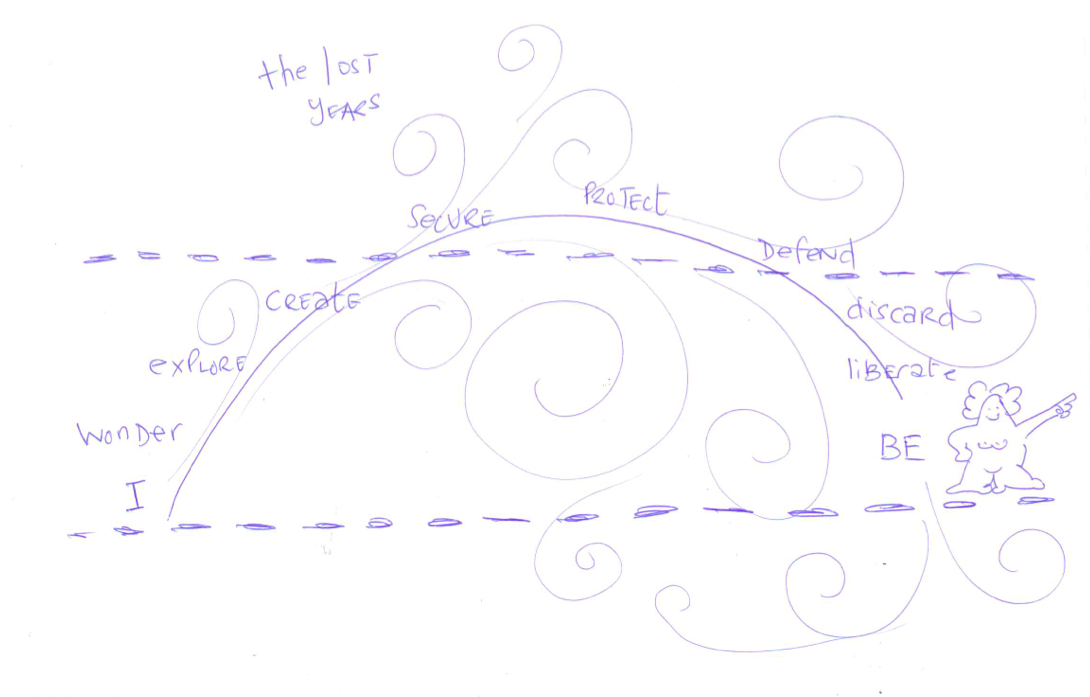
Both view the wheezing middle (those of us between 20 and 60) as an uptight, over wound self obsessed lost tribe. We are trapped in the lost years, having left the age of wonder, explore and create behind, we are trapped in the secure protect and defend stage – fiercely ring fencing the things we have accrued and are accruing – and as yet far short of the time when we are finally confident and secure enough in ourselves that we can begin to discard and disassemble stuff and liberate our crippling concepts of a thriving life and just be.

Unlike the Lost Middle, they have ‘nothing to lose’ in spiritual or material terms. At one end the young, prior to being owned or owning, are still free to explore possibilities randomly, inspiring themselves and each other as they flow. They are at the least compromised stage of their lives. No strings have been attached: no mortgage overlord; no food and energy bills to speak of (even if they have got as far as renting); no fixed pathway measured in decades from which they cannot deviate; and little in the way of allegiance to the sensitivities of others, speaking out loudly and relentlessly at those things they find unfair, irresponsible or destructive. They both have a penchant for saying inappropriate things in public.

Equally, many of the elderly are also in the position of liberty and regeneration, being reasonably capitalised without the stricture of a working day or people to answer to. Both also enjoy a strong sense of community that seems bleakly lacking in the striving grinding scratching generations that separate them (unless of course you think the togetherness of mutual Lexii ownership or collective apple upgrades represent communities of any real worth.)

It is these similarities in nature and self that lead me to believe that they are the two primary stakeholders in building a more resilient model of humanity and the architects of a more enduring aspirational life.

And I believe wholeheartedly that it will take both of them. There is too much pressure being put on the shoulders of the excited young to use their seamlessly connected collectivism to compel companies to act more responsibly, to shape a kinder less tyrannical form of consumption, and ultimately to be more capable of finding meaning within their own means. They simply lack one thing: the kind of resilience and adaptability that is only ever learnt through multiple sustained and not always pleasant experiences being endured over time; and a clear sense of the inevitability of consequence come what may.

Young people need the easy, reflex and second nature wisdoms of thrift and financial integrity of the older generations. They need mentors to help them build a more integrated, inclusive and supportive society; the benefit of which they will come to reap eventually.

Oldies need to be brought in from the cold for a number of reasons not only just to supplement and compliment the young in the shaping of a more enduring model aspiration. Their return to a central role in society would be a salve to the fractured communities and families we increasingly exist within, with parents and grandparents increasingly isolated as younger families move further afield.

There is a dreadful lack of economy, efficiency and foresight in the speed with which we dispense those slightly worn generations into some inert anaglypta hell with a name drawn from the lexicon of calming rolling rural pastures or idyllic flora & fauna. (Even the best of God’s waiting rooms still suffer a dreadful absence of young people in their halls as reminders of the living.)

Thankfully, the brittle brutal truths of austerity, the death of cheap money and the comedy of house prices are making people reconsider bi and tri generational living again. Not to say that will be rose scented from the off.  It will reignite some of the old issues of proximity certainly amongst generations with radically different perceptions of what is good right and fair.

Part of the original dislocation was due to the fact that the oldies of yore remained quite attached to some of their more suspect beliefs even as the world turned. Their casually voiced views and derogatory referencing to foreigners broadly and specifically people of a different ethnicity marked out by colour and homosexuality to name the two biggies didn’t roll too well with the newly liberal uber-youth. This only served to exacerbate the social and familial ruptures.

The unacceptable nature of these traits rightly needed rebalancing but it became a reasonable much cited excuse for us to condone abandonment and simply eject them from the framework of what constituted a decent functioning liberal society.

In doing so we threw the wrinkly baby out with the bathwater. Because with them went all of the old wisdoms of making ends meet, make do and mend, waste not want not, the economies of leftovers, smart buying and existing and still finding meaning within ones means. And it is the nature of those wisdoms that will secure young people’s futures.

For all of the old jokes – Quick, Get teenagers to run the world while they still know it all – the immutable emphatic heart, energy and passion of youth is fragile. They need the irrepressible mettle of oldies and the life wisdoms that come with them. The combination would be amazing.

Brands, especially ones that have been around a while, could find amazing ways to harness this power duo – starting from the inside out and the ground up. Formally connecting the young graduates, interns and apprentices with the retirees and wise owls would recalibrate how a company develops its service propositions and extant purpose in a far more holistic manner.

Telecoms and Broadband providers with an interest in building cohesive societies could fill the gaps that tech progress leaves behind. They could allow fractured or distant families to utilise skype culture to reconnect old and young as part of a Family Broadband Offering.

Educational groups could help children on the verge of dropping out of school by giving them access to the perspectives of a generation of old people who can speak from a lifetime of knowing about the decisions we all make in haste – some with regret some with joy – but all without the hectoring proximity and intensity of a parent made fractious and intransigent because they are both scratching out the bills as well as steering their brood.

But where it really gets exciting is through the introduction of the question ‘Why?’ When we sit around and hack new technologies, create new products, most looking a pale shade of difference to the ones we’ve already got. To raise the question Why? Why spend the money on a tiny upgrade? Why make a 5 bladed version of a 4 bladed razor? Why triple pack food you’ll waste some or all of? Why burn money you don’t have? Why?

The energy and passion of youth with the calm caution and questioning nature of age would create the killer innovations department in most any business.

So here’s to the hard-core stakeholders and architects of better, the oldies and the youngies: old wisdoms and young hearts reshaping a more measured and enduring future.

Subscribe

  • Entries (RSS)
  • Comments (RSS)

Archives

  • November 2025
  • September 2024
  • June 2021
  • December 2020
  • August 2020
  • April 2020
  • March 2020
  • January 2020
  • October 2019
  • June 2019
  • April 2019
  • November 2018
  • August 2018
  • June 2018
  • February 2018
  • January 2018
  • December 2017
  • November 2017
  • August 2017
  • July 2017
  • June 2017
  • May 2017
  • March 2017
  • January 2017
  • December 2016
  • November 2016
  • October 2016
  • September 2016
  • August 2016
  • June 2016
  • May 2016
  • April 2016
  • March 2016
  • February 2016
  • December 2015
  • November 2015
  • October 2015
  • September 2015
  • August 2015
  • July 2015
  • June 2015
  • May 2015
  • April 2015
  • March 2015
  • January 2015
  • December 2014
  • November 2014
  • October 2014
  • September 2014
  • August 2014
  • June 2014
  • May 2014
  • April 2014
  • March 2014
  • February 2014
  • January 2014
  • December 2013
  • November 2013
  • October 2013

Categories

  • Uncategorized

Meta

  • Create account
  • Log in

Create a free website or blog at WordPress.com.

Privacy & Cookies: This site uses cookies. By continuing to use this website, you agree to their use.
To find out more, including how to control cookies, see here: Cookie Policy
  • Subscribe Subscribed
    • thinairfactoryblog
    • Join 28 other subscribers
    • Already have a WordPress.com account? Log in now.
    • thinairfactoryblog
    • Subscribe Subscribed
    • Sign up
    • Log in
    • Report this content
    • View site in Reader
    • Manage subscriptions
    • Collapse this bar
 

Loading Comments...