Celebrating our human existence & the Big Beautiful Boomerang of Science and faith

 Screen Shot 2014-08-07 at 11.07.56

Just for fun – I endeavoured to make a small childlike scribble of the trajectory and meeting place between science and faith just beyond our sphere of consciousness.

Mainly because I was just wondering what happens when we cast our faith and knowledge into the void? And what comes back.

The sub-atomic particular and turbulent cosmic fizz from which all things known and unknown to us are formed – and from which all things reveal themselves – sits just beyond our consciousness.

It represents the great battle-ground on which the fundamentalists of faith and science seek to prevail.

To one group – the faithful – the fizz is an immeasurable fixed expansive and spiritual state with infinite potency and multiplicity rooted in one spiritual universal truth.

To the others – the rational – the fizz is a measurable volatile dynamic and expanding state with infinite faculty and possibility rooted in one mathematical universal truth.

SCIENCE the systematic enterprise that builds and organises knowledge in the form of testable explanations and predictions about the universe is an amazing thing and it reveals new and wondrous things to us everyday. But there is still so much unknown to us in science – and the more we discover the less we know. We now know that quantum physics and the maths that science roots itself in have been found to be common in material terms and in the more obvious nuclear physical world. But they have no idea how they overlap or how to close the chasm between them. And for all the sharp cornered reason based truths of it, even the most rigorous scientific fact or data is open to misinterpretation and manipulation for much the same reason as its theological counterpart. It exists in a rare society dislocated from the populous, hidden and closed. Its arcane nature renders it as arcane as theology. Equally, the moment the human hand or mind touches some absolute scientific truth, it is sullied: subject to human flaw and spoiling

FAITH There is much to be said for faith and its emollient and redeeming features in the hands and hearts of good people. Its ability to elevate and inspire the masses to elevate our human existence and civilise our societies can be very powerful. But this confidence or trust in a person thing, deity or view is wonderful. But we need to draw a very clear line between Faith with a big prescribed religious F and the little f of that belonging to people who just believe in something greater than us and beyond our comprehension and control

The doctrines or teachings of a religion can become a tyranny, as a belief not based on proof is far more vulnerable to manipulation than one that is rooted in measurable fact. Theology becomes the intellectual plaything of a rare society closed to the people and open to politicising and empire building, much the same as science.

The application of either kind of faith in absentia of any proof demands a leap of it, which in turn can lead to a model of sightless following. Blind faith especially in the prescribed religions suffocates honest open discourse. In this the framework lacks resilience – an adaptive reflex nature – and this is rooted in an often demonstrated inability to listen and react to things they don’t agree with in fundamental terms – unsurprisingly there is no evolutionary nature to their dogmas that can respond fluidly to the flux and flow of knowledge – which is the crux of their issue.

The big beautiful Boomerang

But perhaps for the rest of us just trying to find out how best to get to the end of the month without losing our dignity, destroying our planet or bombing our neighbour in some geopolitical fit of pique, it is the arc or trajectory that should hold the greatest reassurance. Because perhaps it allows us to understand the relative nature of these polarities of our existence in a way that is palatable and slightly more understandable.

We know that if we throw our faith out there into the atmosphere and beyond the personifications and forms our various faith-based religions apply to the infinite unknown – it eventually meets an expansive indecipherable omnipotent state beyond our comprehension. And returns to us as a fact of science

We know that if we throw our current scientific knowing out there into outer and inner space far beyond the reach of the hubble scope and microscope and out of human sight it eventually meets the inexplicable chaos of scientific truths still far beyond our human comprehension. And returns to us as an act of faith.

Out of Sight Out of Kind

Perhaps in the particular throng just beyond our comprehension we spy the missing link in the story telling of our human existence in relative terms both spiritual and material.

And by that I don’t mean who owns the story – though the human condition predicts both parties will try.

The subsequent bun-fight that would ensue if the Hadron Collider did reveal that the Higgs Bosun Particle does in fact play a role in turning mass into matter – and whether that was therefore just a further demonstration of the awesome nature of god’s great mystery espoused by the men of Faith or whether it simply removes the God head from the cosmos as many scientists would like to do once and for all.    

That both sets of fundamentalists – accent on the mentalists part – might ever manage not only to appreciate but also accept that in that subatomic fizz that reaches from a sub cellular to an inter stellar dimension, there is a particular truth of such scale and magnitude that it renders both of their emphatic natures and their insistence on continually throwing stones seem simply wilful and precocious.

That either could even for a moment imagine that they control the conversation and define the absolutes in this realm is simply arrogant and ridiculous.

So I say boomerang our beautiful existence in either direction and be happy if when thrown out there, your faith returns as small spark of science and your science as a small act of faith. Both are illuminating and enriching when kept out of the hands of the lunatics who would have either dictate the shape and form of our human happiness and sense of self-determination.

G’day.

Sustainable Human Existence, The D Word & Treading carefully

Tags

, , , , , , , , , , , , , , , , , , , , , ,

Screen Shot 2014-08-03 at 00.05.59

Funny things dreams. Profound to some – sophistry to others.
So please mind your language!

I used the word Dream in a presentation once in the UK. Won’t be doing that again in a hurry any time soon: certainly not without a lot of qualification.
Let’s just say I had not realised how ‘spooked’ grown ups can get by a word.

Equally, it served to remind me that my own slap dash use of language and bumbling naivety could do with some heavy spanner work and a healthy dose of tuning fork.

To be fair the D word popped up in very particular circumstance – a discussion about a methodology called Dream In A Box.

The methodology endeavours to reuse and recycle old wisdoms, contemporary cultural signposting, local idioms and vernaculars to write a new narrative – to re-imagine prosperity, reframe sustainability and transform desire – the consuming kind particularly – to a more enduring and sustainable model; all this in pursuit of a more sustainable human existence.

The D word was chosen for its particular resonance with and reference to ‘the American Dream’ and the staining nature of its most recent variant on our beleaguered planet. Not that it was always thus.

The American Dream was one under which all men (and, sure, yup, women, and ok, eventually, if you’re going to push it, with a civil rights movement for example, Afro-Americans) were equal.

In the heady industry-rebuilding, economy-expanding (where waists would surely follow) post-war rush to create the perfect American thriving, surviving white-picket society, that dream took a few toxic turns, until finally, it eventually settled on the perfectly trimmed lawn of the idyllic all-consuming sub Urban lifestyle that we know and love.

Cue Cary Grant movies. Loveboat. Doris Day. And the chirpy satire of Mad Magazine.

It was a dream promising the consumer citizen infinite growth, financially, spiritually, socially and collectively; all merrily based upon an apparently infinite, fecund and plentiful pool of glorious ‘Godly’ resources; material human and physical.

The patently obvious and accelerating realisation of how wrong that immaculate assumption actually was aside, the feeling in the Dream In A Box camp was that the Dream bit of the phrase was reasonably off set by the In A Box bit.

The In A Box part of it made the following particular point: unless you can find a way of containing the otherwise intangible, lofty, unreachable and mildly frustrating dimensions of a Dream and make them real in ways that are meaningful and valuable to everyday people in the everyday thread of life, you are merely peddling opiates.

Even so, for some it smacked of an over simplified homogenous hideous social chimera. A one size fits all piece of social bullying or bluff that was fundamentally anti–social in its anti-individualist bent.

But this vehemence is not a feeling reserved exclusively for the more square cornered sustainable analysts, scientists, engineers underwriting the operational truths of supply and value chains everywhere.

Dreams generally enjoy a dynamic polarity in many people’s minds.

Dreams seem to inhabit a similar place to things like religious fervor, faith and Walt Disney for many of the reason and rationality junkies out there.
To the nay-sayers and doubters, the idea of having a dream (a phrase preferably spat out or sneered through) verges on criminal self delusion and puffery.

The intangible what if nature of them seems to fill them with some form of existential dread.

There is no place for dreams in a reasonable world, especially a scientific one and certainly no place for reason in dreams  – so what if Brian ‘Mine’s Hadron Collider’ Cox’s band was called D.Ream. Doesn’t mean he ascribes to them.

The reoccurring theme seems to be that Dreams, like faith, are dangerous things – dark instruments. Dreams obfuscate the real raw nature of our human existence and all of its incumbent challenges, puzzles and conundrums.

The realm of Morpheus is a confection that far from enlightening us is seen as one that diminishes us.

Its almost as if Dreams are flawed in some evolutionary way: rendering us incapable of basic human survival; stupefied by our hazy, twinkle-filled and fantastical view of the world.
A small rummage around the point counter point arguments of, on the one hand, the evolutionary benefits set out in Anttii Revonsuo’s Threat Simulation theory, and Flannagan’s concept of Evolutionary epiphenomena (dreams as a state that lacks any form of adaptive function) on the other clearly inform us that the evolutionary jury’s out on this one.

And the case for Dreams as a scientifically proven improver of our human condition is never helped in the eyes of the scientist by the presence of Dream Catchers and other juvenile voodoo bric a brac in the windows’ of student houses and hippy retreats.

Perhaps the most virulent critics spent one long night too many at college or university pretending to give a crap as the fragile teen sitting opposite them bleated their dream stories in some desperate effort to seem windswept, deep and interesting.

Equally the phrase ‘to follow one’s dreams’ doesn’t help, in that it implies a sheep-like loyalty: a subservience in service of something intangible beyond your control. And we know how rationalists like a smidgen of control. 

Whatever it is that causes the anger and disdain; it is a powerful and quite corrosive emotion.

But, for the Dream believers, Dreams are a way of allowing people to transcend the bleak sharp cornered truths of what is and embrace the brighter potential of what could be. Dreams allow us to rise above the deterministic absolutes of any given situation and envision something better.

Martin Luther King had a dream that succeeded in helping to shift millions of black Americans from a position of sub human species needing to know its place to a powerful ethnic constituency in search of a spiritual homeland and tangible human rights and respect.
I doubt even the fiercest doubters could ridicule or set aside the power of that dream to change lives and human existence for the better in some shape or form.
There is a sense that, in the USA of the 1960s, the political power elites, intellectual tribes, state collectives, regional advocates and community activists all jostling for position on either side of the colour divide would never have convened their mighty voices into that one immutable, immoveable and deafening roar without the focus of that Dream, voiced so eloquently and publicly.

But equally, John Stuart Mill found the idea of galvanising and socialising a nation through a singular collective idyll – an idea or dream of better – was at best childish and naïve and at worst an aggressive act of hubris and societal hegemony – a social tyranny.
He believed in the axiom that ‘man should judge everything in life based upon its ability to promote the greatest individual happiness’.
“the tyranny of the prevailing opinion and feeling is more formidable than many kinds of political oppression …leav[ing] fewer means of escape … and penetrat[ing] more deeply into the details of life. ”The “tendency of society to impose … its own ideas and practices as rules of conduct on those who dissent from them; to fetter the development, and if possible, prevent the formation of individuality, not in harmony with its ways”

There is a sense in this view that an individual Dream is fine while it is held safe and unsullied in the heart and the mind of an individual. It is a beautiful and highly personal wonder, broadly uncorrupted though perhaps a little influenced by the dreams of others.

(It is worth reminding ourselves that Martin Luther King Jnr. said ‘I have a dream…’; not ‘We have a Dream’. It was his; it just had the potential to move many others within it.)

It seems that while in its unadulterated individual state, that which is most emotionally proximal to its originator, a dream is widely lauded as the profound generator of poetry, music, art and literature.

Yeat’s Cloths of Gold directs the listener to ‘tread gently for you tread on my dreams’. They are presented as the purest, most precious things he has to offer the world.
Mamma Cass’s ‘California Dreaming’ protested a desire for a sunnier brighter life far removed from the cold emotionally bleak east of Fall and Atlantic swells. It is her dream and hers alone: just one that happened to be shared by a generation.

The problem it seems is that when mobilised, industrialised and socialised at scale, a dream becomes The Dream – the Mother of Suppression of the Individual in hot pursuit of the collective good. The Dream quickly becomes the destroyer of intelligent dissent and the brutal editor of different orthodoxies and philosophies that did not quite ‘fit’ ‘The Dream’. It becomes all that John Stuart Mill berated and warned of in his view of one dimensional models of collective happiness as some conjuring trick played on the masses.

Dreams also have an ill-judged and reoccurring tendency of turning up at the very heart of large orgiastic excursions into nationalistic and hubristic megalomania.
Dreams of Empire whether by Georgian and Victorian Britain, Imperial Japan, Fascist Italy or the German Third Reich always seem to bear out the truth of Mr Mill’s perception.

To use a singular Dream in this way is to squash the very diversity and healthy human tension the enables us to evolve as a species. Dreams are a recidivist and controlling mechanism that are worthy of deep suspicion.

The pollutant seems (as so often is the case) to be somewhat rooted in what man has done in the name of dreams; not in the condition of dreaming which in itself is a pretty confounding experience. They are after all an axial mechanism of our deepest mind.

Dreams at their most basic level are the powerhouse of our emotional computing.
They are the synaptic equivalent of taking the big data from every facet and corner of our existence and atomically mixing it up with the narrative skills of Lewis Carroll, Dickens, Spielberg and Plato.

Dreams are the super processor of individual human potential.

They are the transcendence mechanism in us – they are the ‘reach’ mechanism that compels us to perhaps stretch beyond what seems immediately possible or probable to test the edges of what could or might be.

Science clearly sets out the power of our sleeping computations in regards to cognitive ability and capacity.

But given their sleep hosted ‘madness’, flaky associations, the abstracted corollaries that exist within them and Freud’s rather particular take on them, it is easy to set Dreams aside as garish hyperemotional gibberish – or reinvent them as some twist of needy or proving self-identification and elevation.

Most people find the sharing of what one dreams an immature act of identity assertion; usually by those who feel there is little social or intellectual mystery or magic about them. Given that it is a habit that one usually hopes dies out with the arrival of slightly greater intellectual and spiritual surety, perhaps the mere sight of the word makes them run for the hills screaming.

There is a theory that dreams exist in the sleep-scapes of REM Rapid Eye Movement and NREM Non Rapid Eye Movement and do so with a very clear function.

It is believed that the process of sleep to encode and transfer data from the temporary memory store in the conscious mind accesses and activated in NREM sleep to the long term memory store in the subconscious mind accessed and activated in REM sleep – and the continual activation of this flow is what stimulates dreams. So in that way they are a robust and meaningful process of our body science and an enricher of our more adaptive cognition.

It is not just the science of the brain that frames the arguments and beliefs around dreams and their role.

Human history and the texts of the ancients are riddled with expansive philosophical treatise and frameworks. From the ancient Mesopotamians, Chinese, Upanishads, and Babylonians, to the Egyptians Greeks and Romans, the powerful nature of dreams have always held a deep and profound place in our collective social memory.

In some ways perhaps the truth of Dreams lies as with many things somewhere between the two; at the point at which these two distinct perspectives overlap and stitch together; neither being the predominant force but both represented as balanced and weighted in a perfect symmetry with each other. This duality might offer us a more productive way forwards.

Gramsci invites us to apply Pessimism of the Intellect and Optimism of the Will in all things. Perhaps this is the filter through which we should view Dreams and everything to do with them in regards to the ambition of transforming the more toxic desires of the average consumer.

Certainly in regards to the Dream word being used as a way to frame the spiritual social and material vision of a more sustainable form of consumption, Gramsci’s invitation would help balance the two dimensions.
The pessimistic Intellect – the science – interrogating the truths of how we engineer and support these more sustainable lifestyles while the optimistic Spirit – the philosophical – compels a more transcendent human nature be applied at every opportunity – a higher human purpose that might take everyday humanity beyond the impenetrable science and just doing enough to scrape through.
This would liberate the word and the language around it to be both rooted in the deep science that will be required to reinvent our standard forms of consumption and yet elevated by the optimism of a collective human endeavour lived in real time in the real world.

And perhaps if we liberated the word – set it free from the shackles of an Either/Or model of determinative application we might find something richer and more human again in Dreams.

If perhaps we also recognised that in regards to visionary models of human consumption, Dreams can be nuanced, shaded and culturally meaningful even at a meta level.

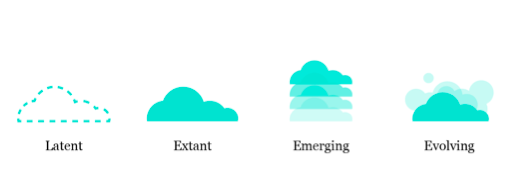
In the Dream In A Box initiatives undertaken so far we already have 5 Shades of Dream – Emerging; Latent; Resurgent; Extant; Evolving – starting to reveal themselves in regards to formulating desirable and enduring lifestyles of consumption.

I am certain that more will present themselves before we are finished.

So here’s to those turbulent, intangible, flaky, studenty, inspirational, nation-shaping, scientist irritating things called Dreams.

If for nothing else they should be considered eminently remarkable purely on the basis that they can elicit so much passionate debate and discourse purely by their mention.

As long as each Dream is considered on its merit – not on some preconceived concept of what it does not fulfil, or on some etymological witch hunt dressed up as rigour and realism we’ll perhaps be fine. Until then…

As Stephen Tyler sang: ‘Dream On’

Frothy Identity & the dark art of ‘my name is…’

Tags

, , , , , , , , , , , , , , , , , , , , , , ,

Image

“Skinny dry Triplefrappacrappercccinolattechiato for Julian”

What’s in a name? My ridiculous and highly needy coffee order for starters. This should be ridiculed in public. That I have managed to get myself to a three dimension coffee order indicates a pestilence of the spirit at work.

Skinny. (I wrestle with Cholesterol) Extra Shot. (I need more help in the morning these days) Super dry (I don’t like milk).

The source of this madness unsurprisingly rests in the heart of galloping consumption and endless retail growth. (And the ease with which my fragile ego can be manipulated!)

Quite simply, our ‘rapacious’ corporate friends have seized on a good thing – the socially levelling model of respecting individual particularity that lies at the heart of the American Dream – and turned it into First Name My Order strategy for Growth.

The long journey of the customer service model that began with starving penniless immigrants arriving on the Island under the frozen gaze of Liberty, nameless or without papers, ends with the coffee order leaving my lips in public in central London suffixed or prefixed with my first name.

The Dream has taken those immigrants from scratching scraps in the poor streets of Dublin, Palermo, Krakow and Juarez to applying a ‘let me tell you exactly how I want this sub sandwich’ selection system loudly directed with almost papal absolutism.

This is not exclusively the domain of 3rd and 4th generation immigrants in the US. We’re all at it.

“6 inch teriyaki sub with extra green peppers” says Daniel Sturridge (the British footballer) because he likes things ‘his way’.

With the help of our emollient, predatory NBBFs (New Best Brand Friends) now everyone can, as Frankie (that’s Sinatra, not Goes To Hollywood) sang in those golden years, “do it my way”.

If you want a triple-tofu-Chilli-cheese-string-dog in marmalade marinade, white sauce and whipped cream in a floury bap, you’ll find that it is your absolute human right.

You are not a faceless, nameless, choice-less drone any more.

You are majestic, singular, powerful: the text of you illuminated by every infinitesimal nuance of particularity you can cook up in one simple order.

The American Dream has delivered us a service culture that promises, hand on heart, that never ever again will you be told what to eat without some recourse to asserting your ‘identity’. And not just in ingredient or format choice.

The game raiser was in the appropriation and use of every customer’s first name ‘with a slightly creepy familiarity’ as part of the service process.

Direct Mail of the utter drivel variety was suddenly ‘ok’ as it sported our name on it, printed in ‘handwritten’ font.

Our mail pages wi-fi logins and every other device interface we have uses our own name to welcome us back. The existential labyrinth presented by the cautious expression Welcome back Julian (Not you?) should not be underestimated.

Not me? What do you mean ‘Not me?’ You know it’s me. I have given you secret-squirrel passwords, a saliva sample, three hairs off my head, some of the earth from under my first den in the garden of my youth and the DNA strand of my first pet. Surely you should know whether it’s me?

And to expand this interrogation, how would I know if ‘I’ was not me? What other clues are you giving me? Nope nothing.  Zip. Nix. Nada. Niente.

But for these NBBFs of mine it seems that as long as my name’s there, everything is OK. Which I suppose it is; Isn’t it?

Our first name is now used freely by everyone from call-centre staff, the man at the garage who I’ve never met before, strangers in Health Clubs and the shifting sands of receptionists at various dental clinics.

In fact the only person who seems reticent to use my first name in the world these days is me.

I am becoming rather protective of it. And getting a little ticked off that it gets demanded from me so often and used back at me so easily.

When I make my ridiculous coffee order and hear my name tabbed on the end I feel as if I have been quietly mugged.

I am starting to see where the sublime logic of the nom de plume, nom de guerre and alter ego.

‘My name is… my name is… my name is… Slim Shady’ sang Eminem…AKA Marshall Mathers. Smart move. At least he can amuse himself with three names to draw down on at the coffee shop. I don’t see Batman with this problem. Though seeing him turn up at a rather self-conscious Gotham Coffee shop, ordering a Chai Latte and being asked ‘What’s your name?’ would help me to begin to navigate the age of absurdity I feel we have now entered. Batman? Or Bruce. You decide.

Perhaps it’s not just me. Perhaps we are all quietly plotting for when our ‘Anakin’ will turn. When the burgeoning malevolence and negative feelings towards people we don’t know from Adam using our first name willy-nilly, will prompt our ‘Darth’ to answer the question  ‘Welcome Back Anakin (Not You?) with a sharp swipe of a light sabre and a dash of keyboard-melting force.

The liberal use of your first name by every brand and business you even glance at is actually doing the opposite of its original intention. At the outset all of this was to empower the individual – to give the customer a sense of being more than just a consuming machine who was expected to turn up at the supermarket in their 343 instalments-station wagon, fill their trolley with 1/3rd Unilever 1/3rd P&G and with the last third a shared cornucopia of Nestle, Coca Cola, Kellogg’s and Kraft consumables.

But as the consumption grew and the giants who purveyed the products that fuelled that consumtion also grew, the people felt further and further away from the things that secured them – the old touchstones of shops, bars and diners where people knew your name.

As the shopping malls got bigger and the diners got franchised. As the towns splintered and the cities and ‘burbs bloated, people stopped knowing anyone’s name. They barely looked them in the face.

The odd island of camaraderie appeared – between till 3 and till 4 and that nice man at the newsagents. But mostly accelerating faceless consumption ruled.

Cheers, the Boston bar based sit com was a master-class in reassurance television. And its theme tune summed up the age. We like places that know our name. It stops everything feeling so bleak on a wet Wednesday in mid February having just returned from said superMall.

It took a little time to realize that the more faceless the sale the more important it was to make someone feel like they were really important. But we all got there.

For a while it was delightful. The truly entrepreneurial people who did actually give a wholesale shit about the customer as a person turned the others’ heads – creating a new culture that aimed to actually understand and communicate with people like they mattered in the transaction.

But the infinite-growth monsters of the old world simply saw that you could screw a few bucks more per person out of a life time value model by using the person’s first name and by being their new best friend

Soon enough, mass personalization, a rather fetching term for how to industrialise degrees of knowing and intimacy, poured into the world: into every shop, call centre, mobile interface, airport lounge, and restaurant.

Once you have spotted the potency of Names and the wielding of them, a world of endless opportunity reveals itself.

There is also the dark art of Reverse First Naming in the entertainment & leisure sector. Like Reverse logistics in the parcel delivery services, it’s a stroke of mirror loving genius.

If you have been in a franchise restaurant in the last 12 months and had someone tell you ‘hey, my names Siobhan and I’m your waitress for this evening’ – you have just been Reverse First Named. Instead of using your own name against you, in this particular instance they use their own. Genius.

Reverse First Naming is a new brutal and unflinching practice to wreak havoc in the unsuspecting consumer.

It is, first and foremost a method for the suppression of free speech – especially if the speech was going to sound something like the following: ‘this place stinks, the service is crap, this burger resembles something that’s been kicked around a barber’s shop floor and there’s chewing gum stuck to my tights’.

It is a well-documented fact that this first name first mover advantage can be life saving.

In potential situations of violence against the person by strangers, people are trained to ‘humanize’ themselves to the aggressor – telling them your first name, or nick name, tell them about your children, your wife waiting at home – to create a connection that triggers sentiment, guilt, shame and conscience – and ultimately responsibility for hurting not a faceless stranger, a piece of collateral damage, but someone ‘known’ to you.

So suddenly you are responsible for Siobhan’s well-being and job satisfaction. Whether she gets a good tip – or a pay raise or not. So the chances are you’ll be a little more considerate and a little less caustic.

But we cannot simply point fingers in this. We were all so wrapped up in looking at and hearing our name in lights, furiously opening letters inviting our handwritten first name self to the opening of another envelope and buying our own name in an email address, that we missed the moment when marketing Insincerity stole our name.

Now it feels as if one has walked through a time space continuum to a hometown we didn’t know we had, populated by people who’ve never met us before but who feel really really friendly like they’ve known us for years. Our own brand built Truman Show.

And there right there in the middle of it all, is our first name in lights surrounded by bands cheerleaders and fireworks.

So right now, anonymity is the real rock n roll. Now that we’ve illuminated the text of that first name by embroidering it with face-book postings, riddled with tweets and pins. Now is the time to get punk and take our first name back.

The first rule of data confidentiality? Take back the little big data! Starting with your name.

Surname is the new Sex Pistols. Ample use of Mr, Mrs or Ms is where the real anarchy lies.

But right up there at the top? Anonymity.

The Man with No Name, an America Colonies Ronin with a Latinate rasp, walked through the Spaghetti Western Trilogy to the chirp of penny whistle, a guitar twang and the crack of a whip utterly devoid of a name.

When standing at the counter of certain Coffee Shops I am tempted to relive The Man With No Name’s short conversation with the barman when asked ‘I didn’t catch your name…’ ‘I didn’t give it’.

Hearing my name repeatedly chiming out of the person delivering it up to me from behind the cawing frothing barista station with faux hoaky bonhomie is getting a little ‘old’.

To understand quite how powerful the imperative to ‘personalise’ the service proposition is, when you are next asked for your name, try saying No.

Along with the right to order ridiculous coffee combinations, to not give your name is a basic human right.

Try it. You may find your No might just be met with a gaze not dissimilar to that of a rather tired Customs Official when confronted with bag full of hand-guns cocaine and Marmite.

This ‘local global’ serving culture that speaks to me like a regular at a corner coffee shop, liberally uses my name to fulfill a number of functions: as a clearing house dispatch mechanism; as an metronome of service excellence (listen to all these good people we’re delivering coffee to); as a ‘personal touch’ and as a piece of service sophistry. And to render human and real the faceless corporate swaggerdaccio of the global brand providing it.

Sometimes just to lighten this moment, I would love people to be confronted with their gamer names perhaps or their tumblr tags just to see how ‘real’ we want all of these separate personas to be to us.

“Dry frappacinno for #kongworrier”

“Triple chai latte with sprinkles for #foxytankbuttgirl”

Our first names are taken in vain by more than just ourselves and the brands we allow to speak to us through them.

Voice activated dialing on smart phones is a source of infinite street theatre. Watching for example someone saying the name James repeatedly into a phone standing on a street corner shouldn’t be funny. What’s funny is when the phone responds by telling the person she’s calling Mary.

I don’t want Mary. I want James.

CALLER: “Call James”

SMART PHONE: “Calling Mary”

You see the person wonder, ‘what am I doing wrong’? They move the phone to different angles askance of their mouth.

CALLER: “James” “Call James”

SMART PHONE: “Calling Mary”.

This then descends into a dulcet opera of different pronunciations. Maybe they’re just saying it wrong. Perhaps in the last week they developed a speech impediment. A cold sore might be ‘smudging’ the sound file. Or perhaps they were drunk when they made the sound tag and sober now. Whatever.

If only James knew how often his name was being called out in a public place.

And therein lies out perfect existential storm.

At a coffee shop counter: having ordered your identity-asserting ‘eat my individuality World’ coffee with 3 complex dimensions, just at the moment when you are asking your smart phone to ‘Call James’, the lady asks your name.

YOU: “Call James”

SERVER: “James?”

YOU: “No Julian”

SERVER: “Not James”

SMART PHONE: “Calling Mary”

YOU: (To smartphone) “No, James”

SERVER: “James?… not Julian?”

DISTANT BARISTA:  “GrandeToffeechinolatte with whipped cream for #saucyleatherboy

SMART PHONE: “Calling #saucyleatherboy”

So the next time you find yourself being asked your name, pause, take a breath, consider the consequences; and then answer. You might be surprised by what comes out of your mouth.

China, you-sized cities & the joy of cutting a different path

Tags

, , , , , , , , , , , , , , , , , , , ,

Image

NOTE This piece was written in May 2012 as part of an exploration on what might constitute the China Dream on a mega-city scale

Its a nice thought – that just by divine chance, Wang Shu, Tim Burton, The Candy Brothers and the People’s Republic all just happened to bump into each other in a coffee shop, got to talking about mega cities and started to think “what if?

It would be perfect: Wang Shu for balance and exceptional sustainable living design: Tim Burton for sheer Magic, Joy and Wonder: The Candy Brothers for monumental ambition and chutzpah: and the People’s Republic because beyond Social Harmony, in the end the mega city concept is still about people: the best of people and their infinite well being, for generation after generation: not just in the now.

In 21st Taoist terms, people and their energy are the ebb and flow of urban dynamic living – the Qi of the mega-city.

Which means the mega-city in its infinite wisdom must be designed and conceptualized around human-sized principles as well as eco and sustainable ones, constructed in such a way as to knit back together the strands of the fabric of society to create more than simple cohesion and structural support. To atomise and empty the rural constituencies requires making quite deep ruptures and rips in the cultural psyche. These need to be either healed or resealed depending on whether you see this as an emotional or rational task first and foremost 

This is about Tan de Bing versus Harmony, Balance & Respect.

With 1 Billion Chinese people expected in urban mega-cities by 2025, how one maintains Harmony Balance & Respect in a way that is both enjoyable and sustainable will become increasingly critical to the national and global well being.

Fossil fuel consumption increasing by 3-6 Billion life years per year with a ten-fold increase in solid waste this becomes a matter of human logistics on an extraordinary scale.

But perhaps just starting by thinking of what it means to be human in a mega-city is a good place to start.

Scale is something that seems to be driven by the most interested party and developers tend to favour scale of ambition over scale of inhabitant too often – particularly demonstrated in the burgeoning mega-cities of the Middle Eastern Sovereign States.

Human Scale

So let’s start perhaps from the small wonder of a human being – and those inextricably linked to that human being, family, friends, community, and those that serve them both professionally and domestically, and the services that surround them, the environments they exist within, and how everything from educational philosophy and medical wellbeing to civic planning needs to be calibrated in the daily flow of urban infrastructure. Obvious yes, but especially critical given the broader societal cultural, industrial and commercial shifts and undercurrents rippling through the nation and how it is perceived both internally and externally.

There are cities where a human scale still survives and becomes the defining aspect of those cities, whether by simple history and divine chronology – the existence of smaller more human-sized historic building scattered amongst the high rises.
The City Of London for example, like many European cities enjoy this aspect of modern urban living.

In a recent New Yorker piece by Evan Osnos, Li Huang the guide showing a group of mainland Chinese travellers ‘Europe’ pointed out the ‘open-ness of the city’ to them while standing on the banks of the Seine. “In Shanghai unless you’re standing right next to the Huangpu River you can’t get any sense of the river because there are too many tall buildings” adding that Europeans “preserve anything old and valuable.”

Even in the US the streets of some US cities like San Francisco and Boston old tradition and historic residences, churches, parks, thoroughfares and in Boston’s case the very halls of the Founding Fathers continue to set human dimensions on the aspirations of the high rise living that surround them.

Also, cities like London have seen the rise in the social and cultural importance of what were the old villages that once circled it. Highgate & Hampstead, Notting Hill & Kensington, Clapham, Dulwich, Blackheath are islands of human-sized buildings, spaces and thoroughfares critical in maintaining the balance between a city’s architecturally progressive and its inexorably human self especially given that they are now fixed firmly inside the UK city’s own version of Tan De Bing – its urban into suburban sprawl.

One could argue that mandating that 30 percent of buildings in any given area of a new mega-city can be no taller than three stories and have as much open space around them as they take up in square meterage would be a good start. Or that perhaps they should be planned with some human sized historic or non commercial building (whether it be a single barn, a temple or a whole village) at its centre, kept as a living spiritual compass for the rest of the city.

Continuing in the 21st Century Confucian theme perhaps a pond-ripple concept might also help keep things human.
If there were a central building: small, low rise (tasked with an active social role beyond being just thematic or symbolic – a community centre and well being clinic perhaps) with open space around it and the development of housing and retail spaces rippling away from its centre, only climbing to the higher and larger scales of buildng at the outer edges, until they overlap other ripples of development.

TRANSPARENCY

The ability to see through things: spaces, areas and buildings to what is beyond is to my mind critical in the health of a city.
Not everything must be wide open but enough to make openness and transparency a signature of better living.

Removing civic opacity to me must be both physical as well as spiritual and political.

The Cities of the future could place this very important ‘Balance’ characteristic at its conceptual core – as a form of ‘letting go’ – of removing the visual and physical barriers that are historically used to close and control communities, spaces, people, lives processes and systems.

Protection in regards to the state institutions has shifted from the more intimate communal protective vigilance of long ago to the more paternal protectionist big brother model – perhaps the mega-cities of the future can start with the one small step on the greater journey to rebalancing this trend.

LUNGS & ARTERIES

Enabling people to feel masters of the environment through scale is one aspect of a healthier urban environment.
The other is open and communal spaces in general, though I would stress a preference for planning that weaves green organic and flourishing habitat into the fabric of the infrastructure planning and not just as spaces set aside for leisure time enjoyment; for example as ways of humanizing commuter routes.

This is more than just a lung concept – these would be truly arterial in that they are oxygenating the traveller along otherwise urban landscapes. As opposed to arterial being a plain descriptor of the role, quality and flow of the traffic in motion along them.
To ‘line’ every road, rail and bike route with flourishing flora of ay sort – to turn them into a landscaped or farmed artery would make for ‘breathing spaces’ in otherwise quite congested high stress channels of flow through the city.
These arteries can also provide areas for the human hand to be seen at work. The still hands of the old might be usefully engaged in planting these arteries, creating shifts and washes of different colours and textures, small strips of pride – the tools and seedlings provided by a hands off civic centre.
If one were to create a grid one could assign the East West facing strips as allotments and urban farm strips, the organic and intimately tended criss-crossing the urban metropolitan landscape. One could even for example create a simple trading relationship between the owners/leases of these and small retail grocery interests around the city to develop a 1 Mile Produce Promise for the people buying the produce.

One Person One Life

The ‘one human’ concept – of people being the same person inside work as they are outside instead of having to become schizophrenic – is helped enormously when you ‘open cast’ their working community alongside the everyday domestic and public flow of life.

Physically knitting the fabrics of the business/commercial retail, domestic elderly and young communities of one city together like this is critical to health and communal well- being.
A true constituency of extant human beings sharing space and fuelling hope and small wonders on an everyday basis.

(NOTE: there is also an inbuilt innovation trigger in this style of interwoven and proximal living as it has a far greater likelihood of driving direct and indirect general idea sharing and creative collisions, making it far more likely for like and eclectic minded individuals t find each other).

This openly interconnected physical formula of: flow x people x experience x action ÷ space drives heightened degrees of mutual respect; of the others right to existence and enjoyment and equally, might also substantially reduce isolation of particular groups which ascendant modernizing societies have a tendency to leave behind in their whirlwind of achievement and pursuit of even greater individual success, e.g. the elderly and young mothers.
Creating working spaces where people travel along or up and down through domestic, retail or public spaces from office to office or from one corner of a business floor to another creates a far healthier attitude and less ‘ shutting away of the worker bees’ – a system proven to ultimately fail by creating social and communal division and isolation with net negative impacts on mental health and potential alcoholism and other domestic issues demonstrated inside people’s lives away from the public eye.

There are also financial possibilities to be considered here in regards to investors in development of these cities: I use the particular example of the Pension Fund standing at ¥1.9Trillion with a track record of low yield investments, lack of transparency in regards to management, low or empty regional pension pots and little impetus to change.

If we were to stitch the elderly back into the infrastructure of the mega-cities, not just by building more residential care homes but by investing their pensions in the very infrastructure of the cities that serve them, this may point to a more accountable and directly applicable financial deployment model of the pension funds that currently enjoy some arcane management at best.
If we were able to combine the financial interests and burdens of the polar ends of society by stitching them into the structure and flow of these new eco mega-cities perhaps it also reapplies a 21st Century version of Confucian harmony.

This is not just some retrograde cod philosophical posturing: a sop to the old wisdoms. We know for a fact from some of the most mature Liberal Democratic Capitalist countries that no good comes of isolating your elderly into the margins.
The soft wisdoms and life learning that comes with them equally disappears with them. The disappearance of these balancing perspectives and small wisdoms break down family cohesion, dumbing down the Emotional Intellect of the family and communities they exist within in by removing the direct effect of their life skills and experience: a removal of balance from the natural social order of things.

Deploying the power of old people back into society as some form of spiritual triage would also remove the tendency for young people to increasingly spend too much time reinventing the wheel in regards to life skills – taking time to discover some life experience that they might have otherwise picked up through sheer social osmosis ultimately takes the young person’s mind away from greater and newer discoveries perhaps.

And finally, old people sitting and watching the world go by being placed in close proximity to the crèches of their grandchildren not only brings the pleasure of young people to bear around them by reinstates the communities kind eyes and watchful carer class

Stitching Well-Being Into Everyday

City living isolates most people ‘away from’ the kinds of small incidental processes of health and well-being that would otherwise do them and their productivity enormous good.
‘Small and often’ in regards to visiting and exploring best-health and well-being practice ultimately pays the individual and the society they live in great dividends – they feel secure and supported, part of a substantial social contract of care, and equally in turn feel less distracted by abstract concerns and better focused on the matters in hand – extant beings working and being in a productive thriving life and society.

So, as an extension of the One Life One Person strategy it would make sense to begin building medical and well-being galleries populated by ‘walk in clinics into this open-cast approach to living working leisure spaces – equally it promotes and builds into the every day psyche a convenience strategy of well-being – critical in a city where people become isolated in their workday from the smallest medical or well being services or considerations.

The Devil’s in the Retail detail.

That every new eco mega city will have a burgeoning and vibrant retail economy goes without saying. It will be a cornerstone of the ebb and flow of life, existence and people’s broad concept of their prosperity.
The fact and detail of how the retail experience: and the brands and the businesses that design and deliver them stitch themselves into the urban society both physically and spiritually will be where the innovation and the harmonious concept development should come.

Most of the traditional retailers and manufacturers are constructed for an American style of manufacture, distribution, format and consumption. In the modern China this model has become simply untenable.
Not only are the American models require a staggering use of fossil, material and human resource to maintain themselves, they are also based upon on a Sub-urban mart and mall model that will not necessarily fit the design sensibility and spatial economy of the new mega cities – they also create cluster and volume formats in which the consumer is guided through a vast arena of offers and multiple purchase deals suited more to the vast double fridge households of the Midwest than the spiritually and physically ergonomic concept of Chinese living.

How retailers adapt to what the Chinese model of consumption will become, as opposed to just pointing at the version of it that currently exists – a cod-American gated villa ranch and lodge style of living that still holds up the SUV double fridge ‘I am therefore I consume’ model as a demonstration of personal meaning – this will be the defining factor in which brands and businesses win.

How the scale retail players deconstruct themselves into these mega-cities – delivering surprise and a more human sized and manageable set of offerings – offers an interesting challenge. Can they still create aircraft hangar sized triple floor temples to their wares and life style signature? Or will they need to sub divide their offerings into boutiques of need, day part and purchase scale scattered throughout the urban landscape? Or will they need to deploy a little of both?

Potentially, bringing in some of these retail and manufacturer partner players at a planning stage while they are still subservient to the greater good, and tasked with stitching themselves sustainably into the future habitat as opposed to helicoptering in and simply ‘planting monoliths to their brand dream where they fancy may be the smartest beginning to that journey

Back to The Future

There has been much talk of a return to the cultural roots of the Chinese – a return to the culture and environment that have shaped this phenomenal culture over the millennia. In returning to this space, and in reconnecting with their roots, there is in essence a trigger for the 21st Century ascendency of new Confucian or Taoist ideals at work across and throughout society.

Pure urbanity is imbalanced in its perspectives and its energies. It must have the organic rural expanse of ‘Other’ to be truly balanced and powerful.

Though some might see this as a cynical cultural play to make every one more personally responsible for their lives and to take them away from the state-orchestrated feel good dependency of old, there is a lot to be said for how we might build this into the vision of the new Chinese eco-mega-city.

If one applies the filter of ‘Perceptions of Prosperity’ over the question of how we reconcile cultural tourism and the rise of the eco megacity, we should simply look at how the most mature western liberal democracies view ‘having it all’.
It would reveal that one of the final steps to the peak of prosperous living and being is the one that takes you into ‘a rural retreat’ – having a place in the country – a cottage, house, farm or barn.
It is seen as the ultimate pressure valve for the modern sophisticated urban player – an escape to something purer and simpler; connected back to the land and the hands that formed it.
For many it is vicarious – many do not actually engage in the ‘hands-on crafts and tending of their property and the land that surrounds it’ even though it has been proven that undertaking these pursuits leads to a greater sense of fulfillment and superior mental health. They’re simply buying ‘the idea’ of it.
But to actually rebuild the bridge back to the rural culture of China could be of enormous social value in regards to a rediscovered and sustained sense of self – though some large negative perceptions and behaviours might need to be accounted for and changed first of all.

To some experts this idea of a return to ‘doing things with one’s hands ‘ – artisan and manual labour; craft works and hobbying’ sits at the peak of the Struggling, Surviving, Thriving, Being pyramid – as a supreme demonstration of ‘Being’, as opposed to near the bottom just above ‘Surviving’.

Given the recent emergent journey up and away from poorer rural roots of many of the new emerging Chinese middle classes, this would probably seem nonsensical or counter-intuitive – just going backwards.
But as has been born out in the western liberal democracies with quite sophisticated social models and concepts of prosperity and success, if one replaces the material striving and existence framework with one predicated on a ‘pursuit of sustainable well- being, balance and harmony’, a new world is revealed. It becomes part of the rupture repair strategy.

In many mature societies, especially those that have moved the furthest away from their original rural agricultural roots post the industrial revolution, it has been proven that hobbies, jobs and professions where ones manual actions are directly linked to having an effect in the physical world – an structural creation or improvement, a communal good, the creation of or maintenance of a personal chattel or machine, an improvement to the immediate landscape or environment – offer exceptional health giving properties and are a source of improved mental well-being and ultimately have a positive effect on people’s perceived sense of personal happiness.

In fact even in the more structured undertaking of civic politics and citizenship, the ability to act on something, directly attributing cause and effect to the person undertaking the action has been proven as a direct producer of ‘happiness’ – as born out in the Swiss cantons that rated highest in one of the global Happiness surveys – their ‘happiness’ rating seemingly attributed to each civic individual’s ability to vote in such a way as to have direct and tangible effect on the quality and progress of their own life and that of the community around them.

So, though I am NOT suggesting that every one need return to their roots and start taking up pot turning and weaving, I do feel that building a supporting environment or infrastructure into the city plan that allows people to ‘reconnect’ with the primal humanities contained in this ‘belonging’ in nature and environment is a good thing – and to that end a halo of eco lodges around as city as an inextricable part of the enjoyment of that city would make supreme sense.

If this outlying landscape was populated by eco-lodges that created an urban escape – one of many different shades – developed as an integral part of a sustainable more balanced living strategy – an inextricable aspect of the urban ebb and flow, maintained by the city as a part of the infrastructure, that would truly be cohesive planning at work. To create a ring fence of rural Eco lodges that any and every inhabitant of those cities could go and use, to escape and reconnect with the old rural cultures just for even a short while would be an amazing embrace of what we know know to be a silent truth about pursuit of happiness – and it would be far closer to the burgeoning 21sts Century Confucian ideal of Social harmony that the central party espouses.

One could also build into the city infrastructure a collection of what could best be referred to as ‘Barn Raisings’ (as a reference to the scene in the movie ‘Witness’ where the Amish community are shown ‘coming together’ to build a barn for a farmer as an exercise of community, brotherhood and social benevolence) – opportunities for communities to come together to put together, arrange, enjoy, expand, build or create something of direct value and enjoyment or utility to them – they could be used as social cohesion projects – one in every neighbourhood – large, communal ways of introducing and stitching together people who may have been drawn together from distant and disparate places

Big Ideas & Small Wonders

One particular thing that we have witnessed as a fall out from the recessions that have struck the western democracies recently is the transient and fluid nature of commercial real estate on the high street as well as in industrial areas.
I focus on the high streets though as they have the most social and communal traction and impact on the broader sense of well-being and as to whether a community is thriving or not.

Many high streets now have many shops that have been without a fixed proprietor for some years – the shops changing hands or being passed on either as a matter of short lettings or as what have become know here as pop up shops.
Over the last 6-8 years these have gone from being very vogue and ‘fashionable’ – a bit edgy and anarchic – to being quite regular spaces of energy and fresh drama on otherwise quite stagnant high streets.

So what if we chose to fix these dynamic moving feasts of retail joy into the new infrastructure of the new eco megacity?
What if we set aside a street of small shops and spaces, ready to trade, with fluid transactional soft and hardware built into each that each resident trader can be registered to use for the period of time that they are there.

What is we created a space populated by a wondrous fluid shifting sand of different small scale boutique cottage industries – of designers, tradespeople, artisans, local hobbyists, in fact anyone with a small volume of materials or products or wares that they wish to exhibit and sell. All you would have to do is register and take your slot. The simple fundamental idea of creating small islands and markets of maker crafts culture and innovations scattered through out the city that are open to any citizen who wishes to try their arm at being entrepreneurial would be a wonderful human sized way of breaking the homogenized tendencies of large urban living centres and creating a new quiet revolution in innovative thinking – but in such a way that it is the civic society that is enabling its own to act upon their skills talents and whims in a way that is productive and positive for everyone from the neighbourhood to the city as a whole.

Digital Glue

The life-changing role of social networks and digital enablement in humanizing cities of an ever-grander scale is critical and absolute. Every eco mega-city must be enabled for people to connect immediately and anywhere. This lies beyond putting up cafes and hot spots and creating the odd social network movement.

This is about the degree to which people can live out their digital lives enabled by the metropolis in which they live – as opposed to relying on the brands and businesses that populate that city to do it for them.

It is also to do with creating the platforms on which they can have their say and act directly on municipal and civic issues, questions and challenges that affect their daily lives.
Social Networks that create, stimulate and elevate a ‘listening’ and ‘acting upon’ culture are critical to engaged and communal environments flourishing and becoming self- sustaining.

That there should be an Open Innovation platform for every city yet to be planned and constructed; an open innovation platform focused on attracting, engaging innovative minds with potential solutions on everything from hi and clean tech and industrial innovation both radical and incremental to social programmes, care initiatives, and community ventures is critical given the scale and the different need states that need to be designed for.

The Open Innovation platform would be not only to harvest the best of local and national thinking and doing but also to create a high profile platform upon which to invite and build relationships with the private sector, where they might tender and where tranches of action and responsibility for the investment and involvement of the private sector in the infrastructure of the new city are presented in an open and transparent manner.

The possibilities that digital sharing living thinking and doing might bring to every aspect of a megacity’s potential both social and structural are only just beginning to be explored and embraced. Watch this space.

Take A Different Path. & Look Up

One last thought in this top note is about things I have noticed over many years, while spending a lot of time in various cities.
One of the ways in which to create social cohesion and engagement is to compel people to perhaps step out of the rigid conformity of their routine – how they journey through the city in which they live and work.

People fix themselves into commutes that are particular and for the most part forensic demonstrations of getting from A to B.
Most urban inhabitants have developed a hypersensitive modus that they apply to every journey..

This tends to lead eventually to a heads-down approach to city living much in the vein of the old New Yorker adage of Look Down Keep Moving.
Although this extreme developed from the time where the streets of New York were a lot less friendly than their post zero-tolerance selves and avoiding people’s gaze just in case was always a good thing, there is a universal truth in that people existing under the auspices of urban pressure cooker living do tend eventually to just put their heads down and get on.

But this creates a downward spiritual pressure on the individual – as they move into ever greater and more reductive processes and spaces of being and action. It creates an urban claustrophobia that is hard to shake and ultimately joyless.

I would contend that one of the greatest challenges to the social health of any eco megacity will be the city’s ability to mitigate or almost eradicate this urban trait – by using their rare opportunity to create as many ways as possible to stop it developing in the first place.

One suggestion if that we develop a travel and transport infrastructure that allows people to ‘take a different path’ to the same destination – getting some different perspectives and taking in different surroundings on the way.
Developing an arterial system that combines pedestrian, bus, tram, monorail, cycle, scooter and car ways in such a way as to allow commuters even at their most time critical to take a different route would create breathing space in the urban ebb and flow – a far greater sense of balance and an opening out of personal perspectives.

I also believe that in creating the opportunity to gently raise people or enabling people to raise themselves out of a sometimes crushing routine helps them to connect and engage with people they might not otherwise have meet or with experiences they might not otherwise ever enjoy – and that is about the earlier point of making transparency and openness an integral ‘living’ part of the city.

If one wants to see this demonstrated first hand get street level in a city where the normal infrastructure of travel is ruptured, stunted, closed, redirected or unsettled by either weather, a national or local event or industrial action.
Initially it is just a city full of exasperated individuals everywhere – anxiety and annoyance are rife. This is simply the immediate emotional reaction to enforced change, the frustration of having no choice in the matter of having to change your routine.

But once the rupture has set in, after a few days, the choice issue dissipates, and you start to see an underlying ‘lift’ in people, small moments or camaraderie, and people beginning to enjoy different aspects and attributes of a city they otherwise would never see.

Imagine if we could build that choice – and the citizens ability to do that – into the everyday travel infrastructure of a city – the ability to ‘take a different path’ and ‘look up’. That would be truly amazing.

Deep Breath

And perhaps in all of these things we could see an eco megacity built upon ore than exceptional carbon modeling, energy use, waste management, sustainable building materials, utility lifecycle planning and infrastructure efficiencies.

We would have a very singular and particular one built to house the new vision of Chinese prosperity – inclusive, interwoven, built around an exceptional ebb and flow of human energy, new dreams built upon old wisdoms, upon urban and rural integration, generations reconnected for everything China is yet to be and yet to do. 

NOTE: China Dream is an initiative designed to reshape a more enduring and resilient concept of prosperity. Developed by Peggy Liu founder of JUCCCE, an NGO, the China Dream is committed to changing the path of Chinese consumption and living for good. 

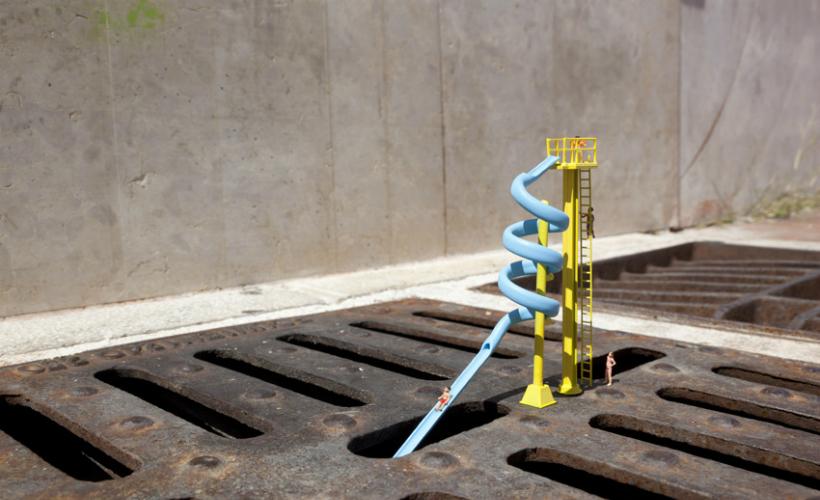
Photo: Little People Project by Slinkachu


One Man’s Ceiling, Elevated Ideas of existence & the problem with Growing Up

Tags

, , , , , , , , , , , , , , ,


Image

As I lay on the sun-warmed grass of the south facing slope of Glastonbury Tor something struck me.

My Little Pony. The yellow-maned one.  On the side of the head to be precise.

“Tickle Fight! Tickle Fight! Tickle Fight!” The shout went up: auguring another limb flailing biff smash crash guffaw squawk celebrity smack-down between myself, my increasingly physical 9 year old boy and his highly rambunctious six year old sister.

Tickle fight is really just an excuse to roll around on the floor. Not that children need much excuse

They had been repeatedly rolling down the slope further around the Tor from where I lay for a good twenty minutes prior to this point.

My son finds any excuse to drop to the floor and roll around. To be fair they both can find themselves sprawling across the floor at the drop of a well-turned hat.

It is not just a percussive physical strike-force strategy: i.e. hit the floor often and repeat as necessary. It is a happy and safe place for them, lying, sitting, sprawled. The more deconstructed the better.

Both can be found at different times Lying inert: staring into the void beneath the bed, by the sofa, in the hall, half-way up the stairs; usually frozen mid play, off in some other universe of being: or they’re sellotaped to the floor setting up various abstract collections of small figures, bits of plastic, random findings and parts of their parent’s more precious items configured into some form of story to be told: a battle, a fairy tale, a horror show, a chance meeting, the end of the world, cosmic catastrophe.

To be part of the invention or story requires the grown up to a) get over them selves and down on their knees, b) fall forwards onto their stomach and c) get their face into the right universe – the miraculous and magical one that has just been created a few millimetres off the ground. A little like spiritual scuba diving, the wonder in their world is a few atmospheres of imagination below us.

Grown ups know this place. Or we should do.

We once spent hours there: whether the ground in question was covered in carpet, straw, wooden boards, grass, earth, pine needles, gravel or even tarmac. (I remember as a child lying on a tarmac road on a hot day and pressing my face to its surface and using a small pen knife to lever out the small lead balls that had been set into it – miniature cannon balls for later use in some fantastic battle scene.)

It was a place of wonder, the ground; where you could still feel the gravity pull you towards the spinning orb. Where you could turn on your back and watch clouds scud above. Where bugs crept up blades of grass. Small pools of dew and rainwater hid. Where the earth smelt real and close: and yours. You knew where you were when you were on the ground.

Anything could take you there. Sometimes it was dramatic: your body suddenly and brutally pulverized by the imaginary film baddie’s automatic pistol/phaser/laser/RPG, at which point, juddering in percussive stunt man slo-mo fashion we would launch off the edge of the bed to land, in continued fake slo-mo, face crunching, on the ground. To then just lie there because it was quite a nice place to be.

Other reasons for being floor or ground bound?

The turning upside-down while sliding off a bed/bench/swing/wall/step like a slithering lizard, lower body still suspended or supported by the thing one has just slid off while the head shoulders, and most importantly, the face, come to a friction-stop, to end up adhered to the floor or ground beneath.

The siren call of a floor-based feast would signal the gathering of twigs leaves, divots of muddy stuff and strands of grass to be confected into a fresh baked pie or meal laid out in the middle of a damp rain flecked piece of grass or in the cork-muffled floor space under the climbing frame. To be sat around and tuned to perfection.

There’s the rolling-down-grassy-knolls reason of course (the non JFK type – though the presence of two small children flailing around on that one might have led history in a different direction!).

Collapsing modes of expressive dance offers many opportunities for floor bound adventure – where a few random balletic moves deconstruct downwards until the small person slumps to the floor like a pile of dropped clothes. Face pressed against the sprung floor of a dance studio or school gym (a nostril of dusty motes and the faint vibration of the boards is one of the happiest places known to man!).

Or at a really base level, you can’t make all of the subterranean tunnels, underpasses, secret doors and undercrofts required to make a killer sand castle until you get your face in the grains and GET IN!

In short, the thing that crossed my mind (just after the small yellow plastic pony) was the thought (one I have had previously and forgotten about) that the main problem with growing up is perhaps that we do exactly that. We grow up and away from the ground, elevating ourselves out of the rare and other worldly atmospheres of the imagination and the visceral experience of the planet on which we exist to take some higher plane of consciousness. We both intellectually and physically start to ‘get above ourselves’.

In growing up we move up and away from our primal connection to the natural landscapes of the imagination and the storytelling nature inherent in all of us.

Our ability, left to our own devices (and closer to the floor) to create or navigate worlds so real that we could attach quite clear cognitive and social principals to them: develop their cultures, languages and rituals: in ever increasing and ever more complicating detail, was and is for those children still doing it quite astounding.

If we weren’t creating floor-sprawling stories from scratch (which takes on a whole new meaning in this earthy atmosphere), we were navigating and revealing to ourselves the ones that already existed there in front of us: between the bugs and the blades, across the mulch under our nose; in wind as it bumped and popped our ears and rolled the blanket of sunlight backwards and forwards across the grass on the common: and in the sky above us in the shapes of the clouds and the velocity of the rain drops that dropped out of the universe to travel through science fiction to arrive as a fact, splat, on our forehead.

And I wondered what robs us of this facility to look in wonder at the simplest things? What interrupts or obscures our ability to see ‘creatively and inventively’, as a rite of human passage to a better existence or a more enlightened and joyful experience? Especially in the context of improving our immediate existence – in our ability to look at our work – is systems its processes its people and its material self.

What diminishes this almost lizard brain mechansim? Of course life sends us tests and brutal realities that knock the ‘stuffing’ out of us and pop our little balloon. Yes, the cynic must play some part in removing the infantile nature of some of the things we explored as a child.  And sticking to a stubbornly naïve and willfully childish perspective (as opposed to child-like one, which we like) only serves to exacerbate the problem with those of us more partial to sharp cornered and wholly reason based perspectives.

But it seems that as some of us become increasingly more ‘grown up’ we become increasingly ‘shut down’ in our liberal creative ‘gut’ abilities – and decreasingly capable of allowing facts and reason and myths and storytelling to exist next to each other without feeling compromised and compelled to ‘choose’.

The rigour of reason and sharp cornered fact is essential in ridding the human race of the kind of voodoo puffery and hocus-pocus to which the more marginalized and frankly dangerous freaks, socio and psychopaths, manipulators, tricksters, megalomaniacs, zealots and fundamentalists flock.

In far more inane terms, frameworks structures and methodologies of Doing are critical to keeping the wheels of human existence turning. But the rote systems that prepare us for participating in their systemic truths are just that.

Systems of Thinking to fit Systems of Doing – manufacturing, trading, building, maintaining, powering, growing, stewarding, managing – allow communities and collectives to be resourceful, resilient, adaptive and endure – a primary imperative

But they are not the source of the wonder of human existence. Human ingenuity, the elevator and slingshot of all we are stems from a curiosity and a wonder of all that exists: both materially, spiritually and inventively: the collision of which creates our sense of What If?

Our frameworks of thriving seem to discount imagination and the storytelling structures it uses to exercise and process cognitive truths as broadly dangerous, fruitless or feckless.

It is as if the cool lucidity of reason can be brutally and eternally extinguished by fairy tales and myths – and anyone partaking of the Kool Aid of lateral creative and deconstructed thinking and any exercises that promote it will be rendered deaf dumb and blind to danger and threat: to risk of any sort; and fail to see the mammoth/meteorite/fight/war/financial-crash/virus coming. Strangely, as I write those out I see that the source and purveyors of most of these bar the mammoth and meteorite are the consequence of wholly sharp cornered reason minded individuals and collectives exercising their needs and desires in the world.

Put some scientists, analysts, mathematicians, engineers in a room with a creative exercise and suddenly we’re all feeling that someone is about to sell us Father Christmas and the Easter Bunny wrapped up in an “I’m a Roswell Believer T Shirt”.

In the hierarchies of need (with which I have been a little loose and free) the engineering mentality of the Surviving With Stickers and Early Thriving stage seems to have overwhelmed our ability to just Be with our most inventive self

BEING – unfettered from burdens – luxury of conscience – What If? – life’s mysteries

Thriving – accruing STUFF, plentiful, stable, secure and expanding life

Surviving With Stickers – stable, secure, comfortable with shiny treats every so often

Surviving – stable secure fixed – a happy grind, power of the collectives

Struggling – unstable, volatile circumstance, financially socially

Flailing & Failing – pick a skip, any skip – includes ‘Scraping’ – the bottom of the barrel – and reaching up to do it: the relegation zone of existence. Struggling to fulfil basic needs – food, warmth, safety.

Sometimes, when running creative exercises in workshops specifically designed to unlock the more lateral out of the ordinary parts of a person’s brain (a part that they most patently have) it is astonishing to find how many supposedly confident and rooted adults are so easily made to feel unsteady and uncertain – and not just as part of the exercise. Even though everyone knows that they will return in a matter of hours to the very narrow channels in which to reapply the relative rigour and specificity they need to do their job successfully, even a small number of hours applied to deconstructing the frameworks they know seems to leave them terrified that the process will render them a useless engine, unfit to ever apply the strictures and applications of the more engineered mind ever again.

If we had dressed grown men in a Floral Shift Dress and 1970s Cork Wedges with Roman sandal ties they would have probably felt more comfortable than they did when asked to undertake the simple act of thinking What If? for 3-4 hours (though that may say more about the latent joy the average professional UK male finds in the ‘cross-dressing up box’ than it does about their ability to unlock their lateral creative gene without a fixed outcome to aim for).

Sadly I sense that it would just be seen as some retrograde hippy exercise but I would love to just once take every super C Suite member of the Private Sector and ask them lie on the ground for an hour (the type of which they can choose of course and face down or up is up to them) and then ask them to write a short ‘ what on earth…?’ piece where they have to relate their time on the ground to some aspect of the business they run.

What on Earth does lying on the bloody floor have to do with my business? Exactly.

I feel that perhaps, in getting closer to the ground is a good thing: not because it allows us to act like a 6 year old (though to be frank I’ve seen some supposedly grown up masters of the universe types or ‘heavy-hitters’ demonstrate behaviour that make my 6 year old daughter look positively sage-like, balanced and calm).

But because it does exactly what the phrase says on the tin: it grounds us. Takes us to a simple point of interrelation, perspective and interpretation. It is hard to maintain the toxic affectations of grandeur and status while lying on the ground. The values and behaviours set alters.

Humility becomes primary: prostrate, genuflective.

Connectedness is mandatory: because more of you is in touch with the living floor of the planet on which we live.

Calm is compulsive: lie down on the floor and see how fast you decompress. It’s measurable – a flashback perhaps to the time at the end of PE at primary school where everyone lay on the floor (long before the ‘stretching’ cool down was fashionable) to just calm down after all that running about.

Consideration becomes reflex: surprising what fills your mind when all the other junk gets pushed out of the way by the smell of grass or the dusty floorboards of an exercise room.

In much the same way that we are apparently far healthier in our minds when undertaking manual constructive and generative tasks – from gardening to DIY to dry-stone walling, I feel we also become far healthier in our minds with a little ‘floor action’.

Getting ground-bound is something I would suggest we all do every now and then, not because it makes us infantile or regress to some ‘creatively compelling’ state of deconstructed dribbling being, but because it reopens some of doors that are of enormous value to our cognitive and effective states of being.

And also a change is as good as a rest.

In the same way that an ascent to stand on a desk to the chant of ‘Captain My Captain’ compelled the schoolboy characters in Dead Poets Society to change their perspective – their way of seeing – by elevating it: I would suggest for Newtonian balance that the same is true for the ground. With stickers.

As unlike its loftier cousin ‘all the way up there’, the ground down here doesn’t just connect us to a different vantage point.

I believe it also connects us to a part of ourselves and our latent social and individual memory that we tend to keep filed away or have perhaps forgotten.

So Double Bubble.

There is something poetic (both spiritually and literally) about how sounds travel through the ground. From the imperceptible nature of the earth turning to bigger things like passing lorries on a motorway, the coming storm of the buffalo, the District & Circle Line.

So lets hear it for the floor, and our connection to it. If it ensures that we ‘get over ourselves’ for ten seconds and catch ‘the elevator down’ from ‘above’ ourselves all power to it.

It might also just be the most powerful HR weapon in the armoury of reinventing C Suite propensities for invention.

Or just be a tickle fight. In which case. Who cares?

Man vs. Breakfast & A New American Dream-like-Breakfast-Burrito-thing-kinda.

Tags

, , , , , , , , , , , , , , , , , , , , , , , , , , , , , , , , , , , , , , , , , , ,

sir grapefellow

Someone was going to do it. Someone was always going to think it was a good idea to eventually bite the bullet and look the

frickinfrackinlipsmackinallbeefpattyonasesameseed

sunnysideupfried4wheeldriveovenbakedstuffedcrust

justlovinitgasandoilmeupandputmytrash

intheringerjerryspringer                                                                                      

beast of the all consuming American Dream in the eye and say Whoa buddy! No buddy. The time’s they are a changin’.

Someone was always going to go to the dark heart of what has got us all junked up on toxic fantasies of infinite everything and stick a sign on its door that simply says ‘obsolete’.

On March 29th 2014, Peggy Liu of JUCCCE and a fellowship of like minds found themselves doing just that at TEDx Occidental. They had an inaugural ‘You are Here!’moment. A first step towards pouring some cool crystal waters on the seemingly unquenchable fires of the old American Dream.

Peggy gave a deeply-felt entreat for why we might ever choose to set about re-imagining something as unwieldy as the American concept of Prosperity. It’s not just a big challenge. I’d say more planet-sized and very very defensive, aggressive and grumpy.

I understand the power of the ambition and how it could shift more paradigms towards improved human existence than we could reasonably count. But the biggest thing for me is – Where the hell would we begin?

Where do we start the journey to a more enduring aspiration for every American? Especially given how entrenched, sprawling and absolutist the old Dream has become and how resilient its ability to seduce still is.

Where do we even begin in unpacking the old one to get to the new? The Constitution? Hollywood? Skyscrapers? Motor City? Fast Food? Celebrity? Route 66? The great American Song book? Jerry Springer’s underwear drawer? the NRA?

The first stage of the Dream in a Box methodology that I developed with Peggy imagines that you will need to include all of them – the more diverse the collection of mindsets, values beliefs, ambitions, truths, myths, inspirations and provocations the better. The Frame The Dream stage actively encourages them.

The Frame The Dream stage endeavours to explore and curate the most diverse cultural levers – beliefs, insights, idioms, visualisations and language – in such a way as to identify some themes or ideas – something human and everyday – that might help can-open the topic in a productive creative and constructive manner. Because you’re going to need a super simple ‘something’ – a word, a thing, a ritual, a truth, an insight, a moment –  that helps everyone to make a very complex thing simple and engaging.

And given that the American Dream sprawls across a collision of cultures, tribes, myths, histories, lifestyles and beliefs all wrapped in a star spangled constitution, it needs to be a ‘something’ that is both broadly representative and quite singular at the same time.

Your ‘something’ will need to be representative of what is, informative of what can be, and illustrative and what might be.

Furthermore, the Dream In A Box methodology is constructed for and committed to making sure that whatever that ‘something’ might be, that it is culturally rooted and relevant – inextricable from the society it is supposed to grow out of.

So lets just cat’s paw around what that might demand of the ‘something’ that might give us a starting point in this journey.

Well, we’d need a ‘something’ that sits at the heart of every American movie, myth and icon, written into the Great American Songbook; something that builds skyscrapers; with its toes in the red-earth of the native and its fingers touching the craters on the Moon; something that stands as an inalienable right of every American and sits at the heart of the great American pioneering spirit would be great; something that feeds the soul and raises a barn; tells you you’re Home and reassures you when you’re away. And hell while we’re at it let’s expect that it has to be a something that is as much of the Corn Belt as it is of the Montana Mountaineer, New England Fisherman and the Mexican ranch worker. It’s got to be quick slow big small light n heavy. As happy on the front seat of the Caddy as it is on the Stoop.

If it is to help inspire the beginnings of re-imagination and the multiple strands that would need to fall out of that, the ‘something’ needs to be multi-talented – a prop, a firework a lever and a pulley. It has to inspire as much as it deconstructs, elevate to the same degree that it mines, and unify as much as divides.

What’s more, to do that authentically and with meaning it has to have an authentic people-powered everyday language of its own; authentically written through the cultural vernacular of the tribes and lives we are trying to inspire. It must enable us to mine insights; and help us ask the right questions by being something that people talk of without ‘side’.

Most importantly the ‘something’ must come from a happy place – be something that people engage with easily and on which they will happily venture an reasoned opinion.

It has to be something people look forwards to, love, fetishise, pore over, chill with, feel protective of, and loyal to; a powerful signature of their identity and a seamless pillar in their everyday

Only a ‘something’ like that will allow us to exit the Glass Half empty world of mitigation and reduction and allows us to enter the Glass half full world of celebration and aspiration.

So no pressure then.

With all of that in mind, my starter for ten against that small list of needs based criteria: my small suggestion for the room.

Re-imagining The Great American Breakfast

The Breakfast of champions – the Great American Breakfast – legendary output of every diner from Montana to New Mexico and Mississippi, via NYC to LA and Chicago and back.

Movies are written around it. Pictures painted of it. Love is made both before it and after it. Lives complete themselves through it. What fuels the Dream? Oil? Wheat? Gold? Nickel? Gas? Perhaps. Breakfast? Always.

Hash browns, three eggs sunny side up or over easy. Sausage patties. Hickory smoked bacon, grits, cornbread, beans, breakfast burrito, Bagel Lox and cheese, 3 egg omelette, steak and eggs. The list is endless. And it comes fast and it comes big. All in or on the side. This is the corner stone of the old pioneer/engineer/farmer America.

Railways may well have been built upon the idea that a businessman in Chicago could eat a fresh caught Maine Lobster for supper in the dining carriage on his way to San Francisco!! But the railways were forged around the great American breakfast (with an Irish & Chinese twist to be fair).

Big dreams are built on big breakfasts in the land of plenty. Scrawny beaten underfed workers don’t build dreams.

So I say if we’re going to re-imagine the American Dream and build a new one – lets start with the right breakfast.

If we’re going to show how a glass-half-full approach allows us to re-imagine something people will turn towards as opposed to away from – lets use the great American breakfast as an illustration of how we move from hectoring and depressing mitigation strategies of more sustainable living plans – relentlessly obsessing on energy and emission reduction, recycle reuse mantras, calorific intake and portion control – to one of celebration.

We love the Great American Breakfast as the foundation on which American Dreams are built. Every great American breakfast type was built and fit for calorific contextual and cultural purpose. It is deeply etched with physiological and psychological truths.

In sustainability, CSR and responsible living terms the breakfast is a road that can lead us to everything – diet; wellbeing; performance; healthcare; social cohesion; myths and rituals; provenance; water stewardship; energy consumption; land crop and livestock management; logistics; pulp, paper & card packaging; pretty much everything.

We could potentially use the popular people-powered culture of the great American breakfast to start to unpack the old dream to shape a new one based around a more enduring aspiration built of people sized values, not corporate sized imperatives. We could start to see that Green Eggs & ham Sam I Am is a far more productive and sociable lever to get everyday people into talking nutrition, ethics, provenance, traceability, consumer bullying, and the caprices of 6-foot tall Cat In a rather special hat and its role in the Great American Child’s dietary intake!

Let’s use its role in the American Dream to frame the American Breakfast as a fluid concept rooted at the very heart of an individuals concept of Prosperity

Use smart savvy storytelling to go on a journey – show why the vast expanse and sometimes behemoth portions sizes of the American breakfast have evolved; its scale and purpose fuelled both by the original immigrant poor seeking the world where they would never put an empty plate in front of their child or scratch another breakfast again – like the Italian Immigrant Construction workers building the skyscrapers of New York in Pietro Donato’s book, Christ In Concrete. Or the transient and vagrant farming poor of the Midwest walking through the flatlands of the Great depression and the pages of The Grapes Of Wrath. Lets celebrate those reasons for being, not throw stones at them.

Lets look at the breakfast culture of the German and Dutch farmers and their substantial daily foundations of steak cheese and eggs, The lox and cheese of the New York Jewish disapora and the Bear Claw pastry commute. let’s get us some of that Southern grits soul of a Cat On A Hot Breakfast Roll Baking Tin Roof and the sleepy spice of a barrio breakfast burrito signorito.

Why?

Because the Great American Breakfast could be the doorway into scaling the conversation – through stimulating the myths and storytelling of individuals and their relationships with their breakfast.

We can introduce the joy of collaborating across the social networks to co-create the Great American Breakfast of the 21st Century – what is it made up of? Who’s represented in there? Is their a hybrid? How do we socialize around it? Use it as a lever to open up the deeper insights of being belonging and thriving.

In scoping a new model for what the great American people need right now, for how they live and work – framed in terms of dietary needs (energy/nutrition/format), wellbeing, balance, speed of life, community and identity – we can start to engage in conversations around calorific intake, obesity, balanced diet, fuel vs. flavor, provenance, quality as a proxy for resilience, and the role of tribes and communities in reshaping the new dream of prosperity without starting with the don’t do this eat less of that, trash fewer of these, torch less of those and stop frackin that speech.

A chat about the Great American Breakfast as a metaphor for the joy, wellbeing, balance and thriving ecosystem of interrelatedness and mutuual respect of all things good at the heart of the New American Dream just might Switch them on and not turn them off.

DISCUSS (over breakfast perhaps?)


The Dimensions of Desire & The Human Ghost in the Value Chain Machine

Tags

, , , , , , , , , , , , , , , , , , , ,

Image

I mentioned recently that I felt that the resiliency of a company’s storytelling: its ability to tell a singular differentiated, robust and authentic story through its value chain, across its social reach and around its stakeholder constituency, is one of the greatest factors in defining that company’s resilience.

The ability to tell a story that fuses the nature of Mutual Desire and Shared Resilience in the company – one that ignites and feeds the Desire of every stakeholder embraced within its parameters – not just some precious few – is critical to capturing and securing value in every link in the chain.

So, having said that, I thought I might just unpack the Satchel of Desire so to speak. Then I shall follow up with a like-minded piece on Resilience.  

Now when I talk about desire at its basest level. I am talking about the ‘core motivator of all human action’  version: the psychoanalytical one, where desires are fundamental to human existence because they are directly attributable to bodily organs and their needs.

Belly empty. Gonads full. Get club. Hit Mammoth. Mammoth dead. Woman eat mammoth. Man eat mammoth. Woman like man. Man like woman. Belly Full. Gonads empty. Repeat as necessary.

This seems terrifying bleak and basic to our terribly self-aggrandising and civilised selves.  Thankfully, things have moved on a little (ish – a night out in your average Harvester or TGIFridays might say otherwise!)

There is also the philosophical nature of the word desire. Hobbes (1588–1679) proposed the concept of psychological hedonism, which asserts that the “fundamental motivation of all human action is actually the desire for pleasure’.

(Some might go further and say that desire at its most basic physiological level is an addiction to the dopamine surges that we interpret as ‘pleasure’ or a pleasurable feeling.)

But dopamine addiction aside – somewhere between the psychoanalytical, physiological and the philosophical lies the basic nature of desire. My particular interest is in regards to the consequence of it on us individually, collectively and communally: especially in context to what motivates out working personas and culture and our concepts of recognition and reward.

As we get further up the civilizing ladder – and the increasing skills/increasing value axis of measurement – the relationship between desire and motivation and emotion and action increase in their levels of sophistication and complexity.

I stated in the previous piece that I had chosen the word DESIRE because it carried within it two profound and powerful dimensions, notably those of IDENTITY and UTILITY.

I believe that developing compound indices around IDENTITY and UTILTY could allow us to set DESIRE up as a rich yet defined enclave within which to further calibrate far more nuanced degrees of relationship between the functional nature of something being desirable and the aspirational nature of its desirability.

I also ventured that to qualify these dimensions with any authenticity we would need to appreciate that there are positive and negative versions of both.

The positive and negative dimensions would help stop us being too over simplistic in our assumptions.

They would allow us to make (and measure) the point that it is possible to choose a Desirable lifestyle that is very heavy on IDENTITY but suffer none or perhaps very few of the negative aspects that we have come to associate with ‘shiny living’ as an assertion of IDENTITY

The usual suspects in our current version of ‘a shiny life’ are traditionally based upon a toxic rendition of the old ‘American Dream’ – a dream of having infinite everything.

The positive/negative axis would allow us to view IDENTITY not only in the terms of the old aspirational underwriters of what constitutes a ‘thriving life’: McMansions, disposable fashion, gas guzzler vehicles, industrial food consumption, endless consumables, palm oil rich beauty regimes, and the accompanying incontinence and profligacy of water and energy use that accompany them. 

(This is where we see Desire as motivator run riot – too many mammoths, overstretched belly, shrunken gonads & Viagra – a delivery system for negative impacts on individuals and society.)

It allows us to see and recognise that a life of IDENTITY includes positive choices – one constituting a state-of-the-art neutral footprint apartment in a carbon savvy city, punked-up electric super-bike, up-cycled fashions, Tai-Bo regime, smart ‘block’ phone, green IP run on renewables, smart meters, and a diet of locally grown and raised foods and stay-cations. DESIRE, if you are that way inclined, can be rendered wholly positive and regenerative.

Equally you could view UTILITY, through an explicitly negative filter. Utility as a word which, whether it is associated with basic infrastructure supply stuff like water and power or alternately in product and lifestyle terms, delivers an ‘aspirational’ state of Amish-like dour and sparse ‘being and doing’, rooted in plain unadorned functionality.

This stripped down approach to aspiration is very fashionable, especially amongst those who celebrate a caustic weathered and slightly cynical view of the world. Everything other than a withered utility is simply hyperbole, sophistry and myth-making.

UTILITY can be a magnet for those quietly terrified that someone is hiding something from them, and a terror of not being taken seriously – people who prefer a candour sparse and stripped down in manner, emotion and function.

This economy of mysteries is the Naturists Camp of Aspiration. Naked. Unfettered by slogans promises and abstract benefits. Does what it says on the tin. Boxy and ugly but safe. It’s big. It’s red. And it eats rocks.

BUT even in this stripped down space the positive nature of your stripped down, no-bullshit utilitarian view of the world can lead you into the ‘negative’ corners of Desire.

Even if you’re being terribly smug about NOT a having a android friendly Sonos system, Samsung TV, i-phone, Primark bag or Walmart carton in sight, you could still sink the whole carbon offset global metric calculation in one small drive from A-B in your 50 year old breaker-salvaged pick up Bronco truck; especially if A runs on an oil fired generator, and B is an abattoir!

ULTILITY can still house a world of ills to both society and the environment. Some would argue that ‘lowest price’ itself is the purest form of negative UTILITY

A lot of stuff that supplies a need – for greatest functionality/delivery matched with cheapest price – is the greatest blight on society.

Take the humble fast food franchise burger with its industrial and environmentally punitive beef farming and logistics distribution supply chain – or those slinky brightly coloured Primark stretch pants shot with petrodollar synthetics for ten bucks a pop – shipped from Pakistan across increasingly emphysemic oceans by the mega tonne.

So, suffice to say, DESIRE framed by the dimensions of IDENTITY and UTILITY qualified by positive or negative impact seems a reasonably simple yet sympathetic baseline framing to start us off.  

It creates a simple tool within which to look at the tasks, roles or stakeholder groups with a direct ability to impact on the performance of a Value Chain through a more finely calibrated social lenses  – the employees of a company for example – to explore any socially or culturally shaded differences, dissonances or hidden similarities between those who might work in payroll and those in IT and on the production line.

Desire Testing the Links in the Value Chain

It allows us to look at the essential and inextricable Stakeholder Groups – the links of people whose compound performance defines and directs the whole – Supplier Company and Employees, Local Regulatory Bodies, Distribution Partners, market audiences – to see if we can reveal exceptional points of integration and disintegration.

Which all sounds kind of fancy but the journey across the marshlands of consumption as its make-up re-calibrates from a purely functional need to one that is more coloured by more nuanced social and cultural measures of wealth and status comes down to some reasonably simple stuff.

People need stuff to live. That stuff is either still viewed at a basic functional level – and they live a utilitarian life in utilitarian housing with utilitarian diets and jobs. Or they have started to ascend the ladder from Surviving into Thriving – and suddenly the degree of cache around the stuff increases.

Take food: it moves in a circular manner – starting with a move from the sparsely populated bowl or plate to stable consistent access to it, then to the volume of it, then to the quality of it, the badge of it, then the diversity of it, then the provenance of it until everything falls away at the ‘Being’ stage – at which point food deconstructs back to three bean shoots, a mung bean and some agedashi tofu washed down with delicious h2o.

So being able to measure the nature and effect of Desire at a mutual level, across a group of stakeholders along a Value Chain might be quite illustrative. It may reveal flaws in the culture of the Value Chain one would otherwise not have noticed. It may reveal that especially in multi national structures that the subtle shifts in socio cultural concepts of prosperity DO impact on the stability and of the company and its ability to ‘rally the ranks’ around a unified strategy for the business

But more importantly it may well reveal some commonalities inherent in that desire that point to a hidden mutual strength or sense of purpose.

And there the real resilience lies: because it is rooted in something more profound and far beyond the analysts strategists and planners segment frameworks.

storytellers, trust & the power of simple sincerities.

Tags

, , , , , , , , , , , , , , , , ,

Image

I watched a film today. A discrete film. An understated film. A short film.

No popcorn. No slash cut dash glut editing. No highly confected verite cutaways. No corporate schlock horror probe. No desperately arch atavistic activist paddling in their own propaganda.

The film, by the Copenhagen Film Company, focused all of its attention on one man.

The camera is unwavering. A set up shot. A few discernible cuts. One push in. Otherwise, clean, clinical and respectful of the subject.

Sitting in a sparse elevated office, we see incidentally through the window behind the subject that life relentlessly trammels on behind and below, regardless of us and our elevated conversations.

The man, Mads Ovlisen, a Senior Advisor at the United Nations Global Compact, speaks of running sustainable businesses. He speaks of the UNGC, committed to setting the agenda and aligning policy around sustainability issues – Energy, Water, Agriculture, Renewables, Food, Transportation, Building and Pharmaceuticals: most every pillar and issue one might ever imagine turning up on a company’s sustainability strategy slide.

He speaks of a discrete yet powerful stakeholder group who collectively make astonishing impacts in the world through their brands and businesses. He speaks of how much fortitude it takes to merge civil and corporate interests.

The man speaks of things that still fall far from the ears or the offices of the average Brand Jonny or Jane (and probably far from their frame of reference or, to be blunt, self interest). Though, to be fair, they would I hope understand the emotion that the film evoked in me.

Maya Angelou’s exposition on the transformative power of emotion versus reason – “I’ve learned that people will forget what you said, people will forget what you did, but people will never forget how you made them feel”-  is a powerful philosophical sound bite for an ad man or woman looking to do more creative and insightful storytelling.

It is one I respect, as I do spend most of my time seeking to make very complex things simple through creative story telling.

But the storytelling here is not some confected theme or hashtag slogan mantra being played out. The storytelling here is in the nature of the Storyteller.

It is not the dry content of his words that I particularly remember: though there is one axial moment in his discourse that did fix itself in my memory.

“This is about how a company makes its money, not about how it spends it

The scintillating simplicity of the statement enables one to view a company’s resilience strategy with a powerful philosophical clarity.

If a company finds that its focus resides in the first part of the phrase – the pursuit of a more sustainable business becomes seemingly infused with a richer seam of intentions – of purpose beyond profit, ethical perspectives and corporate morality – and it gives a clear measure of the degree of humanity that might be enshrined within that company.

If the focus is on the second part, then the company errs on the side of rational efficiencies and economies and smart procurement – potent and very very necessary but a far less compelling and more importantly far less desirable mantra in attracting the right people towards that company.

The reason why this subtle difference is or should be so important to companies is rooted in the part of their resilience strategy that demands best possible future talent be attracted in to the business.

I sense that the leadership and purpose at play in the first shading is vastly more attractive to Millennials than the second, which suddenly feels quite ’90s Business School in comparison.

Its not about which one is right or wrong. It is about which one is more powerful and compelling: and fit for the purpose. And though the ability to sustain itself financially is paramount and primary to any business’s success, its ability to relentlessly and profitably attract best in class new and enlightened talent has to be the only strategy for purposeful future growth and stability.

As I have said, for me, though powerful, it is not ultimately this axiom that made me ‘feel’ something to remember beyond the words. It was the man that I found more compelling. He was the story. The storyteller as the living embodiment of the story he tells.

It was not what he was saying so much as how he said it: his demeanour in the telling.

Simply put, his easy intelligence held lightly, the fixedness and the quiet purpose of his delivery were what drew me in. His eyes and his voice where in some ways hypnotic. A ruse perhaps the cynics might say. Or is he just another modulated technocrat? Maybe.

But the simple fact for me is that his demeanour, delivery and my sense of the integrity of his intention created license for me to find his arguments both authentic and trustworthy.

I would go and listen to him speak again. I WANT to find out more of what’s in his head and heart. And therein lies the emotional killer insight.

Why is this so compelling to me?

Having spent a large amount of time around the professional cabal of the sustainability world and the consultancies that advise them, I find the thing this man seemed to hold within him all too often surprisingly lacking in the room.

I realize now that the sustainability scene is populated with the same kind of politicking sociopaths and psychopaths as the financial and advertising worlds that the sustainability crowd so often deride. A realisation which to be fair simply throws a sharp light on my naivety.

The messianic fervor of righteousness is never far away. One need only scratch a little to find it. This should at best be a powerful driver towards a success. But all to often it can equally become blinded and corrupted by its own sense of righteousness and lose sight of all that it has consistently fought for

I said once that I was stunned by the amount of self interest I found in what is vaunted as a shared interest space. In the 3 years between that observation and today that feeling has only strengthened. (As someone who has spent near on 30 years in the Ad world that’s starting from a fairly low expectation base and heavily tinged with black, kettles and pots but bear with me.)

BUT the sudden clarity the film gave me around the simple human levers and pulleys: of a voice and eyes that I trust. And the sudden realization that when imparting a world view, it really does matter if the storyteller’s smile seems to barely penetrate past the retina, or simply fixes like a grimace slung under cold eyes. It really does matter whether I find the storyteller sympatico or antipatico because if I don’t trust the messenger or the storyteller, the message is utterly lost to me both rationally and more importantly emotionally.

Playing ones intellect and credentials before you into very carefully prepared rooms like a buttered juggernaut full of Bona Fides to ensure the room is won before it is entered takes us nowhere – other than to the next room.

Does that mean I think we should all grin like an idiot or play the touchy feely ‘down with the people’ card? Or not deploy fierce intellects when they are needed for fear of intellectual bullying?

Not at all. I would be the first to say that the way in which intellect is wielded, whether in arch seriousness or as playful banter is more a matter of style, circumstance and empathy than a measure of integrity.

I am the first to admit that my own flippancy and ‘lightness of touch’ brings the veracity of my deeper values and beliefs in this space into question amongst people who do not see levity as even faintly endearing.

I am certain it annoys the crap out of some of the more esteemed minds of the sector, especially if they feel people such as I are seeking only to trivialize their cause.

BUT I am on a populist agenda: I want us to find the language, the demeanour and the presence that makes more people turn towards us, listen and find what we impart desirable and accommodating of the real life they lead.

So for me there needs to be creative storytelling based upon what people care about to illuminate sustainability truths. And there needs to be humanity. But mostly there needs to be trust. Trust that is human and effortless; not something we demand via an attrition of rationality and polemics.

It’s a simple human mechanism: Do I trust the person imparting the ‘wisdom’ to me. Do they make me feel bad and stupid? Or good and smart? If its good and smart: Great. Thanks. Two of those please.

Who knows. Perhaps I am far too one dimensional for all of this and I miss the complexities and subtleties inherent in the thrust and parry of the polemicists.

All I do know is that the average man or woman trying to get to the end of the month and have a nice life without bankrupting themselves and the planet need some Trust in there to even begin to listen and change tack.

Degrees, conferences, credentialing, linked in profiles or executive steering committee positions are great to set the agenda but not to democratise it. They just don’t cut it with the 85+% of the people out there. That’s your dinner party conversation. Not their life.

So I return to the film. And the man who speaks discretely. Sets out his stall: his beliefs, and the benefits of what he does.

At the end of it he gets my vote. I’d put him in a pub with a load of people I was trying to bring round to the cause.

He might not be their cup of tea. They might even find him boring.

But I think they’d trust him.

The film can be found at http://thisistouch.com/this-is/the-news/

Me-Shaped, You Choose!-style Insurance & the 21st Century business of securing all of our identities.

Tags

, , , , , , , , , , , , , , , , , , ,

Image

With the relentless and dynamic shaping  and reshaping of our criss-crossing, inter-lapping, over-weaving worlds and the multiple identities we present in the spaces in which we now exist, the old simple silos of identity, property, chattels, finance, vehicles, travel and health and the old actuarial model of valuing and securing them has all shot straight out of the window.

In an increasingly complex world perhaps the insurance actuary and the new product designer should move to the simplest Newtonian equal and opposite – one of an Insurance Product and service offering that owes as much to the children’s book You Choose! by Nick Sharrat as it does to Zygmunt Baumann’s concept of liquid modernity and its fluid, flexible and evolving needs.

For the insurance companies this is not really discretionary – with the newly assertive persona of the consumer activist and the people power of the networks, if you don’t build it, the customer will simply demand it!

Because I’m standing here in the long shadow of big data, t’internet of things, multiple device living and tracking, physical monitors and behavioural metrics all tied up with super hi-speed fibre-optic string thinking I WANT BETTER!

And I don’t mean, ‘hey could someone aggregate a few more insurancy things for me?’

Rock my world. Blow the bloody doors off.

I want Me Shaped Insurance, what ever shape Me might be. I want insurance that breathes in and out with me. I want mutant super powered insurance with shape shifter abilities – one that tailors itself to my identity – or to be truer to the shape of our multi dimensional multi platform highly connected on and off line lives – my Identity Cluster

Identity Clusters are the bundled collection of identities that embrace the real time, online, any time, any place any where’ version of me – from my formal ‘show us your passport-registered-driving-license-that’s my address where I live’ Identity to my device enabled spiritually GPSd, online shopper, social networked, reward points, nectar drinking, Farmville-coin collecting, Call Of Duty/Black Opps massacring self.

So I want Insurance that radiates out like my wonderful self – starting with Me. And I want it simple – a sort of You Choose for adults (You Choose! is a perfect product service selector/aggregator hybrid model for any Insurance company wishing to recreate the whole product sector!!)

Right.

So. Here I am. I need the stuff covered off that secures me as I stand here. Health & Well Being stuff. Yup. Based on age, general condition and a few top facts and life style truths about me. So general health cover. A bit of dental in there (we live in a celebrity teeth whitened world and Austin Power’s stumps don’t roll any more). Oh and family planning: lets be fair there’s a whole lot of ‘struggling to get pregnant’ stuff going on out there so lets get a bit of cover for that. And I can pop some monitors on me just for good measure to ensure that my real-time monitored, healthy living regime drops my premiums at an almost inappropriate speed. (Bar the odd lager kebab frenzy where I slip in my own excitement outside the Underworld Club in Camden Town and break my neck!!)

Speaking of which, along with general health I need some grown up stuff – critical illness and Life Insurance layered in there. But I want my breathe in breathe out insurance to make sure that they’ll adjust the premium accordingly depending on where I live without me having to ask!!

Then there’s the next big question to insure for and secure: is it just me who’s being insured or am I in good or otherwise company?

Who’s that person next to me? Is that my: partner? Spouse? Shagbuddy? GF? BF? Flatshare? Civil partner? Intimate lodger? Turkish wrestling partner? platonic’ friend’? one-night stand? (Please Tick box accordingly.)

And while we’re at it, are those small people mine as well? And that small terrier?

That’s the next bit I want the breathe in breathe out insurance to cover for: health and life policies for my precious loved ones – even those of the furry, scaled or beaked variety. And don’t forget that with the cost of university fees and such out there why don’t you build in a premium top-up that on maturity pays out an interim dividend to help secure my kids access to higher education!?

I also want the family to enjoy a sliding scale of insurance premium wonder. Mainly so that I can chip away at that premium with a few healthy family weekends and general well being regimes. Hell, you can link straight into my nectar card data and reward me for healthy shopping baskets as ‘data day’ living proof of why I should pay less – no big macs and child waistlines pouring over over-priced kiddy denim like melted cheese in this home! And if we’re members of a health club or a gym you can reward us for the regularity with which we visit it.

Then its time for the Me Shaped policy to breathe out further and insure general ‘stuff’ – so that starts with the close to me stuff, the stuff that’s in my every day – the intimates, trappings and wrappings – valuables, devices (with valuable data caches or access to them), clothing (the good stuff anyway) and family heirlooms or meaningful stuff – antiques, pictures and paintings.

NOTE If uncertain and you need more clarity; apply the ‘a little piece of me died when that xyz got lost/burned/eaten/broken/ravaged/soiled’ filter to see whether it qualifies.

Importantly, this bit needs to be virtually complete, able to encompass all of the ‘valuables’ of the my online persona. That includes all that Identity Cluster stuff I mentioned earlier – and the super-fast fibre-optic bandwidth its travelling on. One small glitch in that and my life needs contingency planning built into the policy.

My data and its protection should be included in this – identity theft and on line PIN theft for financials, etc. should be attributed a value and insured for. C’mon insurance companies! I’m a revenue stream here! Value my personal data – and register it – and if you find that someone has jacked it for personal gain – sue them and compensate me. Sounds like a lovely little earner in our modern hijackable on line world.

Also any currencies that I have that exist should be covered – the latent value of my on line reward cards, saver cards and reward points schemes should be calculated in along with standard on line bank account details.

Then there’s the ‘other’ stuff – general contents. Suspiciously styled mirrors. Kitchen Tables. Spurious prints. Capricious curtain fabric. Barbie Boats, a grand’s worth of lego pieces in various boxes, one slightly self consciously striped grand sofa, a rather battered pouf, soft furnishings, plasma screens, shoe collections and blah. All of it. The stuff that’s a shame to lose or damage but it falls into the no one died category.

Got that?

Great, so that’s the human and the physical close to me stuff ticked off – with some reassurance and peace of mind built in!

Now what wrappers am I choosing – where do I live? What do I live in? Flat, house, shed, tent, bivouac, doorway, canal boat, crack den, skip, log cabin, castle, space station, volcano, cottage, tree, cave?

In my perfect world I would just tick the box with a small calibration to clarify whether I own it/rent it/stole it/squat in it/married into it – and if it’s ‘Own’, then to what percentage.

After that the policy just opens its doors to the big wide world and the planes trains and automobiles part steps in.

The minute I step out of the front door, whether I choose to take a train to work, a hybrid to the farmer’s market, a rocket to the moon, a bike to the seaside, shank’s pony to the library or a death star speeder to oblivion, my Me Shaped policy should just recalibrate to allow for it.

And if I even think of crossing state or national borders, or consider entering slightly more treacherous terrain or taking up a trickier mode of trajectory, its should adjust and cover me accordingly.

So European cover should kick in the minute my GPS position shows I am abroad, and more importantly should rack up accordingly if it shows I am both in an supercar and in the Brenner Pass – especially if the satellite using point-to-point speed assessment and my cloud content monitor show that I am in fact tanking it along at 210 KPH listening to AC/DCs Highway to Hell.

So Me Shaped Insurance on a You Choose model. Simple. Fluid. Evolving. Efficient. Make it happen please.

BUT when you do, please remember my sense of identity ; what’s valuable to me right now, and in the future; and that the concept of what’s precious to me straddles the real and virtual worlds in amazing and complex ways. So give me a simple way to deal with them.

Sure, swing me a dash-board I can tinker with BUT given the sophistication of the technology out there, I would rather the smartest thing if did was to disappear from sight.

You measure it, value it, and secure it so I can just get on with doing lovely stuff safe in the knowledge that Big Brother is actually acting as just that – looking after me even when I might not be doing so myself as I am far too busy hurtling through the Brenner Pass with my pants on fire singing Whole Lotta Rosie. 

Storytelling, the Circular Economy & uncovering the marks of desirable identity

Tags

, , , , , , , , , , , , ,

Image

A year of so ago someone at an unnamed Management Consultancy asked my opinion on why a very rigorous and robust case for a premium beer manufactured wholly on a circular economy model might fail to light a consumer’s fire.

All the ingredients for success were there. A more than decent liquid product with a little room for some tweaking. Simple reuse strategy of bottles, a clear distribution network to run a reverse logistics offering across; state of the art cleaning and preparation process of the used bottles; no loss or tainting of liquid content or loss of quality guaranteed.

Furthermore there had been clear segmentation to suggest that there was a well disposed audience waiting in the wings to consume an intelligent beverage as defined by an interest in purpose beers, smart production and the socialisation of exception and personal identity –  the fun stuff like mass customization of the beer brand experience as pioneered by social network fuelled personalized label offerings. “I liked the beer so much they put my name on it”

The ultimate kicker was the maths. Wholly sound. Geared to grow. Great figures. Nice curve. Everything was sweet.

EXCEPT.

Some lunatic had taken the idea into a consumer research space and asked the average beer drinker what they thought; with no thought given to the story of the product and how it tied into the identity of the drinker.

Doh!

I know little, and increasingly less – but the one thing I have realized as a beer drinker and a watcher of consumers for some time is that once the base line need and accessibility issues are overcome and the financial bridge crossed:

I’m thirsty. I need a lift. There’s a bar. I have a fiver.

The last thing is the ‘lip smack moment in the 10 seconds before the order. What label on that shelf or pump head with all of its reserves of delivery, friendliness, cache and identity will hit the spot?

The matters of identity become elevated to near religious proportions especially in the realm of lager lager lager and the race to the middle (or bottom as some would frame the quality of industrial scale lager production and the brands they deliver).

To walk into a room with a load of drinkers and simply take them through the rational functional concept of circulating glassware and refilling, all backed up by a zero water strategy delivered through off setting simply isn’t going to do it.

There is no desire in the spreadsheet and rationality of a production line; even a circular one – only in what it promises, transports or delivers.

I’m feeling the beer and drinking the beer before I’m thinking the beer.

If it was real ale that would be different. If it was micro-brewery panache that would be compulsory. But not in this instance.

All I could do was to respond to the consultant with the simple question: where’s the storytelling? Where’s the everyday human insightful ‘it’ that every stakeholder can seize upon and unify around? from the brewer employee, to the bottle blower, the water strategist, the production engineer, the hop grower, the distribution partners and most importantly the drinker

Where I asked does the storytelling that draws from the circular truth of the product meet the circulating needs of and storytelling of the drinker’s identity?

If I am to drink from a recycled and reused bottle what am I to think of the bottle I hold and the beer that it carries. It’s not a smart beer. I don’t want a smart beer. I want a beer that’s ‘me’. Or a beer that ticks the badge box of the Me I’d like to be; and goes down nicely on the way to the heart of my repertoire.

So we explored a little more the idea of recycled and reused bottles and the storytelling of a ‘goes around comes’ around world.

For me, the reused bottle is etched into my psyche via the memory of the Coca-Cola bottles I used to see racked up by the side of the bars on the continent (Italy France & Spain were my direct experiences).

Their surfaces mottled pitted and misted by thousands of the tiniest scuffs, scratches and scrapes, these bottles merrily wended their way back to the bottler to be washed and refilled and resold to me and the myriad millions of others who happily consumed from them again and again.

Those bottles with their multiple rewards experience – anticipation, grasp of the bottle, the glass to the lips, the taste, the finish and the return and rewards in the shape of a deposit refund pricing system. These were complete little eco systems of joy.

(I still believe to this day that the Happiness Factory traded touching millions of hearts for touching billions of lips in their transition away from glass to the can and PET or now PLA varieties of packaging. Nothing says summer in the heart like grasping the profile bottle. If Coca Cola ever wanted to take a trip back to the future, re engage in what made them great and differentiate themselves once more they could do worse than figure out the circular logistics and shift everything back to glass. Full Stop.)

I digress. So the marking of multiple life cycles like those on those bottles is a rich texture of story telling. And sets the bottles out as something with an innate integrity of multiple existences.

This is something that we already value as human beings. We consciously or subconsciously rate and measure people by the marks life leaves behind and the marks they choose to make on themselves. The marks they carry on the outside are testament to the lives they have lived and the richness of experience therefore that may reside on the inside.

A beer that travels in such a receptacle might be viewed as a richer brew much like the human being with the abstract unexplained scar, the post operative welt, the skateboard injury, the tattoo, the tribal motif.

SO if I were to have to go into a room tomorrow and set out the story telling of a beer founded on a goes around comes around circular production system I would probably tell it thus:

A real beer comes in a bottle that’s lived a little.

It starts to tell me a story into which I the drinker am to be inextricable woven.

But more importantly it compels you the brewer to create a better product: to fill that bottle with a liquid that is defining in some way – differentiated – not a homogenous wash but a picante brew. With some spice and edge. Disquieting and memorable – but ultimately that shines some light on a grey day.

The circular compound nature of the bottle that’s lived a little also compels you to write a more interesting social nature and behaviour into the fabric of it – and to build a ‘reward’ in at every round.

Perhaps there is a trademark mark that is applied every time it goes through. Perhaps there is a diary of life for the bottle – of the lips and lives it has touched.

Crass or unpleasant to some – but to those towards the edges, looking for something with more chutzpah; perhaps a more desirable story.

So scar my glass with a promise that reaches beyond peddling same old same old. Set the spirit and authentic product truth of the product at the heart of the story: a story that elevates the fundamental brilliance of a wholly circular concept in bottled beer.

Then I might be inclined to take up that beer and tattoo it on my heart.

For a while at least.