• ABOUT

thinairfactoryblog

~ A topnotch WordPress.com site

thinairfactoryblog

Tag Archives: Transforming Desire

Living The Dream?! sustainable living & a Great British conversation just begging to be had.

19 Thursday Mar 2015

Posted by Thin Air Factory in Uncategorized

≈ Leave a comment

Tags

Austin Powers, Banter, brands, Castles, Cats Cradle, China Dream, Climate Change, Constituencies of Action, Consumerism, Dreams, Emerged Economies, faith, great British conversation, Identity, John Stuart Mill, JUCCCE, Lighter Living, love, M&S, Pay Day Loans, Peggy Liu, Pork Scracthings, Prosecco, Reimagining Prosperity, Smarter Living, Stenna Stairlifts, sustainable living, Transforming Desire, UK Dream

images

Funny how some phrases just fall in to your lap. Funny how some just stick. Living the Dream is just such a phrase – a gift horse that was staring me in the mouth.

In the space of two days I had the polarities of Great British aspiration and disappointment writ simple and large on my storytelling wall. Our Great British M&S-stylie Prosecco & Pistachio lifestyle and its poor PaydayLoan & Pork-scratching cousin came gift-wrapped in one exquisitely simple phrase.

In a West London brasserie bar sat a woman, fashionably turned out, the odd fancy shopping bag at her killer-heeled feet, a glass of bubbles in front of her, txting furiously on her i-phone 6. Her friend appeared suddenly, looking a little bedraggled, but on seeing her shiny friend she brightly chirped,’ living the dream babes…look at you…bubbles and everything…’

And within days of the upbeat version wafting in front of me, its poor cousin appeared in North London, just beyond N1. I see a bloke, obviously far from rolling in it: a bag of DIY stuff in one hand, one child in the buggy, the other mid tantrum, on the phone to his partner/girlfriend/wife/babymamma. She is patently giving him an earful. Cue a friend of his walking past on the other side of the street who shouts ‘ Oi Tommy..Living the Dream then mate!?’. The beer-battered sarcasm of this banter simply inspired a meek self-deprecating shrug in the bedraggled bloke on the mobile. True.

As a phrase Living the Dream does what every great tenet, mantra or philosophy of any authenticity and substance should do – it easily and effortlessly embraces every extremity, turbulence, nuance, depth and not so subtle shade of the thing it seeks to define or describe – in this case the quality of life the person is leading at that very moment the phrase is deployed.

It allows enormous complexity to sit just behind it, knowingly, without ever having to say it. The back-stories of these two people were plain to see without having to set them out.

This was the power of the phrase for me.

To be fair I had been searching for one to wrap up a very UK ‘dream of better’ for a while.

We had searched for a conversation starter around a more sustainable lifestyle – one that started in the real everyday world.

In 2013 we ran 4 pilot workshops in London for the UK Dream project to that end – to find a more populist, scalable conversation to inspire a more enduring model of prosperity: a thriving vibrant life open to all, underwritten with sustainable truths.

We needed a new narrative: a new lexicon of better for people to use in their everyday lives. The old narrative was simply not working. Sustainability people speaking to themselves: impenetrable, arcane, complex, off-putting.

For most people the end of the month comes before the end of the world. They are more concerned with making ends meet than with how they might meet their end in some post-apocalyptic climate-induced catastrophe. The old narratives, rooted as they are in the activist roots of environmentalism simply do not chime with your average Joe and Jane.

So we had a chasm to cross. We needed a simple and very UK-centric or British hook that allowed us to start with simple everyday human-sized truths – What keeps you up at night? What gets you out of bed in the morning? What does good look like from where you’re standing?

In a search for this new narrative, we had already applied the 7 stage Dream-In-A-Box methodology (well, three of them at least) to try and shape what better might look like and scaling the everyday conversation around it.

We got as diverse a group of individuals as possible into a room to play with, pull down, interrogate and explore the traits, dimensions, idioms and aspirations of a prosperous life underwritten by sustainable truths. And we did it by first banishing the language of the circular economy, up-cycling, collaborative consumption (a co-created art installation project by 17th Century British poets surely) stewardship, materiality, EP&L, Net Positive and every other phrase on the trending circuit.

The most interesting and charming conversations were sparked around the old arts of thrift – smart shrewd living skills. A form of street smarts for aspirational living. people who know know…

The idea of Lighter Living. Lightening the burden on oneself (bills, cost, beyond ones means) and on the world in which we endeavour to thrive offered an overarching narrative hook that felt aspirational; breezy; cool.

So UK Dream identified Smarter lighter living represented a good beginning – positive – something one feels before one thinks it.

But we still had the tricky D word. Left to its own devices, Dream is a very divisive word, regardless of how you underwrite it; especially in Britain. On the up side everyone likes a dreamy something – we are happy to have the dream job, the dream holiday. But these are specific uses of the word that define a clear and tangible set of benefits and experiences.

Use the D word on a more rarified cultural and nationalistic level and the long shadow of John Stuart Mill enters the room at the faintest whisper of the word.

Dreams. A tyranny of pasteurized living. The death of individuality. An opiate under whose suffocating crop invention withers and spirit is anaesthetised. Dreams: the heartland of the indolent and fearful. The sharp corners and friction of individuality are what keep us alive. Not buttered populist platitudes for us to get fat on.

For the UK audience, Dream just invites the cynic and the heckler to rip it up; test its edges, even when you try and put it in a box.

Hence my search for the phrase that delivered the idea of a dream of better as part of life in the here-and-now; as measured in clear and tangible terms – a phrase that could happily ladder up or down; for better or worse; good or bad; funny or sad.

Cue Living The Dream?!

As soon as we place the ‘Living the Dream?!’ question at the top of our conversational ladder everything shifts – and becomes more human.

It allows us to engage with really simple scenarios to begin with – what keeps you up at night? the ‘mares big and small of every day life – What gets you out of bed in the morning? the dreamy stuff that makes life worth living.

This simple two pillar approach can be used to inspire conversations around identity, fashion, lifestyle, living, food & drink, education, energy, finances, technology, travel & transport, leisure & entertainment, white goods, furniture – anything. Easy conversational doors into complex nuanced stories.

It also means that we can reframe conversations that interweave multiple dimensions (usually only looked at or explored as single threads) and explore them as we find them – as slightly more chaotic jumbled buckets of conversation.

For example:

Love & Shopping

The old intrinsic nature of love and how we demonstrated it – through nurture, provision, protection, empowerment, support and belonging – has been hijacked by brands trying to inveigle their way into a lead position on our purse. We are more likely to make an active demonstration of love through a commercial transaction than we are through a personal one. The extrinsic demonstrable nature of the neu-love we now practice is making us live beyond our means.

So we find ourselves living in a culture that celebrates Saturday shopping in Westfield as an act of bonding and love. Families share in the pursuit of living the dream; even if it just loading love on a credit card for later. Every demonstration of love seems to come with a bar code: DISCUSS.

Faith & Banter

Faith has become more than just the repose of religion – faith and leaps of it are required in every corner: humanists take the leap of faith in humanity and its ability to prevail. Philosophers cross the chasm of the ontological between universals and particulars. Artists relentlessly leap from humanities to science to metaphysics to the primal with an absolute faith in the eventual ascension of something sublime. Even in brittle science, in the absence of an M Theory waiting to be revealed, they undertake a leap of faith of their own every day between the two quantum truths without a bridge to join them.

But in the UK, if you get too serious, watch your language, lighten up and Get over yourself. This is the nation of ‘taking the piss’, heckling, ribbing and anarchic banter. How does something so serious play out in a culture where to be serious is to be dangerous. DISCUSS.

Castles & Cat’s Cradle

Every man is an island and every Englishman’s home is his castle. Well, ‘ish’. Given the level of Great British personal debt, mortgage rates, the ascendence of the pay day loans, just to keep the ‘castle’ from falling down, the old securities of a fixed and stable life are fast disappearing. And as the castle walls shrink or crumble, splendid isolation gives way to dynamic connection and collaboration. We are stitching ourselves back together again in myriad different ways, finding new ties that bind. If 2008 smashed the family china and pulled down the gazebo and the politicians are fracking society who’s got the UHU?

In the gaps and cracks they leave behind new opportunities and alliances form. Run down regions and communities are regenerated. people find new purpose. Can a new more enlighted aspiration for a more enduring life rise with the cultural phoenix? DISCUSS

Wellness in an highly emerged society.

In exploring the Living The Dream conversation, we also realised that culturally, socially and systemically, the UK is so emerged it’s submerged. Simple and very meaningful topics so easily and directly dealt with in other cultures are in ours hidden inside a complex and codified landscape. Triggering conversations around these topics is a minefield: an assault course of social gaffes, trip wires, trap doors, raspberries and silences. So achieving just the right lightness of touch and integrity is critical.

The conversation around wellness and wellbeing is just such a conversation. It is not in the direct line of conversational fire. We speak indirectly of these things, usually as part of a different conversational thread. We are more likely to fall upon the topic of well-being through jokes about Stenna stairlifts, incontinence pants, supersize mother in laws, smoking in bed and Austin Power’s teeth than we are directly with a straight face.

Wellness is a supermarket trend supported by chemist brands – it is NOT a stitched in part of the great british psyche just yet. But we are getting there in our own sweet time.

This is very different to the China Dream where its emerging economy status means that health & well-being are absolutely central to the idea of what better looks like. A conversation that begins and ends with the need for something drastic to happen around air, water, food integrity and diet and their role in building a more resilient and dynamic society.

All in all, Living The Dream?! (for now at least) creates a simple conversational foundation for a bigger conversation around what good looks like and how we might get there individually, communally and collectively. Apply simple rules of smarter, lighter living at the heart of it and perhaps we might move the dial from over indexing on what keeps us up at night and start peaking again on what gets us out of bed in the morning!

All we need now is the right partners to scale the right conversation and start asking the right questions of the right people.

So any platform or brand looking for a purpose in the UK – looking for a conversation to fuel, inspire, support and celebrate – come on down. We have the beginnings of something good.

FOOTNOTES

LivingTheDream is planning to undertake 10 workshops across the UK in 2015 – simply to start asking the right questions of the right people; of what better might look like for them – in their language, in their words and from where they are standing. The curated outcomes will then be shared with the constituencies of action – local communities, councils, faith leaders, collectives, interested parties, brands, institutions and organisations – to adopt, reflect and act upon to start making better a reality.

Living The Dream & the art of smarter, lighter living is an organically developing theme rooted in the original Dream in A Box UK Dream project workshops and part of a wider DreamInABox initiative which includes the founding China Dream movement run in China through NGO JUCCCE and spearheaded by the inimitable Peggy Liu; inspiration and co-founder of all things DiaB.

verukas, prosperity & the detritus of parental love

02 Friday Jan 2015

Posted by Thin Air Factory in Uncategorized

≈ Leave a comment

Tags

adult tantrums, boarding schools, cheap money, China Dream, Consumerism, credit card debt, designer baby clothes, Dream In A Box, ethics, family holidays, hogwarts, love, millennials, moral compass, nurture, parental guidence, propserity, quality of life, the 2 week summer holiday, Transforming Desire

images

Who pandered to her every need?
Who turned her into such a brat?
Who are the culprits? Who did that?
The guilty ones now this is sad
Dear Old Mum and Loving Dad

Is the quality of contemporary parental love destined to go down the garbage chute quickly followed by the children it breeds?

Is the structure on which it is founded becoming increasingly fragile, facile and unsustainable?

Or will our children or grandchildren eventually just turn against us; crippled by their disappointments, and their inability to repeat or recreate the same or a greater quality of life for their own.

We already know that this is the first generation in recorded history that will be passing down a diminished quality of life to their children by our current measures of prosperity.

This question of whether parental love in its current form is unsustainable first raised itself whilst I was trying to assess and deconstruct the current model of prosperity we currently embrace and pursue.

(Let’s face it, for some the highway commercial robbery of Valentines Day, the poisonous barometer of the Tiffany box, Gypsy Weddings and the reoccurring arrival of Kim Kardashian’s latest ‘one and only love’ has firmly flushed the romantic model down the spiritual khazi already)

The exercise in deconstructing prosperity is a major part of a larger one I am undertaking as part of my ongoing involvement with the Dream In A Box initiative and its UK Dream iteration – which in particular terms seeks to Re-imagine the UK model of Prosperity through the transformation of what constitutes a desirous life.

On closer inspection (hardy surprising) it seems that a large part of what makes up our current model of prosperity lies in how we imagine, perceive, measure, pursue, and demonstrate ‘love’ and attachment: to friends, family, prospective partners, spouses and most pointedly our children.

There is no greater demonstration of loving provision and the profound contract of human care it seems than that hosted within the living bond between parents and their children.

But what was once only noted and measured in mostly invisible and passing terms – the degree to which we throw money at our children’s happiness – now seems to be worn like a badge of honour by everyone from the cord-breeched pseudo-toff urban preppy and the polo-shirt & chino mini-mes of the suburbs to the highly singular estate-inhabiting parent with a Burberry buggy.

The integrity of our attendance to our children’s needs and the strength of the love we hold for them now lies in the measure of its social visibility and worth.

We must be ‘seen’ to gladly or otherwise use every scrap of ‘cheap’ money we can get our hands on to further facilitate our children’s ability to hover above the ugly brutal truths of life.

Increasingly our ‘love’ seems to be wholly predicated on the scale of our investment: and not of the balanced, grounding, attentive, affectionate kind.

It would seem that it is wholly acceptable these days for a child to be intellectually stupefied, emotionally ignored, set aside and abandoned or passed over to some one or some thing – a digital device usually or perhaps a new pair of trainers – as long as the parent can be seen to have ‘invested’ at every turn.

From the designer baby clothes they learn to stand up in, to the grotesque and engorging hoards of seasonal gifts they now receive (from skip loads of Easter Chocolate to mountains of Christmas presents) and the increasing quantity of kit they now require to ensure they’re not seen as ‘going without’ – phones tablets game consoles to name a few – the scale of society’s expenditure on the presentation of the ‘loved child’ is staggering.

This is not reserved solely for the ‘kit’ we deck them out with. It seems to infect every corner of the family model for what constitutes a thriving life.

Another hellish tyranny of loving provision embedded in our current model of prosperity is the family holiday.

Even as I typed the words ‘family holiday’ I was suddenly washed in a sun drenched, lens flared, refracted moment of azure blue sky and crystal water splashes; stress free parents and laughing children perfectly framed against a distant white villa horizon speckled and coloured with the lobster clawed, 3 types of fish, pasta, pizza and west Indian slash Asian slash Mediterranean slash Tex Mex slash barbecue buffet.

The tyranny I refer to has nothing to do with the usual clichéd hooting and wailing you hear from many modern parents about the prospect of 2 weeks locked together in some slightly disappointing family resort.

(On that particular matter it will be music to the ears of every emotionally challenged and ‘highly individual’ parent to know that there are now two good reasons as to why that tyranny will quickly become a faint memory. Firstly we are seeing (so the people watchers tell us) that the 2 week block summer holiday meticulously planned and desperately undertaken is in its death throes in the more advanced mature economies. We are taking more and shorter and more impulsive holidays (with all that extra money we all have!!!) And secondly booking.com is chirpily telling any member of the aspirational mobile middle classes who wants to listen that never again will they have to booking arrive to find themselves trapped in some booking desperate, substandard hell-hole with a pool surrounded by drawn-on people and a dodgy booking breakfast buffet – as long as they book with booking dot com that is.)

Given the tsunami of availability and astonishing social pressure to just say yes to everything, it is no surprise that we’re running up a credit-card based personal debt mountain bearing a striking similarity to a Himalayan range built out of bullion and gemstones.

If a family doesn’t get to go on an all you can consume holiday plus a few weekends away and a second holiday thrown in, then they’re not cutting it. That a family with a annual family income of circa £30-40K quietly expects itself to demonstrate its loving provision through multiple holidays abroad is both financially unsustainable and morally questionable.

Education is another ugly social battleground on which ‘love of the child’ is undertaken with everything but balance. True this is a more particular and less universal truth – something usually set aside by the worthy as a First World problem.

It is of course driven by the clawing desperation of the upwardly aspirational middle-middle classes*, (the downwardly aspirational Toffs and upper-middles being otherwise healthily engaged in a swaggering mockney-gangsta walk through White City, Hoxton, Deptford, and the arse-end of Tooting).

These parents are not the first generation to have realised that the route to securing an improving prosperity for your child is a decent education.

The role of education (and skiing holidays for that matter) in social aggrandisement is not new. Parents with a particular predilection for elevating their own narrow lives on the back of the tiniest increment of superiority have been judging their dinner party neighbour by the scale of their educational investment for many decades. But they were (and still are) of a particular rare breed, reasonably cloaked and easily ignored.

What’s particular in the new trend is the frenzy with which the greater majority pursue this madness in the blinding glare of the social spotlight.

Over subscribed schools, post code hopping parents, dodgy intake policies and the see sawing fashion for Public versus independent versus Free versus State versus ‘who said Grammar? I didn’t say Grammar?!’ schools certainly has a lot to answer for.

But that’s still no excuse for the lack of human elegance, the vacuum of discretion, and the gaping hole that seems to have opened up in their ability to circumnavigate the sensitivities of others.

They take a bludgeoning approach to improving the child that is conspicuous by its conspicuity – gratuitous over expectation, intellectual bullying, litanies of after school clubs, multiple tutors, competitive schooling and the most insidious social engineering are all worn in public like a beacon.

Educational trends currently also raise some rather interesting existential questions – of the ‘life-imitating-art-imitating-life’ kind.

The recent Disney-fication of boarding school culture via one small wizard and a place called Hogwarts has had a large number of parents who can ill afford it sending their little darlings to prep and boarding schools ‘because the child demands it’. There’s only so long you can get away with stuffing the fees on a credit card until the house of plastic cards collapses. And love is rarely proven resilient by the relentless use of the word ‘yes’. But that is how society seems to be shaping the model of demonstrable love in a prosperous life. If the child demands it – the loving parent must give it: and blatantly.

For me these are reasonable examples of how warped I believe our sense of how we demonstrate love for the child has become, and evidence of a toxic model of prosperity.

If one takes these lite examples and generously sprinkles them with tons of over packaged brightly coloured and quickly discarded plastic, £400 bikes, theme parks, and mountains of cheap cotton basics with pointless groovy graphics, the landscape of parental love, certainly that currently exercised by the average emerged economy parent, is looking sparkly, cluttered and bleak, and ultimately unsustainable in so many ways.

Is this love of ours Tainted. Maybe. Is it Human. Very.

Is this progress? Perhaps. Or is this simply the gene pool opportunistically wrapping its progeny in as much as it can get its hands on before the moment passes. Most likely.

Regardless. Navigating the modern world and the byways of fruitful love, especially that which we feel and demonstrate for our children, was never going to be easy or simple.

But re-imagination of the model of prosperity we base our life, love and dreams on: one which holds greater store by that which cannot be bought might give us a few more compass points along the way.

It may well also help clear up some of the side issues: like the increasing population of staggeringly spoilt, increasingly sociopathic children… oh and that of personal bankruptcy of course, and a sparsely furnished dotage.

So, veruka cream anyone?

FOOTNOTES

*the middle middle classes are how I refer to a very active, vocal and seemingly forever squeezed section of the British population. They are, in class terms what Mickey Flannagan’s ‘out out‘ is to going out.

Sustainable Human Existence, The D Word & Treading carefully

02 Saturday Aug 2014

Posted by Thin Air Factory in Uncategorized

≈ Leave a comment

Tags

Brian Cox, cary Grant, China Dream, D Ream, Dream catchers, Dream In A Box, Freud, gramsci, Identity, John Stuart Mill, Loveboat, Mad magazine, Martin Luther King Jnr, Morpheus, Peggy Liu, Philosophy, Science, Sustainability, The Ancients, The Civil Rights Movement, Transforming Desire, Walt Disney, Yeats

Screen Shot 2014-08-03 at 00.05.59

Funny things dreams. Profound to some – sophistry to others.
So please mind your language!

I used the word Dream in a presentation once in the UK. Won’t be doing that again in a hurry any time soon: certainly not without a lot of qualification.
Let’s just say I had not realised how ‘spooked’ grown ups can get by a word.

Equally, it served to remind me that my own slap dash use of language and bumbling naivety could do with some heavy spanner work and a healthy dose of tuning fork.

To be fair the D word popped up in very particular circumstance – a discussion about a methodology called Dream In A Box.

The methodology endeavours to reuse and recycle old wisdoms, contemporary cultural signposting, local idioms and vernaculars to write a new narrative – to re-imagine prosperity, reframe sustainability and transform desire – the consuming kind particularly – to a more enduring and sustainable model; all this in pursuit of a more sustainable human existence.

The D word was chosen for its particular resonance with and reference to ‘the American Dream’ and the staining nature of its most recent variant on our beleaguered planet. Not that it was always thus.

The American Dream was one under which all men (and, sure, yup, women, and ok, eventually, if you’re going to push it, with a civil rights movement for example, Afro-Americans) were equal.

In the heady industry-rebuilding, economy-expanding (where waists would surely follow) post-war rush to create the perfect American thriving, surviving white-picket society, that dream took a few toxic turns, until finally, it eventually settled on the perfectly trimmed lawn of the idyllic all-consuming sub Urban lifestyle that we know and love.

Cue Cary Grant movies. Loveboat. Doris Day. And the chirpy satire of Mad Magazine.

It was a dream promising the consumer citizen infinite growth, financially, spiritually, socially and collectively; all merrily based upon an apparently infinite, fecund and plentiful pool of glorious ‘Godly’ resources; material human and physical.

The patently obvious and accelerating realisation of how wrong that immaculate assumption actually was aside, the feeling in the Dream In A Box camp was that the Dream bit of the phrase was reasonably off set by the In A Box bit.

The In A Box part of it made the following particular point: unless you can find a way of containing the otherwise intangible, lofty, unreachable and mildly frustrating dimensions of a Dream and make them real in ways that are meaningful and valuable to everyday people in the everyday thread of life, you are merely peddling opiates.

Even so, for some it smacked of an over simplified homogenous hideous social chimera. A one size fits all piece of social bullying or bluff that was fundamentally anti–social in its anti-individualist bent.

But this vehemence is not a feeling reserved exclusively for the more square cornered sustainable analysts, scientists, engineers underwriting the operational truths of supply and value chains everywhere.

Dreams generally enjoy a dynamic polarity in many people’s minds.

Dreams seem to inhabit a similar place to things like religious fervor, faith and Walt Disney for many of the reason and rationality junkies out there.
To the nay-sayers and doubters, the idea of having a dream (a phrase preferably spat out or sneered through) verges on criminal self delusion and puffery.

The intangible what if nature of them seems to fill them with some form of existential dread.

There is no place for dreams in a reasonable world, especially a scientific one and certainly no place for reason in dreams  – so what if Brian ‘Mine’s Hadron Collider’ Cox’s band was called D.Ream. Doesn’t mean he ascribes to them.

The reoccurring theme seems to be that Dreams, like faith, are dangerous things – dark instruments. Dreams obfuscate the real raw nature of our human existence and all of its incumbent challenges, puzzles and conundrums.

The realm of Morpheus is a confection that far from enlightening us is seen as one that diminishes us.

Its almost as if Dreams are flawed in some evolutionary way: rendering us incapable of basic human survival; stupefied by our hazy, twinkle-filled and fantastical view of the world.
A small rummage around the point counter point arguments of, on the one hand, the evolutionary benefits set out in Anttii Revonsuo’s Threat Simulation theory, and Flannagan’s concept of Evolutionary epiphenomena (dreams as a state that lacks any form of adaptive function) on the other clearly inform us that the evolutionary jury’s out on this one.

And the case for Dreams as a scientifically proven improver of our human condition is never helped in the eyes of the scientist by the presence of Dream Catchers and other juvenile voodoo bric a brac in the windows’ of student houses and hippy retreats.

Perhaps the most virulent critics spent one long night too many at college or university pretending to give a crap as the fragile teen sitting opposite them bleated their dream stories in some desperate effort to seem windswept, deep and interesting.

Equally the phrase ‘to follow one’s dreams’ doesn’t help, in that it implies a sheep-like loyalty: a subservience in service of something intangible beyond your control. And we know how rationalists like a smidgen of control. 

Whatever it is that causes the anger and disdain; it is a powerful and quite corrosive emotion.

But, for the Dream believers, Dreams are a way of allowing people to transcend the bleak sharp cornered truths of what is and embrace the brighter potential of what could be. Dreams allow us to rise above the deterministic absolutes of any given situation and envision something better.

Martin Luther King had a dream that succeeded in helping to shift millions of black Americans from a position of sub human species needing to know its place to a powerful ethnic constituency in search of a spiritual homeland and tangible human rights and respect.
I doubt even the fiercest doubters could ridicule or set aside the power of that dream to change lives and human existence for the better in some shape or form.
There is a sense that, in the USA of the 1960s, the political power elites, intellectual tribes, state collectives, regional advocates and community activists all jostling for position on either side of the colour divide would never have convened their mighty voices into that one immutable, immoveable and deafening roar without the focus of that Dream, voiced so eloquently and publicly.

But equally, John Stuart Mill found the idea of galvanising and socialising a nation through a singular collective idyll – an idea or dream of better – was at best childish and naïve and at worst an aggressive act of hubris and societal hegemony – a social tyranny.
He believed in the axiom that ‘man should judge everything in life based upon its ability to promote the greatest individual happiness’.
“the tyranny of the prevailing opinion and feeling is more formidable than many kinds of political oppression …leav[ing] fewer means of escape … and penetrat[ing] more deeply into the details of life. ”The “tendency of society to impose … its own ideas and practices as rules of conduct on those who dissent from them; to fetter the development, and if possible, prevent the formation of individuality, not in harmony with its ways”

There is a sense in this view that an individual Dream is fine while it is held safe and unsullied in the heart and the mind of an individual. It is a beautiful and highly personal wonder, broadly uncorrupted though perhaps a little influenced by the dreams of others.

(It is worth reminding ourselves that Martin Luther King Jnr. said ‘I have a dream…’; not ‘We have a Dream’. It was his; it just had the potential to move many others within it.)

It seems that while in its unadulterated individual state, that which is most emotionally proximal to its originator, a dream is widely lauded as the profound generator of poetry, music, art and literature.

Yeat’s Cloths of Gold directs the listener to ‘tread gently for you tread on my dreams’. They are presented as the purest, most precious things he has to offer the world.
Mamma Cass’s ‘California Dreaming’ protested a desire for a sunnier brighter life far removed from the cold emotionally bleak east of Fall and Atlantic swells. It is her dream and hers alone: just one that happened to be shared by a generation.

The problem it seems is that when mobilised, industrialised and socialised at scale, a dream becomes The Dream – the Mother of Suppression of the Individual in hot pursuit of the collective good. The Dream quickly becomes the destroyer of intelligent dissent and the brutal editor of different orthodoxies and philosophies that did not quite ‘fit’ ‘The Dream’. It becomes all that John Stuart Mill berated and warned of in his view of one dimensional models of collective happiness as some conjuring trick played on the masses.

Dreams also have an ill-judged and reoccurring tendency of turning up at the very heart of large orgiastic excursions into nationalistic and hubristic megalomania.
Dreams of Empire whether by Georgian and Victorian Britain, Imperial Japan, Fascist Italy or the German Third Reich always seem to bear out the truth of Mr Mill’s perception.

To use a singular Dream in this way is to squash the very diversity and healthy human tension the enables us to evolve as a species. Dreams are a recidivist and controlling mechanism that are worthy of deep suspicion.

The pollutant seems (as so often is the case) to be somewhat rooted in what man has done in the name of dreams; not in the condition of dreaming which in itself is a pretty confounding experience. They are after all an axial mechanism of our deepest mind.

Dreams at their most basic level are the powerhouse of our emotional computing.
They are the synaptic equivalent of taking the big data from every facet and corner of our existence and atomically mixing it up with the narrative skills of Lewis Carroll, Dickens, Spielberg and Plato.

Dreams are the super processor of individual human potential.

They are the transcendence mechanism in us – they are the ‘reach’ mechanism that compels us to perhaps stretch beyond what seems immediately possible or probable to test the edges of what could or might be.

Science clearly sets out the power of our sleeping computations in regards to cognitive ability and capacity.

But given their sleep hosted ‘madness’, flaky associations, the abstracted corollaries that exist within them and Freud’s rather particular take on them, it is easy to set Dreams aside as garish hyperemotional gibberish – or reinvent them as some twist of needy or proving self-identification and elevation.

Most people find the sharing of what one dreams an immature act of identity assertion; usually by those who feel there is little social or intellectual mystery or magic about them. Given that it is a habit that one usually hopes dies out with the arrival of slightly greater intellectual and spiritual surety, perhaps the mere sight of the word makes them run for the hills screaming.

There is a theory that dreams exist in the sleep-scapes of REM Rapid Eye Movement and NREM Non Rapid Eye Movement and do so with a very clear function.

It is believed that the process of sleep to encode and transfer data from the temporary memory store in the conscious mind accesses and activated in NREM sleep to the long term memory store in the subconscious mind accessed and activated in REM sleep – and the continual activation of this flow is what stimulates dreams. So in that way they are a robust and meaningful process of our body science and an enricher of our more adaptive cognition.

It is not just the science of the brain that frames the arguments and beliefs around dreams and their role.

Human history and the texts of the ancients are riddled with expansive philosophical treatise and frameworks. From the ancient Mesopotamians, Chinese, Upanishads, and Babylonians, to the Egyptians Greeks and Romans, the powerful nature of dreams have always held a deep and profound place in our collective social memory.

In some ways perhaps the truth of Dreams lies as with many things somewhere between the two; at the point at which these two distinct perspectives overlap and stitch together; neither being the predominant force but both represented as balanced and weighted in a perfect symmetry with each other. This duality might offer us a more productive way forwards.

Gramsci invites us to apply Pessimism of the Intellect and Optimism of the Will in all things. Perhaps this is the filter through which we should view Dreams and everything to do with them in regards to the ambition of transforming the more toxic desires of the average consumer.

Certainly in regards to the Dream word being used as a way to frame the spiritual social and material vision of a more sustainable form of consumption, Gramsci’s invitation would help balance the two dimensions.
The pessimistic Intellect – the science – interrogating the truths of how we engineer and support these more sustainable lifestyles while the optimistic Spirit – the philosophical – compels a more transcendent human nature be applied at every opportunity – a higher human purpose that might take everyday humanity beyond the impenetrable science and just doing enough to scrape through.
This would liberate the word and the language around it to be both rooted in the deep science that will be required to reinvent our standard forms of consumption and yet elevated by the optimism of a collective human endeavour lived in real time in the real world.

And perhaps if we liberated the word – set it free from the shackles of an Either/Or model of determinative application we might find something richer and more human again in Dreams.

If perhaps we also recognised that in regards to visionary models of human consumption, Dreams can be nuanced, shaded and culturally meaningful even at a meta level.

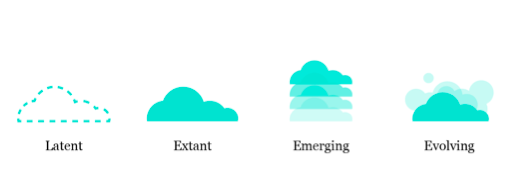
In the Dream In A Box initiatives undertaken so far we already have 5 Shades of Dream – Emerging; Latent; Resurgent; Extant; Evolving – starting to reveal themselves in regards to formulating desirable and enduring lifestyles of consumption.

I am certain that more will present themselves before we are finished.

So here’s to those turbulent, intangible, flaky, studenty, inspirational, nation-shaping, scientist irritating things called Dreams.

If for nothing else they should be considered eminently remarkable purely on the basis that they can elicit so much passionate debate and discourse purely by their mention.

As long as each Dream is considered on its merit – not on some preconceived concept of what it does not fulfil, or on some etymological witch hunt dressed up as rigour and realism we’ll perhaps be fine. Until then…

As Stephen Tyler sang: ‘Dream On’

Subscribe

  • Entries (RSS)
  • Comments (RSS)

Archives

  • November 2025
  • September 2024
  • June 2021
  • December 2020
  • August 2020
  • April 2020
  • March 2020
  • January 2020
  • October 2019
  • June 2019
  • April 2019
  • November 2018
  • August 2018
  • June 2018
  • February 2018
  • January 2018
  • December 2017
  • November 2017
  • August 2017
  • July 2017
  • June 2017
  • May 2017
  • March 2017
  • January 2017
  • December 2016
  • November 2016
  • October 2016
  • September 2016
  • August 2016
  • June 2016
  • May 2016
  • April 2016
  • March 2016
  • February 2016
  • December 2015
  • November 2015
  • October 2015
  • September 2015
  • August 2015
  • July 2015
  • June 2015
  • May 2015
  • April 2015
  • March 2015
  • January 2015
  • December 2014
  • November 2014
  • October 2014
  • September 2014
  • August 2014
  • June 2014
  • May 2014
  • April 2014
  • March 2014
  • February 2014
  • January 2014
  • December 2013
  • November 2013
  • October 2013

Categories

  • Uncategorized

Meta

  • Create account
  • Log in

Create a free website or blog at WordPress.com.

Privacy & Cookies: This site uses cookies. By continuing to use this website, you agree to their use.
To find out more, including how to control cookies, see here: Cookie Policy
  • Subscribe Subscribed
    • thinairfactoryblog
    • Join 28 other subscribers
    • Already have a WordPress.com account? Log in now.
    • thinairfactoryblog
    • Subscribe Subscribed
    • Sign up
    • Log in
    • Report this content
    • View site in Reader
    • Manage subscriptions
    • Collapse this bar
 

Loading Comments...