Old heads, Young Hearts & The Foot soldiers of resilient humanity.

Tags

, , , , , , , , , , , , , ,

Screen Shot 2014-01-25 at 17.32.23

If we had to choose two lead stakeholders in building a more resilient society, my money’s on the under 20s and the over 60s: and here’s for why.

Allow yourself the luxury of the observer for a short while at least and there’s one thing you may notice: teenagers and oldies are very, very similar in many ways – especially when they are grumpy. They re in fact made for each other.

Both sleep at weird times of the day. Both are prone to radical mood swings. Both err on the side of the heavily medicated (prescription or non prescription). Both sport injuries and conditions as a form of life signature: some inflicted by challenging the nature of their own mortality and existence (the irresponsibility of youth): others purely by having existed for so long (the immutability of age). Both enjoy wheeled modes of transport other than cars. Both tend to suffer either a crisis of or a surfeit of identity.

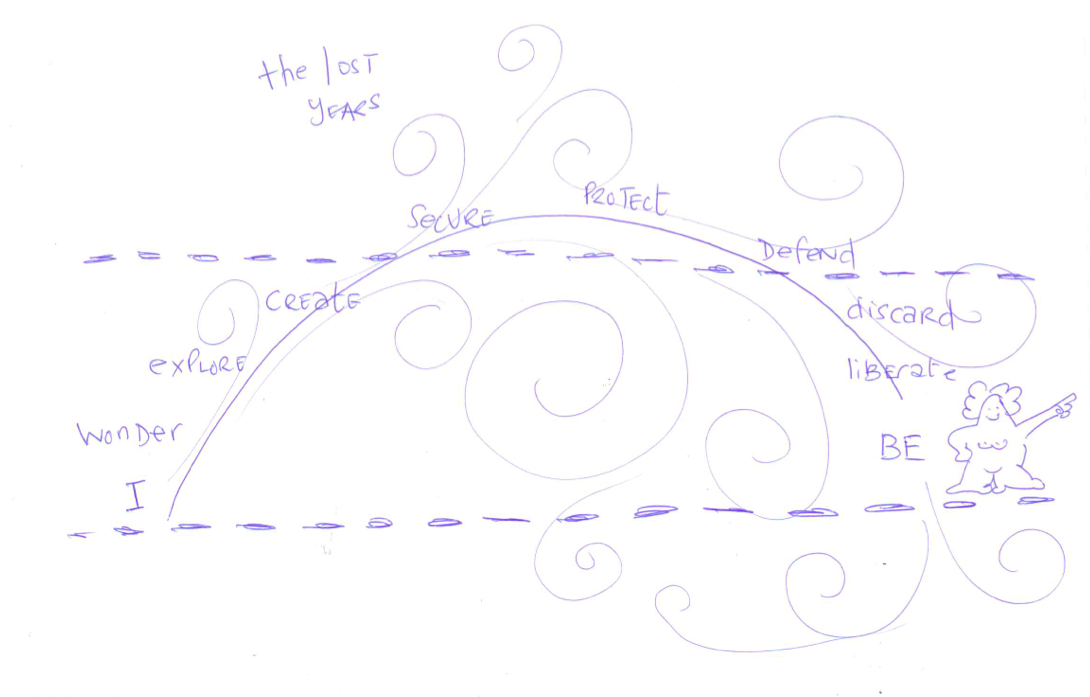
Both view the wheezing middle (those of us between 20 and 60) as an uptight, over wound self obsessed lost tribe. We are trapped in the lost years, having left the age of wonder, explore and create behind, we are trapped in the secure protect and defend stage – fiercely ring fencing the things we have accrued and are accruing – and as yet far short of the time when we are finally confident and secure enough in ourselves that we can begin to discard and disassemble stuff and liberate our crippling concepts of a thriving life and just be.

Unlike the Lost Middle, they have ‘nothing to lose’ in spiritual or material terms. At one end the young, prior to being owned or owning, are still free to explore possibilities randomly, inspiring themselves and each other as they flow. They are at the least compromised stage of their lives. No strings have been attached: no mortgage overlord; no food and energy bills to speak of (even if they have got as far as renting); no fixed pathway measured in decades from which they cannot deviate; and little in the way of allegiance to the sensitivities of others, speaking out loudly and relentlessly at those things they find unfair, irresponsible or destructive. They both have a penchant for saying inappropriate things in public.

Equally, many of the elderly are also in the position of liberty and regeneration, being reasonably capitalised without the stricture of a working day or people to answer to. Both also enjoy a strong sense of community that seems bleakly lacking in the striving grinding scratching generations that separate them (unless of course you think the togetherness of mutual Lexii ownership or collective apple upgrades represent communities of any real worth.)

It is these similarities in nature and self that lead me to believe that they are the two primary stakeholders in building a more resilient model of humanity and the architects of a more enduring aspirational life.

And I believe wholeheartedly that it will take both of them. There is too much pressure being put on the shoulders of the excited young to use their seamlessly connected collectivism to compel companies to act more responsibly, to shape a kinder less tyrannical form of consumption, and ultimately to be more capable of finding meaning within their own means. They simply lack one thing: the kind of resilience and adaptability that is only ever learnt through multiple sustained and not always pleasant experiences being endured over time; and a clear sense of the inevitability of consequence come what may.

Young people need the easy, reflex and second nature wisdoms of thrift and financial integrity of the older generations. They need mentors to help them build a more integrated, inclusive and supportive society; the benefit of which they will come to reap eventually.

Oldies need to be brought in from the cold for a number of reasons not only just to supplement and compliment the young in the shaping of a more enduring model aspiration. Their return to a central role in society would be a salve to the fractured communities and families we increasingly exist within, with parents and grandparents increasingly isolated as younger families move further afield.

There is a dreadful lack of economy, efficiency and foresight in the speed with which we dispense those slightly worn generations into some inert anaglypta hell with a name drawn from the lexicon of calming rolling rural pastures or idyllic flora & fauna. (Even the best of God’s waiting rooms still suffer a dreadful absence of young people in their halls as reminders of the living.)

Thankfully, the brittle brutal truths of austerity, the death of cheap money and the comedy of house prices are making people reconsider bi and tri generational living again. Not to say that will be rose scented from the off.  It will reignite some of the old issues of proximity certainly amongst generations with radically different perceptions of what is good right and fair.

Part of the original dislocation was due to the fact that the oldies of yore remained quite attached to some of their more suspect beliefs even as the world turned. Their casually voiced views and derogatory referencing to foreigners broadly and specifically people of a different ethnicity marked out by colour and homosexuality to name the two biggies didn’t roll too well with the newly liberal uber-youth. This only served to exacerbate the social and familial ruptures.

The unacceptable nature of these traits rightly needed rebalancing but it became a reasonable much cited excuse for us to condone abandonment and simply eject them from the framework of what constituted a decent functioning liberal society.

In doing so we threw the wrinkly baby out with the bathwater. Because with them went all of the old wisdoms of making ends meet, make do and mend, waste not want not, the economies of leftovers, smart buying and existing and still finding meaning within ones means. And it is the nature of those wisdoms that will secure young people’s futures.

For all of the old jokes – Quick, Get teenagers to run the world while they still know it all – the immutable emphatic heart, energy and passion of youth is fragile. They need the irrepressible mettle of oldies and the life wisdoms that come with them. The combination would be amazing.

Brands, especially ones that have been around a while, could find amazing ways to harness this power duo – starting from the inside out and the ground up. Formally connecting the young graduates, interns and apprentices with the retirees and wise owls would recalibrate how a company develops its service propositions and extant purpose in a far more holistic manner.

Telecoms and Broadband providers with an interest in building cohesive societies could fill the gaps that tech progress leaves behind. They could allow fractured or distant families to utilise skype culture to reconnect old and young as part of a Family Broadband Offering.

Educational groups could help children on the verge of dropping out of school by giving them access to the perspectives of a generation of old people who can speak from a lifetime of knowing about the decisions we all make in haste – some with regret some with joy – but all without the hectoring proximity and intensity of a parent made fractious and intransigent because they are both scratching out the bills as well as steering their brood.

But where it really gets exciting is through the introduction of the question ‘Why?’ When we sit around and hack new technologies, create new products, most looking a pale shade of difference to the ones we’ve already got. To raise the question Why? Why spend the money on a tiny upgrade? Why make a 5 bladed version of a 4 bladed razor? Why triple pack food you’ll waste some or all of? Why burn money you don’t have? Why?

The energy and passion of youth with the calm caution and questioning nature of age would create the killer innovations department in most any business.

So here’s to the hard-core stakeholders and architects of better, the oldies and the youngies: old wisdoms and young hearts reshaping a more measured and enduring future.

Swapsies, sharesies, half eaten Apples & the joy of the digital yard sale.

Tags

, , , , , , , , , , , , , , , , ,

images

To be fair the first time I ever heard the phrases Collaborative Consumption and Shared Economy used to explain the new consumption trends of collective barter and re-use I was no more enlightened.

One painted the picture of a co-operative of tubercular poets and the other sounded like a euphemism for a low effort-short-duration-hi reward act of coitus.

Not that I don’t find the concepts they represent amazing and inspiring.

I am in awe of the platforms that are conflating the social culture of sharing and swapping stuff for free, great distribution and logistics providers, a higher purpose of light touch collective action and the target of substantially reducing the purchase of consumer durables by doing so.

The likes of Adam Werbach and the people at yerdle are blazing it.

The whole social marketplace of give and get for free reminds me of the sheer excitement and pleasure of swapsies and sharesies, with everything from player cards to lego pieces to Action Man accessories furiously exchanged  – the smart thrift of a great trade and the thrill of an unexpected treasure.

I just wish more brands figured out how to build this kind of community-making, life-affirming idea seamlessly into their systemic selves.

I am especially irritated with the brands who know full well that a whole load of their junk is in someone else’s trunk (and I don’t mean that as a euphemism)

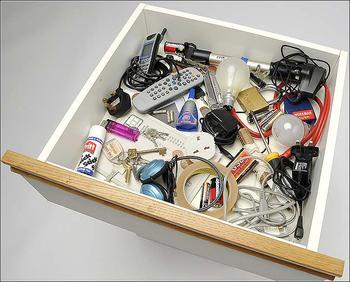
I have already mentioned in a previous blog the fractual tech landfill of the Man Drawer. Drawers filled to brimming old tech kit, some barely used. The orphanage of every tech fling we’ve ever had.

The other junked up trunk in my life is sitting on my lap top right here and somewhere in the ether out there.

i-tunes. Or should I say specifically the deselected i-tunes in my library.

Now I love Hoagy Carmichael. A honky-tonk swoony blues songwriting band leading pianist of the finest order. His Hong Kong Shuffle, Riverboat Blues, Georgia On My Mind and Old Buttermilk Sky are basically liquid golden pools of genius soaking through the pages of the Great American Popular Songbook.

You cannot fail to love a man who when asked to describe his own voice referred to it as sounding “the way a shaggy dog looked”.

And there is nothing one dimensional about Hoagy. Hoagy is not easily set aside. Hoagy is loaded. With him comes the daisy chain memories of that period in the early seventies where everyone from fashion designers, to musicians, artists and filmmakers just couldn’t resist the cultural signatures of the Great American Era from the 1890s to the 1930s – especially the speakeasy chops of the old joanna.

Enshrined in Films such as Butch Cassidy & The Sundance Kind, Bonnie & Clyde, The Great Gatsby, The Sting and The Man With The Golden Gun, the jaunty jazz keys chimed through everything. Even popular music stole a march from the zeitgeist with Bowie drawing in the haunting chops of the good old days into his anthemic tracks Time and Aladdin Sane (accompanied by jazz pianist Mike Garson) and in the fashion of his Man Who Stole The World Zoot Suit come Speakeasy look.

So Hoagy, Genius. But the purchase decision on my part was badly planned. I wanted a download with the 9 or 10 tracks I really liked. What I got was a download of forensic depth and scope. The download included interviews, 7 separate recordings of Riverboat Shuffle alone, and much more.

In the absence of a retro vinyl moment of in-depth sleeve note reading accompanied by the sharp petro-tang of print varnish and PVC this download is old school in its detail. An enthusiast would adore it.

But it’s wasted on me. Which brings me back to the point with our grandparents words ringing in our ears:  Waste Not Want Not

So to that end, Apple, if you’re listening, all I want is a button on my i-tune genius panel marked Yard Sale. And all I want that button to do is allow me to select all the deselected tracks in my library and put them into a special open market.  Where I can either swap and share them for others, or sell them at tuppeny prices and donate the cash to the cause of my choice.

BOOM happiness – and all in the spirit of Yerdle et al.

I am sure that there are many ways of passing around music whose stealth tactics and moves teeter on being a martial art. But I am taking the simpleton tack here. And I am pointing to a Brand’s responsiblity for cleaning up their own back yard, laying waste to waste and leading by example

I want a massive brand like Apple to do it for me – in fact, especially a brand like Apple, with all of its ‘we’re a Purpose Driven Business’ Love Me Love My 4th Upgrade i-phone schtick’.

Workout the IP issues with the artists and publishers – I am certain that the idea of sharing deselected, de-listened and de-loved tracks in some second-hand music platform form of barter is not so satanic an idea or impossible a task.

The criteria that the user only sells the quantity that you have (no multiple sales of individual tracks) and that once sold it’s gone forever seems wholly reasonable.

Now, if there ALREADY IS is a device/trigger/button/easter egg somewhere on my machine or in the software that does allow me to do this, PLEASE SHOW ME WHERE IT IS, along with the other half billion users on the i-tunes system.

Counting down to the one billionth download is all well and good BUT I would be a lot more excited if i-tunes started counting up to celebrating a billion deselected tunes shared and a petaflop of cash raised.

The guys at Yerdle are aiming for a 25% reduction in consumer durables purchases.

My challenge to Apple is to commit to reducing the number of dormant tunes sitting in libraries by the same percentage – by introducing a swopsies and sharesies meets yard sale mechanism into i-tunes.

(That would of course require them to be arsed to do it in the first place. And not just um and ahh their way out of it by distracting themselves and us by counting up to their billionth pointless upgrade I-phone sold.)

I want the spiritual zeitgeist to be carried at scale and across oceans by someone of Apple’s reach and influence. Its a role model thing.

Speaking of zeitgeists, one of the most powerful things about the Yerdle kind lies ironically (given how NOW it is) in the shape of things to come.

As platforms like Yerdle develop, they will become an increasingly valuable partner for any one in the consumer durables markets because they will have first hand insight and data regarding the post purchase behaviour and utility of those consumer products – far richer than any service programme report. The broadened view of the landscape of use would give real meaning to Consumption Insight as it would reach far far beyond the increasingly one dimensional framing of consumption and what it means to consume a product or service over time.

They would have an independent viewpoint of which products leave the home (or favour) as quickly as they enter it, lose their cache, or simply fall redundant. They would know which items travel where, where the sharesie hotspots are and when swopsie communities are most active. They will know what types of profile user gravitate to which type of ‘thing’ – data to cross refer against the company eye view of their segmentation and dynamic customer behaviour.

That kind of knowledge could reshape the nature of the consumer companies’ distribution partnerships and networks as well as their models of Customer Relationship and Service Management.

What’s more it could start to change the shape of Cradle-To-Cradle design in a number of sectors – even to the point where consumer durable manufacturers start to build the share swap barter life stage in the cradle to cradle life cycle design and planning.

Not that any of that helps me – or Hoagy, who is currently sitting mostly deselected and dejected in my library.

So here’s to Swopsies and Sharesies, digital yard sales and Hoagy Rides Again

DELETE A short film idea about mobile living, the death of memory & why we keep what we keep.

Tags

, , , , , , , , , , , , ,

Image

NOTE: STORY/FILM IDEA ORIGINALLY CREATED AS A PIECE OF STORYTELLING DROPPING OUT FROM THE TOPIC OF DISCARDED TECHNOLOGY – By Julian Borra©2012 

ELEVATOR PITCH – In a sentence: Memento on Mobiles – How machines murdered memory & identity. 

DELETE

WE OPEN ON A BLOKE, AN EVERYDAY BLOKE. HE’S IN A BED BUT HE’S DRESSED. HIS CLOTHES ARE A MESS. HE LOOKS LIKE HE SLEPT IN A SKIP AND HERE HE IS, IN AN EXQUISITE LOFT APARTMENT SOMEWHERE. EGYPTIAN LINEN. DUSTBIN SCENT.

He’s foggy, wooly. Unsure and half awake. 

He starts to quietly wail. He looks suddenly wide-awake and terrified. He makes the physical shape of a small creature trapped in a corner of life.

He is wild eyed. Something is wrong something is terribly terrible wrong. He looks around desperately.

There are picture frames. Many picture frames – in all the unusual and haphazard random shapes and styles you get in a home – but every one is empty.

His hands run around his half standing body – a wallet in his back pocket reveals nothing – it is worn – lived in but empty of everything and anything.

He looks down. His bare feet are crusted and smeared with old blood.

He stumbles towards what he believes is a bathroom adjoining the room. He frantically opens all the cupboards. Nothing. No medication, no shampoo, no bin with old cotton buds and tissues – nothing to make this place – human.

He stops. He looks at himself in the mirror. His eyes search his face. He moves his have draws his hand over his chin, scruffs his hair, tears at his face. We start to realise that he has absolutely no idea who he is – who the fuck IS HE?

He opens and closes the mirror cupboard – his face appearing and disappearing – as if trying to jolt his mind into remembering who he is.

We see his feet as he paces across the floor. As he walks he touches furniture; trying to connect – nothing. He walks down some open plan stairs.

He looks in draws – filled with the bric-a-brac of living but nothing – not one thing held a sense… …of someone… …anyone… …any… … identity

The windows reveal nothing. He could be in a truck by a river next to park in a market town underground – anywhere.

His eyes alight on a half open door. He senses more than sees a large space beyond it. He walks towards and then after a beat through the doors. He is in a large loft apartment styled space. The space is empty. Except for one thing. A piece of furniture? He moves towards it. At the far end: a large chest of drawers

He walks towards it as if drawn towards it – by something. No voodoo. Just something

He slows as he reaches it.

Something in it makes him feel apprehensive.

He touches the wrought metal handles. He runs his fingers across the surface. The wood, walnut perhaps, inlaid with mother of pearl. He fingers the handle and then curls his fingers slowly under it, just the tips. He pulls. The drawer slides elegantly out – this is a very, very expensive item.

He looks in. His gaze is met by what seem like dozens of bits of tech. They are mobiles – mobiles of every style and hue and age. There are mobiles in cases and with trinkets, old palms, crackberries, i-phones, motorolas, nokias HTC’s …Jesus.

He picks up one of the more recent models – couple of years old – he flips it. It’s charged. But phones lose charge? Why’s a two-year-old phone charged? He flicks through it.

No signal – no call logs – no message logs – gallery! – gallery?

There’s some files in the gallery. Pictures, random pictures of places; they mean nothing to him…and a woman…he stares. Nothing.

Up here? Down there? Nothing he feels nothing when he looks at her – she is mad and distracted – in the next, she’s reading in a café.

There’s a film file. He hits play. He can see the woman playfully avoiding the film maker. It’s not in this place. It’s a hotel place – somewhere cool and foreign. A hand comes in from the film maker gesticulating to her. She gives the camera the finger. The disembodied hand gestures. She disappears and the film follows her. As we turn the corner she is right in front of us – creepy – staring. She’s not laughing anymore: she smashes her fist at the lens and the film cuts.

A small fizzing feeling slides across his sternum, up his neck and glides across the right side of is face. A small tremor: was it actually a twitch, fires in his left eye.

The random hand in the film wore a large and quite avant-garde ring on the thumb of the right hand.

The hand he is holding the mobile with. His finger traces a faint shallow but very present impression on his thumb, the inner ridge of skin slightly rougher, coarser  – the worn edge of where a ring might once have rubbed and rolled and sat.

Suddenly he frenetically scrabbles through the drawer looking for anything, something to explain who the FUCK HE IS….

He picks up phone after phone: every one. Fully charged. WTF! Now. Where is he NOW.

He grabs what he thinks is the most recent model. He pops the button. Glow, sound signature, mix up. Interface. Gallery. Shit interface. Where’s the gallery. No gallery. Messages? Messages. Picture messages. He scrolls through it. There are hundreds of them. ALl kinds of crap. Girl. A girl. No. He looks closer. Its her. The woman. But she’s younger. So much younger.

He scrolls further. An older couple. Her parents? His parents?

A very sharp pain traverses his skull as a thought crosses his mind. Synchronicity.

He checks the model. He checks the previous model. He knows models. 

The model the old her is on: thats weird. Its older than the model the young her is on.

His face fizzes and buzzes again, louder this time.

Stupid tune. Stupid tune. In his head. Not in his head? Wheres the stupid tune? Tune’s in the drawer. The drawer is ringing.

He starts to tear at the mass of mobiles. Which one’s ringing?

Two stupid tunes? No three. Three tunes.

He steps back. The whole drawer vibrates now.

Every phone starts to ring. Too many stupid tunes.

And one voice.


Trunks, Junk, Science & bees that go BOOM in da room

Tags

, , , , , , , , ,

Image OK. As my preferred space in the world is that of using language and creative storytelling to make very complex or otherwise arcane subjects fun approachable and palatable.

And as I celebrate anyone who has the ability to lighten up to make a serious point, I am currently enamoured with the work of Sam Droege and his team at USGS Bee Inventory and Monitoring lab.

Their bee portraits, featured in the Observer’s Tech monthly article last week, were truly awe inspiring.

But the biggie for me was the lightness of touch involved in how Sam summarised the amazing diarising and macro photography of these beautiful creatures.

“We do select out the supermodel bees”. “We wash them in soapy water and then we blow dry the to make them look good”.

Now, using drop dead photography to make smaller insects, especially those holding the key to keeping the biodiversity tree flourishing and fecund, might be a well trodden path. But the lightness of touch did not end there.

It only got better with the revelation that a bootylicious bee had been named after Beyonce Knowles

It seems that Bryan Lessard, a researcher at Australia’s Commonwealth Scientific and Industrial Research Organization, on finding a newly discovered horsefly in Australia with a golden-haired behind, named it Scaptia Beyonceae. That’s Beyonce to you and I. The reasoning is simple enough.

A stroke of Genus genius if you ask me.

That the given name might bring a titan of bio-diversity into the interest framework of an urban 12 year old girl is exactly what every scientist should wish for. The delight of generating Inappropriate degrees of opposite impact; in such a way as to open up the amazing topic of insects to a teenager has to be good.

In the Huffington Post piece Lessard went on to point out “It’s extremely important to name all the un-described species so we can measure our human impact on the environment and hopefully protect it for future generations to enjoy.”

Now if we could get more sustainability practitioners, boffins and innovators to apply the same tack, we might perhaps start with a better communications brief for the brand or communications whizz bangs to start with.

So I’m saying yes to bootylicious bees and the joy-filled triviality of word play and pop culture.

This is the kind of thing that reaches across chasms.

Joy.

PS Is it me or does Anthrophora Bomboides look a little like Orville The Duck, given a little green fur tinting?

On Human Bondage, Sexism & the corporate art of owning people

Tags

, , , , , , , , , , , , , ,

urlSince you stopped going to the pub after work all the time, working all hours and making a herculean effort to be in the thick of it at the company away-day, have you noticed a cooling in your professional prospects?

If so you may be on the slippery slope to being corporately disowned

There is one shade of casual modern enslavement that seems to always sneak under the radar. That of the corporate cultural variety and the manner in which it captivates and ultimately ‘owns’ people through subtle or overt forms of structural and social entrapment and the illusion of sanctuary.

The average corporation still manages to successfully achieve the rather jaunty conjuring trick of increasing levels of ownership of people while decreasing levels of commitment to them, using ever-more restrictive mechanisms, covenants and contexts to bind their workers personally, financially, socially and professionally to the wheel.

With the death of professional ‘tenure’, jobs for life and the culture of company ‘lifers’; and with the increasing instability or absence of pension security, you’d think that the old social cache of being with a company “Man And Boy” would seem not only outdated. It would look like a fools choice. But still they sign up in their tens and hundreds of thousands.

To be fair, the desire to create stability for oneself and those one loves in an increasingly unstable world compels many to seek the chimera of job security. The social contract written by many corporations only seems to take advantage of that primary and aching human truth – and the social contract between ‘owner’ and ‘owned’  have remained mostly unchallenged until only recently.

The heady confection of deceptively stable pillars of recognition, incremental reward and stability, wrapped as they are in faint praise and quarterly critical assessments and riddled with the insidious spirits of ‘try harder’, stay competitive and the threat of social or tribal alienation for those cast out from its culture are evidence of a rather impressive dark art at work.

Traditionally, the confection, when properly set and applied, fuels a slippery culture of forced bonhomie, social adhesion, complicity, politicking and institutional bullying – a culture by which corporations, even those of the enlightened variety, herd the worker bees to best performance and output for least investment and inconvenience.

The even more surprising thing is that the primary benefits of professional development in a secure job – getting better at what you do, working with inspiring people and enjoying the security of the journey  – are NOT necessarily a natural outcome from Owned cultures.

Quite the opposite in fact, as proven by the number of corporates struggling with employee satisfaction, and the need to go to open-source and collaborative co-create models to ensure that they offset their knowledge gaps and the pockets of intellectual and systemic inertia that their ‘lean’, narrow skill bandwidths and heavily siloed infrastructures and governance seem to nurture.

Corporates, especially multinational ones, function on rules of uniformity and similarity. This often leads ‘outsiders’ to question the nature and quantity of mediocrity that hides within many corporate structures. But in pointing to their ability to ‘hide’ inside the structure misses one vital point.

They aren’t hiding.

Most switched on corporate career tourists are all too aware that mediocrity is a fundamental requirement of the beast. Mediocrity is the gristle, fat and cartilage of the ‘corpus’. The business cannot function and the corpus cannot retain its structural integrity without them.

What we see in our post-modern post-industrial light Manufacturing and Knowledge economies is a shift from the Muscle that moved the machines of manufacture to the Gristle that binds the body corporate.

Critical to the integrity and survival of the corporate structure these gristly, sinewy, fatty actors have to be secured; made immovable and inviolable – inextricably linked to the structure. Owned by it.

The condition of being either Owned or Un-owned by your job, the social and personal impacts of which you choose and ultimately the discrimination you suffer if you choose the un-owned path, have until recently mostly been explored from a female viewpoint – through the filter of sexism, the glass ceiling and equal rights in the work place.

This is hardly surprising. Women rightly pointed out that there could be a far better way of doing things inside large companies and corporate organisations – and in such a way as to make far more of their skills and capabilities.

They made the even greater mistake of mentioning that “while we’re at it, would you mind paying me the same as that bloke, as we do the same job and, errrm… yup, I’d like the same opportunities too. Oh, and in regards to pregnancy I’d like to neither be discriminated against just because it ‘might’ happen or be penalized for actually becoming so

Now that’s just not playing the ownership game.

The primary creator card is never going to go down well with the ‘owners’:  A noisy display of an substantial, vital and deeply rewarding alternative life choice to the job in question would have set off every alarm bell they have.

Top all of that off with a one very irritating request and a paradigm shift in leadership and the ‘pro-ownership lobby probably went incendiary.

The request? To not only remain un-owned but also to be paid as much as those who are. The paradigm Shift in leadership? The rise of the Female Competitive Advantage as the more future-fit leadership model for success.

(Of course exceptions like the investment banks just step over the ugly social tripwire inherent in this conundrum by facing it up: “Yup! We want to own you. You bet. Screw Un-owned. What’s more, your reward will be commensurate to how long we get to own your soul for. If you want un-owned go line up at the welfare office.“)

With the weakening and the collapse of the traditional workers unions  and collectives (the last spoilers of ‘owned’), the next last biggest problem facing the ‘Owners’ was the threat of half of the working population becoming protected and secured. The last thing they needed was an increasing rump of un-ownable workers shifting the balance of power. They needed an answer. But they needed to be smart. And they found the answer: a short term one at least.

Blokes.

The simple reason being this: For millennia men as a gender tribe have allowed themselves to be bullied, poked, teased, coerced and convinced by their Betters, Biggers, Strongers & Richers into a blinkered one dimensional application of all they had to any given task in hand – without distraction and with absolute commitment.

20th Century Corporates (like their ruling predecessors in the royal courts, the military and the clergy) demanded men’s attention be uncluttered by any form of sentimentality and home making – and certainly untouched by even the slightest desire for any alternative life choice other than the one said bloke was committed to.

The corporate ‘owner’ does not need the inconvenience of anything making their wholly owned workers think for even a second that there might be any benefit in comparing and weighing up different life choices let alone pursuing one. The last thing they need is the inconvenience of workers ‘feeling’ – they need blind obedience.

Ownership demands complete sublimation of the self to that which owns you, unwavering and unquestioning. To be owned is to become a non-self in fact. Also it seems that Ownership does not operate at a fundamental level on either gender or ethnicity, other that is than to seek to control or mitigate any traits or attitudes in those genders, tribes, or ethnicities that might otherwise loosen the  powerful grip of owned.

It seems to me that regardless of what sex you might be, to present a life choice or set of life priorities that do not put the job at the very top and centre of everything is to stop being owned, heart and soul, by the job you are in.

Perhaps the inequality we see regarding women in the workplace specifically is not wholly a sexist or feminist issue – founded upon women being women per se.

Perhaps it is founded on the fact that the ‘owners’ simply see women as more or most likely to be compelled by natural forces or desires to pursue an alternative to the sole bondage of career and just working till you drop – regardless of whether they exercise that right for a short period or indefinitely. In turn this allows the owners to infer that their lifetime value is immediately able to be diminished, bartered, sliced and diced – and they can be held as ‘lesser’ than their unquestioning, bowing, obedient and vaguely terrified workmates.

That women have the ability to fall pregnant makes them by their very nature ‘un-ownable’. Perhaps to the corporations that is their crime.

Reasons to be cheerful:

a)  That more and better educated women are pouring into better positions in corporations while still embracing and celebrating their ‘un-ownable’ selves (bar the odd female CEO kills flexitime glitch)

b)  That the millennial working generation will drive a new and more liberated modus of belonging into corporate life as it seems that neither millennial guys nor girls have any intention of being ‘owned’ by anything other than their own purpose

c) That more blokes are citing an interest in de-shackling in favour of softer purposes and priorities like spending more time with their kids.

I think perhaps it is time to consider that in real terms, job, career or corporate success is not necessarily predicated on a Breasts/No Breasts basis. Perhaps it has quite a lot to do with whether one is prepared be ‘Owned or Not Owned’.

Perhaps if we looked at the inequalities and sought solutions to them through a filter of Owned & Un-owned – in a way that removed the gender or even the ethnicity issue it might simplify and focus the process and expedite progress.

An Owned versus Un-Owned framework of interrogation might also enable us look at other symptoms of the modern professional malaise, like the escalation of anti-social behaviours in young working women – especially those in more pressurized workplaces – not as some trite male wannabee ladette trend  – one of women having to ape men and their destructive behaviours to get on and succeed.

We might venture that they are in fact simply adopting the more nihilistic social coping mechanisms of the ‘owned’ human being – the career slave and the working drone suffocating inside their own ambitions, realizing the gap between living the dream and grinding out the reality and ultimately seeking the illusion of escape from the Faustian pact they have signed through 15 Bacardi Breezers or 3 bottles of a rather cheeky sauvignon.

DISCUSS

Dodgy Dumplings, Celebrity Mystery Shopper & a new food culture revolution.

Tags

, , , , , , , , , , , , , , , ,

Image

Having listened on many occasions to Peggy Liu (my partner in all things Dream In A Box and the powerhouse behind The China Dream) speak on the worrying nature of diet and the often questionable quality and provenance of food sold in some Chinese eateries, a small article in The Economist* last week made my heart give a little (non-ischaemic) jump.

Not only did the article report on the feel-good factor of a people-powered ‘first’: that of the president of the People’s Republic turning up unannounced in a local Beijing eatery. it may also potentially provide a playful answer to the huge challenges around regulating for better food and restaurant hygiene in China.

And that answer is? The Mystery Shopper. The one time secret-police of the Sales Promotion industry and their FMCG clients in the late ‘70s and ‘80s could just hold the key – especially if that Mystery Shopper is none other than Xi Jingping

That is an opportunity for a celebrity endorsement you wouldn’t want to screw up. A gift horse one would wish to neither look in the mouth nor find in one’s noodle soup.

The chance that you might still be peddling some old bits of shoe in batter just at the moment the esteemed leader enters your establishment would leave you with more than just Foo Yung egg slice on your face and a few apologies to make.

it would leave purveyors of such culinary delights as slow roasted ‘plucked floating from river’ foul in much the same circumstance as they found the bird in question; quite dead in the water – commercially, legally and personally. The loss of face that would accompany such an unmasking would be immeasurable in a culture that holds honour in such great esteem.

Whether the possibility of it would be enough to dissuade the many sellers of the likes of steamed dumplings stuffed with (used) newspaper soaked in a rather tasty rice vinegar; and pork buns filled with abstract species of every kind other than the porcine variety is uncertain.

But I imagine they would do more than think twice about serving up these mutant delicacies if they feared that Mr Xi might turn up in their lunch time queue unannounced any time soon.

Equally, the reverse impacts along their (loosely phrased) ‘supply chains’ would be of benefit to everyone in terms of eating experiences, food hygiene and a more regulated and heavily scrutinised food industry and culture generally.

To instil a blanket terror in every dodgy dumpling merchant would in fairness require little of the leader. He only need turn up once or twice in the four corners of the Republic: and ensure that the media cover following each appearance was massive.  After that he could simply hire 20 or so unnamed Look-a-likes who could pop up randomly in distant eateries while Xingping remained safely tucked away doing slightly more important things like running China.

There is also something quite apropos about a method once reserved for checking up on whether CTN owners, grocers and Wholesalers had put up snack and soft drink sales promotional literature potentially revolutionising food culture at a mass scale in such a high-profile culture.

That mystery Shopper could from such low beginnings rise to the challenge of solving one of the greatest food crimes ever knowingly undertaken by so few against so many, would indeed constitute a sublime example of conceptual social mobility in a culture once renowned for championing the rise of great leaders from humble beginnings.

So, here’s to the inception of Chinese Celebrity Mystery Shopper and a food revolution.

JUCCCE China Dream FOOTNOTE:

  • CLEAN & SERENE – To activate safe food, JUCCCE is working with Ecolab, a company that works in restaurant hygiene and clean water supply, and a local design firm called Impact Group to publish and distribute a guide for “Top 10 tips for Safe and Healthy Restaurants”.
  • YOU ARE WHAT YOU EAT – created a New Way to Eat program – melds new nutritional guidelines with low impact foods – convening senior global coalition of nutritionalists and sustainable agricultural experts to develop new guidelines – create school curriculum in YK Pao and YCIS schools, and tasty, sustainable and nutritious school meals with Eurest.
  • JUCCE are developing a NWTE programme with WEFer David Agus (author of “End of Illness”) that is “Good for you, Good for the planet”.

* Original Economist Article – A New Flavour. Xi Jingping gets down with the people.

Thrift shops, The Man Drawer & the lighter guide to sustainability storytelling.

Tags

, , , , , , , , ,

ImageEven in the terribly outré, groovy, fame seeking world of fashion, we’re still surprisingly short of getting it right in regards to lighter sustainability storytelling on a populist scale.

When we set about the serious task of enlightening people to the benefits of up-cycling, recycling and reusing clothes, therein lies the problem. The ‘serious’ word: the first cousin of worthy, nephew of pious, uncle of heavy, stepfather of boring and the next-door neighbour to ‘I’d rather stick spoons in my eyes’.

We just seem to get wrapped up in the idea that the environmental and social benefits of doing it are enough to make it really really attractive to people and we forget to seduce and engage and inspire.

Recycling clothes with some panache is at least hanging in there Cali style. Andreas choice, at 2 million + Youtube hits uses her Valley girl whatevrrr guide to Britney style t-shirt recycling to tempt a large proportion of like minded girls and boys to check her out.  And the prize for how to recycle a t.shirt into a hoody dress at 316,000+ you tube views goes to GiannyL

But the prize for creative storytelling in regards to promoting thrift and granddad’s clothes must go to Micklemore & Ryan Lewis’ Thrift Shop at almost 479 million Youtube views. Okay, it breaks all the PC rules so perhaps doesn’t quite tick every do-good box. The sandpaper swearing comes with the territory.  There’s collateral damage in there; the B*&@h word always sadly present: a lazy street slang that not only degrades the recipient but also demeans the user. BUT.

Whether we like it or not, the sheer size of audience Micklemore Et Al attract is staggering – and if only 10% of that audience eschewed another piece of Primark tat for an old OXFAM onesie next time they went clubbing, that makes for 4.7 million people NOT buying a $30 T or skirt that will go from body fill to land fill in the inappropriate and possibly sexist wink of an eye.

The sensational intellect that threads up-cycle and recycle innovations in fabric and textile re-engineering and reuse into systemic process and practice strategies for smarter lighter clothing consumption are both laudable and impressive – but when it comes to creating storytelling to generate some infectious feel-good around them we still need to find the common touch more often.

M&S’s Shwopping comes super close, using the exceptional ambassadorial skills and unmitigated charm and integrity of Joanna Lumley. Her ability to communicate the benefits of recycling those old clothes for good with elegance and aspirational panache is wholly infectious.

So perhaps we just need to do a little gap analysis to define or reveal some smarter storytelling formulae to get us closer to what good looks like more often.

But lightening up is a great place to start.

Having just finished a conversation recently on the toxic nature of tech and battery disposal, I was reminded of the stand up comedian Michael Mcintyre’s Man Drawer sketch – a sublime stroke of observational genius.

With eye-watering clarity of purpose, he unearthed one of the most expansive, multi-site and otherwise invisible storage facilities for old tech and used batteries in the western world: Men’s Special drawers. Drawers packed with tat of every shape, hue, nature and function. A veritable treasure trove.

Now most Youtube stuff around tech and mobile disposal never seems to get beyond a few thousand hits.

But I’d venture that if we got Michael Mcintyre to re-task the Man Drawer sketch as the leading drive in ‘a how to smartly recycle tech and safely dispose of batteries’ campaign we may be in danger of even getting Jeremy Clarkson to think twice.

Suddenly, the content ideas that drop out of this topic also become a lot more interesting. I would love to create a real time infographic based upon the Man Drawer.

Imagine if, having run a small pilot sample to identify a standard unit of control for type, quantity and status of ‘stuff’ in the average Man Drawer, we took it city by city – estimating the number of Man Drawer men between 25 and 55  – and running the numbers to identify potential quantity, sources and scales of tech and batteries lying around – their potential recycle reuse and disposal values – their latent capability or functionality, even untapped energy and intel sources (the SIM graveyard and quantity of rechargeable batteries lying uncharged!). I can already see the real time dials spinning.

Back to the point though, ‘funny’ can unlock a rather arcane and not terribly seductive topic with a lightness of touch usually missing from the average piece of communication around what should be a smarter, lighter living strategy.

So, between leopard-skin onesies in da club, a man with a relentless-stride approach to illuminating the text of everyday life, and a more enlightened approach to how we story-tell, I do think we can get there.

We just need to remember perhaps that sometimes its OK for the messenger to get danced around or laughed at: it’s a whole lot better than being shot.

Divine obsolescence, Sustainability & the silent S in Business Transformation.

Tags

, , , , , , , ,

Image

Mention to a sustainability person that their career trajectory should be hurtling them towards some form of divine obsolescence and the reactions are suffice to say, mixed.

The idea of them passing through some blissful reinvention to rise phoenix-like, only stronger and wiser, in some new primary function at the heart of the business doesn’t always ring everyone’s career bell.

The fact that they should wish to render their current position and the status they derive from it obsolete – a planned professional obsolescence – seems confusing to some, demeaning to others and otherwise simply quietly terrifying to those who have been on the S mission for so long.

Success for most Sustainability people (and their CSR cousins for that matter) is surely achieved at the moment that all of those smart systemic cultural, operational, environmental and social practices, policies and processes they have been championing for years finally become an invisible seamless part of the standard functions of the business. (Or as one Kellogg ELT member said to me once in a meeting – simply just the way that business does business.)

I would go further: I would celebrate that ‘moment’ with some form of International Award system and accreditation that recognizes the real Transformation the moment augers.

The award would celebrate the transformation (both of the person and the business itself) heralded by a Sustainability person moving their S skills and expertise invisibly and indelibly to the heart of that business. Also because it would show that the sustainability profession can move from a support to a leadership function. In that way each sustainability person develops a new focus, seeking to be the living embodiment of the right kind of positive obsolescence.

Of course there will be teething problems. When any one party finally shakes off the mindset and strategies of opposition to take on a leadership role, it takes some time for it to also shake out those who ‘hide’ in opposition; rather the provocateur in the shadows than the leader in the stark light.

In that way the sustainability profession would finally become a true reflection of the qualities in both products and lifestyles it compels the rest of the world to embrace: either that of a singular sturdy, unwavering and enduring utility designed for fluid existence from cradle to cradle – or that of a single thing that propagates multiple by-product life-cycles and strategies of reuse, recycling, repairing or re-tasking.

This ability to build in positive obsolescence should not be a stretch for any of us professionally as it seems to present few issues to us personally.

In our own private lives, the slightest whiff of our obsolete selves wafting into view and suddenly we’re a whirlwind of re-creation – everything thrown at a new model us – starting with a new look, a makeover, a killer pair of shoes; a new hairstyle. Then it is support pants, shaving and waxing (come on gents, don’t be coy, you do), non-surgery lifts, strenuous gym regimes, 2 day starvation diets replaced by Neanderthal diets and then nips and tucks abound. (Or at its least, a chin gym from a catalogue perhaps?)

There are trillion dollar industries wholly based on the fact that we’re mostly quietly terrified of being ousted by a better smarter genetic model of humanity in our everyday life.

So why not perhaps point a little of that at one’s professional persona – especially if one works in the one profession which should know better than most what smart obsolescence looks like – one based on transformation, regeneration and improvement.

In doing so, sustainability people would be applying the smartest evolutionary strategies they know to themselves. If they don’t, the brightness of the future becomes questionable. There are many specialist sector and discipline professionals who can tell them what it feels like to miss the evolution train; many who now the price to pay for refusing to adapt; many who are now contemplating the professional landfill stretching out in front of them.

Sustainability people need to apply all of their brain-power and every ounce of diplomatic skill they have (or that they buy in) to render their own ‘Sell By’ date obsolete.

They need to ‘opt in’ to being an inextricable part of the transformative and regenerative engine in every brand and business. They need to be sitting at the heart of the action when a brand or business is trying figure out new qualitative growth strategies, not clinging to an outmoded professional signifier or tribal colour, abdicating the trials of leadership to some other, and then sitting at the edge in some fit of professional pique

Hopefully 2014 will usher in a new evolutionary professional dawn – or there might just be a lot of babies on that bathwater landfill.

Brands, Palm Oil & The Ugly Face Of Beauty

Tags

, , , , , , , ,

ImageImage

After the recent piece regarding Palm Oil and the depredations its industrial cultivation rains on the heads of one of our most wonderful simian cousins, if there is anyone in the beauty industry or from one of its agencies that read it and didn’t end up feeling anything other than a creeping, yawing shame climb up their neck I would be staggered.

Sadly, whether they give enough of a flying arse to do or say anything about it has more to do with income, career, the unassailable truth of an utterly disinterested management structure and the luxury of distance.

The management of these corporations know that the desperate human psyche is obsessed in ever increasing degrees it seems with looking like something they’re not. Or once were.

And the masters of those businesses keep a firm (serum tightened) eye on supplying the relentless demand for sleights of hand in the human genetic condition department – primarily around the strands that:

a) make us look the way we do

b) make us smell the way we do

b) force us to age

The simple fact is, when it comes to holding the pedlars of the beauty myth to task, our vanities render us mute.

How could we say anything? We’re all still queuing up to slather umpteeen variants on a palm oil theme over our selves to the point of sociopathic self obsession and distraction. Once we’ve lathered (palm oil) conditioned (palm oil) scrubbed (palm oil) primped (palm oil) buffed (palm oil) BB’d (palm oil) Eye-lined (palm Oil) and glossed (palm Oil) we’re hardly likely to suddenly have a lot to say about the relentless abuse, dislocation and death of a distant orange relative (the Orangutan that is – not the 23 year old with the addiction to a high-street chain of tanning shops called the Electric Beach).

Curious given that we all get very upset in the UK about the ill treatment of animals – if you tried (I dare you) to replay the scenes set out in the article about the brutal treatment of oranguans by plantation farm hands on a more home grown creature in your local park, the retribution would indeed be swift and brutal.

If you were to pop down to a county market town somewhere on a blustery saturday, identify a suitable creature – a classic labrador bitch perhaps with a pup in tow – and then set about her with a club with such force that it killed her: at which point you are liberated to kidnap and sell the orphan pup for £6 down the pub, I think we all know what would happen.

It is doubtful that you would even get the club-stick over your head before an outraged brawling scrum of sturdy county women, art students, Chuggers, the vicar, a couple of bloodsports types, a Big Issue seller and the odd till lady from WH Smiths have hurled you to the floor and set about taking your clubstick and turning you into a lollypop.

“I simply didn’t realise! And the little orange people are all the way over there aren’t they dear! And what could little old me do anyway”. And so slap, slap, slap, slap happy, we carry on regardless.

The measure of Distance from or Proximity to crimes against any species, human or otherwise, has always had a direct relation on the measure of both empathy and action against those crimes. Twas always thus. In the old days empires happily wrought bloody havoc all over the globe BUT to the happy, buoyantly nationalistic and highly civilised folks at home, nothing. By the time the news arrived on their breakfast table, it had been boil-washed, scrubbed and swaddled in the white spotless shroud of po-piety and the moral high ground. BUT in our joined up fibre-optic world when the news arrives in nanoseconds in myriad formats and content forms across multiple channels most, of them served directly into the palm of our hand, that little excuse has worn a little thin; much like the veneer of respectability and humanity that exists in corporations large enough to do something about furry orange genocide.

So, all in all, if we have to put anything under some brutal scrutiny, the modern concept of beauty and the manner in which we ‘ape’ the myth we’re presented with by the movies and magazines, is worthy of a little more rigour.

The toxic nature of the pursuit of it as played out on the world stage by stretch faced harridans (both male & female – lets hear it for Christopher Guest!) who have lost the ability to express any emotion in their faces (how surgery reveals the inner soul perhaps?) and their effect on the young mainly women bullied into low self esteem, eating disorders and galloping dysmorphia, toxic and sometimes fatal tanning, relentless plucking and, on a lighter note, an approach to the sexual mores of bodily hair that owes more to porno and paedophillia than it does to any pure aesthetic perceptions of the physical sexual potency of mature adults with all the incumbent accessories – like normal pubic hair!

In the end I suppose one has to decide what one finds beautiful regardless of whether one’s focus is particularly on the human face or form or some other derivative shade of what constitutes a canvass for the beautiful and sublime.

We also have to decide what price we or anyone else for that matter might pay for the pursuit, attainment and maintenance of that beauty: both individually and collectively.

In individual terms, some will just quietly destroy themselves in pursuit of this unsustainable illusion, others loudly and visibly. Some will destroy those immediately around them, their loved ones and friends; some will simply bankrupt themselves in the process either through a bathroom full of age defying cremes with science defying benefits and means defying price tags or through the insidiously addictive and ultimately disfiguring process of plastic surgery.

But all of us, as a collective; as a global nation of beauty chasers, destroy things far afield every time we pick up a beauty product that relies on Palm Oil to deliver itself to the world. And that’s not pretty.

This is not to say there are not other myriad reasons for the sheer scale and dizzying growth in the Palm Oil trade. Its classing as a biofuel allows some of the more destructive or venal farmers to alleviate their conscience while alleviate the primates of their habitat.

But the beauty industry needs to become beautiful on the inside as well as the outside – and it has a world of ugliness to attend to to do it; because our orange cousins deserve more from us as a relative and we deserve more for our money from the brands that serve us..

Banality, Insanity & The Human Condition. The Life Chamber: a short story (virtually)

Tags

, , , , , , ,

Screen Shot 2013-12-16 at 16.05.28

Dan stood expressionless at the mouth of the walkway.

Ridiculous. He couldn’t remember the last time he’d made a decision by himself. Perhaps he never had. But then again, fuck it. The Chamber was there. Why not use it.

To be fair, no-one he knew ever made a decision – a big one anyway – without ‘immersion’ – the slightly baptismal name for a quick session in the Chamber.

And using the Chamber was just so damn easy. A quick questionnaire and background was all that was needed. Provide Your Avatar; your DNA PIN, faith (passive or active) social network; your game personas and your economic and geographic bearing and you were ready to roll. (Dan was already a Gold Tier Traveller.)

The Chamber was a pretty cool piece of kit. Its Possibilities software programme offered a number of primary, secondary and tertiary consequences so large they had to write a second programme to help them reduce the time it took to calculate across the consequence matrices of the first. Nice.

Why was it so popular? Well, no brainer really – in more ways than one.

It allowed you, from the Right Here Right Now, to see how life might play out – it projected your future by playing out in a multitude of actions and consequences, with every action rooted in your previous behaviours and tendencies, digitally correlated to your past and both what you may have done and did do with it and in it. The Chamber played those future possibilities out from the next second to a millennia hence- based on the chain of events you would ignite by any decision you acted upon.

And boy did it open your mind.

When you first went in, all was pretty dark – just a low lit walk way to a central glass platform that seemed to hover in the middle of the air. You had no idea of the construction wrapped around you at this point.

Once you were on the platform, your sight-line was directed by a small amber pin-prick light in the distance. Once you’d locked on that – pow – quick iris scan and you were off – and off was the right word.

After the first few tests they had quickly developed a more gentle fade up timeframe. It seemed the sudden appearance of a thousand cosmoses of opportunity and consequence were so shocking to the human guinea pigs experiencing them that one had a heart attack, two soiled themselves and the fourth reached a rather inappropriate state of arousal (psychopath apparently!)

Anyway, when it rise up in front of you, the effect was so exhilarating it was hard not to just hurl yourself off the platform as, surely, life could never be filled with more wonderment than that which was spread out before you now. The Chamber was a sociopath’s dream.

Look up and you could see your potential for exceptional success rising high above and around you, in front and behind of you – a bright dome of possibility; the fully illustrated illuminated text of the best of you – rendered in one seamless trajectory from the day of your conception to the day you expired. (there was a second Chamber for Posthumous Possibilities and Consequence) Equally all you need do was look down around and about your feet and you had set out before you exactly how bad the failure could get.

Looking forwards was OK but you could kinda figure that out by yourself – the picture of what could be if you carried on as you were.

The really, really brilliant thing happened when you looked left and right – and to what degree and angle you did so.

If you looked to your right, the Chamber would reveal to you what Could Be: and by looking to the left all that Should Be. Slightly nuts – and the theory of it did in fact pitch Dan into a dreadful two month period of insomnia riddled with the brain worms of How on Earth…!?.

Part if its massive impact and WOW factor was in the way the visual technology seamlessly played out what were in effect quintillions of cause and effect strands that all overlapped and informed each other but in such a way as you could actually consume what you were looking at in any way that made any sense whatsoever. Cleverly, they synched everything to the iris lock directional software that drew the part you were looking at into perfect focus while allowing the squillions of slightly shaded variations of the same consequence in its immediate proximity fall out of focus.

It was utterly overwhelming the first few times he used it. He just wasn’t wired that way. Dan’s brother was the gamer, not him. To be able to look around and see how actions he was yet to take might play out in so many ways was frankly insane.

The obvious ones in a straight line stretching out in front of you were easy enough. They were almost pedestrian.

It was the Maybe!? and What if? on the left and right, above and in front of you that really blew your mind.

The Could Be hemisphere offered up visualisations or opportunities – potential decisions based on myriad trajectories from where he was in life right now, drawing in his past actions and outcomes; and calculating the consequences they could deliver going forwards (allowing for all the other 15 billion people stuffed on the planet and their own set of infinite possibilities and his colliding at any given point). Genius.

The Should Be hemisphere was, on the other hand a whole different deal. Whether they admitted it or not, it was basically judging you – a moral, ethical and humanistic filter that was more to do with what you deserved as a human being – a value judgement on you and how you lived your life – and the right of entitlement to nice things happening to you those would deliver.

There were still a lot of naysayers out there about the Chamber and its toxic and addictive nature. Whatever. It made total sense to Dan. There was a sublime logic about the Chamber.

What did they think was going to happen when all that data digital mobile virtual stuff finally met in the middle anyways? Brain Implants Avatars Full immersion virtual experiences, future genome and DNA mapping, data petri-dishes…and all that…STUFF – what did they think was going to turn up?

The number of gamer software programmers out there had been left to their own unaudited devices for decades: developing intuitive algorithms that could meter out infinitesimal shades of cause and effect in real time – organic consequences from any number of human actions and reactions, across multiple players and combinations in any circumstance. When they revealed how far they’d got – effectively developing a parallel universe that our Avatars could live in on their own sweet evolving terms, the proverbial and virtual really hit the notional and legal fan. Once the furore had died down (and that took a while) the Senate agreed that all of the programmes and supporting data would be secured by one host – them funnily enough.

And it wasn’t just the brain bit of the gamer stuff. The platform graphics had learned to keep up. Why wouldn’t they? They were smart evolving programmes too. When they synched that lot with the digital mapping of the planet – elevator madness.  The upgrade impact in virtual experience was initially immeasurable. (They had to subsequently upgrade the neuro-science monitors to read the new wave cadences.) Let’s just say that the ability to capture and render every shade of material environment in 4D alone, had become so sophisticated that some of the scientists managing the programme ended up literally not knowing what planet they were on– and has to be sent on a ReLocation Centre to wean them out of the virtual world they lived in back into the real one.

So:

That eventually, some smart arse would think it was a great idea to take all the uber-advanced human plastics generation technology, genome and DNA mapping, intelligence banks, A.I., gamification programmes and consumer data banks as well as every organic and plastic materiality index and put them in one place was no big surprise. That the said smart arse would also think to converge them into one huge intuitive evolving thinking machine with out first having figured out to what use to put it was a When? and Who?, not an If? or a Why? conundrum!

But two things popped up to save the day on the Why anyway.

A) the Vivisection & Animal testing pressure groups won in the Global High Court. So when the geeks said ‘hey let’s create some virtual humans to experiment on!’ it was high fives and whoop de whoops all round, followed by a sudden urgent and surprisingly coincidental need to develop virtual humans with enough random characteristics in them and undefined cause and effect strands to render them plausible as test moneys .

B) Poor Time-poor first worlders had become so concerned about the degradation of their optimal decision making abilities, compromised by the new speed of life and its attendant devices, that they lobbied successfully for an institution to be established in the public good to enable them to stay, well, optimal.

But because everyone was so tense about the whole ethics thing, every platform, strand and data organism designer was compelled to build an ethical monitoring system and a kill switch into their technology and supporting programming to ensure no mutating toxic or belligerent strands were allowed to develop, rise and prevail. A sort of systemic Do Good Do The Right Thing value programme.

Dan had always thought this was kinda funny – that the scientists that had chased the old God out of the old universe had in fact become the architects of a new him/her/it in their new one.

The really scary bit though had come from the really basic data stuff that had slowly been building up in the vaults of the big consumer companies. Their ability to know and capture in malleable data bundles the banalities and nondescript details of the human condition – when a razor was binned, the speed at which someone crossed a given space, the number of times they recharged the batteries for their sex toys, the fallibility of the individual (wrong turns, punctuality, household breakages), their attitude to risk (heathy purchase of Savlon and Junior Sun Screen?) –  had become so sophisticated that the Big Bank (the human data centre) could actually cut the data in such a way as to predict when a certain post-coded 34 year old Latino guy called Miguel was most likely to forget to pick up something his wife ordered dependent on from which direction he approached the mall.

So, anyway, take all that stuff, and fuse it together some killer polyhedrous curved screen innovation and bingo. The Chamber.

The passive fibrillating sensation bought Dan back to the now. Dan flicked his ThumbMic. It was Cheryl.

CHERYL: You sound weird. What’s up? [ PAUSE ] Don’t tell me? Dan you’re not in that place AGAIN? You’re in The Chamber aren’t you?

DAN: Yup.

CHERYL: For chrissakes! Dan. Its just a birthday present. For a 4 year old?! Surely you can figure that out all by yourself. Jeezus!

CLICK. The line went dead.

Dan pondered a moment before walking down the low lit walkway. It hadn’t been going terribly well with Cheryl recently.  But what to do…what to do?!! Dan dropped a quick note on to his palm screen to book anther Chamber session for next week.

Needs Must and all that.